
Sandy City Zoning Code
CHAPTER 21
14 STOREFRONT CONSERVATION OVERLAY ZONE
21-14-1 Storefront Conservation Development
In an effort to conserve land, encourage water conservation, and create development based upon CPTED principles, the Planning Commission may allow storefront-type development in mixed use and commercial areas of the City. Irrespective of requirements in the underlying zone, the Planning Commission may reduce building setback requirements with the use of approved urban conservation and suburban conservation setbacks and sidewalk zones, based upon the following criteria:
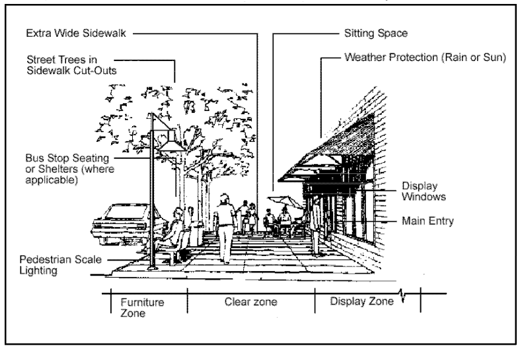
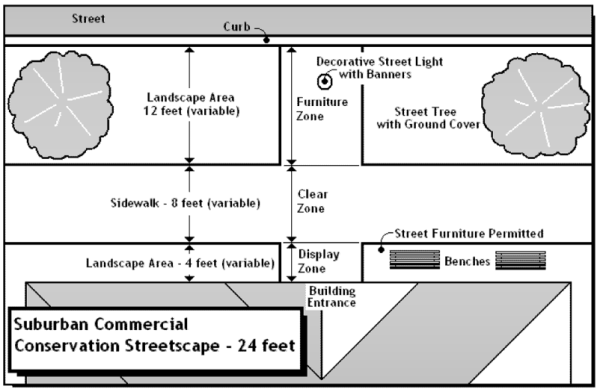
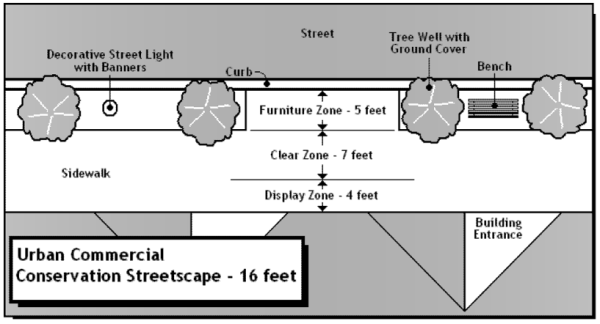
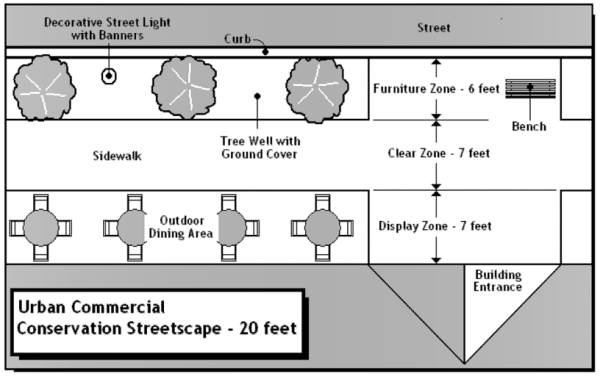
- Setback Areas. Setback areas must comply with 12-foot, 16-foot, 20-foot, or 24-foot approved cross-sections as designed and updated by the City from time to time. The 12-foot cross-section may only be considered for development within Historic Sandy or a Transit Oriented Development (TOD). Setback areas are broken down into sidewalk zones specifically identified as the Display Zone, Clear Zone, and Furniture Zone. Approved sidewalk zones must consider the following standard design features as may be approved by the Planning Commission:
- Display Zone (Located Immediately Adjacent to the Building).
- Display of goods, special sales, promotions, decorations for festivals, holidays, etc.
- Outdoor seating areas and outdoor eating areas, as appropriate.
- Approved newspaper racks, community bulletin boards, etc.
- Limited greenscape (e.g., potted plants, foundation plantings, water conservation plantings, etc.).
- Limited canopy overhangs for building entrances and eating areas.
- Proper access to store entrance from sidewalk grade.
- Clear Zone.
- Walking zone for pedestrians.
- No obstacles.
- Furniture Zone (Adjacent to Curb Line).
- Street trees with tree wells or ground covers.
- Small scale downlit street lights, with or without banners, or other approved attachments.
- Street furniture (e.g., benches, trash receptacles, water fountains, etc.).
- Additional outdoor seating/eating areas, as appropriate.
- Other limited greenscape (e.g., potted plants, water conservation plantings, etc.).
- Display Zone (Located Immediately Adjacent to the Building).
- Architectural Treatment of Building. In addition to the above requirements, building and architectural design shall be street oriented (eyes on the street) and shall consider the following design elements as may be approved by the Planning Commission:
- Parking located to the rear of buildings; or to the side only when deemed appropriate.
- Compliance with an overall area architectural theme with projecting wall signs, where appropriate.
- First level architectural articulation separate from above stories.
- Ample window placement (at least 50 percent of building elevation) to encourage eyes on the street.
- Building entrances directly onto the sidewalk.
- Liberal use of balconies, stoops, insets, etc., to create additional interest and tie to the street.
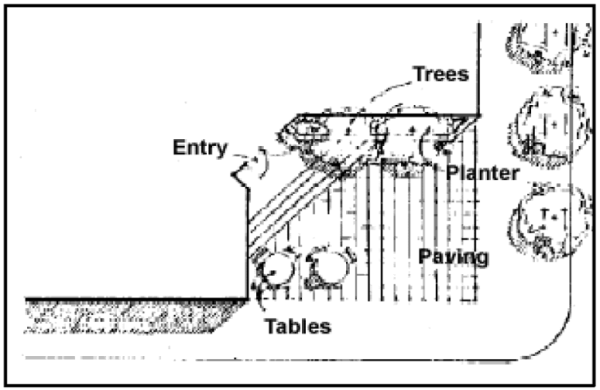
- Walkways (paseos), courtyards, and small plazas should be considered where appropriate.
- Other building design features which promote economic development and safe pedestrian activity, as approved by the Planning Commission.
(LDC 2008, § 15A-14-01)

