
Sandy City Zoning Code
CHAPTER 21
37 DEFINITIONS
21-37-1 General Definitions And Terms
- This chapter provides definitions of all land uses and general terms used throughout this title for which a definition is considered necessary. All land uses allowed by right or by conditional use permit are defined herein. Some land uses shown on the table and in the definitions are categorical, and many potentially allowable specific land uses are assumed to be included in the categorical definitions. In the event of a question as to which category an undefined land use may fall, the Director shall make a final determination.
- For the purposes of this title, certain words and terms are hereby defined as follows: words used in the present tense include the future; words in the masculine gender include the feminine and neuter; words in the singular includes the plural; the plural includes individuals, partnerships, corporations, clubs, or associations. The following words and terms, when applied in this title, shall carry full force when used interchangeably: lot, plot, parcel, premises or site; used, arranged, occupied, or maintained; sold or dispensed; construct, reconstruct erect, alter (structurally or otherwise), but not the term maintenance. The term "used" shall be deemed also to include designed, intended, or arranged to be used.
(LDC 2008, § 15A-37-01)
Amended by Ord. 21-08 § 1(Exh. A) on 3/23/2021
21-37-2 "A" Definitions
- AASHTO means American Association of State Highway and Transportation Officials.
- Abandoned well means a well, the use of which has been permanently discontinued or is in such a state of disrepair that it cannot be used for its intended purpose or for observation purposes.
- Accessory apartment means a housing unit which is self-contained but incorporated within an existing structure that is designed as a single-family dwelling and will not substantially alter the structure or the appearance of the structure.
- Accessory structure, accessory building, means a detached, incidental subordinate building customarily incidental to and located upon the same lot occupied by the main use or building. Detached garages, sheds, workshops, and barns are examples of accessory structures.
- Accessory use means a use conducted on the same lot as the primary use of the structure to which it is related; a use which is clearly incidental to and customarily found in connection with such primary use.
- Acreage.
- Gross means overall total exclusive of deductions.
- Net means the total remaining after all deductions are made.
- ADA means American Disability Act (42 USC 12101 et seq.).
- Adult day care. See Human services programs or facilities.
- Affected entity means a county, municipality, local school district, special service district under the Special Service District Act (U.C.A. 1953, § 17D-1-101 et seq.), school district, interlocal cooperation entity established under the Interlocal Cooperation Act (U.C.A. 1953, § 11-13-101 et seq.), specified public utility under the Municipal Land Use, Development, and Management Act (U.C.A. 1953, § 10-9a-101 et seq.), a property owners association, or the Utah Department of Transportation, if:
- The entity's services of facilities are likely to require expansion or significant modification because of an intended use of land;
- The entity has filed with the City a copy of the entity's General or Long-Range Plan; or
- The entity has filed with the City a request for notice during the same calendar year and before the City provides notice to an affected entity in compliance with a requirement imposed under this title.
- Agriculture means the tilling of the soil, raising of crops, horticulture, gardening, and beekeeping, but not including the keeping or raising of animals or fowl and not including any agricultural industries or businesses, packing plants, fur farms, animal hospitals, plant nurseries, or similar uses or sale of farm or garden products not produced on the premises. (See Farm animals.)
- Alcohol or tobacco specialty store.
- The term "alcohol or tobacco specialty store" means a commercial establishment that, through signage, floor space allocation and sales revenue, demonstrates it is substantially engaged in the offer and sale of alcohol and/or tobacco products, and any one or more of the following factors:
- The sale of alcohol or tobacco products accounts for more than 35 percent of the total annual gross receipts for the establishment, except as allowed within this title such as alcoholic beverage state liquor store and alcoholic beverage package agency; or
- Twenty percent or more of the public retail floor space is allocated to the offer, display, or storage of tobacco products; or
- Twenty percent or more of the total shelf space (retail display or storage areas) is allocated to the offer, display, or storage of tobacco products; or
- If less than 80 percent of the total shelf space (retail display or storage areas) is allocated to the offer, display, or storage of other items, products and merchandise unrelated to tobacco products; or
- The retail space features a self-service display for tobacco products (as defined in Utah State Code); or
- The name of the business or marketing of the business evidences the establishment as a retail alcohol or tobacco specialty store.
- For the purposes of this definition, the term "tobacco product" means:
- Any cigar, cigarette, chewing tobacco, or electronic cigarette as defined in Utah State Code.
- Any substitute for a tobacco product, including flavoring, or additives to tobacco; and
- Tobacco paraphernalia as defined in Utah State Code.
- The term "alcohol or tobacco specialty store" means a commercial establishment that, through signage, floor space allocation and sales revenue, demonstrates it is substantially engaged in the offer and sale of alcohol and/or tobacco products, and any one or more of the following factors:
- Alcoholic beverage establishments require a license from Sandy City in accordance with Title 15 of this Code, and the Utah Department of Alcoholic Beverage Services. Unless otherwise updated in Utah Code, Title 32B, Alcoholic Beverage Control Act, and for purposes of this Title, alcoholic beverage establishments mean:
- Bar establishment, equity. An equity bar establishment license allows the storage, sale, service, and consumption of alcoholic beverages on the premises that is owned by its members and run by a board of directors elected by the members, such as a country club, and which operates under an equity license issued by the Utah Department of Alcoholic Beverage Services. Food must be available for customers, but there is no required percentage of food sales.
- Bar establishment, fraternal. A fraternal bar establishment license allows the storage, sale, service, and consumption of alcoholic beverages on the premises, such as a mutual benefit or patriotic association that is organized under a lodge system, and which operates a fraternal license issued by the Utah Department of Alcoholic Beverage Services. Food must be available for customers, but there is no required percentage of food sales.
- Bar establishment, bar. A bar license allows for the storage, sale, service, and consumption of alcoholic beverages on the premises of a bar (a social drinking establishment), which operates under a bar establishment license issued by the Utah Department of Beverage Services. Food must be available for customers, but there is no required percentage of food sales.
- Hotel license. Available on a limited basis from the Utah Department of Alcoholic Beverage Services consisting of a general license and three or more sublicenses. One sublicense must be a restaurant license or bar establishment, and one must be an on-premises banquet license. Hotels with more than one bar establishment must apply for separate sublicenses and may not combine multiple bar establishments into one sublicense. Licenses are subject to size and location restrictions as described by the Utah Department of Beverage Services.
- Manufacturing license. Manufacturing licenses include brewery, distillery, and winery licenses. A brewery license is required to manufacture, brew, store, transport, or export beer and heavy beer. A distillery license is required to manufacture, store, transport, import or export liquor. A winery license is required to manufacture, store, transport, import and export wines.
- Off-premises beer retailer license. An off-premises beer retailer means an establishment licensed to sell beer, with a maximum of five percent by volume, in original containers for consumption off the premises.
- On-premises banquet and catering license. An on-premises banquet and catering license is required for the storage, sale, service, and consumption of liquor, wine, heavy beer, or beer for contracted banquet activities on the premises of a hotel, resort facility, sports center, or convention center. It also allows for room service in hotels and resorts.
- On-premises beer tavern license. An on-premises beer tavern license shall entitle the licensee to sell beer for consumption on the licensed premises in open containers and on draft not exceeding two liters, where the revenue from the sale of beer exceeds the revenue of the sale of food.
- On-premises recreational beer retailer license. An on-premises recreational beer retailer license is required for the sale of beer at retail for on-premises consumption for establishments that are tied to a "recreational amenity," as defined by the Utah Department of Beverage Services. At least 70 percent of the sales at a recreational facility must be from food or may be from gross revenues directly related to the recreational amenity.
- Package agency. A retail liquor location operated under a contractual agreement with the Department of Alcoholic Beverage Services, by a person other than the State, who is authorized by the Utah Alcoholic Beverage Services Commission to sell packaged liquor for consumption off the premises of the agency.
- Reception center license. A reception center license is required for the storage, sale, service, and consumption of liquor, wine, heavy beer, and beer for banquet or event functions on the premises of a reception center which must be at least 5,000 square feet and have culinary facilities on the premises or under the control of the center that are adequate to prepare full meals. A reception center's primary purpose must be leasing its facility to a third party for the third party's event. No more than 30 percent of annual gross receipts may be from the sale of alcohol.
- Resort license. Resort licenses are required for the storage, sale, service, and consumption of alcoholic beverages on the premises of a resort building that has at least 150 dwelling or lodging accommodations (50 percent of which must be owned by a person other than the resort license), and the building must be at least 400,000 square feet. The resort building must be affiliated with a ski area that abuts the resort building premises. Available on a limited basis from the Utah Department of Alcoholic Beverage Services.
- Restaurant, beer only license. A beer-only restaurant license is required for storage, sale, service, and consumption of beer (but not heavy beer) on the premises of a restaurant that is engaged primarily in serving meals to the general public. Beer may be purchased in conjunction with an order for food that is prepared, sold and served at the restaurant. Each restaurant must maintain at least 70 percent of its total restaurant business from the sale of food.
- Restaurant, full service license. Restaurant liquor licenses are required for the storage, sale, service, and consumption of beer, heavy beer, wine and liquor beverages on the premises of a restaurant that is engaged primarily in serving meals to the general public. Alcoholic beverages may be purchased in conjunction with an order for food that is prepared, sold, and served at the restaurant. Each restaurant must maintain at least 70 percent of its total restaurant business from the sale of food.
- Restaurant, limited service license. Limited service restaurant liquor licenses are required for the storage, sale, service, and consumption of wine, heavy beer, and beer on the premises of a restaurant that is engaged primarily in serving meals to the general public. Alcoholic beverages may be purchased in conjunction with an order for food that is prepared, sold and served at the restaurant. Each restaurant must maintain at least 70 percent of its total restaurant business from the sale of food.
- Single event permits. A single event license allows the licensee to sell and allows the on-premises consumption of any alcohol (including beer) at a temporary event. Multiple single event permits may be obtained per calendar year and is limited to the number of events permitted by the Utah Department of Alcoholic Beverage Services.
- State liquor store. A facility for the sale of package liquor that is located on the premises owned or leased by the State and is operated by a State employee. The term "State liquor store" does not include a package agency, a licensee, or a permittee.
- Temporary beer event permits. Temporary beer event permits allow the licensee to sell beer for on-premises consumption at a temporary event. Multiple temporary beer event permits may be obtained per calendar year and is limited to the number of events permitted by the Utah Department of Alcoholic Beverage Services.
- Alley means a public or private roadway that provides a rear or side access vehicular access and a corridor for utilities and services to abutting property not intended for general traffic circulation.
- All-terrain vehicle (ATV) means any motorized, off-road vehicle 50 inches or less in overall width, having a dry weight of 800 pounds or less, designed to travel on three or more low pressure tires.
- Alteration means any change, addition, or modification in construction, or type of occupancy of a building or structure, or any change in the structural members of a building or structure such as walls, partitions, columns, beams, girders, or exits.
- Alternative healing and energy healing business means energy therapy, energy healing, spiritual therapy, or spiritual healing (including, but not limited to, Rapid Eye Technology, Reiki, Reflexology, Shiatsu, Thai, Qigong, etc.), and is a business devoted primarily to spiritual healing and other related practices, and is not regulated by the State of Utah and is not a sexually oriented business. For purposes of this title, an alternative healing and energy healing business may be performed in a licensed hospital or medical clinic.
- Alzheimer's facility means a nursing care facility or assisted living facility whose primary purpose is to provide living accommodations and services to residents who have been diagnosed with Alzheimer's disease or other type of dementia.
- Ambulatory surgical facility. See Health care facilities.
- Ancillary commercial means a commercial use conducted on the same lot as the primary commercial use of the structure or property to which it is related; a commercial use which is clearly incidental to and customarily found in connection with such primary commercial use.
- Ancillary use means a use conducted on the same lot as the primary use of the structure to which it is related; a use which is clearly incidental to and customarily found in connection with such primary use.
- Animal hospital, veterinary office, means an establishment at which small, medium, or large farm animals or household pets are treated or boarded within a completely enclosed building, and the boarding of animals is limited to short-term care incidental to the animal hospital/veterinary office use.
- Animal, household pets, means household pets, including dogs, cats, rabbits, ducks and chickens, on a non-nuisance basis for family use only (noncommercial) with cages, pens and coops, etc.
- Animal kennel, commercial, means an establishment boarding, breeding, raising, treating, or training small, medium, or large farm animals or household pets for commercial gain.
- Antenna means any device used to transmit and/or receive radio or electromagnetic waves such as, but not limited to panel antennas, reflecting discs, microwave dishes, whip antennas, directional and nondirectional antennas consisting of one or more elements, multiple antenna configurations, or other similar devices and configurations; and exterior apparatus designed for telephone, radio or television communications through the sending and/or receiving of wireless communications signals.
- Apartment. See Dwelling, multiple-family.
- Applicant means the person who applies for a permit, license, or other right under section 21-11-25.
- Aquarium means an establishment where aquatic collections of living organisms are kept and exhibited.
- Arcade means an establishment offering five or more amusement devices, including, but not limited to, coin-operated electronic games, shooting gallery, table games, and similar recreational diversions within an enclosed building. (Additional reference: Sandy City Entertainment Arcade Ordinance.)
- Area of special flood hazard means the land in the floodplain within Sandy City subject to a one percent or greater chance of flooding in any given year.
- Art gallery means an establishment engaged in the exhibition and sale of artworks. The term "art gallery" does not include the sale of art supplies or other raw materials used in the creation of artwork.
- Artist's studio means the location where artwork is created. Examples include, but are not limited to, painting, clay sculpting and firing, engraving, etc.
- Assisted living facility.
- The term "assisted living facility" means a residential facility, licensed by the State of Utah, with a home-like setting that provides an array of coordinated supportive personnel and health care services, available 24 hours per day, to residents who have been assessed under Utah Department of Health or Utah Department of Human Services rules to need any of these services. Each resident shall have a service plan based on the assessment, which may include:
- Specified services of intermittent nursing care.
- Administration of medication.
- Support services promoting residents' independence and self-sufficiency.
- An assisted living facility does not include:
- A residential facility for persons with a disability (defined elsewhere in this chapter).
- Adult day care provided in conjunction with a residential facility for elderly persons or a residential facility for persons with a disability.
- Assisted living facilities are broken down into two classes:
- Limited capacity assisted living facility means a facility accommodating not more than four residents, excluding staff. All residents must be ambulatory, which means a person who is capable of achieving mobility sufficient to exit a structure without the assistance of another person. Adult day care shall not be provided as part of the facility. (See definition under Human services.)
- Large capacity assisted living facility means a facility accommodating more than four residents, excluding staff. Adult day care may be approved separately as provided elsewhere.
- The term "assisted living facility" means a residential facility, licensed by the State of Utah, with a home-like setting that provides an array of coordinated supportive personnel and health care services, available 24 hours per day, to residents who have been assessed under Utah Department of Health or Utah Department of Human Services rules to need any of these services. Each resident shall have a service plan based on the assessment, which may include:
- Athletic club. See Recreation, indoor or outdoor.
- Auto, light trucks, RV dealerships (new), sales and service agencies, means the use of any building, land area, or other premises or portion thereof, for the display or sale of new automobiles, light trucks or vans, trailers, or recreational vehicles and including any warranty repair work and other repair service conducted as an accessory use.
- Auto, light trucks, RV dealerships (used), sales and service agencies, means the use of land for the display or sale of used automobiles, light trucks or vans, trailers, or recreational vehicles.
- Auto, light trucks, RV, rental and leasing agencies, means a building or a tenant space in a multi-tenant building that provides automobile rental services. The facility may have on-site or off-site storage of vehicles to be rented. No servicing of vehicles shall occur on-site. The term "auto, light trucks, RV, rental and leasing agencies" does not include vehicle sales, the rental of equipment, car washes, vehicle maintenance facility, inoperable vehicle storage, or impound lot.
- Automotive self-service station means an establishment for the retail sale of automobile fuels and lubricants at which the customer provides the service to his own vehicle, and no vehicle repair or maintenance service is offered. Such an establishment may offer for sale at retail other convenience items as a clearly secondary activity and may also include a freestanding automatic car wash.
- Automotive service and repair, major, means an establishment primarily engaged in the repair or maintenance of motor vehicles, trailers, and similar large mechanical equipment, including paint, body and fender, and major engine and engine parts, provided it is conducted within a completely enclosed building.
- Automotive service and repair, minor, means an establishment primarily engaged in the repair or maintenance of motor vehicles, trailers, and similar mechanical equipment, including brake, muffler, tire repair and change, lubrication, tune-ups, safety inspections and emission testing, detailing shops, windshield repair, overhaul and transmission work, provided it is conducted within a completely enclosed building.
- Automotive service, non-mechanical, means an establishment engaged in safety inspections and emission testing, detailing shops, and windshield repair, provided it is within a completely enclosed building.
- Automotive service station means an establishment whose primary purpose is the selling of gasoline or other vehicle fuels and oil and lubricant services. Accessory activities may include minor automotive repair and maintenance, car wash service, and food sales.
- Auto, truck, recreational vehicle, and equipment sales or rental means sales or rental of both new and used motor vehicles and equipment from indoor or outdoor areas, but not to include nonserviceable or junk vehicles or equipment.
- Auto, truck, recreational vehicle, and equipment storage means temporary outside storage of both new and used motor vehicles and equipment awaiting distribution. Such storage may include an impound lot, but is not to include nonserviceable, junk, or dilapidated vehicles or equipment.
- Average percent of slope means the rise or fall in elevation along a line perpendicular to the contours of the land connecting the highest point of land to the lowest point of land within a lot.
- Awning means a roof-like covering of canvas, or the like, often adjustable, over a window door, etc., to provide protection against the sun, rain, snow, and wind. Said awning is attached to the vertical wall and has an architecturally compatible color and design with the structure.
(LDC 2008, § 15A-37-02; Ord. No. 10-03, 2-19-2010; Ord. No. 10-12, 4-20-2010; Ord. No. 10-30, 8-8-2010; Ord. No. 12-30, 8-20-2012; Ord. No. 13-13, 6-5-2013; Ord. No. 16-13, 3-23-2016; Ord. No. 17-09, 3-9-2017; Ord. No. 18-22, § 1(15A-37-02), 8-30-2018; Ord. No. 18-28, § 1(15A-38), 9-20-2018)
Amended by Ord. 19-23 § 1(Exh. A) on 10/8/2019
Amended by Ord. 21-08 § 1(Exh. A) on 3/23/2021
Amended by Ord. 21-28 § 1(Exh. A) on 9/28/2021
Amended by Ord. 25-22 on 9/30/2025
21-37-3 "B" Definitions
- Back-loaded garage means a subservient (secondary or de-emphasized) detached parking structure designed for access from an approved alley way or private street.
- Balcony means a covered or uncovered platform usually projecting from a wall or an entrance to a building, sometimes being surrounded by a railing, balustrade, or parapet.
- Bar. See Alcoholic beverage establishments.
- Base flood means a flood having a one percent change of being equaled or exceeded in any given year.
- Base station means a structure or equipment at a fixed location that enables FCC-licensed or authorized wireless communications between user equipment and a communications network. The definition of the term "base station" does not include or encompass a pole as defined herein or any equipment associated with a tower. The term "base station" does include, without limitation:
- Equipment associated with wireless communications services such as private broadcast, and public safety services, as well as unlicensed personal wireless services and fixed personal wireless services such as microwave backhaul that, at the time the relevant application is filed with the City under this chapter, has been reviewed and approved under the applicable zoning or siting process, or under another State or local regulatory review process, even if the structure was not built for the sole or primary purpose of providing such support.
- Radio transceivers, antennas, coaxial or fiber-optic cable, regular and backup power supplied, and comparable equipment, regardless of technological configuration (including distributed antenna systems ("DAS") and small-cell networks) that, at the time the relevant application is filed with the City under this chapter, has been reviewed and approved under the applicable zoning or siting process, or under another State or local regulatory review process, even if the structure was not built for the sole or primary purpose of providing such support.
- Basement means that portion of a building that is partly or completely below grade.
- Basement house means a one-story dwelling where more than 25 percent of the floor area is below the finished surface grade at the front yard level.
- Beacon light. See Search light.
- Bed and breakfast facility means a limited commercial activity conducted within a structure, which includes dining and bathroom facilities with sleeping rooms, on a residential scale for short-term guest rental. Said use will typically provide overnight accommodations, limited food services, parking facilities, and open space in a natural setting, and will comply with standards and procedures as set forth in this title.
- Best management practices (BMPs) means a practice or combination of practices determined to be the most effective practicable (including technological, economic, and institutional considerations) means of preventing or reducing the amount of pollution to a level compatible with water, soil, and air quality goals.
- Billboard means a sign which directs the attention to a business, product, service, or entertainment conducted, sold, or offered off-premises.
- Birthing center. See Health care facilities.
- Block means land or group of lots surrounded by streets or other rights-of-way, other than an alley, or land which is designated as a block on any recorded subdivision tract.
- Boarder means a person living in a rented room in a boardinghouse. The boardinghouse operator, or a member of his immediate family who resides on the premises with the operator, shall not be deemed a boarder.
- Boardinghouse means a single-family dwelling where more than two, but fewer than six, rooms are provided for lodging for definite periods of times. Meals may or may not be provided, but there is one common kitchen facility. No meals are provided to outside guests.
- Boundary adjustment means an agreement between adjoining property owners to relocate a common boundary that results in a conveyance of property between the adjoining lots, adjoining parcels, or adjoining lots and parcels. A boundary adjustment does not include a modification of a lot or parcel boundary that creates an additional lot or parcel or that is made by the Department of Transportation.
- Boundary Adjustment, Full means a means a boundary adjustment that: (a) affects a public right-of-way, municipal utility easement, or other public property; (b) affects an existing easement, onsite wastewater system, or an internal lot restriction; or (c) results in a lot or parcel out of conformity with land use regulations.
- Boundary Adjustment, Simple means a boundary adjustment that does not: (a) affect a public right-of-way, municipal utility easement, or other public property; (b) affect an existing easement, onsite wastewater system, or an internal lot restriction; or (c) result in a lot or parcel out of conformity with land use regulations.
- Botanical gardens means a public or private facility for the demonstration and observations of the cultivation of flowers, fruits, vegetables, or ornamental plants.
- Buildable area means the portion of a lot or site, exclusive of required setbacks, or landscaping, within which a structure may be built.
- Building means any structure, whether permanent or temporary, including, but not limited to, dwelling units which are designed, intended, or used for occupancy by any person, animals, possessions, or for storage of property of any kind.
- Building Code means either the International Building Code or the International Residential Code (as applicable to the type of construction) which covers the fire, life, and structural safety aspects of all buildings and related structures (as adopted and amended by the State of Utah).
- Building height means the vertical distance from the average finished grade surface of the building to the highest point of the coping of a flat roof, to the top of a mansard roof, or the top of the ridge for a gable, hip, or gambrel roofs.
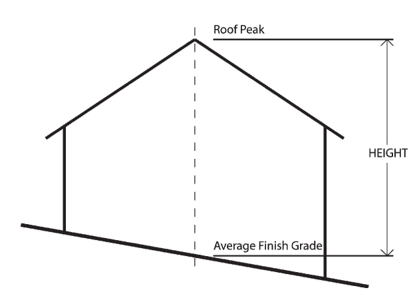
- Building line means the line circumscribing the buildable area of a lot.
- Building, main, means a building in which the principal use of the site is conducted.
- Building, temporary, means a building used for the storage of construction materials and equipment incidental and necessary to on-site construction of houses, utilities, or other community facilities, or used temporarily in conjunction with the sale of property within a subdivision under construction. A permit is required from the Building Inspector.
- Build-to lines means setback distances which bring structures adjacent to streets and sidewalks in order to encourage pedestrian activity and safety.
- Business License Administrator means the individual who performs regulatory administration of Title 15 and any applicable federal, state, County and local laws.
- Business License Division means the Business License Office of the Community Development Department.
- Business or financial services means an establishment intended for the conduct or service or administration by a commercial enterprise, or offices for the conduct of professional or business service, but not including medical, dental, chiropractor or other arts. Uses intended by this definition would include, but not be limited to, business offices, depository institutions, other establishments performing financial services (including outside drive-up facilities), radio or television station. This definition shall not include businesses that are defined as a non-depository institution, nor businesses in which goods or merchandise are sold or stored.
(LDC 2008, § 15A-37-03; Ord. No. 18-28, § 1(15A-38), 9-20-2018)
Amended by Ord. 21-08 § 1(Exh. A) on 3/23/2021
Amended by Ord. 25-25 on 11/11/2025
21-37-4 "C" Definitions
- Canopy means a roofed structure constructed of fabric or other material placed so as to extend outward from the building providing a protective shield for doors, windows, and other openings supported by the building or by supports extending to the ground directly under the canopy.
- Carport means a roof structure open on at least two sides and subject to all the zoning regulations prescribed for a private garage.
- Car wash means a stand-alone facility, either self-service or full service, that is used to clean the exterior, and/or the interior, of motor vehicles.
- Cemetery, columbarium, or mausoleum means land or buildings used for the burial or interment of the dead, but not including facilities for embalming or cremation. Other uses that may be offered are clearly accessory to, and supply services to the principal use, including a facility for the manufacture of cement vaults and sale and engraving of grave markers, a retail floral shop, and live plant nursery.
- Check cashing means cashing of checks for consideration or extending a deferred deposit loan, and shall include any other similar types of businesses by the State pursuant to the Check Cashing Registration Act.
- Chief building official means the individual, under the direction of the Community Development Director, who supervises and directs the activities of the Building and Safety Division, acts as the City authority on interpretation and enforcement of all Building and Development Codes applying policy directives of the Mayor and City Council.
- Child placing. See Human services programs or facilities.
- City means Sandy City, Utah.
- City trees. See Trees, City.
- Clinic means a building or portion of a building containing offices and facilities for providing medical, dental, psychiatric, or counseling services for outpatients only.
- Closure (Chapter 21-17) means the cessation of operation of a facility or any portion thereof, and the act of securing such facility or portion thereof to ensure protection of groundwater in accordance with the appropriate State, Federal, and local regulations applicable to the specific facility and within the provisions of this title.
- Club. See Alcoholic beverage establishments.
- Clustered subdivision means a residential use that divides land into not more than the number of lots permissible in a conventional subdivision of the same property in the same zone, but where the size of the individual lots may be reduced in order to gain common open space.
- Code means the Sandy City Code.
- Code Compliance Officer, Code Enforcement Officer, or Code Inspector means any authorized agent or employees of the City whose duty it is to assure Code compliance.
- Collection area (Chapter 21-17) means the area surrounding a groundwater source which is underlain by collection pipes, tile, tunnels, infiltration boxes, or other groundwater collection devices.
- Collocate or collocation means to install, mount, maintain, modify, operate, or replace a small wireless facility: on a wireless support structure or utility pole; or, for ground-mounted equipment, adjacent to a wireless support structure or utility pole.
- Columbarium. See Cemetery, columbarium, mausoleum.
- Commercial, heavy, means an establishment or business which generally uses open sales yards, outside equipment storage and/or company vehicles and trucks, or outside activities that generate noise or other impacts considered incompatible with less intense uses. Typical businesses included in the term "commercial, heavy," are lumber yards, construction specialty services, heavy equipment suppliers, or construction related contractors and subcontractors.
- Commercial mixed use means development within a building, which incorporates retail commercial or individual offices on the ground level and office and/or residential use on upper levels.
- Commercial parking means an open area, other than a street, used for the parking of vehicles, with or without a garage, used for the temporary parking of automobiles with or without a fee.
- Commercial repair services means establishments which engage principally in the repair of large or heavy duty household goods such as washers and refrigerators; the re-upholstery of automobiles, boats, and similar vehicles; small engine repair; or other similar services which exceed the smaller scale classification intended under commercial retail sales and services, but which can still be performed within an enclosed building. For large-scale repair facilities or allowance for outdoor storage or activity, see Commercial, heavy or Industry.
- Commercial retail sales and services means establishments which engage in the sale of general retail goods and accessory services. Businesses within this definition include those which conduct sales and storage entirely within an enclosed structure (with the exception of occasional outdoor on-site promotions); businesses that specialize in the sale of general merchandise or convenience goods. Services include laundromats with coin-operated self-service machines, repair services for small household appliances or equipment. Work conducted on the premises includes handicraft production such as pottery, jewelry, picture frames, or leather goods. Goods assembled or produced on the premises must be for sale on the premises. This is a broad definition which is intended to include all retail sales and services (including personal services) generally associated with commercial districts which are not specifically covered by other definitions in this chapter.
- Commercial specialty means an establishment which engages in the sale of specialty items and not the general sale of retail goods and accessory services. Businesses within this definition include those which conduct sales and storage entirely within an enclosed structure not exceeding 500 square feet; and specialize in the sale of specialty merchandise or convenience goods. Products sold, other than beverages, may not be prepared or produced on site. The term "commercial specialty" does not include those land uses which are defined as a restaurant by Sandy City or other government agency having jurisdiction within the City. The sales or preparation of alcoholic beverages is not permitted under the term "commercial specialty."
- Commercial vehicle means a vehicle designed and/or used for business, transportation of commodities, merchandise, produce, freight, animals, passengers or other transports including tow trucks or trailers used for the movement of equipment regardless of length. The term "commercial vehicle" also includes construction vehicles such as a bulldozer, backhoe, and similar vehicles.
- Commission means the Sandy City Planning Commission.
- Community-based program. See Correctional facility.
- Community area means a smaller geographic unit of the political subdivision of Sandy City as adopted by City ordinance (see adopted Community Map).
- Community Center means a neighborhood facility dedicated to children and young people and staffed by professionals and volunteers. These facilities typically offer after school, off-track, and weekend programs to provide a safe place for social, educational, or recreational activities. Any church or school would be permitted to operate this type of facility as an ancillary use in any zone in which the church or school is allowed.
- Community correctional facility. See Correctional facility.
- Community development director means the individual who supervises and directs the Community Development Department which includes responsibility for the physical and economic development of the City.
- Conditional use means a land use that, because of its unique characteristics or potential impact on the City, surrounding neighbors or adjacent land uses, may not be compatible in some areas or may be compatible only if certain conditions are required that mitigate or eliminate the detrimental impacts.
- Condominium means a single unit in a multi-unit project or structure which is separately owned which may be combined with an undivided interest in the common areas and facilities of the property.
- Congregate care facility means a housing development of five or more dwelling units which is planned, designed, and managed to include facilities and common space that maximize the residents' potential for independent living. The facility may be occupied by elderly persons or persons with a disability. The direct services that are provided or made available shall relate to the nutritional, social, recreational, housekeeping, and personal needs of the residents and shall be provided or made available at a level necessary to assist the residents to function independently. Direct services include meals, housekeeping services, transportation services, and planned recreational and social activities which shall be provided to the residents directly by the management of the congregate housing. Support services are social services, day care services and in-home services which the management of the congregate housing shall assist the residents in obtaining at the request of the residents. A congregate care facility may only be developed as a component of a transitional care development, and not as a stand-alone development.
- Continuous transit means the nonstop movement of a mobile vehicle except for stops required by traffic laws.
- Convalescent home. See Nursing home.
- Correctional facility means any facility operated by the State Department of Corrections or Division of Youth Corrections or under a contract with either to house offenders, either in a secure or non-secure setting, including, but not limited to, a prison, jail, juvenile detention facility or juvenile secure facility and the following:
- Community-based program. A non-secure residential or nonresidential program designated to supervise and rehabilitate youth offenders in the least protective restrictive setting, consistent with public safety, and designated or operated by or under contract with the Division of Youth Corrections.
- Community correctional center. A non-secure correctional facility operated by the Department of Corrections or under a contract with the Department of Corrections.
- Detention center. See Secure detention (Subsection j of this definition).
- Jail. A facility established and operated by the County, either directly or under contract with a private provider, for confinement of persons in lawful custody.
- Juvenile detention facility. A facility established and operated by the State of Utah, either directly or under contract with a private provider, for temporary detention of delinquent juveniles.
- Juvenile receiving center. A non-secure, nonresidential program established by the division that is responsible for juveniles taken into custody by law enforcement for status offenses or delinquent acts, but who do not meet the criteria for admission to secure detention or shelter.
- Juvenile secure facility. A facility established and operated by the State of Utah, either directly or under contract with a private provider, for incarceration of delinquent juveniles.
- Observation and assessment program. A service program operated or purchased by the Division of Youth Corrections that is responsible for temporary custody of youth offenders for observation.
- Secure correctional facility. Any prison, penitentiary, or other institution operated by the Department of Corrections or under contract for the confinement of offenders where force may be used to restrain them if they attempt to leave the institution without authorization.
- Secure detention. Predisposition placement in a facility operated by or under contract with the Division of Youth Corrections for conduct by a child who is alleged to have committed a delinquent act.
- Secure facility. Any facility operated by or under contract with the Division of Youth Corrections that provides 24-hour supervision and confinement for youth offenders committed to the Division for custody and rehabilitation.
- Shelter. The temporary care of children in physically unrestricted facilities pending court disposition or transfer to another jurisdiction.
- Council means the City Council of Sandy City.
- Court means an open, unoccupied space, other than by a yard, on the same lot with a building or group of buildings, and which is bounded on two or more sides by such building or buildings.
- Coverage means the percent of the total site area covered by structures or impervious paving other than those excepted in this title.
- Crematory, embalming facility means buildings used for the cremation and/or embalming of the dead, but not including facilities for burial, internment, body viewing, or funeral services.
- Crime Prevention Through Environmental Design (CPTED) means guiding design principles for creating safer built environments, incorporating natural surveillance, access control, territorial reinforcement, sense of ownership, management and maintenance.
- Cul-de-sac means a street closed at one end by an enlarged, circular turn-around area where the arc exceeds at least 190 degrees.
- Cut, in the context of grading, hillside or slope modification, means either excavated material or the void resulting from the excavation of earth material and is measured from natural grade to finished grade.
(LDC 2008, § 15A-37-04; Ord. No. 11-05, 3-25-2011; Ord. No. 13-13, 6-5-2013; Ord. No. 13-22, 10-4-2013; Ord. No. 15-05, 3-23-2015; Ord. No. 18-21, § 1(15A-37-02), 8-30-2018; Ord. No. 18-28, § 1(15A-38), 9-20-2018)
Amended by Ord. 21-08 § 1(Exh. A) on 3/23/2021
21-37-5 "D" Definitions
- Dance hall means an establishment intended primarily for dancing and entertainment within an enclosed dance floor space, using either live or electronically produced music, either open to the public or operated as a private club open to members only.
- Dance school means an establishment for the instruction of the art of dance, including, but not limited to, ballet, ballroom, jazz, tap, and modern. The standards applicable to the operation of such a facility are dependent upon the physical location of the school. If within a home, they must comply with the provisions of Chapter 15-8 requirements. If within a commercial location, they must comply with the requirements of the underlying zone.
- Day care, adult, means continuous care and supervision for three or more adults 18 years of age and older for at least four but less than 24 hours a day, that meets the needs of functionally impaired adults through a comprehensive program that provides a variety of health, social, recreational, and related support services on a protective setting.
- Day care, child, means an establishment for the care and/or instruction, whether or not for compensation, of 12 or fewer children at any one time. Child nurseries and overnight child care are included in this definition.
- Day care, elderly, means arranging for or providing the necessities of life, for compensation, as a protective service to individuals who are at least 60 years old, and are disabled or who are experiencing a dislocation or emergency that prevents them from providing these services for themselves.
- Day care, group, means an establishment for the care and/or instruction, whether or not for compensation, of more than 12 children at any one time. Child nurseries and preschool facilities are included in this definition.
- Day treatment. See Human services programs or facilities.
- Deck. See Balcony.
- Decorative pole means a City-owned or City-managed pole that is specially designed and placed for an aesthetic purpose, and:
- On which a nondiscriminatory rule or code prohibits an appurtenance or attachment, other than:
- A small wireless facility;
- A specially designed informational or directional sign;
- A temporary holiday or special event attachment; or
- On which no appurtenance or attachment has been placed, other than:
- A small wireless facility;
- A specially designed informational or directional sign; or
- A temporary holiday or special event attachment.
- On which a nondiscriminatory rule or code prohibits an appurtenance or attachment, other than:
- Department means the public agency, division, or department designated by Sandy City to enforce the provisions of this title. For Sandy City, the departments are Public Works, Community Development and the Salt Lake Valley Health Department.
- Depository institutions means a bank, savings and loan association, savings bank, industrial bank, credit union, or other institution that:
- Holds or receives deposits, savings, or share accounts;
- Issues certificates of deposit; or
- Provides to its customers other depository accounts that are subject to withdrawal by checks, drafts, or other instruments or by electronic means to effect third party payments.
- Design district means an area that is zoned or otherwise designated by City ordinance or code, and for which the City maintains and enforces unique design and aesthetic standards on a uniform and nondiscriminatory basis.
- Detention center. See Correctional facility.
- Developer means any subdivider or any person or organization that develops, intends to develop, or sells property for the purpose of future development. The term "developer" includes the legal or beneficial owners of a lot or of any land included in a proposed development, including the holder of an option or contract to purchase, or other persons having enforceable proprietary interests in such land.
- Development means any manmade change to improved or unimproved real estate, including, but not limited to, buildings or other structures, mining, dredging, filling, grading, paving, excavation, or drilling operations.
- Development review meeting means a meeting held by the Community Development Department for review of development projects. Representatives from the following City departments, as necessary, may attend:
- Community Development Department.
- Public Works Department.
- City Attorney's Office.
- Fire Department.
- Police Department.
- Parks and Recreation Department.
- Development site includes the total perimeters of:
- A subdivision.
- A residential planned unit development.
- A tract, lot, or parcel of land intended to be used as a commercial, public, quasi-public, utility, or other building site.
- Director means the Director of the Community Development Department, or the Director's designee.
- Disabled/disability.
- The term "disabled/disability" means a physical or mental impairment that substantially limits one or more of a person's major life activities, including a person having a record of such an impairment or being regarded as having an impairment.
- The term "disabled/disability" includes those as defined in Utah Code Ann.; a severe, chronic disability that:
- Is attributable to a mental or physical impairment or combination or mental and physical impairments;
- Is likely to continue indefinitely;
- Results in a substantial functional limitation in three or more of the following areas of major life activity: self-care, receptive and expressive language, learning, mobility, self-direction, capacity for independent living, or economic self-sufficiency; and
- Requires a combination or sequence of special interdisciplinary or generic care, treatment, or other service that may continue throughout life and must be individually planned and coordinated.
- The term "disabled/disability" also includes those who need assistance with activities of daily living as defined in Utah Code Ann., which activities include dressing, eating, grooming, bathing, toileting, ambulation, transferring, and self-administration of medication.
- The term "disabled/disability" does not include current illegal use of, or addiction to, any Federally-controlled substances, as defined in the Controlled Substances Act, 21 USC 802.
- Discharge (Chapter 21-17) means and includes, but is not limited to, spilling, leaking, seeping, pouring, injecting, emitting, emptying, disposing, releasing, or dumping regulated substances to the soils, air, groundwaters, or surface waters of the City. The term "discharge" does not include the use of a regulated substance in accordance with the appropriate use intended or specified by the manufacturer of the substances provided that such use is not prohibited by Federal, State, or local regulations. The term "discharge" shall not include releases specifically authorized by Federal or State permits.
- Distance between residential structures means the shortest distance between the vertical walls of two residential structures as herein defined.
- Domestic staff means persons employed or residing on the premises of a dwelling or other residential facility to perform domestic services or to assist residents in performing daily life activities.
- Domestic violence treatment program. See Human services programs or facilities.
- Drinking water source protection zone means an area within which certain practices are mandated to protect groundwater flowing to public drinking water wells.
- Drinking water supply spring means a drinking water spring to supply water which has been permitted or intended for consumptive use.
- Drinking water supply well means a drinking water well to supply water which has been permitted or intended for consumptive use.
- Drive-up window (non-food) means an opening in the wall of a building or structure designed and intended to be used to provide for sales to and/or services to patrons who remain in their vehicles.
- Driveway means a private roadway providing access for vehicles to a parking space, garage, dwelling, or other structure.
- Dwelling means any structure designed or used for residential purposes that has been constructed to comply with all Building Codes of Sandy City or the Building Codes established by the National Manufactured Housing Construction and Safety Standards Act (42 USC 5401 et seq. (1976)), or the HUD Code. A dwelling does not include hotels, motels, bed and breakfast facilities, etc., nor structures used for or under short-term residential leases.
- Dwelling, duplex, means a building designed or arranged to be occupied by two families living independently, the structure having only two dwelling units in one ownership.
- Dwelling, earth-sheltered, means a dwelling built underground and beneath a continuous exterior surface grade for the purpose of energy conservation, having a roof of earthen material, and having its floor at the approximate level of some other exterior grade on one or more sides. Dwellings may be detached, semi-detached or attached.
- Dwelling, multiple-family, means a building arranged or designed to include three or more dwelling units, each to be occupied by one family living independently in which they may or may not share common entrances and/or other spaces. Individual units may be owned as condominiums or offered for rent.
- Dwelling, multiple-unit, means a building or portion thereof designed for occupancy by three or more families living independently in which they may or may not share common entrances and/or other spaces. Individual units may be owned as condominiums or offered for rent.
- Dwelling, planned group, means two or more detached buildings used as residences located on a lot that is in single ownership and having yards, courts, or facilities in common.
- Dwelling, single-family, means a building arranged or designed to include only one dwelling unit occupied by one family (See Family), including extended living areas or an accessory apartment which may be approved as provided elsewhere in this title.
- Dwelling unit means one or more rooms in a building or portion thereof designed, occupied, or intended as a residence for a family with complete and independent facilities for living, sleeping, eating, cooking, and sanitation provided within the dwelling unit. See also Dwelling, single-family.
- DWSP means Drinking Water Source Protection.
(LDC 2008, § 15A-37-05; Ord. No. 13-13, 6-5-2013; Ord. No. 18-28, § 1(15A-38), 9-20-2018)
Amended by Ord. 21-08 § 1(Exh. A) on 3/23/2021
Amended by Ord. 26-50 on 7/2/2026
21-37-6 "E" Definitions
- Earth station means any apparatus or device commonly known as an earth terminal antennae, earth terminal, satellite communication antennae, satellite antennae, microwave dish antennae, satellite television antennae, or dish antennae which is designed for the purpose of transmitting and/or receiving radio, television, satellite, microwave, or other electromagnetic energy signals, but does not include conventional television, radio, and amateur radio antennae.
- Easement means that portion of lots reserved for present or future use by a person or agency other than the legal fee owners of the property. The easement may be for use under, on or above said lot or lots.
- Educational facility with housing means any public, parochial, private, charitable, or nonprofit school, junior college, or university, including instructional and recreational uses, with living quarters, dining rooms, restaurants, heating plants, and other incidental facilities for students, teachers, and employees.
- Elderly person means, for the purposes of this title, to qualify for residence within a residential facility for elderly persons, a person who is 55 years old or older.
- Eleemosynary means related to and supported by charity.
- Eligible facilities request means any request for modification of an existing tower or base station that does not substantially change the physical dimensions of such tower or base station involving:
- Collocation of new transmission equipment.
- Removal of transmission equipment.
- Replacement of transmission equipment.
- Embalming facility. See Crematory, embalming facility.
- Emergency means any occurrence, or substantial imminent threat thereof, whether natural, technological or manmade, in war or in peace, which results or may result in substantial injury or harm to the population or substantial damage to or loss of property.
- End stage renal disease facility. See Health care facilities.
- EPA means The U.S. Environmental Protection Agency.
- Equestrian facilities means commercial horse, donkey, and mule facilities, including horse ranches, boarding stables, riding schools and academies, horse exhibition facilities, park stations. This land use includes barns, stables, corrals, and paddocks accessory and incidental to the above issues.
- Equipment sales and services means an establishment primarily engaged in the sale or rental of tools, trucks, construction equipment, and similar industrial equipment. Included in the term" equipment sales and service" is the incidental storage, maintenance, and servicing of such equipment.
- Excavation means the removal of earth from its natural position or the cavity resulting from the removal of earth.
- Expansive soil means soil characterized by clay like material that shrinks and swells as it dries or becomes wet and is generally found in areas that historically were a floodplain or lake, but can occur in hillside areas also.
- Exposition/convention center means a stand-alone facility, not part of a larger development, designed to accommodate 5,000 or more persons and used for conventions, consumer shows, trade shows, conferences, seminars, product displays, recreation activities and entertainment functions, along with accessory functions including temporary outdoor displays, indoor dances, holiday celebrations, and food and beverage preparation and service for on-premises consumption.
- Exposition hall/center. See Exposition/convention center.
- Extended living areas means additional and accessory living facilities within a dwelling structure with kitchen, bathroom, and sleeping areas designed for temporary use by extended family members for medical or economic reasons on a non-rental basis and in compliance with standards as set forth in this title. The term "extended living areas" also includes additional family kitchens or kitchenettes and living quarters for domestic staff or other personnel typically employed in household maintenance (e.g., maids, butlers, gardeners).
(LDC 2008, § 15A-37-06; Ord. No. 13-13, 6-5-2013; Ord. No. 18-28, § 1(15A-38), 9-20-2018)
Amended by Ord. 21-08 § 1(Exh. A) on 3/23/2021
Amended by Ord. 21-28 § 1(Exh. A) on 9/28/2021
21-37-7 "F" Definitions
- Face of building means the wall of a building fronting on a street, excluding any appurtenances such as projecting fins, columns, pilasters, canopies, marquees, showcases, or decorations, but including the parapet wall.
- Family.
- The term "family" means a person living alone or any of the following groups living together as a single nonprofit housekeeping unit and sharing common living, sleeping, cooking and eating facilities:
- Any number of people who are all related by blood, marriage, adoption, or court sanctioned guardianship, together with any incidental domestic or support staff who may or may not reside on the premises;
- Four unrelated people; or
- Two unrelated adults and any minor children related to them.
- The term "family" does not include:
- Any society, club, fraternity, sorority, association, lodge, federation, coterie, or like organization.
- Any group of individuals whose association is temporary or seasonal in nature.
- Any group of individuals who are in a group living arrangement as a result of criminal offenses.
- The term "family" means a person living alone or any of the following groups living together as a single nonprofit housekeeping unit and sharing common living, sleeping, cooking and eating facilities:
- Farm animals means animals other than household pets that may, where permitted, be kept and maintained for commercial production and sale and/or for family food production, education, or recreation. Farm animals are identified by these categories: large animals (e.g., horses and cattle); medium animals (e.g., sheep and goats); small animals (e.g., rabbits, chinchilla, chickens (hen or rooster), turkeys, pheasants, geese, ducks and pigeons; or Vietnamese potbellied pigs). Pigs are not permitted to be kept within the City except for Vietnamese potbellied pigs, as pets.
- Farmer's market means a consortium of three or more individual produce growers, and/or manufacturers of whole grain products who meet on a regular basis at a central location within a structure or open area to sell farm produce.
- Fence means any tangible barrier, an obstruction of any material, a line of obstacles, lattice work, screen, wall, hedge, or continuous growth of shrubs or trees with the purpose of, or having the effect of, preventing passage or view across a fence line.
- Fill means earth materials used as a manmade deposit to raise an existing grade, or shall mean the depth or the volume of such material. The reference for a fill shall be measured from natural to finished grade.
- Final grading means the last stage of grading a soil or gravel material prior to landscaping, the installation of concrete or bituminous paving, or other required final surfacing material.
- Final plat means a plat and supporting documents, prepared in accordance with the provisions of this title and prepared for recording in the Salt Lake County Recorder's Office.
- Financial office means a bank, savings and loan, credit union, mortgage office, lending establishments, or automated teller machine (ATM).
- Fine jewelry store means a jewelry store that primarily manufactures jewelry comprised of gold, silver, platinum, titanium, tungsten, or other precious metals and which may contain gemstones.
- Fiscal impact analysis is often used interchangeably with the term "cost revenue analysis." Fiscal impact analysis describes the current or anticipated effect upon the public costs and revenues of a local government imposed by a residential or commercial development.
- Flag lot means a lot that has access to a public right-of-way by means of a narrow strip of land.
- Flagpole means a freestanding structure or a structure attached to a building designed and used for the sole purpose of displaying a flag.
- Flood or flooding means:
- A general and temporary condition of partial or complete inundation of normally dry land areas from:
- The overflow of inland waters; and/or
- The unusual and rapid accumulation or run off of surface waters from any source.
- Mudslides (i.e., mudflows) that are proximately caused by flooding as defined in this chapter and are akin to a river of liquid and flowing mud on the surfaces of normally dry land areas, as when earth is carried by a current of water and deposited along the path of the current.
- The collapse or subsidence of land along the shore of a lake or other body of water as a result of erosion or undermining caused by waves or currents of water exceeding anticipated cyclical levels or suddenly caused by an unusually high water level in a natural body of water, accompanied by a severe storm, or by an unanticipated force of nature, such as flash flood or an abnormal tidal surge, or by some similarly unusual and unforeseeable event which results in flooding.
- A general and temporary condition of partial or complete inundation of normally dry land areas from:
- Flood Insurance Rate Map (FIRM) means the official map on which the Federal Emergency Management Agency has delineated both the areas of special flood hazards and the risk premium zones applicable to Sandy City.
- Flood insurance study means the official report provided by the Federal Emergency Management Agency that includes flood profiles, the Flood Boundary-Floodway Map, and the water surface elevation of the base flood.
- Floodplain means land that is within the 100-year floodplain designated by the Federal Emergency Management Agency; or has not been studied or designated by the Federal Emergency Management Agency but presents a likelihood of experiencing chronic flooding or catastrophic flood event because the land has characteristics that are similar to those of a 100-year floodplain designated by the Federal Emergency Management Agency.
- Floodplain, 100-year (intermediate regional flood) means a designated area where a flood whose peak flow magnitude has about a one percent chance of being equaled or exceeded in any year. The flood within a floodplain is based on statistical analysis of stream flow records available for the watershed and analysis of rainfall and runoff characteristics in the general region of the watershed. The flood would have an average frequency of occurrence of about once in 100 years.
- Floodway means the channel of a river or other watercourse and the adjacent land areas that must be reserved in order to discharge the base flood without cumulatively increasing the water surface elevation more than one foot.
- Floor area means the total gross floor area of the building or structure, but not including any area within the building utilized for the required off-street parking spaces.
- Fraternity or sorority house means a building occupied by and maintained exclusively for students affiliated with an academic or professional college or university or other recognized institution of higher learning, who are associated together in a fraternity/sorority that is officially recognized by such institution and who receive lodging and/or meals on the premises for compensation.
- Frontage means the width of a lot or parcel abutting a public or private right-of-way measured at the front setback line.
- Front loaded garage means a subservient (secondary or de-emphasized (i.e., located behind the front line of the building)) parking structure designed for access from the street, either attached to the dwelling, or detached to the side or rear of the dwelling.
- Funeral home. See Mortuary.
(LDC 2008, § 15A-37-07; Ord. No. 10-31, 8-8-2010; Ord. No. 11-24, 12-5-2011; Ord. No. 12-02, 1-27-2012; Ord. No. 13-26, 11-25-2013)
Amended by Ord. 21-08 § 1(Exh. A) on 3/23/2021
21-37-8 "G" Definitions
- Garage, private, means a detached accessory building or portion of a main building for the parking or temporary storage of automobiles of the occupants of the premises.
- Garage sales means the sale of miscellaneous used items commonly associated with residential use. Garage sales shall not be for the sale of primarily a single commodity. The term "garage sale" includes the terms "yard sale" and "estate sale."
- General acute hospital. See Health care facilities.
- Geologic hazard means land that may include surface fault rupture, shallow groundwater, liquefaction, a landslide, debris flow, unstable soil, rock fall, or any other geologic conditions that presents a risk to life; of substantial loss of real property; or of substantial damage to real property.
- Grade means the average level of the finished surface of the ground adjacent to the exterior walls of the building.
- Grade, highest adjacent, means the highest natural elevation of the ground surface prior to construction next to the proposed wall of a structure.
- Grading means either an excavation or fill, or the act of excavating or filling.
- Gravel parking area. A six-inch gravel base complying with City specifications may be used for the storage of recreational vehicles only.
- Gross acreage means the total area of the development site, including all rights-of-way.
- Gross leasable area (GLA) means the total floor area of a retail business designed for tenant occupancy and exclusive use, including basements, mezzanines and upper floors, expressed in square feet as measured from the centerline of joint partitions and from outside wall faces.
- Groundwater means any water which may be drawn from the ground.
- Groundwater discharge area means an area where the direction of groundwater movement is upward from the principal aquifer to the shallow unconfined aquifer. Discharge areas are determined by the United States Geological Survey (USGS).
- Groundwater divide means a ridge in the water table or potentiometric surface, from which groundwater moves away in both directions.
- Groundwater TOT means time of travel for groundwater.
- Group child activities means an establishment for the care and/or instruction, whether or not for compensation, of 12 or fewer children at any one time. Child nurseries, day cares, preschools, and dance schools are typical examples of a group child activity.
- Guesthouse means a detached living quarters located within an accessory structure that is subordinate to, and located on the same premises with, a primary dwelling, occupied solely by members of the family and temporary guests on a non-rental basis.
(LDC 2008, § 15A-37-08; Ord. No. 13-13, 6-5-2013)
Amended by Ord. 21-08 § 1(Exh. A) on 3/23/2021
Amended by Ord. 21-28 § 1(Exh. A) on 9/28/2021
21-37-9 "H" Definitions
- Half-pipe ramp means a smooth-surfaced outdoor structure shaped like a trough and used in gravity extreme sports such as snowboarding, skateboarding, freestyle BMX, or inline skating. The structure is usually wood, although sometimes the surface is made of another material. Appearance wise, it resembles a cross-section of a swimming pool, and in its most basic form, it consists of two concave ramps (or quarter pipes), topped by copings and decks, facing each other across a transition.
- Handicapped person. See Disability.
- Handle means to use, generate, process, produce, package, treat, store, or transport a regulated substance in any fashion.
- Hazardous materials means any substance:
- Which is flammable, explosive, radioactive, toxic, corrosive, infectious, carcinogenic, mutagenic or otherwise hazardous and is or becomes regulated by any governmental authority, agency, department, commission, board or instrumentality of the United States, the State of Utah or any political subdivision thereof; or
- Which contains asbestos, organic compounds known as polychlorinated biphenyls, chemicals known to cause cancer or reproductive toxicity or petroleum, including crude oil or any fraction thereof; or
- Which is or becomes defined as a pollutant, contaminant, hazardous waste, hazardous substance, hazardous material or toxic substance under:
- The Resource Conservation and Recovery Act, 42 USC 6901-6987;
- The Comprehensive Environmental Response, Compensation and Liability Act, 42 USC 9601-9657;
- The Hazardous Materials Transportation Act, 49 USC 1801-1812;
- The Clean Water Act, 33 USC 1251-1387;
- The Clean Air Act, 42 USC 7401-7642;
- The Toxic Substances Control Act, 15 USC 2601-2655;
- The Safe Drinking Water Act, 42 USC 300f-300j;
- The Emergency Planning and Community Right to Know Act of 1986, 42 USC 11001-11050;
- Title 19, Chapter 6, of the Utah Code;
- Hazardous waste means a hazardous waste as defined by the U.S. EPA.
- Hazard tree. See Tree, hazard.
- Health care facilities include:
- Ambulatory surgical facility means a freestanding State-licensed facility which provides surgical services to patients not requiring hospitalization.
- Assisted living facility. See Assisted living facility.
- Birthing center means a freestanding State-licensed facility with five or fewer birth rooms, receiving maternal clients and providing care during pregnancy, delivery, and immediately after delivery.
- End stage renal disease facility means a State-licensed facility which furnishes staff-assisted kidney dialysis services, self-dialysis services, or home-dialysis services on an outpatient basis.
- General acute hospital means a State-licensed facility which provides diagnostic, therapeutic, and rehabilitative services to both inpatients and outpatients by or under the supervision of physicians.
- Home health agency means a State-licensed agency, organization, or facility or a subdivision of an agency, organization, or facility which employs two or more direct care staff persons who provide licensed nursing services, therapeutic services of physical therapy, speech therapy, occupational therapy, medical social services or home health aide services on a visiting basis. The term "home health agency" does not mean an individual who provides services under the authority of a private license.
- Hospice means a program of care for the terminally ill and their families which occurs in a home or in a health care facility and which provides medical, palliative, psychological, spiritual, and supportive care and treatment.
- Nursing care facility means a State-licensed health care facility, other than a general acute or specialty hospital, constructed, licensed, and operated to provide patient living accommodations, 24-hour staff availability, and at least two of the following patient services:
- A selection of patient care services, under the direction and supervision of a registered nurse, ranging from continuous medical, skilled nursing, psychological, or other professional therapies to intermittent health-related or paraprofessional personal care services;
- A structured, supportive social living environment based on a professionally designed and supervised treatment plan, oriented to the individual's habilitation or rehabilitation needs; or
- A supervised living environment that provides support, training or assistance with individual activities of daily living. The term "activities of daily living" means essential activities including:
- Dressing;
- Eating;
- Grooming;
- Bathing;
- Toileting;
- Ambulation;
- Transferring; and
- Self-administration of medication.
- Residential health care facility or residential care facility means an operation licensed by the State of Utah as a residential health care facility under authority of U.C.A. 1953, § 26-21-8; or any successor section thereto.
- Small health care facility means a four to 16 bed State-licensed facility that provides licensed health care programs and services to residents who generally do not need continuous nursing care or supervision.
- Specialty hospital means a State-licensed facility which provides specialized diagnostic, therapeutic, or rehabilitative services in the recognized specialty or specialties for which the hospital is licensed.
- Health club. See Recreation, indoor or outdoor.
- Hillside area means any property with a slope of 30 percent or greater.
- Home Health Agency. See Health care facilities.
- Homeless shelter means a charitable lodging or sleeping rooms provided on a daily or other temporary basis to persons lacking other safe, sanitary or affordable shelter. Homeless shelters also include a kitchen and cafeteria.
- Home occupation means a business, occupation, profession, operation, managing or carrying on of a business for the purpose of economic gain, which activity is carried on as an accessory use in a residential zone by a bona fide resident of the dwelling. A home occupation shall not be construed to mean an employee working in their own home in the service of an employer whose principal place of business is licensed at another location within Sandy or elsewhere. A home occupation shall not be construed to mean an individual making deliveries of products which were ordered in advance.
- Home-based microschool. See School, home-based microschool.
- Hospice. See Health care facilities.
- Hospital means an institution licensed by the State of Utah which provides diagnostic, therapeutic, and rehabilitative services to individuals on both an inpatient and outpatient basis by or under the supervision of one or more physicians. Any medical clinic or professional office which offers any inpatient or overnight care, or operates on a 24-hour basis shall be considered to be a hospital. A hospital may include integral support service facilities such as laboratories, outpatient units and training and central services, together with staff offices necessary to the operation of the hospital. The term "hospital" includes both general acute and specialty hospitals and must be licensed by the Utah Department of Health pursuant to the Heath Care Facility Licensing and Inspection Act.
- Hotel means an establishment providing, for a fee, sleeping accommodations and customary lodging services, including maid service, the furnishing and upkeep of furniture and bed linens, telephone and desk service. Related ancillary uses may include, but not be limited to, conference and meeting rooms, restaurants, lounge, and recreational facilities.
- Housekeeping unit means a family or group of individuals who:
- Share a strong bond or commitment to a single purpose (e.g., members of a religious order). The relationship must be of a permanent and distinct character with a demonstrable and recognizable bond characteristic of a cohesive unit; and
- Are not legally dependent on others not living with them;
- Share a single household budget;
- Prepare food and eat together on a regular basis;
- Share in the work of maintaining the premises;
- Legally share in the ownership or possession of the premises (e.g., tenants in common on a deed or cosigners of a single lease);
- Does not include a common living arrangement whose basis for the establishment of the housekeeping unit is temporary or financial in nature.
- HUD Code means the National Manufactured Housing Construction and Safety Standards Act, 42 USC 5401 et seq.
- Human services programs or facilities include:
- Adult day care. Continuous care and supervision for three or more adults 18 years of age and older for at least four but less than 24 hours a day, that meets the needs of functionally impaired adults through a comprehensive program that provides a variety of health, social, recreational, and related support services on a protective setting.
- Child placing. An operation licensed by the State of Utah for receiving, accepting, or providing custody or care for any child under 18 years of age, temporarily or permanently, for the purpose of:
- Finding a person to adopt the child;
- Placing the child temporarily or permanently in a home for adoption; or
- Foster home placement.
- Comprehensive mental health treatment means an operation licensed by the State of Utah as "Comprehensive Mental Health Treatment" under authority of U.C.A. 1953, §§ 62A-1-111, 62A-2-103, and 62A-2-105; or any successor section thereto.
- Day treatment. An operation licensed by the State of Utah as day treatment for specialized treatment for less than 24 hours a day for four or more persons who are unrelated to the owner or provider and who have emotional, psychological, developmental, physical, or behavioral dysfunctions, impairments, or chemical dependencies. Day treatment is provided in lieu of, or in coordination with, a more restrictive residential or inpatient environment or service.
- Domestic Violence Treatment Program. An operation licensed by the State of Utah as a nonresidential program designed to provide psychological treatment and educational services to perpetrators and victims of domestic violence.
- Outpatient treatment. An operation licensed by the State of Utah as outpatient treatment for individual, family or group therapy or counseling designed to improve and enhance social or psychological functioning for those whose physical and emotional status allows them to continue functioning in their usual living environment.
- Residential support. An operation licensed by the State of Utah as residential support to arrange for or provide the necessities of life as a protective service to individuals or families who are disabled or who are experiencing a dislocation or emergency which prevents them from providing these services for themselves or their families. Treatment is not a necessary component of residential support.
- Residential treatment. An operation licensed by the State of Utah as residential treatment as a 24-hour group living environment for four or more individuals unrelated to the owner or provider that offers room or board and specialized treatment, rehabilitation or habilitation services for persons with emotional, psychological, developmental, or behavioral dysfunctions, impairments, or chemical dependencies. In residential treatment, individuals are assisted in acquiring the social and behavioral skills necessary for living independently in the community.
- Resource family home. An operation licensed by the State of Utah as a resource family home to provide services to a child in the custody of the State and includes a foster care home and a legal risk home.
- Secure treatment. An operation licensed by the State of Utah as secure treatment as a 24-hour specialized residential treatment or care for persons whose current functioning is such that they cannot live independently or in a less restrictive environment. Secure treatment differs from residential treatment to the extent that it requires intensive supervision, locked doors, and other security measures which are imposed on residents with neither their consent nor control.
- Social detoxification. An operation licensed by the State of Utah as social detoxification for short-term residential services for persons who are intoxicated, that are provided outside of a health care facility licensed under the Health Care Facility Licensure and Inspection Act (U.C.A. 1953, § 26-21-1 et seq.), and that include:
- Room and board for persons who are unrelated to the owner or manager of the facility;
- Specialized rehabilitation to acquire sobriety; and
- Aftercare services.
- Support Staff. Persons employed or residing on the premises of a dwelling or other residential facility to assist residents in performing daily life activities or to provide on-site treatment, rehabilitation, or habilitation services.
- Youth Program. An operation licensed by the State of Utah as youth program as a nonresidential program designed to provide behavioral, substance abuse, or mental health services to minors that:
- Services either adjudicated or nonadjudicated youth;
- Charges a fee for its services;
- May or may not provide host homes or other arrangements for overnight accommodation of the youth;
- May or may not provide all or part of its services in the outdoors;
- May or may not limit or censor access to parents or guardians;
- Prohibits or restricts a minor's ability to leave the program at any time of his own free will; and
- Will not apply to recreational programs such as Boy Scouts, Girl Scouts, 4-H, and other such organizations.
(LDC 2008, § 15A-37-09; Ord. No. 13-13, 6-5-2013; Ord. No. 18-28, § 1(15A-38), 9-20-2018)
Amended by Ord. 21-08 § 1(Exh. A) on 3/23/2021
Amended by Ord. 24-14 § 1(Exh. A) on 7/30/2024
21-37-10 "I" Definitions
- Impervious material means material that is impenetrable by water.
- Improvements means streetscapes, curbs, gutters, sidewalks, utilities, grading, pavings, landscaping, water and sewer systems, drainage systems, fences, fire hydrants, street lights, public facilities, amenities and other such requirements of this title.
- Industry, heavy, means a use engaged in the basic processing and manufacturing of materials or products, predominantly from extracted or raw materials; or storage or manufacturing processes that potentially involve hazardous or commonly recognized offensive conditions; or a use engaged in the storage of or manufacturing processes using flammable or explosive materials that constitute a physical or health hazard in quantities in excess of those allowed in control areas identified within the International Building Code under the High-Hazard Group H Occupancy and is not an accessory occupancy as defined in the International Building Code to the main occupancy of the building. Examples of this use may include refineries, mining or milling operations, above ground flammable or chemical storage, bulk gas distribution or storage, outside steel fabrication, or other similar uses.
- Industry, light, means a use engaged in the basic processing, manufacturing, compounding, assembling, and packaging of predominantly previously prepared materials, products or parts; or testing of goods or equipment or research activities. All activities must be conducted entirely within an enclosed structure, with no outside storage. This type of use may include incidental storage of allowable flammables or chemical materials (within the quantity limits of hazardous materials allowed in control areas identified within the International Building Code under the High-Hazard Group H Occupancy), sales or distribution of such products, serviced by a modest volume (less than 12 trips in 24 hours) of trucks or vans and imposing a negligible impact upon the surrounding environment by noise, vibration, smoke, dust or pollutants. Examples of this use may include the manufacturing of professional instruments, photographic equipment, watches/clocks, jewelry, musical instruments, sporting goods, office supplies and equipment, or other similar uses.
- Industry, medium, means the manufacturing, compounding, processing, assembling, packaging, or testing, of goods or equipment within an enclosed structure or an open yard that is capable of being screened from neighboring properties. These types of uses are serviced by a modest volume of trucks (less than 12 trips in 24 hours), or other vehicles, and whose environmental impact is within the industrial performance standards. This would also include a use engaged in the storage of or manufacturing processes using flammable or explosive materials; or storage or manufacturing processes that potentially involve hazardous or commonly recognized offensive conditions; but fall within the quantity limits of hazardous materials allowed in control areas identified within the International Building Code under the High-Hazard Group H Occupancy. Examples of this use may include paint shops, firework/ammunition manufacturing or storage, wood/cabinet shops, steel fabrication shops, or other similar uses.
- Institutional buildings includes, but is not limited to, churches, schools, hospitals, public and quasi-public buildings.
- Institutional care development/facility means a facility constructed, licensed and operated to provide long-term or permanent living accommodations, 24-hour staff availability, and at least two of the following services:
- A selection of resident care services, under the direction and supervision of a registered nurse or other health or human services licensed professional, ranging from continuous medical, skilled nursing, psychological, or other professional therapies to intermittent health-related or paraprofessional personal care services;
- A structured, supportive social living environment based on a professionally designed and supervised treatment plan, oriented to the individual's needs; or
- A supervised living environment that provides support, training, or assistance with individual activities of daily living.
(LDC 2008, § 15A-37-10; Ord. No. 15-05, 3-23-2015)
Amended by Ord. 21-08 § 1(Exh. A) on 3/23/2021
21-37-11 "J" Definitions
- Jail. See Correctional facility.
- Jurisdictional wetlands means those areas (within Sandy City) that are inundated or saturated by surface water or groundwater at a frequency and duration sufficient to support, and that under normal circumstances do support, a prevalence of vegetation typically adapted for life in saturated soil conditions. Wetlands generally includes swamps, marshes, bogs, and similar areas.
- Juvenile detention facility. See Correctional facility.
- Juvenile receiving center. See Correctional facility.
- Juvenile secure facility. See Correctional facility.
(LDC 2008, § 15A-37-11)
Amended by Ord. 21-08 § 1(Exh. A) on 3/23/2021
21-37-13 "L" Definitions
- Land Development Code means the Sandy City Land Development Code Revised 2008, as codified in this Title 21.
- Landscaping, dry, means the finishing and adornment of yard areas solely by use of rocks, fountains, lanterns, benches, decorative paving, etc., and not including growing or planted materials.
- Lane, private, means a right-of-way or easement in private ownership, not dedicated or maintained as a public street, that serves one or two lots, and is less than less than 150 feet in length.
- Library means a public, nonprofit facility in which literary, musical, artistic, or reference materials, such as, but not limited to, books, manuscripts, computers, recordings, or films, are kept for use by loaning to patrons of the facility, but are not normally offered for sale.
- License review board means persons appointed by the Mayor, or his designee, to serve as a review board for Category II home occupation licenses and as a board of appeals for denied, suspended or revoked home occupation licenses. It shall be convened by the Community Development Director when necessary for review or appeal as set forth in this title. Board members are comprised of two members from each of the following departments: the Fire Department, Police Department, and Community Development Department, and three Sandy residents. There must be at least five attending board members and three concurring votes to approve or deny any measure set before the License Review Board.
- Liquor means alcohol, or any alcoholic, spirituous, vinous, fermented, malt or other liquid or combination of liquids, a part of which is spirituous, vinous, or fermented and all other drinks or drinkable liquids, which contain more than one-half of one percent of alcohol by volume which is suitable to use for beverage purposes; except that the term "liquor" shall not include any beverages defined as beer, malt, liquor, or malted beverage that has an alcohol content of less than four percent alcohol volume.
- Live/work units means mixed use development within a building, which incorporates retail commercial or individual offices on the ground level, residential use on upper levels, with direct access between uses and levels.
- Lot means a tract of land, regardless of any label, that is created by and shown on a subdivision plat that has been recorded in the office of the county recorder.
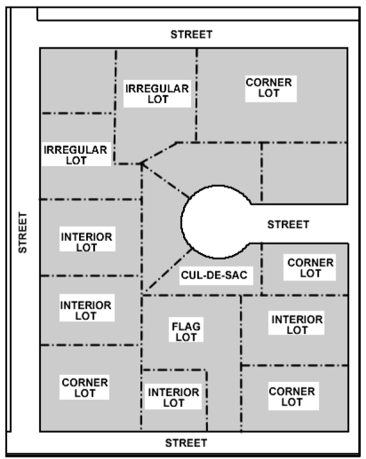
- Lot, corner, means a lot abutting on two intersecting or intercepting streets, where the interior angle of intersection or interception does not exceed 135 degrees.
- Lot, interior, means a lot other than a corner lot.
- Lot, irregular, means a building lot whose rear property line is not generally parallel to the front property line, such as a pie-shaped lot on a cul-de-sac, or where the side property lines are not parallel to each other.
- Lounge. See Alcoholic beverage establishments.
- Lowest floor means the lowest floor of the lowest enclosed area (including basement). An unfinished or flood-resistant enclosure, usable solely for parking of vehicles, building access or storage, in an area other than a basement area, is not considered a building's lowest floor, provided that such enclosure is not built so as to render the structure in violation of the applicable non-elevation design requirements of this title.
(LDC 2008, § 15A-37-13; Ord. No. 13-13, 6-5-2013; Ord. No. 14-29, 9-28-2014; Ord. No. 18-28, § 1(15A-38), 9-20-2018)
Amended by Ord. 21-08 § 1(Exh. A) on 3/23/2021
Amended by Ord. 22-16 § 1(Exh. A) on 12/6/2022
Amended by Ord. 25-25 on 11/11/2025
21-37-14 "M" Definitions
- Maintenance facility means any building, premises, or land upon which a private business, service, industry or unit of government (other than police or fire agencies):
- Services or maintains motor vehicles; or
- Stores vehicles or equipment used for servicing off-site facilities or infrastructure.
- Major sports venue means a stadium or similar building, with at least 20,000 fixed seats, in which a professional sporting competition, concert, or other similar event is held.
- Manufactured home means a transportable factory-built housing unit constructed on are after June 15, 1976, according to the HUD Code, in one or more sections, which:
- In the traveling mode, is eight feet or more in width or 40 body feet or more in length, or, when erected on-site, is 400 or more square feet; and
- Is built on a permanent chassis and designed to be used as a dwelling with or without a permanent foundation when connected to the required utilities, and includes the plumbing, heating, air conditioning, and electrical systems.
- Manufactured/mobile home park means a residential development in which owners of mobile homes may rent, lease, or own a lot on which to place their home. Such developments may provide all of the amenities and improvements typical of planned unit developments.
- Market study means a study or related aggregate data review to establish the number of potential users of a commercial facility or the size of a market area.
- Marquee means a permanent roofed structure over the entrance to a building often bearing an advertising sign. This structure is designed to meet all provisions of the current International Building Code and other specifications as outlined in this title. Where specifications in this title and the International Building Code as adopted by Sandy City differ, the more restrictive shall apply.
- Mausoleum. See Cemetery, columbarium, mausoleum.
- Medical and health care office means a building used exclusively by physicians, dentists, and other health care personnel for the treatment and examination of patients on an outpatient basis.
- Micro-education entity. See School, micro-education entity.
- Micro wireless facility means a type of small wireless facility that, not including any antenna, is no larger in dimension than 24 inches in length, 15 inches in width, and 12 inches in height, and on which any exterior antenna is no longer than 11 inches; and that only provides Wi-Fi service.
- Mixed use, commercial and residential development. See Mixed use development.
- Mixed use development means a project that that combines residential and one or more other nonresidential land uses (commercial retail sales and services, office (professional and medical), institutional, or civic uses) that must be included within a building or set of buildings, which includes all of the following:
- Part of an overall master planned development or area; and
- Mutually supportive uses, arranged in vertical or horizontal massing of physical and functional components; and
- Incorporates a public amenity within the overall master plan (i.e. plaza, gathering space, etc.); and
- Promotes walkability through pedestrian connections with limited interruptions; and
- Layout and mix of uses reduces vehicular traffic and parking impacts; and
- Contains sufficient size and physical improvement to protect benefit to the surrounding areas, the general community, and ensures a harmonious integration into the neighborhood.
- Mixed use, residential and office use. See Mixed use development.
- Mobile food business means a business that prepares and serves food or beverages from a self-contained unit that is a motorized vehicle, nonmotorized cart, portable stand, or a trailer. The term "mobile food business" shall not include mobile ice cream vendors that only stops to sell pre-packaged ice cream treats when traveling along the public right-of-way through residential area.
- Mobile food cart means a portable stand or nonmotorized cart that is used to prepare and serve food or beverages.
- Mobile food court means where three or more mobile food businesses congregate to offer food or beverages for sale to the public. Any cluster of more than one mobile food business located on the same parcel of land shall be considered a mobile food court.
- Mobile home means a transportable factory-built housing unit built prior to June 15, 1976, in accordance with a State Mobile Home Code which existed prior to the HUD Code.
- Model home means a dwelling temporarily used as a sales office for a residential development under construction; said home being used for on-site sales and not for general real estate business.
- Modular unit means a structure built from sections which are manufactured in accordance with the construction standards adopted in the Utah Uniform Building Standards Act and transported to a building site, the purpose of which is for human habitation, occupancy, or use.
- Monument, survey, means a permanent survey marker established by the Salt Lake County Surveyor and/or a survey marker set in accordance with the City Engineer's specifications and referenced to Salt Lake County survey monuments.
- Mortuary/funeral home means an establishment engaged in undertaking services as preparing the dead for burial, and arranging and managing funerals. The facility may include such uses as are associated with, clearly accessory to and supply services to the principal use: a chapel for the conduct of funeral services and spaces for informal gatherings and/or display of funeral equipment, and may also include a retail floral shop, live plant nursery, a facility for the manufacture of cement burial vaults and the sale and engraving of grave markers.
- Motel means a building or series of buildings in which lodging is offered for compensation, and which is distinguished from a hotel primarily by reason of typically providing direct independent access to, and adjoining parking for, each rental unit.
(LDC 2008, § 15A-37-14; Ord. No. 09-03, 2-6-2009; Ord. No. 13-13, 6-5-2013; Ord. No. 15-34, 11-16-2015; Ord. No. 18-28, § 1(15A-38), 9-20-2018)
Amended by Ord. 21-08 § 1(Exh. A) on 3/23/2021
Amended by Ord. 22-13 § 1(Exh. A) on 11/15/2022
Amended by Ord. 24-03 § 1(Exh. A) on 2/27/2024
Amended by Ord. 24-14 § 1(Exh. A) on 7/30/2024
21-37-15 "N" Definitions
- Natural access control means physical design which guides the mobility of people and which decreases crime opportunity and increases perception of risk to potential offenders.
- Natural state means the condition of land which has not been graded, disturbed, or built upon.
- Natural surveillance means physical design which keeps potential intruders under the perception of continual watch, using "eyes on the street" and visual permeability in architecture, lighting, and landscaping.
- Natural vegetation includes, but shall not be limited to, orchards, trees, shrubs, lawn, grass and perennial growth.
- Natural waterways means those areas, varying in width along streams, creeks, springs, gullies, or washes which are natural drainage channels as determined and identified by the City.
- Net residential acreage means all land within a development site devoted exclusively to a residential use.
- New construction means structures for which the start of construction commenced on or after the effective date of the original ordinance from which this title is derived, and includes any subsequent improvements to such structures.
- Nonconforming building means a building or structure or portion thereof lawfully existing when the relevant regulation first became effective, which was designed, erected, or structurally altered that does not conform to the regulations of the district in which it is located, or a building or structure that does not conform to all the height and area regulations.
- Nonconforming lot means a lot whose width, area, or other dimension does not conform to the regulations when this title became effective. However, proposed structures for such lots shall meet the required setbacks under this title unless otherwise stipulated by the Board of Adjustment.
- Nonconforming use means a use which lawfully occupied a building or land at the time this title became effective and which does not now conform with the use regulations.
- Non-depository institution means a financial business, other than a depository institution such as a bank, credit union, mortgage lender or savings and loan association that is registered by the State of Utah pursuant to the Check Cashing Registration Act or the Title Lending Registration Act. Specifically included are the following:
- Check cashing business means a person or business that for compensation engages in cashing a check for consideration or extending a deferred deposit loan. The term "check cashing business" does not include depository institutions, as defined by the State of Utah. The term "check cashing business" also does not include a retail seller engaged primarily in the business of selling goods or services to retail buyers that cash checks or issue money orders for a minimum flat fee not exceeding one percent of the check or $1.00 as a service fee that is incidental to its main purpose or business.
- Deferred deposit lender means a business that conducts transactions where a person presents to a check casher a check written on that person's account or provides written or electronic authorization to a check casher to effect a debit from that person's account using an electronic payment and the check casher provides the maker an amount of money that is equal to the face value of the check or the amount of the debit less any fee or interest charged for the transaction and agrees not to cash the check or process the debit until a specific date.
- Payday loan business means an establishment providing loans to individuals in exchange for personal checks or assignment of wages as collateral.
- Title loan business means an establishment providing short-term loans to individuals in exchange for the title of a motor vehicle, motor home, or motorboat as collateral.
- Other. Also included are any other business that offers deferred deposit loans, title loans, check cashing services and loans for payment of a percentage fee exceeding one percent of the check or $1.00 as a service fee that is incidental to its main purpose or business.
- Nondiscriminatory means treating similarly situated entities the same absent a reasonable, and competitively neutral basis, for different treatment.
- Nursing care facility. See Health care facilities.
- Nursing home means an intermediate care/nursing facility or a skilled nursing facility, licensed by the State of Utah, for the care of individuals who, due to illness, advanced age, disability, or impairment, require assistance and/or supervision on a 24-hour per day basis. A nursing home, convalescent home or rest home does not include:
- A residential facility for persons with a disability;
- A residential facility for elderly persons;
- An adult day care facility; or
- Adult day care provided in conjunction with a residential facility for elderly persons or a residential facility for persons with a disability.
(LDC 2008, § 15A-37-15; Ord. No. 18-28, § 1(15A-38), 9-20-2018)
Amended by Ord. 21-08 § 1(Exh. A) on 3/23/2021
21-37-16 "O" Definitions
- Observation and assessment program. See Correctional facility.
- Office. See Business or financial services.
- Official Street Map means a map drawn by City authorities that shows actual and proposed rights-of-way, centerline alignments, and setbacks for highways and other transportation facilities; provides a basis for restricting development in designated rights-of-way or between designated setbacks to allow the government authorities time to purchase or otherwise reserve the land; and has been adopted as an element of the General Plan.
- Off-site improvements means any improvement that may be required which are not located within the area of the property to be subdivided or developed.
- Open space means land areas that are not occupied by buildings, structures, parking areas, streets or alleys. Open space may be devoted to landscaping, preservation of natural features, forests, conservation areas including, but not limited to, wilderness areas, watershed areas, wildlife refuges, wetlands, and recreational leisure areas and facilities.
- Operating permit (Chapter 21-17) means a permit to operate a facility handling regulated substances under this title.
- Ordinary repair means the painting or replacement of existing building materials on or within a structure, provided that such replacement consists of materials which do not alter the integral structure and design of the building. Ordinary repairs do not include changing the building's exterior space/dimension.
- Outdoor rooms means physical design of buildings, parking lots, open space areas, etc., which breaks up expansive areas and creates the feeling of ownership and safety.
- Outpatient treatment. See Human services programs or facilities.
- Overlay zone means an area where certain additional requirements are superimposed upon a base zoning district and where the requirements of the base or underlying district may or may not be altered.
- Oversized vehicle means a motor vehicle, trailer, or boat which by itself or together with other structures or vehicles attached to it exceeds 24 feet in length, or eight feet in width, or eight feet in height, or is greater than one ton, exclusive of appurtenances such as antennas, air conditioners, luggage racks, and mirrors.
(LDC 2008, § 15A-37-16; Ord. No. 13-13, 6-5-2013)
Amended by Ord. 21-08 § 1(Exh. A) on 3/23/2021
21-37-17 "P" Definitions
- Parcel means any real property that is not a lot.
- Park and ride facilities means parking lots or structures located along public transit routes designed to encourage transfer from private vehicles to mass transit or to encourage carpooling for purposes of commuting, or for access to recreation areas. Said facilities shall be appropriately developed and landscaped to City standards, with special attention paid to buffers adjacent to residential properties. Facilities approved as part of existing shopping centers shall have authorization from property owners and shall not adversely impact existing parking ratios.
- Parking area, restricted, means the area within the front yard of a lot within which the parking of recreational and commercial vehicles is regulated.
- Parking lot means an open area, other than a street, used for the parking of vehicles.
- Parking space, automobile, means space within a building or private or public parking area, exclusive of driveways, ramps, columns, office and work areas, for the parking of an automobile.
- Parking structure/terrace means parking spaces and adjacent access drives, aisles, and ramps that are located in a structure with two or more levels.
- Park, private, means a park, playground, swimming pool, golf course or athletic field, conservation areas including, but not limited to, wilderness areas, watershed areas, wildlife refuges, wetlands, available for recreational, educational, cultural, or aesthetic use, which is under the control, operation, or management of a private entity not associated with any unit of a government.
- Parking, underground, means below-grade parking facilities which typically include ventilation systems where motor vehicles are parked, or allowed to remain, and where the owner or person parking the vehicle may be charged a fee.
- Park, public, means a park, playground, swimming pool, golf course or athletic field, conservation areas including, but not limited to, wilderness areas, watershed areas, wildlife refuges, wetlands, available for recreational, educational, cultural, or aesthetic use, which is under the control, operation, or management of the State, a State agency, the County, or Sandy City.
- Parkstrip means the landscape area within a public right-of-way located between the back of the street curb and the sidewalk, or, in the absence of a sidewalk, located between the back of the street curb and the property line. The term "parkstrip" shall also include tree-well sites located within the public right-of-way.
- Pawnbroker means a person whose business engages in the following activities:
- Loans money on one or more deposits of personal property;
- Deals in the purchase, exchange, or possession of personal property on condition of selling the same property back again to the pledger or depositor;
- Loans or advances money on personal property by taking chattel mortgage security on the property and takes or receives the personal property into his possession, and who sells the unredeemed pledges;
- Deals in the purchase, exchange or sale of used or secondhand merchandise or personal property; or
- Engages in a licensed business enterprise as a pawnshop.
- Pawnshop means the physical location or premises where a pawnbroker conducts business.
- Pedestrian mew means a public or privately owned pedestrian oriented corridor that serves a similar purpose of a street that provides frontage and public access to properties, but restricts vehicular use. These corridors are designed at a pedestrian scale consisting of an inviting walkway, landscape, and other pedestrian amenities and furnishings lined with building on either side (also known as a block break).
- Pedestrian street means a street designed for the use of pedestrians, restricting vehicular use to service and emergency vehicles, particularly in areas where retail commercial is on both sides of the street.
- Permanent make-up means the application of pigments to or under the skin of a human being for the purpose of permanently changing the color or other appearance of the skin. The term "permanent make-up" includes, but is not limited to, permanent eyeliner, eye shadow, lip color, or areola color. This type of land use is typically an ancillary use to a beauty salon. This does not include the term "tattoo."
- Permittee means the person who has received a permit to operate or maintain a SWF under this chapter, or that person's authorized representative.
- Person means an individual, firm, partnership, corporation, association, joint venture, governmental entity or other legal entity, and shall include the plural as well as singular.
- Personal wireless services means commercial mobile services, unlicensed wireless services, and common carrier wireless exchange access services as defined at 47 USC 332 (c)(7)(C), or as modified from time to time in the United States Code.
- Petroleum product includes fuels (gasoline, diesel fuel, kerosene, and mixtures of these products), lubricating oils, motor oils (new and used), hydraulic fluids, and other similar petroleum-based products.
- Planned commercial center means an area of minimum contiguous size, as specified by ordinance, to be planned, developed, operated, and maintained as a single entity containing one or more structures to accommodate commercial areas and other uses incidental to the predominant uses. Planned commercial centers are designed as an integrated complex of leasable or individually owned spaces in a single building, group of buildings, or parcels.
- Planned shopping center means a group of architecturally unified commercial establishments built on a site that is planned, developed, owned and managed as an operating unit related in its location, size and type of shops to the trade area that it serves. The unit provides on-site parking in definite relationship to the uses and total size of the stores.
- Planned unit development (PUD) means a residential or commercial development guided by a total design plan in which one or more of the zoning or subdivision regulations, other than use regulations, may be waived or varied to allow flexibility and creativity in site design, building design, and location, in accordance with general guidelines as specified in this title. Units within a PUD may be sold or offered for rent.
- Plant nursery means a facility used for the growing and the wholesale or retail sale of trees, shrubs, flowers, ground covers, etc. Said use may also include sales of related products, including fertilizers, mulch, landscape decoration, etc.
- Playground means a facility designed for use by children, which may include, but not limited to, a slide, swing set, climbing bars, one or more basketball standards, hard surface for play, and tether ball. A playground does not include a golf course, full size athletic fields, tennis courts, volleyball court, swimming pool and other similar in size outdoor activities.
- Plot plan means a plat of a lot, drawn to scale, showing the actual measurements, the size and location of any existing buildings or buildings to be erected, the location of the lot in relation to abutting streets, and such other information as may be required.
- Pole agreement means an agreement by the owner of a pole in the ROW to place a SWF on the pole.
- Porch. See Balcony.
- Potential contaminant source (PCS) means any physical, chemical, biological, or radiological substance that enters the hydrological cycle through human action and may cause a deleterious effect on groundwater or surface water sources; it shall include, but is not limited to, hazardous waste, limiting nutrients, and sanitary sewage.
- Potential geologic hazard area means an area that is designated by a Utah Geological Survey map, County geologist map, or other relevant map or report as needing further study to determine the area's potential for geologic hazard; or has not been studied by the Geological Survey or a County geologist but presents the potential of geologic hazard because the area has characteristics similar to those of a designated geologic hazard area.
- Practitioner means a medical doctor (surgeon, general practice, orthopedic, mid-wife, nurse practitioner, etc.) or those who perform dental care (dentist, orthodontist, endodontist, etc.). A practitioner does not include nursing staff, receptionists, dental assistants, rehabilitation specialists and other similar support staff.
- Preliminary plat means a plat prepared in accordance with this title, showing the design of a proposed subdivision and the existing conditions in and around the subdivision.
- Preschool means an establishment for the instruction of children prior to entrance into kindergarten. The standards applicable to the operation of such a facility are dependent upon the zone in which it is located. If within a home, the preschool must comply with the provisions of the home occupation requirements. If within a commercial location, the preschool must comply with the requirements of the underlying zone.
- Primary recharge area means the areas depicted on the Drinking Water Source Protection Map on file in the Sandy City Public Works Department.
- Prison means a facility for incarceration of persons convicted of crimes, established and operated by the State of Utah or by private provider pursuant to the provisions of the Private Correctional Facilities Act, Utah Code Annotated, as amended.
- Private tree. See Tree, private.
- Professional office means professional or governmental office such as real estate, insurance, accounting, auditing, bookkeeping services, advertising agencies, architectural, engineering, planning, surveying services, attorneys, counseling services, court reporting services, detective agencies, educational, scientific, research organizations, employment, stenographic, secretarial, word processing services, government offices including agency and administrative office facilities, management, public relations, consulting services, photography, commercial art studios, or similar services. The term "professional office" does not include medical and health care offices.
- Protection zone means the delineation zones of the Drinking Water Source Protection Zone Map.
- Protective housing facility means a facility operated, licensed or contracted by a governmental entity, or operated by a charitable, nonprofit organization, where, for no compensation, temporary, protective housing is provided to:
- Abused or neglected children awaiting placement in foster care;
- Pregnant or parenting teens;
- Victims of sexual abuse; or
- Victims of domestic abuse.
- Public improvement means any roadway improvements that are proposed to be maintained by Sandy City, such as curb and gutter, drive approaches, waterways, sidewalks, trails, bike paths, raised medians, asphalt paving, road base, geotextile fabric, painting and striping, and may also include the following:
- Survey monuments.
- Survey rivets.
- Any water system facilities that are proposed to be maintained by Sandy City, such as water main lines, service laterals, meter boxes, fire hydrants, pressure reducing valve stations, and other appurtenances.
- Irrigation and flood control systems.
- Street lights.
- Landscaping and sprinkling systems.
- Streetscape (trees, benches, etc.).
- Fencing and walls.
- Retaining walls.
- Any other required improvements determined by the City Engineer or Community Development Director.
- Public landscaping improvement means landscaping that an applicant is required to install to comply with published installation and inspection specifications for public improvements that:
- Will be dedicated to and maintained by the municipality; or
- Are associated with and proximate to trail improvements that connect to planned or existing public infrastructure.
- Public plaza means a publicly-owned area that is in proximity to and associated with a publicly accessible structure or event facility. It is not identified and operated by the City as a public park and does not have a playground. Plazas are areas that function as pedestrian site arrival points and are available to the public as a place to display art, passive recreation, relaxation, walking, seating, socializing, reading, and eating.
- Public/private park means an open space, playground, swimming pool, golf course, or athletic field available for recreational, educational, cultural, aesthetic use, or natural areas, including, but not limited to, conservation areas, wilderness areas, watershed areas, wildlife refuges, and wetlands which are under the control, operation, or management of a government agency or private entity.
- Public service means uses which may be housed in separate buildings or which may occupy a space within a building that are operated by a unit of government to serve public needs, such as a library, museum, police (with or without jail), fire service, ambulance, judicial court or government office, but not including public utility stations or maintenance facilities.
- Public utility station means a structure or facility used by a public or quasi-public utility agency to store, distribute, generate electricity, gas, telecommunications, and related equipment, or to drill capture, pump, and to otherwise engage in all aspects of treating and distributing water or effluent. The term "public utility station" shall not include storage or treatment of solid waste, or hazardous waste.
- Public water system (PWS) means a water system that serves the public.
(LDC 2008, § 15A-37-17; Ord. No. 10-31, 8-8-2010; Ord. No. 13-13, 6-5-2013; Ord. No. 16-35, 10-20-2016; Ord. No. 18-28, § 1(15A-38), 9-20-2018)
Amended by Ord. 19-23 § 1(Exh. A) on 10/8/2019
Amended by Ord. 21-08 § 1(Exh. A) on 3/23/2021
Amended by Ord. 23-08 § 1(Exh. A) on 7/18/2023
Amended by Ord. 25-25 on 11/11/2025
Amended by Ord. 26-50 on 7/2/2026
21-37-18 "Q" Definitions
- Quad homes means residential use structures which comprise four dwelling units, but are designed to architecturally appear as large single-family homes. Design elements include, but are not limited to, back loaded garages, porches, entrances and sidewalks oriented to the street.
- Quasi-public means essentially a public use, although under private ownership or control.
(LDC 2008, § 15A-37-18; )
Amended by Ord. 21-08 § 1(Exh. A) on 3/23/2021
21-37-19 "R" Definitions
- Rear-loaded garage means a subservient parking structure designed for access from a private street, alley, or driveway that is either attached or detached, to the rear of the dwelling.
- Reasonable accommodation means a change in a rule, policy, practice, or service necessary to afford a person equal opportunity to use and enjoy a dwelling. As used in this definition of the term "reasonable accommodation":
- Equal opportunity means achieving equal results as between a person with a disability and a non-disabled person.
- Necessary means the applicant must show that, but for the accommodation, one or more persons with a disability likely will be denied an equal opportunity to enjoy housing of their choice.
- Reasonable means a requested accommodation will not undermine the legitimate purposes of existing zoning regulations notwithstanding the benefit that the accommodation would provide to a person with a disability.
- Reciprocal access means, where commercial uses share a property line, off-street parking lots servicing the properties are made accessible to each other.
- Recreational vehicle means a vehicular unit, other than a mobile home, primarily designed as a temporary dwelling for travel, recreational and vacation use, which is either self-propelled or is mounted on or pulled by another vehicle. In addition, boats, jet skis, snowmobiles, four-wheelers, etc., shall also be considered as recreational vehicles.
- Recreational vehicle park (travel trailer park) means any tract of land where the lots or spaces are rented to recreational vehicle owners or users for a period of time not to exceed 30 consecutive days, and where related services are provided.
- Recreation center means an establishment providing a variety of recreation activities, including activities that are enclosed within a structure along with outdoor recreational activities on the same premises. Activities may include those identified with indoor recreation, passive or active exercises and related activities performed for the purpose of physical fitness, improved circulation or flexibility, and/or weight control, as well as such outdoor activities as miniature golf, amusement rides, slides and swimming pools.
- Recreation, fitness center, means an establishment providing completely enclosed fitness-related activities. Accessory uses may include the preparation and serving of food and/or the sale of equipment related to the enclosed use. This definition may include such uses as swimming pool, aerobics, weight training, diet counseling, indoor running track, etc.
- Recreation, indoor, means an establishment providing completely enclosed recreation activities. Accessory uses may include the preparation and serving of food and/or the sale of equipment related to the enclosed uses. Included in this definition shall be bowling, roller or ice skating, billiards, swimming pools and related amusements.
- Recreation, outdoor, means an area free of buildings except for restrooms, dressing rooms, equipment storage, maintenance buildings, and open air pavilions, and used primarily for recreation activities not involving motor vehicles, animals, or overnight use. This definition shall include semi-private swimming pools.
- Recycling materials collection/drop-off facility means a facility that collects recyclable materials for transport to a separate location for processing and recovery. Recyclable materials include glass, plastic, paper, cloth and other materials collected for recovery and re-use. This definition does not include two or fewer newspaper recycling bins and other similar recyclable material bins that are not staffed by on-site employees, but are self-service.
- Regrading and re-paving means changing of the established grades of an existing parking lot or paved area which significantly alters the existing grade that was constructed according to an approved site plan.
- Regulated substances (Drinking Water Source Protections Ordinance) means substances (including degradation and interaction products) which because of quantity, concentration, or physical, chemical (including ignitability, corrosivity, reactiveness and toxicity), infectious characteristics, radiomutagenicity, carcinogenicity, teratogenicity, bioaccumulative effect, persistence (non-degradability) in nature, or any other characteristics relevant to a particular material that may cause significant harm to human health or and environment (including surface water and groundwater, plants, and animals).
- Rehabilitation/treatment facility means a facility licensed by or contracted by the State of Utah to provide temporary occupancy and supervision of adults or juveniles in order to provide rehabilitation, treatment, or counseling services. Without limitation, such services may include rehabilitation, treatment, counseling, or assessment and evaluation services related to delinquent behavior, alcohol and drug abuse, sex offenders, sexual abuse, or mental health. Associated education services may also be provided to juvenile occupants. A rehabilitation/treatment facility does not include a residential facility for persons with a disability.
- Related accessory equipment means the transmission equipment customarily used with, and incidental to, wireless communication facilities antennas, including by way of example, coaxial or fiber-optic cable, regular and backup power supply and remote radio units.
- Religious or cultural activity means buildings owned or maintained by organized religious organizations and nonprofit associations for social, civic or philanthropic purposes, or the purpose for which persons regularly assemble for worship. Uses also included are the public nonprofit display of art, historic or cultural artifacts or other inanimate exhibits, a building used as a lending library or reading room, seminaries (associated with schools), monasteries and convents. This definition shall not include temporary tents or structures.
- Renovation means interior or exterior remodeling or enlargement of a structure, other than ordinary repair.
- Renter means a single person or group of people who provide compensation, in any form, in exchange for occupancy of a dwelling unit, or portion thereof, under one lease or rental agreement.
- Research and development facility means a building or group of buildings in which are located facilities for scientific research, investigation, testing, experimentation, assembly, or repair; but not facilities for the manufacture or sale of products except as incidental to the main purpose of the laboratory. This also includes facilities for scientific laboratory research in technology intensive fields. Examples would include biotechnology, pharmaceuticals, genetics, plastics, polymers, resins, coatings, fibers, fabrics, films, heat transfer, and radiation research facilities or similar uses.
- Research park means a large tract of land that has been planned, developed, and operated as an integrated facility for a number of separate buildings and supporting ancillary uses with special attention to circulation, parking, utility needs, aesthetics, and compatibility.
- Residence means a dwelling unit or other place where an individual or family is actually living at a given point in time and not a place of temporary sojourn or transient visit.
- Residential activity means any building or structure or portion thereof that is designed for or used for residential purposes and any activity involving the use or occupancy of a lot for residential purposes. Residential activity shall include those customary and accessory residential activities associated with the principal permitted use of a lot for residential purposes as set out in this title.
- Residential density means the average number of dwelling units on one acre of land in a given area.
- Residential density, gross, means the density obtained by dividing all land in a defined area used for residences, streets, open space, local schools, local parks, and local shopping facilities, into the total number of dwelling units in said area.
- Residential density, net, means the density determined by dividing the total number of dwelling units in a defined area by the total acreage of all parcels of land within the area that are used exclusively for residential and accessory purposes.
- Residential facility for elderly persons means a dwelling unit owned by a resident thereof or an immediate family member of a resident, or for which the title has been placed in a trust for a resident; and is voluntarily occupied on a 24 hour per day basis by eight or fewer elderly persons in a family-type arrangement. A residential facility for elderly persons does not include any facility:
- Operated as a business, provided that such facility shall not be considered to be operated as a business solely because a fee is charged for food or for actual and necessary costs of operation and maintenance of the facility;
- Where persons are placed:
- For alcoholism or drug abuse treatment;
- As part of, or in lieu of, confinement, rehabilitation, or treatment in a correctional facility;
- Which is a health care facility as defined by the Utah Code, as amended; or
- Which is a residential facility for persons with a disability.
- Residential facility for persons with a disability means a dwelling unit or other place in which more than one person with a disability resides and, if required by state law, is licensed or certified by:
- The Utah Department of Human Services under U.C.A. 1953, title 62A, ch. 2 (U.C.A. § 62A-2-101 et seq.); or
- The Department of Health under the Health Care Facility Licensing and Inspection Act (U.C.A. 1953, § 26-21-1 et seq.).
- Residential short-term rental (STR) means any single-family or individual multifamily dwelling or portion thereof that is available for use for temporary sojourn or transient visit of guests, for direct or indirect remuneration, for a period of less than 30 consecutive days.
- Residential support. See Human services programs or facilities.
- Residential treatment. See Human services programs or facilities.
- Resource family home. See Human services programs or facilities.
- Restaurant means an eating establishment in which food is prepared for either on- or off-premises consumption, with service being provided in a traditional sit-down restaurant with indoor or outdoor seating style or served from a counter. The term "restaurant" also includes specialty food stores such as ice cream parlors or delicatessens, but does not include drive-in or drive-up window service.
- Restaurant, drive-in/drive-up window, means an eating establishment in which food is prepared and served; may include facilities for indoor seating, take-out, drive-up window service, or outside service provided by employees to customers in vehicles.
- Rest home. See Nursing home.
- Retail sales and services means a commercial enterprise that provides goods and/or services directly to the consumer where such goods are available for immediate purchase and removal from the premises by the purchaser. The term "retail sales and services" includes retail establishments engaged in selling goods of merchandise to the general public as well as to other retailers, contractors, or businesses, and rendering services incidental to the sale of such goods. Retail establishments could also involve a high volume of sales of related and/or unrelated products in a warehouse setting and may include membership warehouse clubs (big box retail).
- Retaining wall means a structure or combination of natural elements constructed to hold back or support the adjacent slope, earthen berm or otherwise create a differential in heights between two or more land masses.
- Right-of-way means the portion of roadway dedicated to the purpose of conveying vehicle and pedestrian traffic, and other public use. The right-of-way includes, but is not limited to, all areas of pavement and sidewalk between opposing property lines.
(LDC 2008, § 15A-37-19; Ord. No. 13-13, 6-5-2013; Ord. No. 18-21, § 1(15A-37-02), 8-30-2018; Ord. No. 18-28, § 1(15A-38), 9-20-2018)
Amended by Ord. 21-08 § 1(Exh. A) on 3/23/2021
21-37-20 "S" Definitions
- SARA Title III means the Superfund Amendment and Reauthorization Act section found in 40 CFR 300—302, pertaining to emergency response and right-to-know.
- Satellite dish (ground/roof mount) means an accessory structure which at its widest dimension is in excess of 36 inches; an earth-based station, the purpose of which is to receive signals from orbiting satellites and other extraterrestrial sources, together with other equipment related to such purposes.
- School, charter, means a public school established by a contract with a school district governing board, the State Board Of Education, or the State Board for Charter Schools pursuant to state law.
- School, commercial, means a school established to provide for the teaching of vocational, industrial, clerical, managerial, artistic skills, or similar skills. This definition applies to schools that are owned and operated privately for profit and that do not offer a complete educational curriculum (e.g., beauty school, modeling school).
- School, commercial (low-impact), means those commercial schools which are artistic in nature and which have a relatively low impact on surrounding uses because they are conducted indoors; have a limited number of students; and do not require a large number of parking spaces because of the age of the students. Such schools generally include smaller scale dance schools, music lessons, martial arts schools, gymnastics schools and similar uses.
- School, home-based microschool, means an individual or association of individuals that registers as a business entity in accordance with state and local laws; and provides kindergarten through grade 12 education services for compensation, to 16 or fewer students from an individual's residential dwelling, accessory dwelling unit, or residential property. A home-based microschool does not include a daycare.
- School, micro-education entity, means a person or association of persons that registers as a business entity in accordance with state and local laws; and provides kindergarten through grade 12 education services for compensation to 100 students or fewer. A micro-education entity does not include a daycare, home-based microschool, private school, commercial school, or a school within the public education system.
- School, private or quasi-public, means a school operated by a private or quasi-public organization, or individual, which has a curriculum similar to that provided in any public school in the State of Utah, except that such curriculum may include religious instruction. A private school may be a profit-making or nonprofit organization. A private school may also include laboratory and shop instruction with the use of demonstration vehicles, products or models incidental to said instruction; but shall not include the repair, maintenance and manufacture of vehicles, goods or merchandise, and shall not provide direct services, other than instruction to the general public. (Does not include commercial schools.)
- Schools, public, means an educational facility operated by a school district or other public agency of the State of Utah.
- Sculpture park means a facility for the display for viewing and/or sale of sculptures. Facility may include outdoor display. Such facility typically includes a large expanse of landscaped green-space containing an array of gardens, fountains, and sculptural artworks.
- Search light means a temporary advertising device which is a stationary or revolving light which flashes or projects illumination, single-color or multi-colored, in any manner which is intended to attract or divert attention.
- Secondary containment (Chapter 21-17) means any system that is used to provide release detection and release prevention, such as trays under containers, floor curbing or other systems designed to hold materials or liquids that may discharge from containers holding regulated substances. Examples include a double-walled tank, a double-walled integral piping system, or a single-walled tank or integral piping system that is protected by an enclosed concrete vault, liner, or an impervious containment area.
- Secondhand merchandise dealer.
- The term "secondhand merchandise dealer" means an owner or operator of a business that:
- Deals in the purchase, exchange, or sale of used or secondhand merchandise or personal property; and
- Does not function as a pawnbroker.
- The term "secondhand merchandise dealer" does not include:
- The owner or operator of an antique shop;
- Any class of businesses exempt by administrative rule under U.C.A. 1953, § 13-32a-112.5, or its successor;
- Any person or entity who operates auction houses, flea markets, or vehicle, vessel, and outboard motor dealers as defined in U.C.A. 1953, § 41-1a-102, or its successor;
- The sale of secondhand goods at events commonly known as garage sales, yard sales, or estate sales;
- The sale or receipt of secondhand books, magazines, or post cards;
- The sale or receipt of used merchandise donated to recognized nonprofit, religious, or charitable organizations or any school-sponsored association, and for which no compensation is paid;
- The sale or receipt of secondhand clothing and shoes;
- Any person offering his own personal property for sale, purchase, consignment, or trade via the Internet;
- Any person or entity offering the personal property of others for sale, purchase, consignment, or trade via the Internet, when that person or entity does not have, and is not required to have, a local business or occupational license or other authorization for this activity;
- Any owner or operator of a retail business that receives used merchandise as a trade-in for similar new merchandise;
- An owner or operator of a business that contracts with other persons or entities to offer those persons' secondhand goods for sale, purchase, consignment, or trade via the Internet;
- Any dealer as defined in U.C.A. 1953, § 76-10-901, or its successor, which concerns scrap metal and secondary metals; or
- The purchase of items in bulk that are:
- Sold at wholesale in bulk packaging;
- Sold by a person licensed to conduct business in Utah; and
- Regularly sold in bulk quantities as a recognized form of sale.
- The term "secondhand merchandise dealer" means an owner or operator of a business that:
- Section 6409(a) means Section 6409(a) of the Middle Class Tax Relief and Job Creation Act of 2012, Pub. L. No. 112-96, 126 Stat. 156, codified as 47 USC 1455(a), as may be amended.
- Section 6409(a) modification means any eligible facilities request that does not cause a substantial change and is submitted for approval pursuant to Section 6409(a) and the FCC's regulations at 47 CFR 1.40001 and following sections.
- Secure correctional facility. See Correctional facility.
- Secure detention. See Correctional facility.
- Secure facility. See Correctional facility.
- Secure treatment. See Human services programs or facilities.
- Sensitive area means an area of land which contains environmental or potential geological hazards, and which, if altered, may cause damage to the environment.
- Septic holding tank (Chapter 21-17) means a watertight receptacle, used to contain septic waste. The contents of which are extilated and disposed of at a waste disposal facility.
- Septic tank system (Chapter 21-17) means a generally watertight receptacle connected to a drain field that allows liquid from the tank to enter the soil. The system is constructed to promote separation of solid and liquid components of domestic wastewater, to provide decomposition of organic matter, to store solids, and to allow clarified liquid to discharge for further treatment and disposal in a soil absorption system.
- Setback. The setback for all structures is the shortest distance between the property line and the building or any portion thereof excluding the following:
- Window awnings and unenclosed front entry and steps not protruding more than five feet into the setback area.
- Uncovered patios.
- Decks and balconies not greater than two feet in height from grade, and not less than four feet from the rear property line and eight feet from the side property line.
- Decks and balconies not greater than eight feet above grade and not less than ten feet from the rear lot line.
- Chimney and roof overhangs protruding no greater than two feet into the setback area.
- Uncovered above-ground landing (platform) that is with or without stairs or an uncovered ground level walkout porch, that is within the rear setback and meets all the following standards:
- Landing or porch area is no more than 32 square feet in size;
- Stairs from a landing to the finished grade shall be allowed provided that the stairs extend no closer to the rear property line than the extent of the landing;
- Connected to the rear of a residential dwellings; and
- Used for ingress to and egress from the rear of a residential dwelling.
- Window wells within the rear setback that allow for emergency ingress to and egress from the rear of a residential dwelling through a window to a basement that is fully or partially below ground.
- Sexually oriented business means adult businesses, nude entertainment businesses, semi-nude dancing bars, outcall services, and nude and semi-nude dancing agencies as defined in Chapter 16-2.
- Shelter. See Correctional facility.
- Sheltered workshop means a nonresidential facility providing supervised educational or vocational training facility for persons with a disability.
- Sight visibility triangle means the triangular area formed by a diagonal line connecting two points located on intersecting street right-of-way lines (or a right-of-way line and the high back of curb or edge of a driveway).
- Sign means every message, announcement, declaration, demonstration, display, illustration, insignia, surface, or space erected or maintained in view of the observer thereof for identification, advertisement, or promotion of the interests of any person, entity, product, or service. This definition shall include all flags of any type. This definition shall also include the sign structure, supports, lighting system, and any attachments, ornaments or other features used to draw the attention of observers.
- Sign, abandoned, means a sign which no longer correctly directs or influences any person, advertises a bona fide business, lessor, owner, product or activity conducted or available on the premises where such sign is displayed.
- Sign, advertising, means a sign which attracts or directs attention to a use, product, commodity, or service either related or not related to the premises on which the sign is located.
- Sign, advertising bench, means a bench for public use and convenience which is painted or otherwise covered with advertisement.
- Sign, advertising statuary, means a stature or other three dimensional structure in the form of an object that identifies, advertises, or otherwise directs attention to a product or business.
- Sign, A-frame, means any sign, structure, or configuration composed of one or two sign faces mounted or attached on the top, back-to-back in such a manner as to form a basically triangular vertical cross-section.
- Sign, animated, means a sign which involves motion or rotation of any part by mechanical or artificial means or displays flashing or intermittent lights.
- Sign area means the portion of a sign that is used for display purposes, excluding the minimum frame and supports. In computing sign area, only one side of a back-to-back or double face sign covering the same object shall be computed when the signs are parallel or diverge from a common edge by an angle of not more than 45 degrees.
- Sign, awning, means an awning having copy or logo, or which is back-lit, externally illuminated, or nonilluminated.
- Sign, banner, means a flag or banner constructed of cloth, canvas or light fabric that is hung from a light pole.
- Sign, blade, means signs projecting perpendicular from the wall having a certain distance from the wall and a certain clearance above the ground.
- Sign, blade banner, means a vertical banner supported by a durable pole.
- Sign, business, means a sign which identifies a business or use conducted, product or commodity sold, or service performed upon the premises on which it is located.
- Sign, canopy, means any sign attached to the underside or constructed upon a canopy.
- Sign, changeable copy, means a sign on which the copy is changed manually or electrically, such as a message center or reader boards with changeable letters or changeable pictorial panels, and electronically controlled time and temperature signs. The term "changeable copy sign" does not include poster panels or painted bulletins.
- Sign, community, means temporary, on- or off-premises signs, generally made of a woven material or durable synthetic materials primarily attached to or hung in a vertical fashion from light poles or on buildings, of solely a decorative, festive, and/or informative nature, announcing activities, promotions, events, seasonal or traditional themes having broad community interest and which are sponsored or supported by Sandy City or a local community based nonprofit organization.
- Sign, community event banner, means a temporary secured banner that is attached to a public light pole that the City has installed for a specific purpose and limited duration.
- Sign, exterior stadium, means signs designed to be viewed from the exterior of a major sports venue.
- Sign, field boards, means portable signs that are inside a major sports venue. Changeable copy is allowed.
- Sign, flag, commercial, means flag signs which are made of cloth and express messages which are primarily commercial in nature.
- Sign, flag, noncommercial, means flag signs which are made of cloth and express messages which are not primarily commercial. Such flags may include, but not be limited to, flags of governmental entities, flags identifying the person, institution, organization or corporation occupying a property, or solid color, patterned or artistic designs.
- Sign, flagpole, illuminated, means flagpoles which are internally illuminated or have lighting attached to the pole for purposes of drawing attention to a business location. This shall not include poles which have lighting attached to or directed towards a pole for purposes of illuminating the flag.
- Sign, flashing, means a sign or parts thereof which is intermittently on and off or which revolves in such a manner to create the illusion of being on and off, with the exclusion of time and temperature signs.
- Sign, flat, means a sign erected parallel to and attached to the outside wall of a building and extending out not more than 18 inches from such wall with messages or copy on the face side only.
- Sign, floodlighted, means a sign made legible in the absence of daylight by devices which reflect or project light upon it.
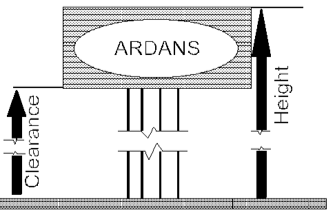
- Sign, freestanding (orpylon sign), means a sign that is mounted on a support structure so that the bottom edge of the sign is six feet or more above grade.
- Sign, grandstand, means signs that are attached to fixed seats.
- Sign, guide and directional, means signs containing directional information about public places owned or operated by Federal, State, or local governments or their agencies; publicly- or privately-owned natural phenomena, historic, cultural, scientific, educational, and religious sites; and areas of natural beauty or naturally suited to outdoor recreation. Directional signs may also be erected for the purpose of facilitating or controlling the efficient or safe movement of pedestrians or vehicles on or into private property, and shall be located on the properties to which they pertain.
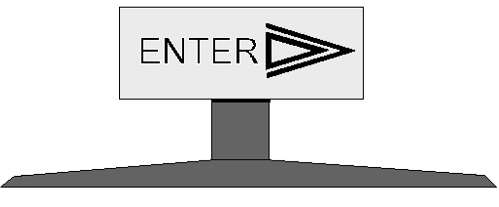
- Sign, home occupation, means a sign identifying a home occupation legally existing on the premises.
- Sign, illuminated, means any sign directly lighted by any electrical light source, internal or external, except light sources specifically and clearly operated for the purpose of lighting the general area in which the sign is located rather than the sign itself.
- Sign, interior, means a sign located within a building so as to be visible only from within the building in which the sign is located.
- Sign, interior stadium, means signs designed to be viewed by spectators and visitors to the major sports venue and only incidentally seen from the exterior or areas accessible by nonpaying visitors.
- Sign location, means a lot, site or premises, building, wall, or any place wherever a sign is erected, constructed or maintained.
- Sign, marquee, means a sign designed to have changeable copy, either manually or electronically. Marquee signs may be a principal identification sign, a freestanding sign, a wall sign, or attached to a canopy.
- Sign, menu board, means a sign that is used to advertise the product available at a restaurant.
- Sign, monument, means a low sign (where the top edge of sign is six feet high or lower) where the extent of the sign surface is attached to the ground or a foundation in the ground, and where there are no poles, braces, or other visible means of support other than attachment to the ground.
- Sign, name plate, means a sign indicating the name and/or occupation of persons residing on the premises or legally occupying the premises, or indicating a home occupation legally existing on the premises.
- Sign, naming right, means signs with the stadium name.
- Signs, noncommercial opinion, means a sign that does not advertise products, goods, businesses, or services and that expresses an opinion or other point of view.
- Sign, nonconforming, means a sign or sign structure of portion thereof lawfully existing when the relevant regulation first became effective, which does not now conform to all regulations prescribed in the district in which it is located.
- Sign, off-premises, means an advertising sign which directs attention to a use, product, commodity, or services not related to the premises on which it is erected.
- Sign, on-premises, means a sign which directs attention to a business, commodity, product, use, service or other activity which is sold, offered or conducted on the premises upon which the sign is located.
- Sign, portable, means a sign that is not permanently affixed to a structure or the ground and is movable, such as A-frame or T-frame signs. This definition does not include any signs on trailers or vehicles.
- Sign, projecting, means a sign attached to a building and extending in whole or in part more than 18 inches beyond any wall of the building.
- Sign, property, means a temporary sign related to the property on which is located advertising contemplated improvements or announcing the name of the builder, owner, designer, or developer of the project, or warning against trespassing.
- Sign, public necessity, means signs installed, or required to be installed, by a unit of government for control of traffic and other regulatory purposes, including street, danger and warning, railroad crossing, hospital, wayfinding, trailblazing, directional or warning signs for public service and construction companies, utilities or institutions, signs specifically designed to meet the requirements of the Americans with Disabilities Act, or signs erected by or on the order of a public officer in the performance of his public duty.
- Sign, pylon. See Sign, freestanding.
- Sign, real estate, means a temporary sign related to the property on which it is located and offering such property for sale or lease.
- Sign, roof, means a sign erected partly or wholly freestanding on or over the roof of a building.
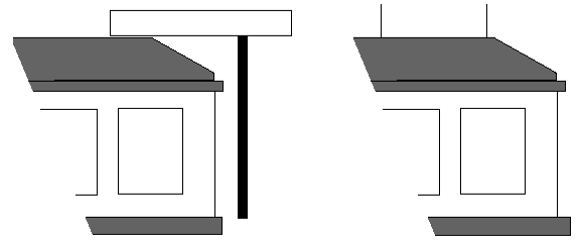
- Sign, rotating, means a revolving sign in which all or a portion of the sign moves in a revolving or similar manner, with the exclusion of time and temperature signs.
- Sign, scoreboard, means a changeable copy sign typically used for scores, game updates and replays located on a structure facing the playing field.
- Sign, seasonal or holiday, means such signs as Christmas decorations, to include those used for a historic holiday and installed for a limited period of time.
- Sign, snipe, means a sign for which a permit is required and has not been obtained and which is tacked, nailed, posted, pasted, glued or otherwise attached to the ground, trees, poles, stakes, or fences, or other objects with the message appearing thereon.
- Sign, sponsorship scrim panel, means lightweight perforated fabric with graphics applied to the surface, attached with a tension system.
- Sign, sports field fencing, means single faced signs that are permanently attached to the fence that surrounds a private park which is associated with a major sports venue.
- Sign, spot light. See Search light.
- Sign, structure, means the supports, uprights, bracing, cables and framework of a sign or outdoor display.
- Sign, suspended, means a sign which is hung from a roof, pole, canopy or other similar structure.
- Sign, temporary, means a banner, pennant, valance or advertising display constructed of paper, cloth, canvas, fabric, cardboard, wall board or other materials, with or without frames, intended to be displayed in or out of doors for a short period of time; shall include political signs, special events signs, special business promotions or portable signs.
- Signs, trailblazing, means off-premises signs with the purpose of providing directions from the State Highway to an advertised business, major destination, or tourist attraction.
- Signs, tunnel, means flat nonilluminated signs mounted above the player tunnel in a major sports venue.
- Sign, vehicle, means any sign that is mounted upon, painted upon, or otherwise erected on trucks, cars, boats, trailers, or other motorized vehicles or equipment.
- Sign, wall, means a building-mounted sign either attached to or displayed or painted on an exterior wall in a manner parallel with the wall surface, and not projecting more than 18 inches from such surface.
- Sign, wayfinding, means a directional sign that guides the traveling public to key civic, visitor, and recreational destinations within a specific region.
- Sign, wind, means any propeller or similar commercial device which is designed to flutter, rotate, or display other movement under the influence of the wind, not including pennants, flags or banners.
- Sign, window, means a sign either attached to a window or door or located within a building so as to be visible through a window or door from outside of the building.
- Site change means changes to the existing site improvements.
- Site plan means a plan which outlines the use and development of any tract of land within Sandy City for the purposes of meeting the requirements set forth in this title.
- Skatepark means a public facility that is designed for use by persons riding skateboards, in-line skates, roller skates, or bicycles.
- Sludge orbiosolids (Chapter 21-17) means the solids separated from wastewater during the wastewater treatment process.
- Small health care facility. See Health care facilities.
- Small wireless communications facility means a type of wireless facility:
- On which each wireless service provider's antenna could fit within an enclosure of no more than six cubic feet in volume; and
- For which all wireless equipment associated with the wireless facility, whether ground-mounted or pole-mounted, is cumulatively no more than 28 cubic feet in volume, not including any:
- Electric meter;
- Concealment element;
- Telecommunications demarcation box;
- Grounding equipment;
- Power transfer switch;
- Cut-off switch;
- Vertical cable run for the connection of power or other service;
- Wireless service provider antenna; or
- Coaxial or fiber-optic cable that is immediately adjacent to or directly associated with a particular collocation, unless the cable is a wireline backhaul facility.
- Social detoxification. See Human services programs or facilities.
- Social or reception center, fraternal organizations, means a building or group of buildings and/or uses owned or maintained by an association or organization for the fraternal, social and/or recreational purposes of certain groups. This may include a meeting hall, cooking and dining facilities for large groups, but shall not provide overnight lodging. This definition shall include, but not be limited to, fraternal organizations and senior citizen centers, and privately-operated reception centers.
- Solar energy systems means an energy system which converts solar energy to useable thermal, mechanical, chemical, or electrical energy.
- Solar equipment means any solar collector or other solar energy device whose primary purpose is to provide for the collection, storage, and distribution of solar energy for space heating, cooling, water heating, or for power generation.
- Solid waste conversion facility means a facility which utilizes a technology or process which converts municipal solid waste to electricity or fuel and which may include a recycling facility as an ancillary use.
- Solid waste disposal facility means any solid waste management facility which is the final resting place for solid waste, including landfills and incineration facilities that produce ash from the process of incinerating solid waste.
- Specialty hospital. See Health care facilities.
- Special use permit means a specific approval that has been determined to be less intense or to have potentially minor impacts on surrounding properties than a conditional use within the same zoning district. Special uses have specific conditions of approval that are found within Chapter 21-11.
- Stadium means a commercial structure with tiers of seats rising around a field or court, intended to be used primarily for the viewing of athletic events. The sports area may also be used for entertainment and other public gathering purposes such as conventions, circuses, or concerts.
- Start of construction includes substantial improvement, and means the date the building permit was issued, provided the actual start of construction, repair, reconstruction, placement, or other improvement was within 180 days of the permit date. The actual start means either the first placement of permanent construction of a structure on a site, such as the pouring of slab or footings, the installation of piles, the construction of columns, or any work beyond the stage of excavation; or the placement of a manufactured home on a foundation. Permanent construction does not include land preparation, such as clearing, grading and filling; nor does it include the installation of streets and/or walkways; nor does it include excavation for basement footings, piers, or foundations or the erection of temporary forms; nor does it include the installation on the property of accessory buildings, such as garages or sheds not occupied as dwelling units or not part of the main structure. For a substantial improvement, the actual start of construction means the first alteration of any wall, ceiling, floor, or other structural part of a building, whether or not that alteration affects the external dimensions of the building.
- Step back architecture means physical design for mid-rise and higher buildings by setting the building facade away from the street on successively higher stories, and which includes expansive glass areas, balconies, terraces, and landscape features and architectural elements.
- Storage (mini-storage) facilities means a building or series or buildings for which individual storage space is rented for storage purposes only.
- Story means that portion of a building included between the surface of the floor and the ceiling next above it other than the basement.
- Street means a public thoroughfare which affords principal means of access to abutting property. The term "street" shall include avenue, drive, circle, road, parkway, boulevard, highway, thoroughfare, or any other similar term.
- Street, arterial; major and minor, means providing for through traffic movement between areas and across the City, with moderate access to abutting property subject to necessary control of entrances, exits, and curb use. The location of this type of street is addressed in the Transportation Element of the Sandy City General Plan and designated on the Official Street Map for Sandy City.
- Street, collector; major and minor, means providing for traffic movement between major arterials and local streets, and direct access to abutting property. The location of this type of street is addressed in the Transportation Element of the Sandy City General Plan and designated on the Official Street Map for Sandy City.
- Street, local, means providing for direct access to abutting land, and for local traffic movements. The location of this type of street is addressed in the Transportation Element of the Sandy City General Plan and designated on the Official Street Map for Sandy City.
- Street, private, means a right-of-way or easement in private ownership, not dedicated or maintained as a public street that serves more than two lots and is greater than 150 feet in length.
- Streetscape Plan means the Streetscape section of the Growth, Land Use and Community Identity chapter of the Sandy City General Plan.
- Street vendors means a use consisting of a portable stand/cart and any related accessory appurtenances such as awning, canopy, or seating used for the retail sales of goods including, but not limited to, beverages, food, and flowers.
- Structure means anything constructed or erected, the use of which requires location on the ground or attachment to something having location on the ground. A building is included in this definition. Any structure two feet or above in grade shall meet all underlying zoning requirements.
- Subdivision means any land that is divided, resubdivided, or proposed to be divided into two or more lots or other division of land for the purpose, whether immediate or future, for offer, sale, lease, or development either on the installment plan or upon any and all other plans, terms, and conditions.
- The term "subdivision" includes:
- the division or development of land, whether by deed, metes and bounds description, devise and testacy, map, plat, or other recorded instrument, regardless of whether the division includes all or a portion of a parcel or lot; and
- except as provided in Subsection (76)(c), divisions of land for residential and nonresidential uses, including land used or to be used for commercial, agricultural, and industrial purposes.
- The term “subdivision” does not include:
- a recorded conveyance document:
- consolidating multiple lots or parcels into one legal description encompassing all lots by reference to a recorded plat and all parcels by metes and bounds description;
- joining a lot to a parcel;
- a bona fide division of land by deed or other instrument if the deed or other instrument states in writing that the division:
- is in anticipation of future land use approvals on the parcel or parcels;
- does not confer any land use approvals; and
- has not been approved by the land use authority;
- a boundary adjustment;
- a boundary establishment;
- a road, street, or highway dedication plat;
- a deed or easement for a road, street, or highway purpose; or
- any other division of land authorized by law.
- a recorded conveyance document:
- The term "subdivision" includes:
- Subdivision amendment means:
- an amendment to a recorded subdivision that:
- (1) vacates all or a portion of the subdivision;
- (2) increases the number of lots within the subdivision;
- (3) alters a public right-of-way, a public easement, or public infrastructure within the subdivision; or
- (4) alters a common area or other common amenity within the subdivision.
- The term "subdivision amendment" does not include a simple boundary adjustment.
- an amendment to a recorded subdivision that:
- Subgrade means either the soil prepared and compacted to support a structure or a pavement system, or the elevation of the bottom of the trench in which a sewer or pipeline is laid.
- Substantial damage means damage of any origin sustained by a structure whereby the cost of restoring the structure to its before damaged condition would equal or exceed 50 percent of the market value of the structure before the damage occurred.
- The term "substantial improvement" means any repair, reconstruction, addition, or improvement of a structure, the cost of which equals or exceeds 50 percent of the market value of the structure either:
- Before the improvement or repair is started; or
- If the structure has been damaged and is being restored, before the damage occurred.
- The term "substantial improvement" includes structures which have incurred substantial damage, regardless of the actual repair work performed. The term "substantial improvement" does not, however, included either:
- Any project for improvement of a structure to correct existing violations of State or local Health, Sanitary, or Safety Code specifications which have been identified by the local code Enforcement Official and which are the minimum necessary to ensure safe living conditions; or
- Any alteration of a historic structure, provided that the alteration will not preclude the structure's continued designation as a historic structure.
- The term "substantial improvement" is considered to occur when the first alteration of any wall, ceiling, floor, or other structural part of the building commences, whether or not that alteration affects the external dimensions of the structure. Substantial improvement.
- The term "substantial improvement" means any repair, reconstruction, addition, or improvement of a structure, the cost of which equals or exceeds 50 percent of the market value of the structure either:
- Substantial modification means:
- A proposed modification or replacement to an existing wireless support structure that will substantially change the physical dimensions of the wireless support structure under the substantial modification standard established in 47 CFR 1.40001(7); or
- A proposed modification in excess of the site dimensions specified in 47 CFR Part 1, Appendix C, § III.B.
An explanatory note: The thresholds for a substantial modification outlined above are disjunctive. The failure to meet any one or more of the applicable thresholds means that a substantial modification would occur. The thresholds for height increases are cumulative limits. For sites with horizontally separated deployments, the cumulative limit is measured from the originally permitted support structure without regard to any increases in size due to wireless equipment not included in the original design. For sites with vertically separated deployments, the cumulative limit is measured from the permitted site dimensions as they existed on February 22, 2012, which is the date that Congress passed Section 6409(a).
- Support staff means persons employed or residing on the premises of a dwelling or other residential facility to assist residents in performing daily life activities or to provide on-site treatment, rehabilitation, or habilitation services.
- SWF means small wireless communication facility.
- Swimming pool means a constructed pool used for bathing or swimming, which is over 24 inches in depth, or with a surface area exceeding 250 square feet.
- Swimming pool, private, means a pool which is used or intended to be used as a swimming pool in connection with a residence and available only to the family of the householder and his private guests.
- Swimming pool, semi-private, means a pool which is used or intended to be used in connection with a neighborhood recreational facility or a multifamily development.
- Swimming school means an establishment for the instruction of children or adults in the swimming arts and sports, including diving, treading water, strokes, and life saving techniques. A swimming school does not include instruction on snorkeling, underwater swimming with breathing apparatus, or other similar instruction.
(LDC 2008, § 15A-37-20; Ord. No. 09-03, 2-6-2009; Ord. No. 09-35, 12-7-2009; Ord. No. 10-31, 8-8-2010; Ord. No. 11-22, 11-21-2011; Ord. No. 11-24, 12-5-2011; Ord. No. 13-13, 6-5-2013; Ord. No. 13-19, 8-15-2013; Ord. No. 15-30, 9-12-2015; Ord. No. 15-34, 11-16-2015; Ord. No. 18-28, § 1(15A-38), 9-20-2018)
Amended by Ord. 21-08 § 1(Exh. A) on 3/23/2021
Amended by Ord. 23-10 § 1(Exh. A) on 8/8/2023
Amended by Ord. 24-12 § 1(Exh. A) on 6/18/2024
Amended by Ord. 24-14 § 1(Exh. A) on 7/30/2024
Amended by Ord. 25-25 on 11/11/2025
21-37-21 "T" Definitions
- Tattoo means a permanent design or mark made on the skin by pricking it and ingraining in it an indelible pigment, or by raising scars on it.
- Tattoo parlor means any business establishment which operates tattoo equipment to inject ink or otherwise modify human skin for the purposes of decoration.
- Tavern. See Alcoholic beverage establishments.
- Technical necessity exception means the allowance of a facility to be maintained because of engineering or technological incapability or significant implacability reasons.
- Telecommunications review group is comprised of the directors of the Sandy City departments of Community Development, Public Works, and the City Attorney, or their designees, and others appointed from time to time by the City's CAO.
- Tennis club. See Recreation, indoor or outdoor.
- Ten-year storm means a storm having a ten percent chance of annual occurrence.
- Territorial reinforcement means physical design which encourages users of property to develop ownership over it, developing space with an easily discernable purpose, using symbolic barriers such as low lying fences/wall, landscaping and signage, eliminating ambiguous spaces, encouraging easy maintenance, and discouraging crime.
- Theater means a building used primarily for the presentation of movies projected upon a screen; may include ancillary uses such as arcades. The term "theater" also includes a building used primarily for the presentation of live stage productions or performances or open air theater for performing arts.
- Topping means the internodal cutting back (between existing stem and/or branch nodes), dehorning or pollarding of stems or branches, resulting in the severe alteration of the species' genetic structural characteristics.
- Townhouse means a single-family dwelling unit constructed in a group of three or more attached units in which each unit extends from foundation to roof and with open space on at least two sides.
- Trade or vocational school means a post-high school educational or vocational training facility.
- Traditional neighborhood development means physical design, mixed use or stand-alone, which promotes pedestrian activity by incorporating guidelines controlling architectural elements, entrances and sidewalks oriented to the street, walkways, driveways, landscaping, street design and streetscape, and other pedestrian elements.
- Transitional care development means a cohesive development created primarily for the care and housing of the elderly and/or persons with a disability. To qualify under this definition, the development must contain at least two of the following land use classifications:
- Single-family unit development (either detached or attached, such as a traditional home or twin home development).
- Congregate care facility.
- Assisted living facility.
- Nursing home/convalescent home/rest home.
- Hospice.
- Small health care facility.
- Transitional housing facility means a facility owned, operated, or contracted by a governmental entity or a charitable, nonprofit organization which provides non-congregate interim housing, on a referral (non-walkup) basis only, with on-site supportive services to persons experiencing homelessness for a total anticipated stay of no more than 24 months while they obtain work, job skills, or otherwise take steps to stabilize their circumstances. A transitional housing facility does not include:
- A homeless shelter;
- A detached single-family dwelling unit provided to a family for its exclusive use as part of a transitional housing program for more than 30 days; or
- A residential facility for persons with a disability.
- Travel time contour (Chapter 21-17) means the locus of points that form a line of any configuration in space from which groundwater particles on that line theoretically take an equal amount of time to reach a given destination, such as a well or a wellfield, as predicted by the Refined Salt Lake Valley MODFLOW/MODPATH model copyrighted.
- Tree, city, means all trees and shrubs located in a City-owned parkstrip or on other City-owned and/or maintained property.
- Tree, hazard, means any tree determined to be a public nuisance, which may include, but not be limited to, the following:
- Any tree that is host to a communicable disease, destructive disease or other pestilence.
- Any tree, the roots or any other portion of which, causes the surface of a public street, curb, gutter or sidewalk to be up-heaved or otherwise disturbed creating a threat to the public health, safety or welfare.
- Any tree or portion thereof which, by reason of location and/or structural defect, increases the chance of failure of the tree and increases the risk to the health, safety or well-being of the public.
- Any tree or portion thereof which, by reason of location and/or condition, impedes a public right-of-way or may cause a threat to the public health, safety or welfare, including any tree adjacent to any sidewalk used as a public right-of-way which is not pruned from either edge of the right-of-way vertically to a height of eight feet above the surface of sidewalk or any tree adjacent to a roadway which is not pruned to a height of 14 feet vertically from back of curb or is not pruned as is deemed necessary by the City Transportation Engineer.
- Any tree or portion thereof which interferes with adequate street light coverage of public rights-of-way.
- Tree, private, means any and all trees and shrubs now and hereafter growing on private property within Sandy City and which are not defined or designated herein as City trees.
- Tree stewardship program means the ongoing and shared responsibility between public and private parties for the protection, care and renewal of trees.
- Twin home means a residential structure composed of two dwellings set side by side and sharing a common wall and separation wall. Each dwelling is constructed on its own building lot and is sold separately from the adjoining attached dwellings.
(LDC 2008, § 15A-37-21; Ord. No. 18-28, § 1(15A-38), 9-20-2018)
Amended by Ord. 21-08 § 1(Exh. A) on 3/23/2021
Amended by Ord. 23-17 § 1(Exh. A) on 10/3/2023
Amended by Ord. 26-50 on 7/2/2026
21-37-22 "U" Definitions
- UAC means the Utah Administrative Code.
- Urban forest means vegetation on the City's public lands.
- Urban forester means the Sandy City employee designated to carry out work duties associated with the urban forest.
- Urban forestry means the planning, design and management of vegetation on public lands in and around communities to maximize their visual, economic and environmental contributions to the well-being of the community.
- Urban wildland interface means a geographical area where structures and other development meets or intermingles with wildland or vegetative fuels.
- Usable land means that contiguous parcel of natural land and/or compacted (engineered) fill, as permitted by this title or the International Building Code, included within the lot (including setbacks), no part of which has a slope exceeding 30 percent.
- Use means the activities occurring on a lot or parcel for which land or a building is arranged, designed, or intended, or for which land or a building is or may be occupied, including all accessory uses.
- Use change means changing the use of the property from that which was intended by the original site plan to another use that will require changes to the original approved site plan.
- Use, change of business, means change within the classified use of a structure, or any portion of multi-tenant structure such as from one retail business to another which does not increase the size or occupancy capacity of the structure.
- Use, temporary, means a use that is to be conducted for a fixed period of time with intent to discontinue such use upon expiration of the time period. Temporary uses are characterized by such activities as the sale of agricultural products produced on the premises on which they are sold, contractor's offices and equipment sheds, Christmas tree and firework sales, and carnivals.
- USGS means the United States Geological Survey.
- Utilities includes natural gas, electric power, cable television, telephone, telecommunication services, storm system, sewer system, irrigation facilities, culinary water, street lights and other services deemed to be of a public-utility nature by the City.
- Utility easement means the area designated for access to construct or maintain utilities on privately- or publicly-owned land.
- Utility pole.
- The term "utility pole" means a pole or similar structure that is in a right-of-way and is or may be used, in whole or in part, for:
- Wireline communications;
- Electric distribution;
- Lighting;
- Traffic control;
- Signage;
- A similar function to a function described in Subsections (n)(1)a—e of this definition; or
- The collocation of a small wireless facility.
- The term "utility pole" does not include: a wireless support structure; a structure that supports electric transmission lines; or a municipally owned structure that supports electric lines used for the provision of municipal electric service.
- The term "utility pole" means a pole or similar structure that is in a right-of-way and is or may be used, in whole or in part, for:
(LDC 2008, § 15A-37-22; Ord. No. 18-28, § 1(15A-38), 9-20-2018)
Amended by Ord. 21-08 § 1(Exh. A) on 3/23/2021
21-37-23 "V" Definitions
- Variance means a legal divergence from this title granted by the Board of Adjustment.
- Vehicle means a machine propelled by power other than human power, and includes campers, trailers, and other equipment designed to be carried upon or towed behind such powered vehicle, designed to travel along the ground by use of wheels, treads, runners or slides, or upon such vehicle, and transport persons or property or pull machinery, and shall include, without limitation, automobile, airplane, truck, trailer, camper, motorcycle, motor scooter, recreational vehicle, tractor, buggy and wagon.
- Vehicle, junk, means any vehicle that:
- Has been made inoperable due to a collision or other violent act;
- Has had parts removed from the vehicle rendering the vehicle inoperable, or contains defective parts making the vehicle inoperable, and has remained in such state for a period longer than 30 days. Portions of junk vehicles, such as hoods, fenders, radiators, rims, motors, etc., not being immediately utilized for the repair of a motor vehicle, shall be considered junk; or
- Is not licensed or registered and is in a condition of deterioration or disrepair, that includes, but is not limited to, a vehicle that is or has any of the following conditions: dismantled, broken windows, broken head or tail lights, flat tires, no tires, missing doors, missing windows, missing paint, missing fenders, missing hood or missing trunk.
(LDC 2008, § 15A-37-23; Ord. No. 10-27, 7-30-2010)
Amended by Ord. 21-08 § 1(Exh. A) on 3/23/2021
21-37-24 "W" Definitions
- Warehouse, wholesale, means a building in which goods, merchandise or equipment are stored for eventual distribution. No outside storage is permitted.
- Waste transfer station means a facility where solid waste materials, including yard waste, demolition materials, and household refuse, are transferred from small vehicles to large trucks for efficient transport to landfills, recycling centers, and other disposal sites.
- Watercourse or waterway means aqueducts, pipes, natural or artificial streams or channels through which water can flow at any time.
- Water efficient landscaping means a set of garden design and landscape maintenance principles that promote good horticultural practices and efficient use of water; water conserving, drought tolerant landscaping.
- Well means any excavation that is drilled, cored, bored, washed, driven, dug, jetted, or otherwise constructed when the intended use of such excavation is for the location, acquisition, development, or artificial recharge of groundwater.
- Wellfield (Chapter 21-17) means an area of land which contains one or more drinking water supply wells.
- Wind energy conversion system means any device, such as a wind charger, wind turbine or windmill, that converts wind power to another form of energy.
- Wireless service means any service using licensed or unlicensed spectrum, whether at a fixed location or mobile, provided to the public using a wireless facility. The term "wireless service" includes the use of Wi-Fi.
- Wireless service provider means a company or other entity providing wireless cell service, or a company providing services to such a company or entity by contract.
- Wireless telecommunications facilities. The following definitions are specific to wireless telecommunications facilities:
- Antenna means any system of wires, poles, rods, arms, reflecting discs or similar devices of various sizes, materials, and shapes including, but not limited to, solid or wire-mesh dish, horn, spherical or bar configuration used for the transmission or reception of radio signals. Types of antennas include:
- Roof-mounted antenna means an antenna mounted directly to the roof of a building, mechanical penthouse or parapet enclosure wall which is on the roof top of a building.
- Top-hat antenna means a spatial array of antennas, generally located on a freestanding structure, where the visible width of antennas and antenna-mounting structures are more than three feet in width as viewed looking directly at the structure.
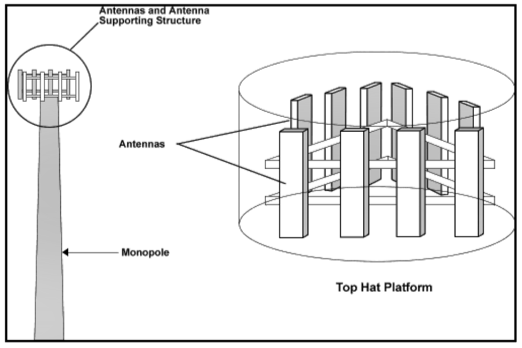
- Utility pole antennas means any antenna mounted directly to a street light pole. This definition shall not include poles carrying electrical lines, telephone lines or any other type of utility not specifically included above.
- Wall-mounted antenna means any antenna mounted directly to the fascia or outside wall of a structure, existing parapet walls, penthouses, or mechanical equipment rooms, with no portion of the antenna extending above the roofline of such structures.
- Whip antenna means an antenna that is cylindrical in shape. Whip antennas can be directional or omnidirectional and vary in size depending upon the frequency and gain for which they are designed.
- Antenna support structure means a structure the principle purpose of which is for location of antennas. Types of antenna support structures include:
- Lattice tower means a self-supporting multiple sided, open steel frame structure used to support one or more antennas.
- Monopole means a freestanding antenna support structure placed directly on the ground used to support one or more antennas.
- Co-location means a telecommunications facility comprising more than one telecommunications provider's antennas.
- Equipment facility means any building, shelter or cabinet used by telecommunication providers to house switching, backup or other equipment at a telecommunications facility.
- Non-stealth design means any antenna or equipment facility not camouflaged in a manner to blend with surrounding land uses, features or architecture. The design does not conceal the intended use of the telecommunications facility. A monopole with equipment facilities above ground and unscreened would be considered non-stealth.
- Residential institutional use means a school, church, clubhouse or public building in a residential zone where stealth antennas may be permitted. This definition does not include residences or multifamily structures containing one or more residential units.
- Stealth means antennas, antenna support structures and equipment facilities camouflaged or designed to blend with surrounding land uses, features, and architecture, thus minimizing the aesthetic impact on adjacent uses, thereby concealing the intended use and appearance of the telecommunications facility such as heavy landscaping, installing telecommunications facilities within existing buildings, or placing equipment facilities underground. A flush wall mount antenna painted the same color as the background, located on a building where the equipment facility is located inside said building would be considered stealth design.
- Telecommunications facility means an unmanned structure which consists of equipment, including antennas, antenna support structures and equipment facilities as defined herein, that transmit and/or receive voice and/or data communications through radio signals such as "cellular" or "PCS" (Personal Communications System) communications and paging systems.
- Antenna means any system of wires, poles, rods, arms, reflecting discs or similar devices of various sizes, materials, and shapes including, but not limited to, solid or wire-mesh dish, horn, spherical or bar configuration used for the transmission or reception of radio signals. Types of antennas include:
- Wireless telecommunications facility.
- The term "wireless telecommunications facility" means equipment at a fixed location that enables wireless communication between user equipment and a communications network, including equipment associated with wireless communications; and, regardless of the technological configuration, a radio transceiver, an antenna, a coaxial or fiber-optic cable, a regular or backup power supply, or comparable equipment.
- The term "wireless facility" does not include the structure or an improvement on, under, or within which the equipment is collocated; or a coaxial or fiber-optic cable that is between wireless structures or utility poles, not immediately adjacent to or directly associated with a particular antenna; or a wireline backhaul facility.
(LDC 2008, § 15A-37-24; Ord. No. 13-19, 8-15-2013; Ord. No. 18-28, § 1(15A-38), 9-20-2018)
Amended by Ord. 21-08 § 1(Exh. A) on 3/23/2021
21-37-25 "X" Definitions
- Xeriscaping means landscaping characterized by the use or vegetation that is drought-tolerant or of low water use in character.
(LDC 2008, § 15A-37-25)
Amended by Ord. 21-08 § 1(Exh. A) on 3/23/2021
21-37-26 "Y" Definitions
- Yard means an open, unoccupied space on a lot, other than a court, which is unobstructed from the ground upward by buildings or structures except as otherwise provided in this title.
- Yard, front, means:
- For an interior lot: an open, unoccupied, space in the same lot with a building between the front line of the building and the street right-of-way or front property line, whichever distance is the shortest.
- For a corner lot: an open, unoccupied space on the same lot with the main building and between the front line of the building and the front street line, also between the side line of the building adjacent to the street and the side street line and extending for the full width and depth of the lot; or the shortest distance across said space from the main building to the street line.
- Yard, rear, means a yard extending across the full width of the lot between the most rear main building and the rear lot line.
- Yard, side, means an open, unoccupied space on the same lot with the building and between the side line of the building and the side lot line, and extending from the front yard to the rear yard; or the shortest distance across said space from the main building to the side lot line.
- Youth program. See Human services programs or facilities.
(LDC 2008, § 15A-37-26)
Amended by Ord. 21-08 § 1(Exh. A) on 3/23/2021
21-37-27 "Z" Definitions
- Zero lot line development means:
- Single-family dwellings arranged on individually owned lots as either detached structures with one side wall of the main building on a side property line (or as twin homes with the separation wall on the property line).
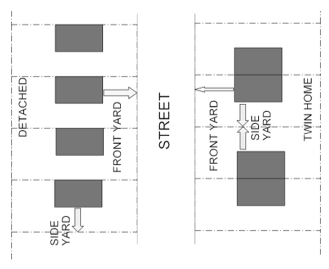
- Twin home, attached (see Twin home).
- Single-family dwellings arranged on individually owned lots as either detached structures with one side wall of the main building on a side property line (or as twin homes with the separation wall on the property line).
- Zone change means the legislative act of re-zoning one or more lots or parcels.
- Zoological gardens means an area, building, or structures which contain wild animals on exhibition for viewing by the public.
(LDC 2008, § 15A-37-27)
Amended by Ord. 21-08 § 1(Exh. A) on 3/23/2021

