
Sandy City Zoning Code
CHAPTER 21
26 SIGNAGE AND OUTDOOR ADVERTISING
21-26-1 Purpose And Scope
- It is the intent and purpose of this chapter to outline regulations which are fair, comprehensive, and enforceable while allowing Sandy City to create and maintain safe and aesthetically pleasing building elevations and streetscapes. These regulations serve to balance the need to protect the public safety and welfare, the need for a well maintained and attractive community, and the need for adequate identification, communication, and advertising for land uses. By adherence to these regulations the following objectives should be achieved:
- Signs that are compatible with their surroundings and effectively index the environment while preserving the aesthetics and sense of order within the community.
- Signs that are conducive to promoting traffic safety and add to the convenience and enjoyment of public travel by preventing visual distraction for motorists and protection of pedestrians.
- Signs that preserve and enhance property values, increase the standard of living within the community and serve to attract visitors to the City by establishing first class businesses and commercial districts.
- Signs that adhere to adopted fire, traffic, and safety standards in order to ensure the safety of residents and visitors to the City.
- The regulations of this chapter are intended to apply to both on-premises and off-premises signs, but do not apply to interior signs, nor hand-held placards and other similar devices used for public protest and the noncommercial exercise of free speech. Any noncommercial message may be substituted for any commercial message permitted under this chapter.
(LDC 2008, § 15A-26-01)
21-26-2 Administration And Enforcement
- Interpretation. The sign regulations contained herein are declared to be the maximum allowed for the purposes set forth. Any sign not expressly allowed by this chapter is prohibited.
- Authorities. The Director shall be vested with the duty of enforcing this chapter and in performance of such duty shall be empowered and directed to:
- Issue Permits. Unless stipulated otherwise, a sign permit is required to erect, install, paint, or change the face of any sign, whether it be temporary or permanent in nature. This includes new signs, signs to be added to existing buildings or uses, and existing signs that are to be enlarged, changed, or modified. If no action is taken, the expiration date for such permits shall be 180 days in conjunction with building permits.
- Determine Conformance. The Chief Building Official may make any necessary inspections of any sign for which a permit has been issued and for which an inspection has been deemed necessary. Such inspections shall be performed to ascertain that all signs, construction, and all reconstruction or modifications of existing signs are built or constructed in conformance with this title and as represented at application for a permit.
- Issue Notices of Violations, Citations, and Information. The Director shall issue a written notice of violation to the person having charge, control, or benefit of any sign found to be hazardous, abandoned, non-maintained, or in violation of this title, particularly when the City is contemplating removal of said sign. Such official may also take criminal or civil action against violators.
- Abate and Remove Signs. The Director may at once abate and remove signs or, in the alternative, use all available legal means to have a sign removed, including, but not limited to, criminal or civil action with the appropriate court.
- Abatement or removal may occur under the following circumstances:
- A hazardous sign is not repaired or made safe within five working days after receiving written notice of such condition from the City. The Chief Building Official may also require a sign to be removed or made safe within one working day after written notice from the City if such sign poses an immediate hazard.
- An abandoned, non-maintained, or sign identifying a discontinued use has not been repaired or put into use within 45 calendar days after receiving written notice from the City.
- A permanent sign has been installed without a permit or is otherwise illegal as defined by this title, does not obtain a permit, or made to conform within 30 calendar days after receiving written notice from the City.
- A temporary sign has been installed without a permit or is otherwise illegal as defined by this title and has not been made to conform either through removal of the temporary sign or by obtaining a temporary sign permit within 72 hours after receiving written notice from the City.
- A sign posted upon public property may be removed by the City at any time. Notwithstanding the foregoing, the sign, though removed, shall not be destroyed in a period less than 30 days from the date of removal. In no case shall the failure to remove said signs constitute approval by the City of the illegal placement of the sign.
- Persons having charge, control, or benefit of the affected sign shall pay to Sandy City the full cost incurred by its abatement or removal. Payment shall be made within 30 calendar days of receiving written notice of such cost.
- Guidelines for the abatement and removal of permanent signs shall be in accordance with the Uniform Code for Abatement of Dangerous Buildings. Abatement of billboards shall be in accordance with those standards outlined in the Utah State Code.
- Abatement or removal may occur under the following circumstances:
- Require Bonds. The Director may require that a bond be posted by a sign company, contractor, or employee of such (hereafter referred to as "business"), under the following circumstances and guidelines:
- Violation of Chapter. If any business commits a violation of any part of this chapter or provision within this title concerning the installation, modification, or City required inspection of a sign, that business shall post a cash bond of $1,000.00 with the City upon written notice of such violation. Sandy City will not issue any subsequent sign permits to said business until such bonds have been posted.
- Forfeiture of Bond. A cash bond which has been posted to the City shall be forfeited to the City if an additional violation by the business occurs. A new cash bond of $2,000.00 shall be required from the business upon forfeiture of the previous bond. Each future violation by such business will result in bond forfeiture and require posting of a new cash bond at twice the previously posted amount. Sandy City will not issue any subsequent sign permits to said business until the required cash bond has been posted.
- Duration of Bond. A posted bond shall be held for a minimum one-year period. At the end of such period, if the bonded business has not had any additional violations of the City's sign regulations, the posted bond shall be released upon receiving an Affidavit of Compliance by the City. If a business has future violations after having a bond released, the initial $1,000.00 amount shall be required and the provisions of Subsection (b)(5)b of this section shall apply.
- Right to Appeal. Any person who has been ordered to alter or remove any sign, or whose application for a sign permit has been denied because of conflict with regulations stated herein, may appeal to the Board of Adjustment. For appeal procedures, please see the Sandy City Board of Adjustment guidelines contained in this title.
(LDC 2008, § 15A-26-02)
21-26-3 Nonconforming Signs
- Regulation, Containment, and Elimination. In order to minimize confusion and unfair competitive disadvantage to those businesses which are required to satisfy the current Sign Ordinance standards, the City intends to apply firm regulation of existing nonconforming signs with a view to their eventual elimination. Excluding normal maintenance and repair, a nonconforming sign shall not be moved, altered (including face changes), or enlarged unless it is brought into complete compliance with this chapter. The following alterations are exempt from this provision:
- Face changes in nonconforming multi-tenant signs; and
- Copy changes in nonconforming permanent signs which were originally approved by the City with a changeable copy feature.
- Abandonment. Within 45 calendar days after vacation of an existing business, any on-site nonconforming signs must be removed or brought into compliance by the property owner. If removal does not occur, Sandy City may have the entire nonconforming sign (both face and structure) removed through the processes specified herein. An abandoned sign may not regain any legal nonconforming status later, even if the original or a new business occupies the property.
- Billboards. Any billboards shall be in conformance with State Code.
(LDC 2008, § 15A-26-03)
State law reference(s)—Billboard termination, U.C.A. 1953, § 10-9a-513.
21-26-4 Prohibited Sign Devices
- Prohibited Sign Devices. Any sign not specifically allowed by this chapter is prohibited. The following devices used to attract pedestrian or vehicular attention are prohibited in Sandy City:
- Signs on bus benches and on transit stop enclosures. Bus benches and transit stop enclosures which do not contain advertising are encouraged in order to provide shelter and a more enjoyable experience for those utilizing mass transit.
- Flashing or animated signs. This shall also include architectural lighting features or elements. Signs or lighting which have subtle changes of light intensity are allowed. This does not include time/temperature or electronic message center signs complying with the standards herein.
- Graffiti.
- Off-premises signs. This includes billboards.
- Roof signs, including flags of any type.
- Sexually oriented signs. Any display, decoration, sign, or show window that provides the observation of any material depicting, describing, or relating to specified sexual activities or specified anatomical areas.
- Statuary. Statuary bearing the likeness or suggestion of any product or logo.
- Snipe signs.
- Flagpole accents. This shall not include poles in nonresidential areas which have lighting attached to or directed towards a pole for purposes of illuminating a flag as defined herein and not serving to illuminate solely the pole itself. (See Figure 1.)
Figure 1. Prohibited Flagpole Accents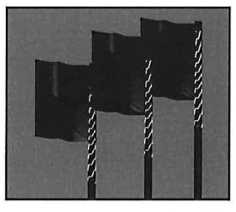
- Handbills, Signs; Public Places and Objects. The language in this section has been taken from Section 28.04 of the Los Angeles Municipal Code. This section was upheld by the United States Supreme Court in 1984 as complying with the First Amendment of the Constitution (Members of the City Council of the City of Los Angeles et al. v. Taxpayers for Vincent, et al.).
- Except as otherwise stipulated, no person shall paint, mark or write on, post or otherwise affix any handbill or sign to or upon any sidewalk, crosswalk, curb, curbstone, parkstrip, street lamp post, hydrant, tree, shrub, tree stake or guard, railroad trestle, public utility pole (e.g., light or power, telephone or telegraph, or light rail wire pole), or wire appurtenance thereof or upon any lighting system, public bridge, drinking fountain, life-saving equipment, street sign, traffic sign, or vehicles.
- Any handbill or sign found posted upon any public property contrary to the provisions of this section may be removed without notice by any designated City employee. The person responsible for any such illegal posting shall be liable for the cost incurred in the removal thereof, and the City is authorized to effect the collection of said cost.
- Nothing in this section shall apply to the installation of a metal plaque or plate or individual letters or figures in a sidewalk commemorating a historical, cultural, or artistic event, location, or personality for which the Public Works Department has granted a written permit.
- Nothing in this section shall apply to the painting of house numbers upon curbs.
(LDC 2008, § 15A-26-04)
21-26-5 General Guidelines For Signs In Sandy
- Standards of Construction.
- Building Codes. All signs erected in the City shall comply with the most recent Sandy City adopted provisions of the following: National Electrical Code, International Building Code, and the Sandy City Sign Ordinance.
- Licensed Contractor Required. No sign requiring a permit shall be erected, installed, or modified in Sandy City except by a licensed and bonded sign contractor. Electrical wiring or connections for such sign, fixture, or device must be installed or connected by a licensed and bonded electrical contractor.
- Engineering Required. Where required by the Chief Building Official, all sign permit applications shall be accompanied by a drawing stamped by an appropriate engineer, licensed by the State of Utah, attesting to the adequacy of the proposed construction of the sign and its supports and demonstrating conformance with the applicable provisions of the International Building Code. Standard engineering may be submitted to the Chief Building Official for approval and filed for use with multiple applications by authorized companies. Thereafter, permits may be obtained which utilize such engineering without refiling detailed structural plans. The Chief Building Official may require sign specific engineering regardless of standard details on file with the City.
- Durability. All permanent signs must be built of durable and permanent materials.
- Power Source. Permanent power sources for signs must be concealed underground away from public view or within the structure of the sign or building to which the sign is attached and comply with all provisions of the National Electrical Code.
- Foundations. All ground signs must be mounted on foundations and footings which conform to the International Building Code.
- Sign Company Tag. All permanent signs must have a sign builder's identification tag or signature. The tag or signature must be made of durable weatherproof material and must be affixed to the sign so as to be visible from the sidewalk or nearest convenient location by City inspectors.
- Location and Setback Requirements. The following shall apply:
- General Location. No part of any sign shall interfere with the use of any fire escape, exit, required stairway, door ventilator, or window.
- Traffic Safety.
- Visibility Triangle. No sign more than three feet in height (above the top back of curb) shall be erected near any driveway or intersection for vehicular traffic within a triangular area formed by the intersection of straight lines extended from the back of curb (or a future curb) and a line connecting them at points 60 feet from the intersection of the lines (see Figure 2). Deviations from these requirements must be reviewed and approved by the City Transportation Engineer.
Figure 2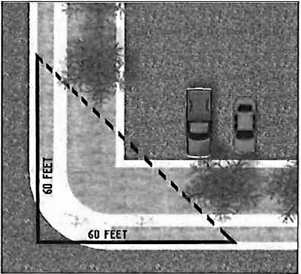
- Copy Standards. No sign or other advertising structure shall be erected which in any manner may be confused with an official traffic sign or signal, or which bears words normally used in such signs (e.g., stop, go slow, caution, danger, warning, etc.). No sign or advertising structure shall be erected which, by reason of its size, location, shape, content, coloring, or manner of illumination, might be confused as a traffic control device. No sign shall have lighting which impairs the vision of anyone traveling upon a public street or distracts any driver so as to create a public nuisance. Signs shall not extend over any pedestrian or vehicular access area unless specifically approved by the City Transportation Engineer.
- Visibility Triangle. No sign more than three feet in height (above the top back of curb) shall be erected near any driveway or intersection for vehicular traffic within a triangular area formed by the intersection of straight lines extended from the back of curb (or a future curb) and a line connecting them at points 60 feet from the intersection of the lines (see Figure 2). Deviations from these requirements must be reviewed and approved by the City Transportation Engineer.
- Public Rights-of-Way. No sign shall be located on publicly-owned land or inside street rights-of-way except signs owned and erected by permission of an authorized public agency or specifically authorized herein.
- Vertical Setback. In addition to the height restrictions contained herein, no sign shall be erected or maintained which has less horizontal or vertical clearance from communication lines and energized electrical power lines than that prescribed by the laws of the State of Utah, its agencies, or appropriate utility company.
- Side Setbacks. Pylon and monument signs shall be located at least their height in distance from side property lines in order to prevent damage to adjacent land in case a sign is toppled by accident or an act of nature.
- Front Setbacks. The following shall apply:
- Pylon and monument signs shall be set back at least three feet from all driveways and the back of sidewalk or public right-of-way, whichever is greater.
- Banners or other temporary signs allowed herein shall be set back at least seven feet from the public right-of-way.
- Additional Setbacks. All permanent signs must be located at least two feet from a required parking stall or parking area.
- Landscaping. All permanent pylon or monument signs must be incorporated into a landscape design or planter box. The landscaped area in which any sign is placed shall be kept free from weeds, garbage, and debris. Removal of required landscaping to facilitate sign placement must be in compliance with commercial landscape standards in this title.
- Lighting.
- Signs shall be carefully oriented so that light emitted from a sign or group of signs is not a traffic hazard, obtrusive, or a nuisance to adjacent properties, particularly residential.
- Signs with exterior illumination must have luminary devices shielded and screened from public view and directed to avoid light spill from the affected signs.
- Persons installing or manufacturing a sign which has an LED or electronic message center must demonstrate that the brightness of such sign will not exceed one footcandle along the property line as measured six feet above curb grade. Such signs must also be equipped with a dimmer switch in order to change the intensity of light emitted from the sign to meet the one footcandle brightness if needed after installation.
- Maintenance. All signs shall be maintained in a safe, presentable, and good condition, including the replacement of defective parts, cleaning, painting, oiling, changing of light bulbs, or other acts required for the maintenance of said sign. Maintenance shall also include the restoration or repair of any exterior wall penetrations, discolorations, or other damages caused by the installation, removal, or placement of signs on a building.
- Measurement of Regulated Sign Area. For the purpose of this chapter, a complete phrase, copy and/or image, and the proposed layout of such shall be considered a sign (e.g., One Hour Photo).
- Single Plane/Panel Signs. Regulated area shall be according to the following standards:
- For sign copy that is mounted as individual letters and/or graphics against a wall, window, or fascia of a building or other structure that has not been painted, textured, or otherwise altered to provide a distinctive background for the sign copy, the area shall be defined as the area enclosed by the smallest 8-sided polygon that will enclose all sign area (see Figure 3).
Figure 3
- Sign copy mounted or painted on a background panel or area distinctly textured or constructed as a background for the sign copy shall be measured as that area contained within the outside dimensions of the background panel or surface (see Figure 4). Any illuminated bands or illuminated structures which contain sign copy, corporate logos, etc., are by definition wall signs in their entirety. However, illuminated bands on canopies covering gasoline pump islands shall be regulated per this chapter.
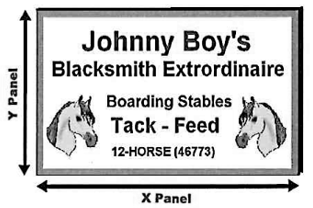
- Sign copy as an illuminated architectural element of a building shall be calculated as that portion of the illuminated surface or illuminated element which contains sign copy (see Figure 5).
Figure 5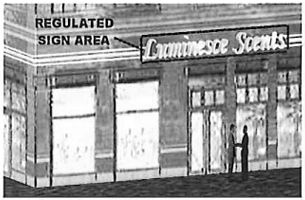
- The regulated area of a monument sign shall include all parts of the sign or structure that contain identification (words or symbols) and information (see Figure 6).
Figure 6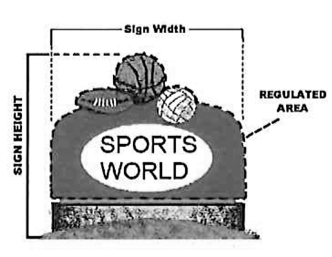
- The regulated area of a pylon sign shall include all parts of the sign or structure that contain identification (words or symbols) and information (see Figure 7).
Figure 7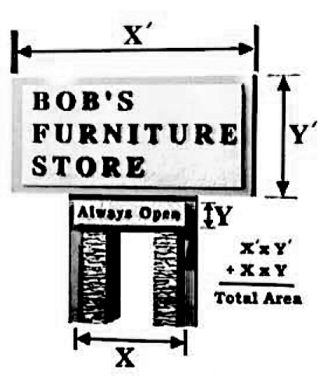
- For sign copy that is mounted as individual letters and/or graphics against a wall, window, or fascia of a building or other structure that has not been painted, textured, or otherwise altered to provide a distinctive background for the sign copy, the area shall be defined as the area enclosed by the smallest 8-sided polygon that will enclose all sign area (see Figure 3).
- Multiple Face Signs (Including, But Not Limited to, Pylon or Monument Signs).
- Double Panel. If the interior angle between two faces is 45 degrees or less, the sign area to be measured is a single face. If the angle is greater than 45 degrees, the sign area to be measured will be the area sum of the areas of the two faces (see Figure 8).
Figure 8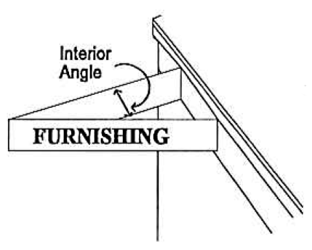
- Three or More Faces. The sign area shall be the sum of the areas of the three or more faces.
- Double Panel. If the interior angle between two faces is 45 degrees or less, the sign area to be measured is a single face. If the angle is greater than 45 degrees, the sign area to be measured will be the area sum of the areas of the two faces (see Figure 8).
- Non-Planer Signs. For spherical, free-form, or other non-planer signs, the sign area shall be the sum of the areas of the four vertical sides of the smallest polyhedron that will encompass the sign structure (see Figure 9).
Figure 9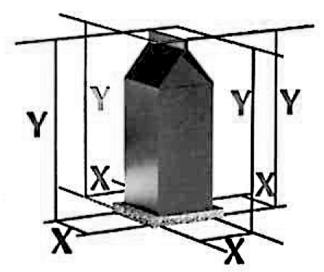
- Single Plane/Panel Signs. Regulated area shall be according to the following standards:
(LDC 2008, § 15A-26-05)
21-26-6 Standards For Permanent Signs Allowed Without A Permit
- Building Identification. Numbers which are used to denote the address of a building shall not be counted against the allowable square footage for the same building, but must comply with the standards for building identification as found in Chapter 21-29.
- Home Occupations. A legally licensed business in a residence may have a single, one square foot in area, non-illuminated, flat wall sign mounted to the residence.
- Institutional Uses. Churches, public schools, public utility companies, libraries, governmental buildings, parks, public golf courses, etc., are allowed a single monument sign of 32 square feet per street frontage. Wall signs shall be regulated as set forth in this chapter.
- Memorial Signs. Memorial signs include signs or tablets with the names of buildings and date of erection cut into any masonry surface or inlaid so as to be part of the building.
- Neighborhood Identification Signs. In any zone district, a sign, masonry wall, landscaping, and other similar materials or features may be combined to form a display for a neighborhood or planned unit development project identification provided that such signs comply with the monument sign standards herein.
- Notice Bulletin Boards. Notice bulletin boards for institutional buildings may not exceed 32 square feet in area. Such signs must be oriented solely to the interior of the property and not be used to direct exterior vehicular attention to the institution or its services.
- Plaques. Plaques, name plates, and commemorative plaques of recognized historical agencies, not exceeding two square feet, may be fastened directly to a building.
- Wayfinding Signs. As set forth by the Sandy City Construction Standards.
- Symbols or Insignia. Religious symbols, identification emblems of religious orders, or historical agencies are permitted provided that such signs conform to the relevant wall or monument sign standards herein.
(LDC 2008, § 15A-26-06)
21-26-7 Standards For Permanent Signs That Require A Permit
- Signs on Awnings and Canopies. Signs on awnings and canopies must meet the following standards:
- Materials. Awning and canopy coverings shall be made of Sunbrella or other similar material. Materials with a glossy finish are not permitted.
- Awnings. Awnings on nonresidential buildings are required to be approved by the Planning Department and community development department. (For appropriate awning placement and dimension standards, see the Sandy City Architectural Design Standards.)
- Signs on Awnings. Signs on awnings shall be limited to street level businesses only (see Figure 10). Signage on an awning shall be limited to 40 percent of the awning. Total copy area on awnings shall not exceed 15 percent of the primary business wall area. Translucent letters or accents sewn into awnings are permitted.
Figure 10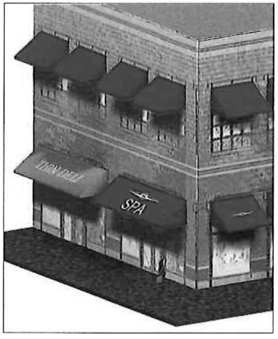
- Canopies. No sign shall be constructed or placed on top of the roof of any canopy. Translucent letters or accents sewn into opaque canvas or acrylic coverings are permitted up to 40 percent of a canopy face (see Figure 11). (For appropriate canopy placement and dimension standards see the Sandy City Architectural Design Standards.)
Figure 11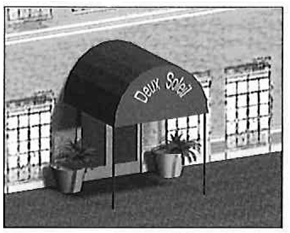
- Illumination of Awnings or Canopies. Illumination of awnings or canopies with signage shall be external. Backlit awnings may be used in conjunction with other site lighting for lighting walkways, entrances, and providing a safe environment.
- Signs on Awnings or Canopies in Combination with Wall Signs. Combinations of signs on awnings or canopies with wall signs are permitted. If a combination of awning and wall signage will be used, the signage on the awning shall be limited to 25 percent of the awning. Total allowable copy area between the awnings and wall signage shall not exceed 15 percent of the business' primary elevation.
- Directional or Instructional Signs. Signs which provide direction or instruction and are located entirely on-premises are permitted. Directional signs shall not exceed four square feet in area or four feet in height (see Figure 12). The number allowed shall be determined by the Director during site plan review and shall be the minimum required for safe circulation of traffic onto and within a development.
Figure 12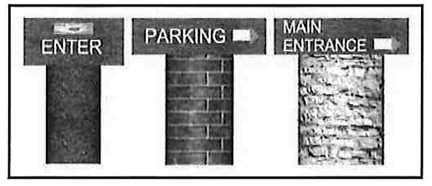
- Pylon Signs (On-Premises) (See Figure 13). The standards for the use of pylon signs are as follows:
- Developments, Planned Centers, or Parcels Less than Seven Acres. No pylon signs are allowed, only monument signs.
- Developments, Planned Centers, or Parcels More Than Seven Acres. The Director may approve one pylon sign per street frontage. No pylon sign shall be allowed for any planned center or parcel that has less than 300 feet of street frontage.
- Properties Along Interstate 15 (I-15). The following parcels or developments may apply for a pylon sign:
- Parcels adjacent to and fronting I-15 or the I-15 frontage road where it runs adjacent to I-15.
- Properties north of 9000 South on the west side of the freeway and within 100 feet of the I-15 right-of-way.
Figure 13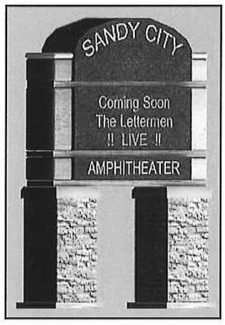
- Area Standards. A sign area may not exceed the size set forth in this chapter and must be part of an approved sign theme. Reader boards, changeable copy areas, and electronic message centers shall not exceed 50 percent of the total sign copy area of the sign.
- Height Standards.
- The height of a pylon sign shall be the distance from the highest point of the sign to the top of the curb or sidewalk or crown of the street when there is no curb or sidewalk. Signs may not exceed 25 feet above grade. Properties along I-15 or the frontage road may have a height not greater than 25 feet above the nearest traveled freeway lane or frontage road, whichever is greater.
- The Director may grant a special exception for additional height to businesses that are adjacent to a freeway overpass or similar view-obscuring structure (excluding vegetation) based on the following criteria and submittals:
- A topographic map with one-foot interval contours is provided to illustrate existing conditions at the site.
- Visual simulations or scaled profile drawings are provided which illustrate the required and requested sign heights in relation to the view-obscuring structure.
- The additional height is the minimum necessary to provide reasonable visibility above the view-obscuring structure.
- Location Standards. Signs must be located within the 30-foot setback area from the property line. Signs within the visibility triangle may be allowed with the permission of the City Transportation Engineer.
- Support Standards. All such signs must have the structural supports covered or concealed with pole covers (pylon covers). The covers must utilize materials and be architecturally compatible to the building or development to which it is associated (see Figure 13).
- Gas Island Canopies. Signage on canopies over gas islands are regulated as follows:
- Sign copy, corporate logos, etc., may be a maximum of 15 percent of the vertical canopy face per elevation.
- Individual letters, logos, or symbols may not project above or below the canopy face or project out from the surface of the canopy more than ten inches.
- Marquees. Marquees may not extend more than six feet from the building face and maintain a minimum eight-foot clearance above grade. The sign should blend with the aesthetics of the building and surrounding natural and manmade environment. The color, style, size, scale, and proportion of the sign should enhance the exterior of the building and not place too much bulk, nor be an excessive external distraction on the building's exterior (see Figure 14).
Figure 14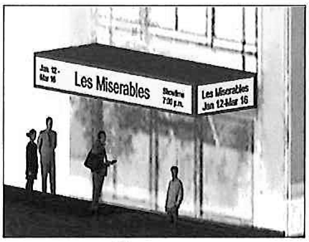
- Menu Boards. Menu board locations for drive-in and drive-up window restaurants are to be reviewed and approved by the Community Development Department at site plan review. They shall be located behind the front landscaped setback area. One sign is allowed with a maximum area of 35 square feet, and an additional sign with a maximum area of nine square feet is allowed per lot. Neither sign shall exceed eight feet in height. The changing of copy within these signs does not require a permit.
- Monument Signs. The following standards shall apply:
- Allowance. Monument signs are allowed for any parcel provided that the parcel has 50 feet of street frontage.
- Planned Commercial Centers, Pad Buildings, and Buildings Not Associated with a Planned Commercial Center. Planned commercial centers, pad buildings, and buildings not associated with a planned commercial center are allowed a monument sign on each associated street frontage. However, the signs must be separated by at least 100 feet as measured diagonally across the property from center to center of both signs and shall be no closer than 100 feet to any other sign (monument or pylon/pole) located on the same frontage. Signs within the visibility triangle may be allowed with the permission of the City Transportation Engineer.
- Planned Commercial Centers.
- Monument signs may have a logo/identification theme as part of the sign.
- The area of the sign is determined by the length of the frontage of any freestanding buildings and contiguous parcels included within the planned commercial center.
- Pad Building Within a Planned Commercial Center. The freestanding building lot must be contiguous to a major arterial street and have at least 100 feet of street frontage to have a monument sign.
- Building Not Associated With a Planned Commercial Center. A building not associated with a planned commercial center is allowed one monument sign provided that the parcel has at least 50 feet of street frontage and can locate the sign per the above standards.
- Planned Commercial Centers.
- Area Standards. The sign area allowed for a monument sign is determined as shown in Section 21-26-12(a), Attachment A. Reader boards (changeable copy areas) and electronic message centers may be allowed; however, such devices shall not exceed 50 percent of the total sign face.
- Height Standards. The height of a monument sign shall be the distance from the highest point of the sign to the height of the street curb or sidewalk.
- Sign Face. The cabinet or face of a monument sign may not exceed five feet in vertical size.
- Overall Height. Maximum height for a monument sign is six feet. Signs placed within bermed areas may have an additional inch of overall height for each vertical inch of berm directly under the sign. In such cases the entire frontage must have existing or equal berming treatment, and the sign shall not exceed an overall height of eight feet (see Figure 15). Site centric architectural features or enhancements to the sign supports are excluded (see Figure 16).
Figures 15 and 16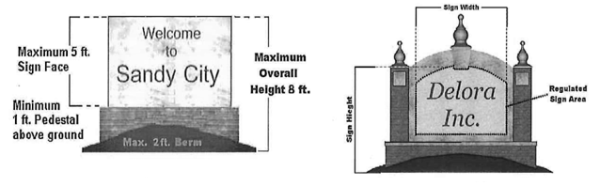
- Pedestal Standards. All monument signs must have at least a one-foot opaque pedestal designed as part of the foundation which conceals any pole support. Height of the pedestal is measured from the highest grade below the sign. The pedestal should run at least 50 percent of the horizontal length of the sign and extend from the sign into the ground below the sign. There shall be no copy or sign element on the pedestal, except addresses. The pedestal shall utilize materials and design elements that relate the sign to the associated buildings. The Director may review and approve/deny any variation to the pedestal base requirements based on-site characteristics, topography, or design integrity.
- Suspended Signs. Suspended signs used in place of wall signs are allowed if the architecture of the building or planned center lends itself to that design (see Figure 17). The following shall apply:
Figure 17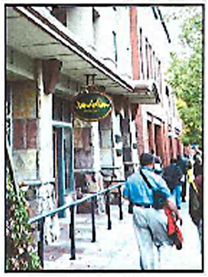
- The Director must review any proposal for a suspended sign for compatibility with the building.
- No sign may project beyond the outside limit of the arcade, marquee, canopy or facade to which they are attached.
- Any sign must have at least an eight-foot clearance above the sidewalk.
- There must be a minimum horizontal distance of 30 feet between signs suspended perpendicular to a building face.
- Signs suspended parallel to a building face may not exceed 15 percent of the first floor elevation of the business.
- Projecting Signs. Projecting signs shall only be allowed within the Historic Sandy Business District, mixed use projects, or other developments which have an approved sign theme. The following shall apply:
- Projecting signs are allowed by themselves or in conjunction with signs on awnings. They will not be allowed in conjunction with other wall signs.
- The sign should blend with the aesthetics of the building and the surrounding natural and manmade environment. The color, style, size, scale, and proportion of the sign should enhance the exterior of the building and not place too much bulk, nor be an excessive external distraction on the building's exterior. Equal treatment and design consideration should be given to any mounting and supporting structure for the sign (see Figure 18).
Figure 18
- No sign shall be larger than 16 square feet.
- Projecting signs shall not extend more than six feet, nor have less than a six-inch spacing from the attached vertical wall. They shall have a minimum clearance of nine feet from the sidewalk or finished grade and shall be no more than 12 inches thick (see Figure 19). There must be a horizontal separation of 20 feet from other projecting signs.
Figure 19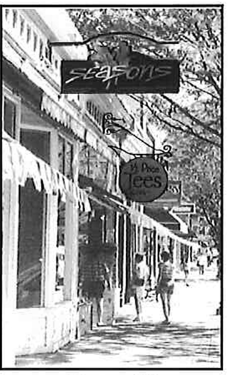
- Electronic message centers or changeable copy signs are not allowed.
- Only the street level tenants in a multi-story building may use projecting signs.
- Wall Signs. The following criteria shall be met:
- Location Standards. Wall signs must meet the following location standards:
- They must be located on a wall under complete control by the tenant applying for the signage or as otherwise permitted by the Director as stated below.
- Upon review and approval by the Director, a business may request the placement of a business identification sign upon an area within the same development not otherwise controlled by the named business. The following criteria shall be considered:
- The proposed sign is in close proximity to the identified business.
- The proposed sign square footage is counted against the allowable square footage for the area upon which it is mounted.
- They shall not cover architectural features or elements on buildings.
- No part of the sign or the sign structure shall project above or below the highest or lowest part of the wall upon which the sign is mounted or painted (see Figure 20).
Figure 20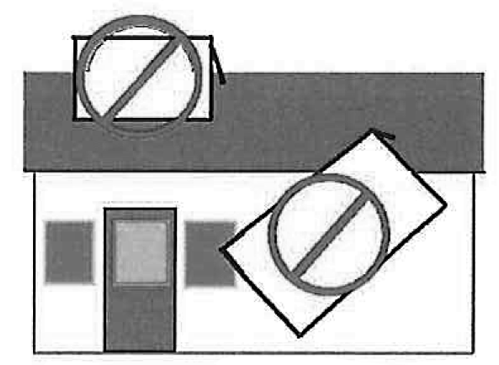
- Businesses which back directly onto residential areas may be allowed non-illuminated signs on the rear of the building.
- Design Standards. Wall signs must meet the following location standards:
- Signs shall blend with the surrounding natural and manmade environment (e.g., the color, style, size, scale, proportion) to enhance the exterior of the building and not place too much bulk and external distractions on it.
- Wall signs with changeable copy, reader board, or electronic message capability are not allowed.
- Wall signs shall not project more than 18 inches from the wall to which they are attached.
- Area Standards, Single Tenant Buildings. The area of signage allowed on a wall shall be based on the dimensions of the exterior wall (see Figure 21) under complete control by the tenant applying for a permit and under the following guidelines:
- Signage which utilizes shaped or layered cabinet signs or with three-dimensional faces and/or individual letters may not occupy more than 15 percent or 600 square feet, whichever is less, of any one wall.
Figure 21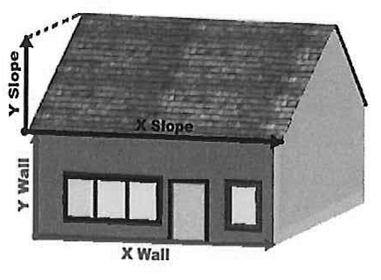
- For multiple walls, signage which utilizes shaped or layered cabinet signs with three-dimensional faces and/or individual letters may occupy the combined area of the walls as follows:
- For two walls, up to 20 percent.
- For three walls, up to 25 percent.
- For four walls, up to 30 percent.
- Signage which utilizes flat, non-dimensional cabinet signs with 90 degree corners may not occupy more than five percent or 40 square feet, whichever is less, of any wall.
- Signage which utilizes shaped or layered cabinet signs or with three-dimensional faces and/or individual letters may not occupy more than 15 percent or 600 square feet, whichever is less, of any one wall.
- Area Standards, Multi-Tenant Buildings.
- Ground floor tenants which have direct access from grade into their tenant space may utilize the standards specified for single tenant buildings above. Such tenants whose entrance is located under a canopy or like feature must locate their signs under such feature unless the Planning Commission has approved a sign theme stipulating otherwise.
- Tenants who access their space through a common entrances or tenants above ground level are not allowed to have individualized wall signs on the exterior of the building. They must be located on a directory sign located next to or within the common entrance of the building. If located on an exterior wall, such directory signs may not exceed 12 square feet and copy shall not exceed one inch in height.
- In addition to ground floor tenant signs allowed above, buildings with more than two stories are required to have a building identification sign. This may be the name of the major tenant in the building. All wall signs must comply with the Planning Commission approved sign theme for the building.
- Multiple Signs for a Single Tenant on an Elevation.
- The maximum number of wall signs on a wall controlled by a single user shall be seven and shall be appropriate to the scale of the building.
- Multiple wall signs may utilize individual letters and/or shaped or layered cabinet signs with three-dimensional faces in any combination not to exceed 15 percent of any one wall. (See Figure 22.)
Figure 22
- Painted Signs/Murals. Painted signs or murals applied directly to any building face must have specific approval of the Director. If the building is in Historic Sandy, the sign must have approval of the Planning Commission.
- Signs on Sloping or Mansard Roofs.
- Signs shall not be mounted on a sloping or roof portion of any building.
- Signs may be mounted within a roof area if mounted upon a vertical surface such as a gable, dormer or similar structure.
- Such signs will only be allowed to avoid architectural conflicts on the face of the building. They shall not be approved solely for better signage visibility.
- Such vertical structure must be finished in a manner that closely matches the architectural design, materials and colors of the building and must be permanently integrated and attached to the roof.
- Signs mounted upon a vertical structure integrated into the sloping roof of a building must meet the size requirements as set forth in this chapter. Such signs may not protrude beyond the vertical face of the structure or cover any architectural ornamentation.
- If a roof structure is to be constructed for purposes of mounting a sign, the applicant must apply for, and receive, the proper building and zoning clearances and permits before a sign permit will be issued.
- Location Standards. Wall signs must meet the following location standards:
(LDC 2008, § 15A-26-07; Ord. No. 14-34, 11-13-2014; Ord. No. 15-06, 3-23-2015)
21-26-8 Temporary Signs
- General Provisions for All Temporary Signs. The following shall apply to all temporary signage as outlined herein:
- Signs shall be removed as specified herein, unless otherwise indicated in this chapter. There are no specific timeframes for noncommercial opinion signs.
- Signs may only be located on private property and must have the property owner's permission. Signs may not be placed on public property, or in a public right-of-way unless otherwise allowed herein, such as banners on public light poles and public necessity signs.
- Signs shall not be erected in a manner as to constitute a roof sign.
- Signs may not flash, blink, be illuminated, spin, rotate, block traffic visibility, constitute a vehicular or pedestrian traffic hazard, or cause a public nuisance of any kind.
- Signs shall not be attached to utility poles, fences, or trees.
- Signs must be secured to a building or the ground.
- Signs may be attached to existing permanent signs only for the grand opening period.
- Signs may cover or obscure an existing permanent sign only if the business has changed ownership or changed names.
- No off-premises temporary signs are allowed except those specifically allowed herein.
- Signs shall require application and approval from the Department for issuance of a temporary sign permit prior to installing or erecting a temporary sign, unless exempted in this section.
- All temporary signage must be subordinate to and be positioned in such a way so that any permanent ground-mounted signage on the same property remains visible.
- All signs and sign supports, including decorative covers, must be maintained in a graffiti-free and clean, like-new condition. Allowed banners and flags must be repaired or replaced when the surface area is frayed, torn, defaced or damaged.
- Any sign not expressly allowed by this ordinance is prohibited.
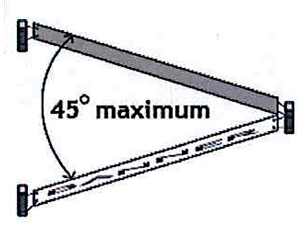
- Signs may be two-faced but may not be split faced if the interior angle is greater than 45 degrees.
- Temporary Signs Allowed Without a Permit in All Zones.
- Signs Allowed Within the Public Right-of-Way.
- Banners on Public Light Poles. The City may erect community event banners on public light poles within the right-of-way under the following guidelines (see Figure 23). Signs shall:
- Be constructed and maintained with durable, weather-resistant materials in a graffiti-free and clean, like-new condition. Allowed banners must be repaired or replaced when the surface area is frayed, torn, defaced or damaged.
Figure 23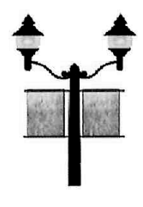
- Be uniform in size and be no larger than three feet wide and eight feet tall. A maximum of 48 square feet of banner signage shall be allowed per light pole.
- Maintain clearance height of at least 14 feet above the right-of-way.
- Be limited to a maximum of two banner signs, one on each side of the pole.
- Be placed on the light pole by permanent support brackets (top and bottom) meant for the placement of a sign so that such signs shall hang taut.
Public Necessity Sign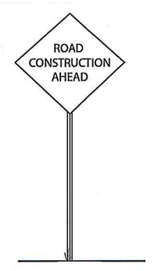
- Be constructed and maintained with durable, weather-resistant materials in a graffiti-free and clean, like-new condition. Allowed banners must be repaired or replaced when the surface area is frayed, torn, defaced or damaged.
- Public Necessity Signs. Such signs may be of the type, number, area, height, location, or illumination authorized by the applicable law, statute, or ordinance.
- Banners on Public Light Poles. The City may erect community event banners on public light poles within the right-of-way under the following guidelines (see Figure 23). Signs shall:
- Community Signs. Community Signs require review by the Community Development Department and/or other pertinent City departments for compliance with the following criteria:
- May not be attached to another temporary or business sign, traffic device, or a permanent public necessity sign.
- May not exceed 32 square feet.
- Signs attached to a building may be larger, but must be appropriate in scale and location and not pose a public safety risk as approved by the Director.
- Such signs for any single purpose or event may not be displayed for more than 30 days. However, the Director may approve community signs for long-term purposes subject to review on a 90-day basis.
- Holiday Decorations. Holiday decorations are noncommercial displays primarily decorative in nature which are clearly incidental, customary, and commonly associated with any national, local, or religious holidays. Such displays may include any type, number, and area and shall be contained entirely within the boundaries of the lot or premises on which they are erected. They must be placed so as to avoid confusion with authorized traffic lights and signals and shall conform to traffic safety standards. Within nonresidential zoning districts they shall not be displayed for more than 45 days prior to and not more than 14 days after the holiday.
- No Trespassing or No Dumping Signs. One sign not exceeding 16 square feet, or four signs not exceeding four square feet each, may be installed to prevent trespassing or unauthorized dumping on property. The Director may allow more signs, based upon the size and location of property in order to adequately notify the public.
- Noncommercial Opinion Signs. Noncommercial opinion signs are subject to all requirements and provisions of the Utah Code Annotated and other laws as may be applicable. Such signs are regulated as follows:
- Residential Zones. Individual signs may not exceed 32 square feet. The maximum height of such signs shall be six feet.
- Nonresidential Zones. Individual signs may not exceed 32 square feet. The maximum height of such signs shall be eight feet.
- Construction Vehicle and Trailer Signage. Signs on licensed commercial vehicles, including construction trailers that are kept on-site and used for daily business operations for an approved project under development.
- Signs Allowed Within the Public Right-of-Way.
- Temporary Signs Allowed Without a Permit; Residential Districts (Including Residential Developments Within Nonresidential Zones Such as MU, BC, IC, SD(EH) and SD(X)).
- Properties Subject to Development or Construction. Properties which have been approved for a residential development are subject to the following guidelines:
- Properties subject to development or construction shall be allowed one or more on-site signs, per street frontage, as shown in the table below.
- The size allowed for the signs depend on the number of lots to be developed as shown in the following table:
Number of Units/Lots 2—4 5—24 25—49 50 or more Maximum size of signs (square feet) 32 64 96 128 Maximum height (ft.) 12 12 12 12 Split option (total number of signs). Multiple signs shall be separated by at least 100 feet. 1 (not to exceed 32 square feet) 2 (not to exceed 64 square feet) 3 (not to exceed 96 square feet) 4 (not to exceed 128 square feet) - Three directional signs may be allowed for a developer to guide traffic to a site. They are limited to 32 square feet in area and eight feet in height and must be placed entirely upon private property. These signs must have written permission of the property owner and be presented to the Director for approval before they are erected. The duration of display shall be the same as on-premises development promotional signs.
- Such signs shall be removed within one year after issuance of the final building permit for the residential development.
- Residential Properties Subject to Sale, Lease, Rent, or Auction. Except as otherwise allowed herein under grand opening provisions, properties legally subject to sale, lease, rent, or auction shall be allowed one on-site sign, per frontage, of one of the following types without necessity of an application for or issuance of a sign permit:
"T" Post Sign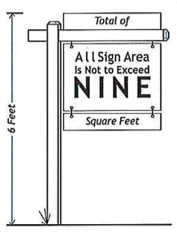
- One "T"-shaped post sign subject to the following requirements:
- Such sign shall be a maximum of nine square feet hanging from a "T" shaped mounting post;
- The maximum height of such signs shall be six feet;
- Such a sign and post shall be set back from the property line not less than three feet and cannot obstruct the right-of-way;
- Such sign shall be allowed, without necessity of a permit, for the duration of the property's sale, lease, rent, or auction.
Yard Sign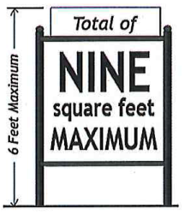
- One yard sign subject to the following requirements:
- The maximum area of such signs shall be nine square feet;
- The maximum height of such signs shall be six feet;
- Such sign shall be set back from the property line not less than three feet and cannot obstruct the right-of-way;
- Such sign shall be allowed, without necessity of a permit, for the duration of the property's sale, lease, rent, or auction.
Window Sign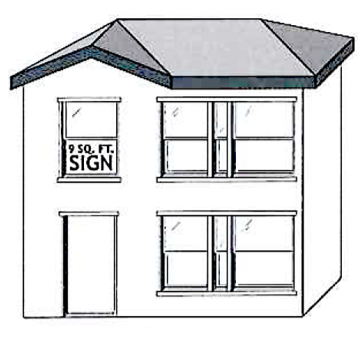
- One window sign, per street frontage, subject to the following requirements:
- The maximum area of such signs shall be nine square feet;
- Such sign shall be allowed, without the necessity of a permit, for the duration of the property's sale, lease, rent, or auction.
- Properties Subject to Sale, Lease, Rent, or Auction. Properties subject to sale, lease, rent, or auction shall be allowed off-site signs as follows:
- Such signs may be used to direct traffic to a property for sale, lease, rent, or auction.
- Such signs shall be used only when a representative is on duty at the residence for sale, lease, rent, or auction or the property owner is present at the property for inspection.
- The placement of such signs shall require permission of the property owner of properties on which the signs are to be placed.
- The maximum area of such signs shall be six square feet each.
- The maximum height of such signs shall be three feet.
- One direction sign is allowed that applies to the provisions herein to be located on each corner of intersecting streets starting from the closest arterial street leading directly to the property (see Figure 24).
Figure 24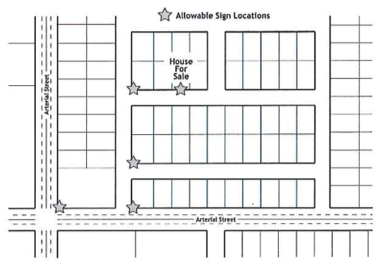
- Such signs shall be located outside the sight visibility triangle at any street or driveway intersection, as determined by the Sandy City Transportation Engineer.
- One "T"-shaped post sign subject to the following requirements:
- Vehicle Signs. Any sign that is attached to or placed on a vehicle or trailer that is parked on private property or driven upon public streets where:
- The vehicle or trailer is in operating condition, currently registered and licensed to operate on public streets and is actively used for the daily operations of the business to which such signs relate.
- The vehicle or trailer does not violate the provisions related to parking of a commercial vehicle in residential zones.
- Properties Subject to Development or Construction. Properties which have been approved for a residential development are subject to the following guidelines:
- Temporary Signs Allowed Without a Permit; Nonresidential Zones.
- Changing Copy. The changing of copy on a marquee, reader board, electronic message center, or other replaceable copy area is allowed when such is part of a permitted sign. Sign face changes are not included in this category and as such require a permit, except for those individual tenant faces within a multi-tenant or shared monument or pylon sign.
- Gas Island Signs. A sign (four square feet or less) may be located at each gas pump and must be located directly on top of a gas dispenser. Such signs shall not project beyond the pump structure.
- Window Signs. Window signs are allowed for ground floor tenants only, except as otherwise allowed herein. They shall not be located as to block clear view of exits or entrances or to create a safety hazard. Any window sign shall not disrupt the visibility from employee stations to the parking area or of law enforcement personnel into the business. The following shall also apply:
- They shall not cover more than 50 percent of any single window, nor more than 33 percent of the entire surface area of a group of windows on each building face. A single window is any window, or section of windows, that is separated from another window by 12 inches or more. Any door with windows is always considered a separate window (see Figure 25).
Figure 25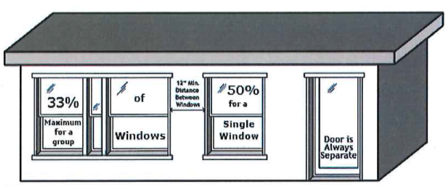
- Window signs and permanent wall signs combined shall not exceed 20 percent of the exterior wall area of the tenant.
- Properties subject to sale, lease, rent or auction in structures that are three stories or larger, may be allowed to have window signs up to 100 square feet. The square footage is allowed per street frontage; however, the signs are not required to be on the side facing the street.
- They shall not cover more than 50 percent of any single window, nor more than 33 percent of the entire surface area of a group of windows on each building face. A single window is any window, or section of windows, that is separated from another window by 12 inches or more. Any door with windows is always considered a separate window (see Figure 25).
- Road Construction Periods. Businesses with frontage immediately adjacent to a road right-of-way construction zone may have one banner, per street frontage, not to exceed 32 square feet nor five feet in height during periods of construction occurring within the road right-of-way. The signs shall be located on-site and may be in landscape areas abutting the right-of-way or on the building. Signs must be removed after completion of construction activities.
- Temporary Businesses. Temporary businesses are allowed only two temporary signs under the following conditions:
- The two signs may only be banners and/or portable signs.
- Each banner may not exceed 32 square feet and portable signs must comply with the size and area requirements for portable signs allowed without a permit and shall not be allowed in the public right-of-way.
- Properties Subject to Development or Construction. Properties which have a site plan approved for development are subject to the following guidelines:
- Properties subject to development or construction shall be allowed one or more on-site signs, per street frontage, as shown in the table below.
- The size of the signs depend on the number of acres involved in the project as shown in the following table:
Acreage of Development 0—4.9 5—9.9 10 or more Maximum size of signs (square feet) 64 128 256 Maximum height (ft) 15 15 15 Split option (total number of signs). Multiple signs shall be separated by at least 100 feet. 1 (not to exceed 64 square feet) 2 (not to exceed 128 square feet) 3 (not to exceed 256 square feet) - Such sign shall be removed before permanent signs are installed.
- Properties Subject to Sale, Lease, Rent, or Auction. Properties subject to sale, lease, rent, or auction shall be allowed temporary signs as follows:
- Window signs according to the provisions of this section; or
- One freestanding sign for which the maximum area of such signs shall be 64 square feet and the maximum height of such sign shall be 12 feet.
- Portable Signs. One portable sign is allowed per business under the following guidelines:
- The sign is entirely outside of the public rights-of-way, roadways, on-site drive isles, landscape areas, or designated parking areas. The sign shall be located on the pedestrian areas abutting the business and within the extent of the business face (see Figures 26 a and b).
Figure 26a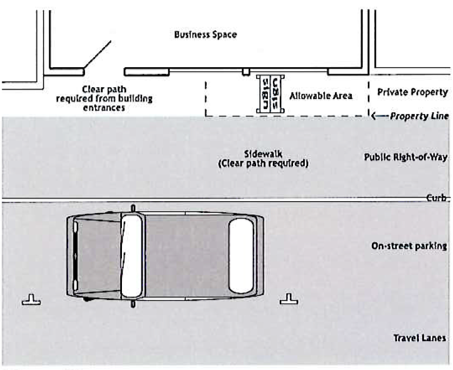
Figure 26b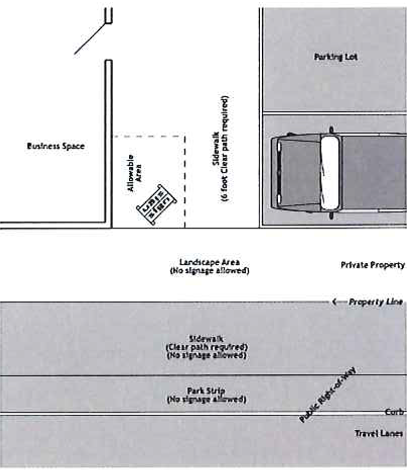
- A six-foot-wide clear path area on the existing hard surface shall be maintained, and such sign shall not obstruct any pedestrian or wheelchair access, including, but not limited to, access from the sidewalk to any of the following:
- Transit stop areas.
- Designated disabled parking spaces.
- Disabled access ramps.
- Building exits including fire escapes.
- The sign shall not exceed 48 inches in height, nor be more than 24 inches wide (see Figure 27).
Figure 27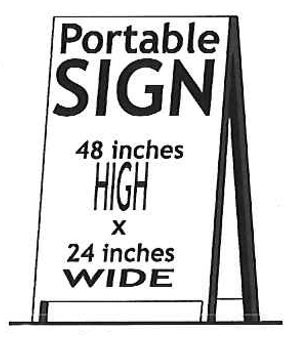
- Such signs shall not rest upon or be attached to any other signage, utility pole or device, or any sign identified as a public necessity sign.
- Such signs shall be located:
- On the property containing the business which the sign represents; or
- In the case of multi-tenant property, within 100 feet of the business which the sign represents.
- The sign is entirely outside of the public rights-of-way, roadways, on-site drive isles, landscape areas, or designated parking areas. The sign shall be located on the pedestrian areas abutting the business and within the extent of the business face (see Figures 26 a and b).
- Free Promotional Periods. A business may advertise a special service, product, or sale during the following periods without a permit, under the following provisions:
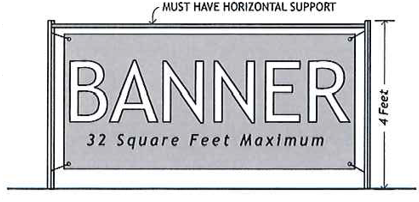
- Only one banner or up to two blade banners, per property, may be used on-site in nonresidential zones. Groups of blade banners shall be separated by another group of blade banners by at least 100 feet. Such signs shall not exceed 32 square feet.
- Signs must be securely attached to a structure or to ground posts. Banners mounted to the ground may be not higher than 48 inches from the ground to the top of the sign and must have a stabilizing crossbar between the ground posts at the top of the sign.
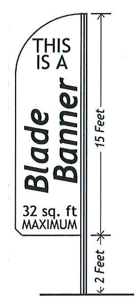
- Blade banners shall not exceed an overall height of 17 feet. The blade banners must be ground-mounted using a post or supported in a stand.
- Signs shall be set back from the property lines a minimum of three feet and cannot obstruct the right-of-way.
- Signs shall not be placed where they obstruct the view of any sign identified as a public necessity sign.*See special promotional periods for additional time to display banner and/or blade banners (signs that require a permit).
Free Period Permitted Display Time February 11—21 March/April Two weeks before Easter Sunday May 25—30 July 1—5 and 20—25 September 1—7 October 24—31 November 4th week of November December December 10 through January 2
- Vehicle Signs. Any sign that is attached to or placed on a vehicle or trailer that is parked on private property or driven upon public streets where:
- The vehicle or trailer is in operating condition, currently registered and licensed to operate on public streets and is actively used for the daily operations of the business to which such signs relate and is parked a minimum of 50 feet away from the right-of-way of a public or private street; or
- The vehicle or trailer is not actively used for the daily operations of the business and is parked on the private property of the business to which the sign relates; and
- The vehicle is not to be used as parked or stationary outdoor display signage.
- Banners on Light Poles for Private Developments and Public Facilities. Banners on light poles may be used on developments within the CBD and RC Zones, a planned shopping center, or planned development which has seven acres or larger and having at least 300 lineal feet of frontage, and under the following guidelines (see Figure 23).
Figure 23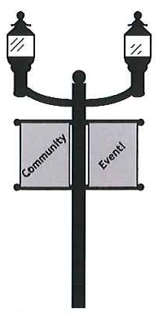
- Each light pole may have a maximum of two banner signs.
- Banners shall be uniform in size and be no larger than three feet wide and eight feet tall. A maximum of 48 square feet of banner signage shall be allowed per light pole. Each light pole may have a maximum of two banner signs, one on each side of the pole.
- Maintain clearance height of at least ten feet if located in a landscape island or 14 feet if vehicular access is allowed beneath the banners.
- No light pole shall be erected with the intent of hanging a banner unless the primary purpose of the light pole is to provide light in parking areas and driveways.
- Signs shall be placed on the light pole via permanent support brackets (top and bottom) meant for the placement of a sign where such signs shall hang taut.
- Signs shall be constructed and maintained with durable, weather-resistant materials in a graffiti-free and clean, like-new condition. Allowed banners must be repaired or replaced when the surface area is frayed, torn, defaced or damaged.
- Temporary Signs Requiring a Permit; Residential and Nonresidential Districts. Temporary signs displayed during the following promotional periods require a temporary sign permit and may not be prolonged by those above periods allowed without a permit:
- Properties Subject to a Business Grand Opening. Temporary signs erected for the opening of a business or the relocation or change of ownership of an existing business may be allowed within the first year of operation for a period not to exceed 45 calendar days. A combination of banners, blade banners, wind signs, inflatables, beacon lights, portable, and mobile signs may be used. The signs must be removed at the end of the 45-day period.
- Multi-Family Projects. New for rent or lease multi-family projects are permitted to use a combination of banners, blade banners, directional, and A-frame signs in order to advertise the new units under the following provisions:
- Banners are limited to one per building and must be installed on the building. The size of the banner may be determined by the Director and is dependent upon the size and scale of the sign and the number of units in the project. As a maximum, the banner may not exceed five percent of the building face. All other signs are prohibited within the right-of-way.
- Projects containing up to 49 units will be permitted to install temporary signs for 45 days. Projects that have 50-99 units will be permitted to install temporary signs for six months. Projects with over 100 units will be permitted to install temporary signs for one year.
- Allowed signs must be repaired or replaced when the surface area is grayed, torn, defaced, or damaged.
- Special Promotions. A business may apply for up to four special promotion periods during the calendar year, under the provisions listed below. Each period may not exceed seven days in length. These periods may run consecutively.
- Only one banner, or up to two blade banners, per property, may be used on-site in nonresidential zones. Groups of blade banners shall be separated by another group of blade banners by at least 100 feet. Such signs shall not exceed 32 square feet.
- Signs must be securely attached to a structure or to ground posts. Banners mounted to the ground may be not higher than 48 inches from the ground to the top of the sign and must have a stabilizing crossbar between the ground posts at the top of the sign.
- Blade banners shall not exceed an overall height of 17 feet. The blade banners must be ground-mounted using a post or supported in a stand.
- Signs shall be set back from the property lines a minimum of three feet and cannot obstruct the right-of-way.
- Signs shall not be placed where they obstruct the view of any sign identified as a public necessity sign.
- Only one banner, or up to two blade banners, per property, may be used on-site in nonresidential zones. Groups of blade banners shall be separated by another group of blade banners by at least 100 feet. Such signs shall not exceed 32 square feet.
- Properties Subject to a Business Grand Opening. Temporary signs erected for the opening of a business or the relocation or change of ownership of an existing business may be allowed within the first year of operation for a period not to exceed 45 calendar days. A combination of banners, blade banners, wind signs, inflatables, beacon lights, portable, and mobile signs may be used. The signs must be removed at the end of the 45-day period.
(LDC 2008, § 15A-26-08; Ord. No. 11-24, 12-5-2011; Ord. No. 16-14, 3-23-2016; Ord. No. 17-13, 5-11-2017)
21-26-9 Sign Permit Process
- Sign Design. Each sign submitted for approval shall incorporate the following elements:
- Architectural compatibility.
- Size, scale, proportion (balance).
- Illumination.
- Color and style.
- Location.
- Landscaping.
- Required Permit Information.
- Information Required for All Applications.
- Proof of current Sandy City business license.
- Business address and phone number.
- Address of property owner and phone number.
- General or sign contractor license, phone number, and address.
- Value of the sign (including the cost of manufacturing and installation).
- Additional Information Required for Monument and Pylon Signs.
- Plot plan showing relationship of signs to buildings, property lines, setback from public rights-of-way, intersections, easements, driveways, existing site contours one-foot intervals), and nearest monument or pylon signs on the same frontage.
- Two accurately dimensioned, scaled drawings showing height, color, square foot dimensions, landscaping, sign composition, materials, type of illumination, and how the sign will appear from the street.
- Details of sign construction, including an electrical plan and foundation schemes with appropriate engineers' stamps.
- Number of acres and length of lineal frontage of property.
- Additional Information Required for Signs on a Building Exterior.
- Two scaled drawings showing square foot dimensions of both the building and the sign, sign composition, and type of illumination.
- A profile drawing of how the sign will appear from the street/parking area and on the building.
- Details of sign construction, electrical plan, and attachment details with appropriate engineers' stamps.
- Temporary Signs.
- Plot plan showing relationship of signs to buildings, property lines, setback from public rights-of-way, intersections, easements, and driveways.
- Length of period for display.
- Type of request (e.g., grand opening, special promotions, etc.).
- Information Required for All Applications.
- Required Inspections and Tags.
- Permanent Signs. All permanent signs containing electrical components, footings, engineering, or as otherwise required by the Chief Building Official shall receive final inspections by an authorized building official to certify that the placement and construction of such sign is in conformance with representations made in permit applications, and that work is completed and meets all applicable Building and Safety Codes and conditions of approval.
- Temporary Signs. Temporary signs for which a permit is required and has been approved shall have attached thereto a City-issued tag recognizing the temporary nature of its approval. Such tags shall be displayed for the duration of the City-approved period. Inspections shall be made to ensure that the sign is in conformance with representations made in permit applications, and that all applicable codes, standards, and conditions of approval are met.
- Penalties for Installing Signs Without Permits or Inspections. New or existing signs installed or maintained without a required permit or the required inspections will be required to be removed or assessed a penalty fee as outlined by the most recently adopted Sandy City budget at the time the owner/operator of the sign makes application for its permit. A cash bond will be required in accordance with the guidelines stated herein before any subsequent permit applications will be approved for the contracted sign company.
(LDC 2008, § 15A-26-09)
21-26-10 Sign Themes And Special Zones
- Sign Themes.
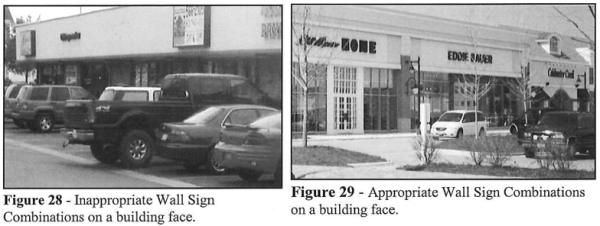
- All multi-tenant centers/buildings must submit a proposal for design and placement of all on-premises signs to the Planning Commission during site plan review. All such developments must have an approved sign theme before any sign permits will be issued to a business locating within it. The use of multiple cabinet signs or combination of cabinet and individual lettering signs shall not be allowed (see Figures 28 and 29).
- Upon planning commission approval, the design and placement of on-premises signs (including any proposed advertising statuary signs) for developments of seven acres or larger and having at least 300 lineal feet of frontage may vary from the regulations set forth herein. The Planning Commission must determine that:
- The proposed sign exceptions are not in conflict with the purpose and intent of this chapter;
- The proposed signs are in architectural harmony with the development; and
- The proposed signs appropriately utilize those elements listed in the design criteria of this chapter.
- All multi-tenant centers/buildings must submit a proposal for design and placement of all on-premises signs to the Planning Commission during site plan review. All such developments must have an approved sign theme before any sign permits will be issued to a business locating within it. The use of multiple cabinet signs or combination of cabinet and individual lettering signs shall not be allowed (see Figures 28 and 29).
- Signs in Special Zones. The rules for signs in special zones (e.g., Civic Center Overlay Zone, the AutoMall District, the CBD Zone, etc.), shall be as described in such zones. However, the Planning Commission may, as part of a conditional use, impose more stringent requirements during conditional use or site plan review.
- Signs on Major Sports Venues.
- All major sports venues must submit a proposal for an overall sign theme showing design concepts and approximate placement of signs. This sign theme may be approved if the Planning Commission can determine that:
- The proposed signs are not in conflict with the purpose and intent of this chapter, and consistent with the General Plan;
- The proposed signs and sign locations are compatible with the architecture of the development; and
- The proposed signs appropriately utilize the elements listed in the design criteria of this chapter.
- The proposed sign theme may include the following:
- A combination of cabinet and individual lettering signs. Changeable copy may be incorporated into approved wall signs.
- The use of individual lettering roof signs if they are mounted to the top of the exterior parapet wall and compatible with the architecture of the development.
- Signs permitted on major sports venues may include the following:
- Interior Stadium Signs. Those signs designed to be viewed by spectators and visitors to the sports venue and only incidentally seen from the exterior or areas accessible by non-paying visitors. Interior signs may include, but are not limited to sponsorship scrim panel signs, wall signs, blade signs, grandstand signs, scoreboard signs, field boards, murals, posters, flags, banners, and wayfinding signs. The number or size of these signs shall not be limited, except as described below:
- Sponsorship scrim panel signs: to be located between the seating structure and the canopy of the stadium.
- Wall signs: these signs are allowed above the wall fascia by no more than four feet.
- Blade signs: to be located upon pedestrian corridors within the venue must be at least eight feet above the walking surface.
- Grandstand signs: signs that are only directed toward the interior of the stadium must either be hidden from exterior view or be architecturally compatible with the structure when viewed from the exterior.
- Scoreboard sign: must be located on a structure facing the playing field. It may also include permanent, non-changeable copy signs. Permanent non-changeable copy signs with individual lettering may be placed above the scoreboard fascia by up to 50 percent of the sign itself.
- Field boards: are allowed around the entire perimeter of the field.
- Exterior Stadium Signs. Those signs, designed to be viewed from the exterior of the building. Exterior signs may include:
- Sponsorship scrim panel signs: may be located between the seating structure and the canopy of the stadium or exterior of scoreboard structure. These signs may also be located on the southwest corner of the canopy structure and may not be higher than the interior scrim signs. Limited to 20 signs.
- Wall signs: must be mounted to wall fascia. These signs are allowed above the wall. The amount of signs is limited to 30 percent of the total exterior wall face square footage. Changeable copy signs may be incorporated into two percent of the total wall signage.
- Roof signs: as regulated in the section above, may be used in combination with wall signs and are counted towards the allowable amount of wall signage.
- Scoreboard signs: that are viewable from the exterior may include permanent, non-changeable copy signs not exceeding 100 percent of the total square footage of the scoreboard. The scoreboard signs do not count towards the allowable amount of wall signage.
- Blade signs: to be located above pedestrian areas on the exterior of the venue must be at least eight feet above the walking surface. These signs may be used in combination with wall signs and are counted towards the allowable amount of wall signage.
- Grandstand signs: signs that are intended to be viewed outside the stadium. They must back up to an interior grandstand sign. These signs may be used in combination with wall signs and are counted towards the allowable amount of wall signage.
- On-premises freestanding signs: one sign per street frontage is limited to 30 feet in height and 100 square feet in sign face area. Up to ten directional signs within the internal road system is limited to 15 feet in height and 100 square feet in sign face area.
- Banners: are allowed in all private parking lots, streets, plazas, and stairways, and must comply with existing banner regulations.
- On-site fencing signs: single faced signs attached to the fence surrounding the parking lot south of the stadium are allowed, provided they comply with the following provisions:
- The proposed sign is not in conflict with the purpose and intent of this chapter; and
- The fence is not located on a property line; and
- The proposed sign shall not exceed four feet in height.
- Interior Stadium Signs. Those signs designed to be viewed by spectators and visitors to the sports venue and only incidentally seen from the exterior or areas accessible by non-paying visitors. Interior signs may include, but are not limited to sponsorship scrim panel signs, wall signs, blade signs, grandstand signs, scoreboard signs, field boards, murals, posters, flags, banners, and wayfinding signs. The number or size of these signs shall not be limited, except as described below:
- All major sports venues must submit a proposal for an overall sign theme showing design concepts and approximate placement of signs. This sign theme may be approved if the Planning Commission can determine that:
- Sports Field Fencing Signs. All applications for sports field fencing signs within a private park, which park is associated with a major sports venue, shall be reviewed by the Planning Commission, which shall determine the following:
- The proposed signs are not in conflict with the purpose and intent of this chapter, and are consistent with the General Plan, and:
- The proposed signs appropriately utilize those elements listed in the design criteria of this chapter.
- The proposed signs shall not be on any fencing that is located adjacent to, or within 50 feet of, any public street.
- The proposed signs shall not exceed six feet in height, or the height of the fence, whichever is lower, and shall be permissible only on the field side of the fence.
- The proposed signage shall not occupy more than 50 percent of the total length of the fence line surrounding the sports field.
- Either one six-foot-tall evergreen or one 1 1/2-inch caliper deciduous tree shall be planted on the site for every 150 lineal feet of fencing which contains a sports field fence sign.
- The sign shall be made from a vinyl mesh material.
(LDC 2008, § 15A-26-10; Ord. No. 09-03, 2-6-2009; Ord. No. 11-22, 11-21-2011; Ord. No. 14-14, 6-12-2014)
Adopted by Ord. 23-10 § 1(Exh. A) on 8/8/2023
21-26-11 Sign Regulations For Sexually Oriented Businesses
Notwithstanding anything contrary contained in this chapter, the more restrictive requirements for signs shall prevail. Signs for sexually oriented businesses shall be limited as follows:
- No more than one exterior wall sign, not to exceed 18 square feet, shall be allowed.
- No animation shall be permitted on or around any sign or on the exterior walls or roof of such premises.
- No descriptive art or designs depicting any activity related to or inferring the nature of the business shall be allowed on any sign. Said signs shall contain alphanumeric copy only.
- No display, decoration, sign, or show window that provides the observation of material depicting, describing, or relating to specified sexual activities or specified anatomical areas is allowed.
- Painted wall advertising is not allowed.
- The sexually oriented business shall not construct or allow to be constructed any temporary sign, banner, light, or other device designed to draw attention to the business location.
(LDC 2008, § 15A-26-11)
21-26-12 Attachments And Graphs
- Attachment A. Graph-Size Allowance for Monuments.
The sign area allowed for monument signs: 32.0 sq. ft. + 1 sq. ft. per 3.125 lineal feet of street frontage over 50.0 feet, maximum size is 80.0 sq. ft.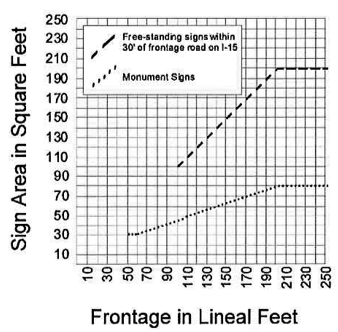
The sign area allowed for a pylon sign placed on property abutting the freeway or frontage road: 100.0 square feet plus one square foot per each lineal feet of street frontage over 100.0 feet; maximum size is 200.0 square feet. - Attachment B. Graph-Sign Area Allowance for Pylon Signs:
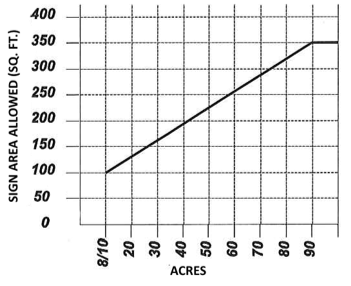
(LDC 2008, § 15A-26-12)
21-26-13 Newspaper Or Periodical Racks And Stands
- Intent and Purpose. The City Council finds and declares that:
- Findings.
- The uncontrolled placement and maintenance of newsracks in public rights-of-way and private property presents an inconvenience and danger to the safety and welfare of persons using such rights-of-way and private property; including pedestrians, persons entering and leaving vehicles and buildings, and persons performing essential utility, traffic control, and emergency services.
- Newsracks located to cause an inconvenience or danger to persons using public rights-of-way and private property and unsightly newsracks located therein constitute public nuisances.
- It is a matter of public necessity that Sandy City protect children and unconsenting adults in and on its public streets, sidewalks, transportation facilities, and other public rights-of-way from viewing public displays of offensive sexual material. Such displays are thrust indiscriminately upon unwilling audiences of adults and children and constitute assaults upon individual privacy.
- These factors constitute an unreasonable interference, and obstruction of the use of public rights-of-way and private property constitute an unwarranted invasion of individual privacy. They are injurious to health, offensive to the senses, and constitute such an obstruction of the free use of property as to interfere in the comfortable enjoyment of life and property by the entire community.
- The City Council recognizes that the use of such rights-of-way are so historically associated with the sale and distribution of newspapers and publications that access to those areas for such purposes should not be absolutely denied. The City Council further finds that these strong and competing interests require a reasonable accommodation which can only be satisfactorily achieved through the means of this section which is designed to accommodate such interests regulating the time, place, and manner of using such newsracks.
- Purpose. The provisions and prohibitions hereinafter contained and enacted are in pursuance of and for the purpose of securing and promoting the public health, morals, and general welfare of persons in Sandy City in their use of public rights-of-way through the regulation of placement, appearance, number, size, and servicing of newsracks on the public rights-of-way and private property so as to:
- Provide for pedestrian and driving safety and convenience.
- Ensure no unreasonable interference with the flow of pedestrian or vehicular traffic, including ingress to or egress from any place of business or from the street to the sidewalk.
- Provide reasonable access for the use and maintenance of sidewalks, piles, posts, traffic signs and signals, hydrants, mailboxes, landscaping, and similar appurtenances, and access to locations used for public transportation purposes.
- Reduce visual blight on the public rights-of-way, protect the aesthetics and value of surrounding properties, and protect the quiet of residential areas.
- Protect the right to distribute information protected by the United States and the Utah State Constitutions through the use of newsracks.
- Preservation of Constitutional Rights. It is not the intent of this section to in any way discriminate against, regulate, or interfere with the publication, circulation, distribution, or dissemination of any printed material that is constitutionally protected.
- Findings.
- Definitions. The following words, terms and phrases, when used in this section, shall have the meanings ascribed to them in this subsection, except where the context clearly indicates a different meaning:
- Block means one side of a street between two consecutive intersecting streets.
- Distributor means the person responsible for placing and maintaining a newsrack in a public right-of-way or private property.
- Newsrack means any self-service or coin-operated box, container, storage unit, or other dispenser installed, used, or maintained for the display and sale or free distribution of newspapers or other news periodicals or publications.
- Obscene means material which depicts or describes sexual conduct that is objectionable or offensive to accepted standards of decency which the average person applying contemporary community standards would find, taken as a whole, appeals to prurient interests; or material which depicts or describes, in a patently offensive way, sexual conduct specifically defined by applicable state law, and taken as a whole, lacks serious literary, artistic, political, or scientific value.
- Parkstrip means the area between the sidewalk and the curb of any street, and where there is no sidewalk, the area between the edge of the roadway and the property line adjacent thereto. The term "parkstrip" shall also include any area within a road right-of-way that is not open to vehicular travel.
- Roadway means that portion of a street improved, designed, or ordinarily used for vehicular travel.
- Sidewalk means any surface provided for the exclusive use of pedestrians.
- Street means all the area dedicated to public use for public street purposes and shall include, but not be limited to, roadways, parkstrips, alleys, and sidewalks.
- Newsracks Prohibited.
- No person shall install, use, or maintain any newsrack which projects onto, into, or rests, wholly or in part, upon the roadway of any public street.
- No person shall install, use, or maintain any newsrack which projects onto, into, or rests, wholly or in part, upon the parkstrip of any public street.
- No person shall install, use, or maintain any newsrack which, in whole or in part, rests upon, in, or over any public sidewalk:
- When such installation, use, or maintenance endangers the safety of persons or property.
- When such site or location is used for public utility or public transportation purposes or other governmental use.
- When such newsrack unreasonably interferes with or impedes the flow of pedestrian or vehicular traffic, including parked or stopped vehicles; the ingress in or egress from any residence or place of business; or the use of poles, posts, traffic signs or signals, hydrants, mailboxes, or other objects permitted at or near said location.
- When such newsrack interferes with the cleaning of any sidewalk by the use of mechanical sidewalk cleaning machinery.
- When such newsrack does not allow a minimum sidewalk clearance of six feet in width or depth.
- In any other manner inconsistent with or in violation of the provisions of this section.
- No newsrack shall be chained, cabled, mounted, or otherwise attached to any post, pole, or other device used for the direction, control, identification of vehicular traffic, or the conveyance of a public utility. Such devices include, but are not limited to, stop signs, street identification signs, semaphore poles, semaphore control boxes, State highway identification signs, and public utility poles.
- No newsrack shall be erected near any driveway or intersection for vehicular traffic within a triangular area formed by the intersection of straight lines extended from the back of curb (or a future curb) and a line connecting them at points 60 feet from the intersection of the lines. Deviations from these requirements must be reviewed and approved by the City Transportation Engineer.
- Newsracks Permitted.
- Permit Required. It shall be unlawful for any person, firm, or corporation to erect, place, maintain, or operate on any public street, sidewalk, or in any other public way or place in Sandy City any newsrack without first having obtained a permit from the Community Development Department specifying the exact location and construction and appearance details of such newsrack.
- Application for Permit. Application for such permit shall be made in writing to the Community Development Department upon such form as shall be provided and shall contain the name and address of the applicant, the proposed specific location of said newsrack, including plot plan, the structural design and color of the newsrack, listing of other joint distributors within the newsrack, a hold harmless agreement, proof of insurance, and shall be signed by the applicant. All applications shall be accompanied by payment of the newsrack fee, as set by the City Council. The fee is per location, not per application.
- Condition for Permit. Such permits shall be valid for three years and shall be renewable pursuant to the procedure for original applications and upon payment of the application fee.
- Hold Harmless Agreement. Every owner of a newsrack who places or maintains a newsrack on a public sidewalk or other public property in Sandy City shall file a written statement with the Community Development Department in a form satisfactory to the City Attorney, whereby such owner agrees to indemnify and hold harmless the City, its officers, and employees, from any loss, liability, or damage, including expenses and costs, for bodily or personal injury, and for property damage sustained by any person as a result of the installation, use, and/or maintenance of a newsrack.
- Newsrack Identification Required. Every person or other entity which places or maintains a newsrack on a public sidewalk or other public property of the City shall have his or its name, address, and telephone number affixed thereto in a place where such information may be easily seen. However, such information shall not take up space on the rack in excess of six square inches.
- Location and Placement. Any newsrack which rests, in whole or in part, upon, or on any portion of a public right-of-way or which projects onto, into, or over any part of a public right-of-way shall be located in accordance with the following provisions:
- No newsrack shall be used or maintained which projects onto, into, or over any part of the roadway or any public street, or which rests, wholly or in part, upon, along, or over any portion of the roadway or parkstrip of any public street.
- No newsrack shall be chained, bolted, or otherwise attached to any fixture located in the public right-of-way, or any post, pole, semaphore, or governmental sign which may be adjacent to the right-of-way. Such prohibition includes all public utility poles, all street light poles, and other facilities placed and maintained by local, State, or Federal governmental authorities.
- No newsrack shall be placed, installed, used, or maintained:
- Within five feet of any marked crosswalk.
- Within 15 feet of the curb return of any unmarked crosswalk.
- Within five feet of any fire hydrant or other emergency facility.
- Within five feet of any driveway.
- Within three feet ahead or 25 feet to the rear of any sign marking a designated bus stop.
- Within five feet of the outer end of any bus bench enclosure.
- At any location whereby the clear space for the passageway of pedestrians is reduced to less than six feet.
- Within three feet of or on any public area improved with lawn, flowers, shrubs, trees, or other landscaping, or within three feet of any display window of any building abutting the sidewalk or parkstrip or in such a manner as to impede or interfere with the reasonable use of such window for display purposes.
- Within 100 feet of any other newsrack on the same side of the street, in the same block, containing the same issue or edition of the same publication.
- No newsrack shall be erected near any driveway or intersection for vehicular traffic within a triangular area formed by the intersection of straight lines extended from the back of curb (or a future curb) and a line connecting them at points 60 feet from the intersection of the lines. Deviations from these requirements must be reviewed and approved by the City Transportation Engineer.
- On any access ramp for disabled persons.
- No newsrack shall be placed, installed, used, or maintained:
- For locations upon private property, the newsrack shall be placed adjacent to the building and be located near or at the main entrance to the facility. They shall not be placed in such a manner to act as a billboard or similar off-premises advertising sign.
- Newsrack and Stand Design. No newsrack shall extend above 56 inches in height. All newsracks shall use dark brown or dark green coloring. Should the placement of more than one newspaper or periodical be desired, they will all be contained in one unit holding up to six newspapers or periodicals. Should more than six newspapers or periodicals be desired, another rack or stand may be used. Individual periodical dispensers/racks may not be placed next to one another. (See Subsection (i) of this section for adjacent placement requirements.)
- Examples of Acceptable Rack and Stand Design (Not a Representation of Color).
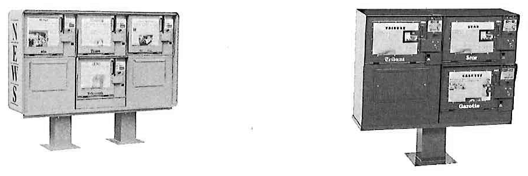
- Adjacent Placement Requirements. Newsracks may be placed next to each other provided there are more than six newspapers or periodicals that cannot be placed in one unit, with not more than six inches separating each newsrack. No than two six unit newsracks shall be located on any public right-of-way within a space of 200 feet in any direction within the same block.
- Advertising Cards. No newsrack shall be used for advertising or display purposes, except that newsrack cards may be used to advertise the publication sold therein, and the name of the publication may appear on the display window.
- Standards for Maintenance and Installation. Any newsrack which, in whole or in part, rests upon, in, or over any public sidewalk or parkway shall comply with the following standards:
- No newsrack shall be used for advertising signs or publicity purposes other than that dealing with the display, sale, or purchase of the newspaper or news periodical sold or distributed therein.
- Each newsrack shall be equipped with a coin-return mechanism to permit a person using the machine to secure an immediate refund in the event the person is unable to receive the paid-for publication. The coin-return mechanism shall be maintained in good working order.
- Each newsrack shall have affixed to it in a readily visible place so as to be seen by anyone using the newsrack, a notice setting forth the name and address of the distributor and the telephone number of a working telephone service to call to report a malfunction, to secure a refund in the event of a malfunction of the coin-return mechanism, or to give the notices provided for in this section.
- Each newsrack shall be maintained in a neat and clean condition and in good repair at all times. Specifically, but without limiting the generality of the foregoing, each newsrack shall be serviced and maintained so that:
- It is reasonably free of dirt and grease.
- It is reasonably free of chipped, faded, peeling, and cracked paint in the visible painted areas thereof.
- It is reasonably free of rust and corrosion in the visible unpainted metal areas thereon.
- The clear plastic or glass parts thereof, if any, through which the publications therein are viewed are unbroken and reasonably free of cracks, dents, blemishes, and discoloration.
- The paper or cardboard parts or inserts thereof are reasonably free of tears, peeling, or fading.
- The structural parts thereof are not broken or unduly misshapen.
- Display of Certain Matter Prohibited. Publications offered for sale or free distribution from newsracks placed or maintained on or projecting over the street or sidewalk shall not be displayed or exhibited in a manner which exposes to public view from the street or sidewalk any of the following:
- Any publication or material which exposes to public view any pictorial material that is obscene.
- Any statements or words describing explicit sexual acts, sexual organs, or excrement where such statements or words have as their purpose or effect sexual arousal, gratification, or affront.
- Any picture or illustration of a person's genitals, pubic hair, perineum, anus, or anal region where such picture or illustration has as its purpose or effect sexual arousal, gratification, or affront.
- Any picture or illustration depicting explicit sexual acts where such picture or illustration has as its purpose or effect sexual arousal, gratification, or affront.
- Violations.
- Upon determination by the Director that a newsrack has been installed, used or maintained in violation of the provisions of this section, an order to correct the offending condition shall be issued to the distributor of the newsrack.
- Such order shall be telephoned or made in person to the distributor and confirmed by mailing a copy of the order by certified mail, return receipt requested. The order shall specifically describe the offending condition, suggest actions necessary to correct the condition, and inform the newsrack distributor of the right to appeal. Failure to properly correct the offending condition within five days (excluding Saturdays, Sundays, and legal holidays) after the mailing date of the order or to appeal the order within three days after its receipt shall result in the offending newsrack being summarily removed and processed as unclaimed property. If the offending newsrack is not properly identified as to the owner under the provisions described herein, it shall be removed immediately and processed as unclaimed property. An impound fee, which shall be measured by the City's cost and expense of impounding, shall be assessed against each newsrack summarily removed. The Director shall cause inspection to be made of the corrected condition or of a newsrack reinstalled after removal under this section.
- Appeals. Any appeal herefrom shall be filed in accordance with Chapter 21-35.
- Abandonment. In the event that a newsrack remains empty for a period of 30 continuous days, the same shall be deemed abandoned and may be treated in the manner as provided in this section for newsracks in violation of the provisions of this section.
- Severability. If any section, subsection, sentence, clause, or phrase of this section is for any reason held to be invalid or unconstitutional by the decision of any court of competent jurisdiction, such decision shall not affect the validity of the remaining portions of this section.
(LDC 2008, § 15A-26-13)
21-26-14 Flags
The following regulations apply to all flags and flagpoles:
- Flags Allowed Without a Permit in All Zones.
- Up to three noncommercial flags per parcel in all zone districts may be displayed.
- Such flags may be attached to the side of a building, flown on a flagpole, not to exceed six feet in length attached to a building, or flown from a ground-based flagpole of not more than 20 feet in height. Flagpoles shall be located in a place that will not impede traffic or cause a hazard for pedestrians or vehicles.
- Flags Allowed With a Permit in Residential Zones.
- No more than three noncommercial flags shall be displayed on a single parcel in a residential district. No commercial flags shall be allowed in any residential districts.
- All flagpoles over the height of 20 feet require an approved building permit from the Sandy City Community Development Department and must be located in a place that will not impede traffic or cause a hazard for pedestrians or vehicles.
- Flagpoles shall not exceed 60 feet or the maximum height limit in the zone district in which it is located, whichever is less.
- Flags Allowed with a Permit in Commercial and Industrial Zones.
- Up to three commercial flags per parcel in Commercial and Industrial Zones may be displayed. A total of six (three commercial and three noncommercial) flags may be displayed on a single parcel in Commercial or Industrial Districts.
- Such flags shall require a permit, regardless of size of flag or flagpole.
- Flagpoles shall not exceed 60 feet or the maximum height limit for structures in the zone district in which it is located, whichever is less, except as allowed herein.
- The Planning Commission may grant a special exception for a taller flagpole based upon the following criteria:
- A maximum height of 120 feet may be approved.
- The parcel must be at least two acres.
- Minimum flagpole setback from any property line shall equal the height of the flagpole.
- The Planning Commission may be able to impose additional conditions directed at minimizing or eliminating nuisance factors related to noise.
- Lighting of Flags. If a flag is lit, it shall be lit using directional up-lighting from ground level only. No lighting is permitted on the flagpole itself. Exceptions to the ground-level requirement may be made in order to properly light a noncommercial flag according to protocol established by the Congress of the United States and the State of Utah (U.C.A. 1953, § 76-9-601) with permission from the Director, provided such lighting does not constitute a hazard to traffic or pedestrians or an undue burden on neighboring properties.
- Exceptions. On recognized State and Federal holidays, the above regulations will not be enforced. Flags may be displayed without limit to number or location provided they do not pose a hazard to traffic flow or pedestrians.
(LDC 2008, § 15A-26-14; Ord. No. 11-24, 12-5-2011)

