
Sandy City Zoning Code
CHAPTER 21
19 SPECIAL DEVELOPMENT SD DISTRICTS
21-19-1 Special Development District SD
- Purpose. The Special Development District (SD) Zone designation is provided in order to allow the most efficient and creative development of lands that have unique or unusual characteristics. The SD District is intended to be used for development when it can be shown that no other zone classification would be adequate or appropriate for reasonable development.
- Qualification. For an applicant to qualify for SD District, classification the following conditions shall be present:
- The property to be classified shall be at least one acre in size.
- The applicant shall demonstrate to the Planning Commission and City Council that development on the property would be substantially constrained by unusual topographic or other natural features, by difficult platting or ownership configuration, by an unusual or difficult impact from public utility structures or other public structures or facilities or that a similarly unusual hardship condition exists. Alternatively, a unique development proposal or land use that wouldn't be allowed within an existing zone must be demonstrated.
- The entire site proposed for SD District classification shall be included in a development plan for review and Planning Commission approval.
- Land Uses Allowed. Land uses allowed within an SD District shall be established by the review process as described in Subsection (e) of this section, except as otherwise authorized by Utah Code Annotated as are currently in effect or as may be amended. These include, but are not limited:
- School, Charter. Charter school is a permitted use.
- School, Home-based Microschool. Home-based microschool may be allowed only as a home occupation subject to the home occupations standards and qualifications. If not otherwise permitted in the zone, the home-based microschool may only be considered for existing legal nonconforming dwellings.
- School, Micro-education Entity. Micro-education entity is a permitted use subject to the special use standards and qualifications.
- School, Public. Public school is a permitted use.
- District Designation. When the land uses to be allowed in a specific SD District are determined, a permanent suffix for the district shall be established that shall be shown on the Sandy City Zone District Map. The suffix shall describe the dominant land use characteristic of the district, as the examples below illustrate:
- SD-R (residential uses).
- SD-I (industrial uses).
- SD-C (commercial uses).
- SD-X (mixed residential and commercial uses).
- Development Plan.
- A development plan shall be presented to the Director for review and presentation to the Planning Commission. The Planning Commission shall review the plan, along with comments from the Director. The Commission shall recommend approval, recommend approval with conditions, or recommended disapproval.
- The development plan shall be a conceptual proposal for general development of the entire site proposed for SD classification and shall include the following:
- A legal description and a map drawn to scale showing site boundaries, site orientation, major streets that serve the site and zoning classification and uses on abutting properties.
- The general location of proposed land uses (including structures) and land area to be devoted to each use.
- Existing contours and a general estimate of finished grades and contours.
- Location and type of existing vegetation.
- Specific Development Standards and Regulations.
- The Planning Commission or the Director may prepare specific development standards and regulations for the proposed site provided such standards and regulations are in conformity with Planning Commission adopted policies, programs, and plans and all applicable chapters of this title. Such standards and regulations may include, but are not limited to:
- The height, location and bulk of buildings.
- The location, arrangement, and configuration of open space and building setback.
- The location and design of off-street parking areas.
- The number, size and location of all signs.
- Permitted or conditional uses.
- Such other regulations and standards as may be necessary to accomplish the purposes and intent of the SD District.
- Unless otherwise specified within the SD District, all current development standards shall apply.
- The Planning Commission or the Director may prepare specific development standards and regulations for the proposed site provided such standards and regulations are in conformity with Planning Commission adopted policies, programs, and plans and all applicable chapters of this title. Such standards and regulations may include, but are not limited to:
- Zone Change Process. A petition for an amendment to the Sandy Land Development Code for an SD Zone Classification shall conform to the process as described in the Amendment to Zone District Map and Land Development Code. Information for the petition shall include the development plan approved by the Planning Commission.
- Reversion. There will be an annual review of SD zones. If substantial construction is not initiated within a year of the zone approval, the classification may be reverted to the previous classification, or that of an abutting district.
(LDC 2008, § 15A-19-01)
Amended by Ord. 21-13 § 1(Exh. A) on 4/6/2021
Amended by Ord. 24-14 § 1(Exh. A) on 7/30/2024
21-19-2 SD (R-1-9)--1300 E And 12000 S
- Purpose. The Residential R-1-9 District is established to provide a residential environment within Sandy City that is characterized by moderate densities, medium-sized homes, a minimum of vehicular traffic and quiet residential neighborhoods favorable for family life.
- Uses Allowed.
- Permitted Uses.
- Agriculture (which does not include the keeping of farm animals).
- Dwelling, single-family.
- Home occupation.
- Home occupation, Category I.
- Conditional Uses.
- Accessory apartments.
- Cemetery, columbarium, crematory, mausoleum.
- Day care, group.
- Dwelling, earth-sheltered.
- Dwelling, residential facility for elderly persons.
- Dwelling, residential facility for the handicapped.
- Dwelling, group, planned.
- Planned unit development.
- Public service.
- Public utility station.
- Recreation, outdoor.
- Religious, cultural activity.
- School, private or quasi-public.
- School, public.
- Zero lot line development (detached only).
- Home occupation, Category II.
- Permitted Uses.
- Development Standards.
- Lot and Yard Regulations.
- Lot Size. An area of not less than 9,000 square feet shall be provided and maintained for each dwelling and uses accessory thereto.
- Frontage. The minimum width of any lot for a dwelling shall be 80 feet, measured 30 feet back from the front property line.
- Front Yard Requirements.
- All buildings shall be set back 30 feet from the front property line.
- Where lots front on cul-de-sacs or elbows, the front setback may be smaller, provided that no dwelling is closer than 20 feet from the front property line.
- Lots having an overall slope in excess of ten percent may, notwithstanding other provisions of this title to the contrary, be developed with a front setback of at least 20 feet.
- Garages and carports, or the garage portion where the garage is part of the main structure, may extend beyond the main structure to a setback line of 25 feet (but not beyond the setback line where 20-foot setbacks are allowed).
- Corner Lots. On corner lots, the front setback shall be a minimum of 30 and 20 feet, respectively, irrespective of which way the home faces.
- Side Yard Requirements. All dwelling structures and other main buildings shall be set back from each side property line a distance of at least eight feet and the total distance of the two side setbacks shall be at least 18 feet. The zero lot line side yard setback shall be zero and at least 18 feet (between dwelling structures).
- Rear Yard Requirements. All dwelling structures and other main buildings shall be set back from the rear property line a distance of at least 20 feet, or on irregular lots, an average of 20 feet, provided that no portion of the building is closer than ten feet to the property line.
- Accessory Buildings and Uses. Regulated as per R-1-9 Standards.
- Size of Buildings. All dwellings shall be comprised of the following minimum square footage:
- One-story. Split level and split entry: 1,300 square feet.
- Two-story. Total both levels: 1,625 square feet.
- Garages. All dwellings shall provide at least a double space garage.
- Height of Buildings. All buildings shall be no higher than 35 feet. A dwelling structure less than ten feet in height above finished grade may be allowed only if it qualifies as an earth-sheltered dwelling.
- Size of Buildings. All dwellings shall be comprised of the following minimum square footage:
- Lot and Yard Regulations.
(LDC 2008, § 15A-19-02; Ord. No. 12-14, 5-15-2012)
21-19-3 SD-MU MIXED USE--7800 S 1300 E And 9400 S 1300 E
- Purpose. The purpose of the Special Use District (Mixed Use) is to provide for mixed uses, such as professional office, multifamily and quasi-public.
- Uses Allowed.
- Permitted Uses.
- Alcoholic beverage single event permit.
- Alcoholic beverage temporary beer permit.
- Alcoholic beverage restaurant beer-only license. 1 & 2
- Alcoholic beverage restaurant, limited service. 1 & 2
- Alcoholic beverage restaurant, full service. 1 & 2
- Alcoholic beverage brewery manufacturing license. 1 & 3
- Athletic, tennis or health club.
- Business and financial services.
- Commercial retail sales and service up to 10,000 square feet for the entire development site.
- Commercial school.
- Medical and health care offices.
- Nursing care facility.
- Quasi-public uses such as a library or other governmental facilities.
- Recreation, indoor.
- Religious or cultural activity.
- Research and development park.
- Restaurant. Theater, concert hall.
- Conditional Uses. Planning Commission review is required as set forth in the Conditional Uses chapter of the Development Code.
- Animal kennel, veterinary office.
- Arcade.
- Automotive self-service station.
- Commercial retail sales and service over 10,000 square feet for the entire development site.
- Recreation center, outdoor.
- Restaurant, drive-in.
- Commercial parking garage.
- Industry, light.
- Park and ride facilities.
Explanatory Notes.
1. The alcoholic beverage restaurant and brewery manufacturing licenses are only allowed in the SD-MU Mixed Use zone at 7800 S 1300 E; these uses are not allowed within SD-MU zone at 9400 S 1300 E. The distance requirements between outlets and restaurants from community locations of the Alcoholic Beverage Control Act also apply (UCA 32B-1-202).
a. Main entrance shall have an unimpeded line of sight from the street or public way.
b. Lighting of the building at the entrance.
c. Provide parking lot lighting. All lighting shall be shielded and directed downward to avoid light spill beyond the property line.
3. A brewery manufacturing license shall only be allowed if it is on the same premises as a sit-down restaurant; a stand-alone brewery manufacturing license is not permitted. Winery and distillery manufacturing licenses are not permitted.
- Permitted Uses.
- Development Standards.
- Building Height. Buildings shall be erected to a height of no greater than 35 feet for any part intended for human occupancy.
- Commercial and Industrial Standards. Planning Commission review is required as outlined in Chapter 21-32.
- Building Location.
- No building shall be closer than five feet from any private road or driveway with the exception of any portion that contains a drive-up window or counter. Structures which are adjacent to a plaza, mall, or other permanent pedestrian open space and under the same ownership as the structure, may abut the space and have openings onto such appurtenances.
- The public street right-of-way shall be considered the front property line of a lot. Where a lot is bordered on two or more sides by a public street right-of-way, all such sides shall be considered as front property lines, and the area between the front property line and the building lines shall be known as the front yard in all cases.
- Driveway Access and Design.
- Unobstructed and direct driveways shall be provided from commercial off-street parking or loading facilities to a street or alley. Loading driveways may coincide with driveways to parking facilities.
- In establishing permissible curb openings and sidewalk driveway crossings for access to private property, such curb openings or driveways shall not be authorized where they are unnecessary or where they would interfere with the movement of vehicular traffic, with public improvements, or with the rights of the public in the adjacent street or alley, and in no case shall any curb opening be of greater width than necessary for reasonable access to the property to be served. In determining the width of curb openings and spacing of driveways, the end transitions in each case will not be considered a part of the length of the curb opening. The curb opening or width of each driveway shall be defined as the throat width of the driveway at the inside point of the curb transition radius at the top face of the curb.
- Building Location.
- Frontage on Arterial or Major Collector Streets. Uses on parcels with at least 150 feet of frontage are allowed only one access onto an arterial or a major collector street as designated on the Official Street Map. Uses on parcels with less than 150 feet of frontage shall be required to share a common driveway in order to ensure 150 feet of distance between driveways.
- Frontage on Minor Collector or Local Streets. Uses on parcels with at least 70 feet of frontage are allowed only one access onto a minor collector street or local street as designated on the Official Street Map. Uses with less than 70 feet of frontage shall be required to share a common driveway in order to ensure 70 feet of distance between driveways.
- Additional Driveway Openings. If a capacity or safety need for more than one driveway opening can be demonstrated to the City Engineer, additional driveway openings may be allowed.
- Off-Street Parking Accessibility. Where commercial uses share a property line, off-street parking lots serving the properties shall be made accessible to each other, where possible.
- Driveways and Curb Design.
- One-way driveways shall be not less than 12 feet nor more than 25 feet in width, except that no two complementary one-way driveways may total more than 40 feet in width. Two-way driveways shall be not less than 25 feet nor more than 32 feet in width. In determining the width of curb openings and spacing of driveways, the end transitions in each case will not be considered a part of the width of the curb opening.
- Driveways shall be located a minimum of five feet from the side property line, measured from the nearest end transition point. This does not apply to side property lines abutting public rights-of-way.
- Driveways shall have a minimum end transition (curb radius) of ten feet and a maximum of 30 feet. There shall be at least 24 feet of full height curb between the end transition point (point of curvature of the curb lines) of any two driveways, except as noted in Subsections (c)(7)d and e of this section.
- Where a common driveway is of the split, one-way directional type, there shall be at least five feet between the end transition points of the two driveways.
- Wherever a common driveway is constructed serving two or more properties, the common curb opening shall have a maximum width of 36 feet.
- The total width of all curb openings shall not exceed 40 percent of the frontage. For corner lots, the total width of curb openings shall not exceed 30 percent of the combined frontages.
- No throat of a driveway of curvature for any driveway curb opening shall be permitted within 25 feet of the public right-of-way of an intersecting street.
- No curb opening will be approved which contemplates vehicle encroachment on any portion of the street right-of-way for loading, standing, or unloading.
- Curb openings must serve only those off-street parking spaces or loading zones that conform to Sandy City standards.
- Curb openings shall be entirely within the extension of the side property lines extended perpendicular to the street centerline.
- Curb openings and driveways shall be paved and shall provide for adequate drainage.
- Curbs for driveway approaches shall be of the radius type and be provided with wheelchair ramps.
- Upon the issuance of a building permit, any unused or abandoned curb openings or portion thereof shall be restored to the original curb section by the removal of existing material and replacement of curbing at the expense of the abutting property owner. Upon refusal or neglect of the owner or agent to restore the curb and gutter to their original section, the City shall proceed to do such work and all expenditures so incurred shall be charged against the owner or agent.
- Improvements in the public right-of-way shall be designed and constructed in conformance with the applicable specifications. The minimum design vehicle shall be the single unit truck.
- No object shall be so situated as to interfere with the required sight-distance of intersections as set forth in the AASHTO specifications.
- Special Requirements for Service Stations. The maximum and required width of an access way through the perimeter landscaped strip to a service station shall be 32 feet for two-way vehicular movement and 12 feet for one-way vehicular movement. No more than one two-way driveway shall be permitted for any street frontage up to 100 lineal feet, nor more than two one-way accessways shall be permitted for any street frontage and for frontages of more than 100 lineal feet. Two two-way accesses, each a maximum and required width of 24 feet, are permissible, but shall not be built on the same frontage as any other driveway, said standards to be applicable to any one ownership.
- Areas in which autos, trailers, etc., are stored for rental as an accessory use must be screened by a wall or opaque fencing to a minimum height of six feet. See Chapter 21-28.
- The outside display of oil, tires and miscellaneous auto supplies for sale, either permanent or temporary, shall not be permitted in any public right-of-way, nor in front of or in the required landscaped setback.
- Fuel pump islands located at service stations shall be set back a minimum of 30 feet from the front property line.
- Landscaping.
- Percent of Lot to be Landscaped. A minimum of 15 percent of any lot on which there will be a commercial or industrial use shall be landscaped. Such landscaping shall be composed of natural landscaping elements, including lawn, shrubs, trees and planted ferns.
- Commission May Reduce Percentage of Required Landscaping. The regulations described in this section shall be mandatory, except that the Planning Commission may reduce the 15 percent requirement by five percent in return for any one or a combination of the following (the applicant shall show during site plan review that the reduction of the requirement will not create undo impact on abutting properties):
- The planting of specified trees that are larger than two-inch caliper.
- Expansion in depth of the front yard landscape requirement (as shown in Subsection (8)c of this section.
- The use of a berm of at least three feet high above curb level in the required front yard landscape area.
- Front Yard.
- A minimum of 15 feet of landscaping shall be provided, as measured from the front property line after any required street dedication. This standard shall apply to all frontages. Frontages on arterial streets shall be planted with trees (as specified by the Street Tree Planting Guide) of two-inch caliper in size at intervals of 30 feet.
- The Planning Commission may approve the elimination of the parkstrip in a commercial district allowing the sidewalk to be placed against the curb and gutter. If the elimination of the parkstrip is approved by the Planning Commission, the sidewalk shall be increased to five feet. In addition, the front landscape area shall be 19 feet. Trees shall be planted in the front landscaped area according to the Streetscape Guide. If the sidewalk meanders, 24 feet of landscaping is required.
- Side and Rear Yards. There shall be a minimum of three feet of landscaping between parking areas and side or rear property lines (except between commercial uses where not visible) and a minimum of three feet of landscaping between an access driveway and a side of rear property line, unless said driveway is to be used for common access by an adjacent lot. Other side and rear setback areas that are open to view from public rights-of-way or from residential property shall have a minimum of ten feet of landscaping.
- Parking in Landscaped Area. Parking within the minimum landscaped area is prohibited.
- Landscaping in Parking Area.
- Landscaping planters and/or raised barrier sidewalks shall be installed along buildings and any paved areas to provide safety to pedestrians and protect the structure.
- All landscaped areas abutting any paved area shall be curbed.
- At intersections of streets, driveways, sidewalks, etc., landscaping shall be limited to a height of not more than 3 1/2 feet above street level within the area required for minimum sight distances as specified in the Geometric Design Guide (AASHTO) for local roads and streets.
- Any traffic channelization island shall be fully landscaped.
- Trees shall be required in parking strips at a minimum interval of 30 feet according to the Street Planning Guide for arterial and collector streets.
- Boundary landscaping around the perimeter of parking areas shall be separated by a concrete curb or wall at least six inches higher than the parking area. For the purpose of calculating the minimum percentage of landscaping in parking areas, boundary landscaping may be included.
- All unpaved areas not utilized for parking, access, or storage, shall be landscaped utilizing ground cover, shrub and tree materials, and/or dry landscape materials (but not to exceed more than ten percent dry landscaping). Undeveloped areas proposed for future expansion shall be maintained free of weeds and trash.
- Screening Boundaries of Residential Districts. An opaque screen shall be installed and maintained along lot lines that coincide with all zoning boundaries, other than streets, where the premises abut residential uses. Except as otherwise provided, it shall have a total height of not less than six feet, nor more than seven feet. Where there is a difference in elevation on opposite sides of the screen, the height shall be measured from the highest elevation. For commercial areas abutting residential districts, a screen shall consist of one, or any combination, of the following types:
- Walls. Construction materials shall only include ceramic tile, stone, brick, concrete panel, concrete blocks, or other materials as approved by the Planning Commission. Posts must be reinforced with rebar and wire as specified by the Engineering Department.
- Signs. No signs or sign supports shall be permitted on any required screening.
- Commission May Approve Other Screening. Under special conditions where it has been determined that the development may create unique impacts on an adjoining residential district, such as in the case of hillside developments, the Planning Commission may review and approve other methods of screening such as bermed landscaping, open construction, screen height, placement of screen or other types of screening.
- Storage, Trash and Mechanical Equipment. Storage areas which do or do not contain garbage or rubbish containers (dumpsters) shall be screened with landscaping or opaque fencing. Each wall or fence shall be at least six feet in vertical height or equal in height to the containers or dumpsters to be screened and shall be sufficient to screen such facilities from a public street or neighboring lot. See Chapter 21-28.
- No outdoor storage display or dumpster shall be located within 30 feet of any residential district and no storage display or dumpster shall be permitted in the required front yard setback.
- All mechanical equipment (air conditioning, transformers, etc.) shall be screened with opaque material.
- Lighting. Reflectors, spotlights, floodlights and other sources of illumination may be used to illuminate buildings, landscaping, signs, parking and loading areas, provided they are equipped with proper lenses or other devices concentrating the illumination upon the building, landscaping, signs, parking and loading areas, and preventing any bright, direct illumination upon adjacent property or any public right-of-way. No unshielded white lights, reflectors, spotlights, strobe lights, or search lights shall be so located that they are pointed towards or are directly visible from frequently-traveled public rights-of-way.
- Signs. Signs are permitted subject to the provisions of the Sandy City on-premises and off-premises sign regulations.
- Parking Lots and Loading.
- General. There shall be provided at the time of erection of any main building or at the time any main building is enlarged or increased in capacity, minimum off-street parking space with adequate provision for ingress and egress by standard-sized automobiles in accordance with the requirements herein.
- Parking Areas, Development and Maintenance. Every parcel of land hereafter used as a public or private parking area, including a commercial parking lot or an automobile, farm equipment, or other open-air sales lot, shall be developed and maintained in accordance with the following requirements:
- Curb. The perimeter of the paved surface shall be finished with concrete curb and handicap ramp, where necessary.
- Landscaping. The planting of trees, lawn and shrubs or other approved material is required within appropriate areas, especially along street frontage, and along boundaries that abut residential lots.
- Surfacing. Every parcel of land hereafter used as a public parking area shall be paved with an asphaltic, brick or concrete surfacing, and shall be so arranged and marked as to provide the orderly and safe loading or unloading and parking and storage of vehicles.
- Lighting. Lighting used to illuminate an off-street parking area shall be so arranged as to reflect the light away from adjoining residential premises.
- Off-Premises Parking.
- Where parking is to be provided off of the premises, a recorded document, signed by the owners of the property, stipulating to the permanent use of the site for parking shall be filed with the Community Development Department. Such parking shall be within 200 feet of the use for which the parking is being provided.
- Required parking may be separated on the same site by landscaping or building elements.
- Off-Street Loading.
- For every building or part thereof having a gross floor area of 10,000 square feet or more, which is to be occupied by a commercial or industrial use, to or from which delivery of materials or merchandise are regularly made by motor vehicle, there shall be provided and maintained, on the same lot with such building, at least one off-street loading space, plus one for each additional 20,000 square feet or major fraction thereof. Additional parking may be required depending upon the use.
- Each loading space shall be not less than 12 feet in width and 25 feet in length and 14 feet high if covered or enclosed.
- Such loading space may occupy the rear or side yard, except that it shall be located no closer than 30 feet from the edge of the dock to any residential district. Loading areas shall be screened from view from public streets.
- For every building or part thereof having a gross floor area of 10,000 square feet or more, which is to be occupied by a commercial or industrial use, to or from which delivery of materials or merchandise are regularly made by motor vehicle, there shall be provided and maintained, on the same lot with such building, at least one off-street loading space, plus one for each additional 20,000 square feet or major fraction thereof. Additional parking may be required depending upon the use.
(LDC 2008, § 15A-19-03)
Amended by Ord. 19-11 § 1(Exh. A) on 4/23/2019
Amended by Ord. 25-22 on 9/30/2025
21-19-4 Elderly Housing Zone--Brim And Associates--11000 S 700 E, 10600 S 300 E, And 8300 South Highland Drive
- Purpose. The SD(EH) Zone is established to provide an area for elderly housing, including nursing homes, convalescent centers and assisted living centers. This zone is not intended for hospitals, clinics or health care centers. To ensure neighborhood compatibility, all developments shall be approved by the Planning Commission as a part of site plan review.
- Uses Allowed. The only uses permitted are those specifically listed or otherwise interpreted to be similar to those listed as permitted by the Planning Commission.
- Nursing care facility.
- Residential health care facility.
- Development Standards.
- Parcel Size. A planned elderly center shall be of sufficient size, composition, and arrangement to enable its feasible development as a complete unit. In no case shall any project developed under this section be under one acre in size.
- Building Height. The maximum height for all buildings shall be 35 feet from average grade.
- Building Setbacks. It shall be within the authority of the Director to determine for any lot in this district, as to which property lines shall be considered as side or as rear lines for the purpose of administering this section. No building shall be closer to a public street right-of-way than 30 feet.
- Front Setbacks. The public street right-of-way shall be considered the front property line of a lot. Where a lot is bordered on two or more sides by a public street right-of-way, all such sides shall be considered as front property lines, and the area between the front property line and the building lines shall be known as the front setback area in all cases. Canopies, overhangs, and similar coverings may project into the front setback area a maximum of ten feet.
- Side Setbacks. Side setback areas shall be a minimum of ten feet, excluding canopies and overhangs, except where a side property line abuts a residential district, in which case the side setback area shall be a minimum of 30 feet.
- Rear Setbacks. Rear setback areas shall be a minimum of ten feet, except where a rear property line abuts a residential district, in which case the rear setback area shall be a minimum of 30 feet.
- Parking. Parking for all uses shall be in accordance with the following ratio: one-half spaces per bed. No parking shall be permitted in the minimum front, side, or rear landscape setback areas, except where a side or rear landscape setback area abuts a residential zone.
- Loading. All loading and unloading operations shall be performed on the site. Off-street berths, where required according to the schedule below, shall be provided in addition to required off-street parking and shall not be located within driveways. Each loading berth shall not be less than 12 feet wide, 25 feet long and, if enclosed or covered, 14 feet high. Adequate turning and maneuvering space are to be provided between the lot lines.
- Driveway and Curb Opening. In establishing permissible curb openings and sidewalk driveway crossings for access to private property, they shall not be authorized where they would interfere with the movement of vehicular traffic, with public improvements, or with the rights of the public in the adjacent street or alley, and in no case shall any curb opening be of greater length than necessary for reasonable access to the property to be served thereby. In determining the length of curb openings and spacing of driveways, the end transitions in each case will not be considered a part of the length of the curb opening. The curb opening or width of each driveway shall be defined as the throat width of the driveway at the inside point of the curb transition radius at the top pace of the curb. The following standards shall apply in determining the size of curb openings and location of driveways:
- Driveways shall have a minimum end transition (curb radius) of ten feet and a maximum of 30 feet. There should be at least 24 feet of full-height curb between the end transition point (point of curvature at the curb lines) of any two driveways serving one piece of property.
- Curb openings for driveways shall be regulated by the following standards:
- Where the width of the adjacent public right-of-way is less than 80 feet, no curb opening for a driveway shall be longer than 30 feet, except as noted in Subsection (c)(6)c of this section.
- Where the width of the adjacent public right-of-way is 80 feet or more, no curb opening for a driveway shall be greater than 33 feet, except as noted in Subsection (c)(6)c of this section.
- Wherever a common driveway is constructed serving two or more properties, that common driveway and curb opening will have a maximum width not to exceed 36 feet.
- The total length of all curb openings shall not exceed 40 percent of the frontage. For corner lots, the total length of curb openings shall not exceed 30 percent of the combined frontages.
- No point of curvature for any driveway curb opening shall be permitted within the following distances of the points of curvature for intersection curb turns:
- 25 feet if the intersection is signalized;
- 25 feet if the intersecting street's right-of-way is greater than 66 feet; and
- 12 feet if the intersecting street's right-of-way is equal to or less than 66 feet.
- Where the construction of more than one curb opening is required, a concrete safety curb between curb openings, along and inside the property line, shall be provided when the property located between two driveways is used for the purpose of movement, storage or parking of vehicles.
- No curb opening will be approved which contemplates a vehicle's encroachment on any portion of the street right-of-way for loading, standing or unloading.
- Curb openings must serve only legal off-street parking spaces or loading zones.
- Curb openings shall be entirely within the extension of the side property lines extending perpendicular to the street centerline.
- Curb openings and driveways shall be paved and provide for adequate drainage.
- Curbs for driveway approaches shall be of the radius type and be provided with wheelchair ramps.
- Any unused or abandoned curb openings or portion thereof shall be restored to the original curb section at the expense of the abutting property owner. Upon refusal or neglect of the owner or agent to restore the curb and gutter to their original section, the City shall proceed to do such work and all expenditures so incurred shall be changed against the owner or agent.
- Improvements in the public right-of-way shall be designed and constructed in conformance with the applicable specifications. The minimum design vehicle shall be the single unit truck.
- No object shall be so situated as to interfere with the required sight-distance of intersections as set forth in the AASHTO specification.
- Storage Areas.
- All outdoor storage, including vehicle storage, shall be visually screened from access streets, freeways, and adjacent property. Said screening shall form a complete opaque screen up to a point six feet in vertical height, but need not be opaque above that point. Such requirement shall not apply to loading docks.
- No storage shall be permitted between a frontage street and the building line. Furthermore, no outdoor storage shall be located within 30 feet of any district zoned for residential use.
- Mechanical Equipment.
- All mechanical equipment (air conditioning, transformers, etc.) on the ground shall be screened with opaque material.
- All mechanical equipment located on the roof shall be screened with opaque material where deemed appropriate by the Planning Commission.
- Refuse Collection Areas.
- All outdoor refuse collection areas shall be visually screened from access streets and adjacent property by a complete opaque screen.
- No refuse collection areas shall be permitted between a frontage street and the building line.
- Landscaping and Suggested Amenities.
- The preservation of natural features that enhance the development and will benefit the community (including trees, scenic points, view corridors, historic buildings or locations, unique geological formations and other community assets).
- Parking areas, service areas, buffers, entrances, exits, yards, courts, landscaping, graphics, and lighting shall be designed as integrated portions of the total planned development and shall project the residential character thereof.
- Building Spaces. Each development shall provide reasonable visual and acoustical privacy for dwelling units. Fences, insulation, walks, barriers, landscaping, and sound-reducing construction techniques shall be used as appropriate for the aesthetic enhancement of property and the privacy of its occupants, the screening of objectionable views or uses, and the reduction of noise.
- The landscaping upon the entire site shall conform to the following minimum requirements:
- Front Setback. A minimum of 15 feet measured from the front property line after any required street dedication. This standard shall apply to both frontages of a corner parcel.
- Side and Rear Setback.
- A minimum of three feet between parking areas and side or rear property lines.
- A minimum of three feet between an access driveway and a side or rear property line, unless said driveway is to be used for common access by an adjacent commercial parcel.
- Other side and rear setback areas that are open to view from public rights-of-way or from residentially zoned property.
- Irrespective of other requirements, developments abutting residential districts shall have a minimum of ten feet of perimeter landscaping and shall have large trees and shrubs planted to form a buffer between uses. Buffer areas may be approved with interval landscaping when not open to view from public rights-of-way and where it can be shown that the buffer areas will conform to the intent of this section.
- Screening at District Boundaries. An opaque screen shall be installed and maintained along all district boundaries, other than streets, where the premises abut areas zoned for residential uses, unless otherwise provided.
- Except where otherwise provided, the screen shall have a total height of six feet.
- Acceptable construction materials for screens shall only include ceramic tile, stone, brick, concrete panel, concrete block, or such other materials as the Planning Commission may approve. Concrete panels and posts must be reinforced with rebar and wire as determined by the Engineering Department.
- No signs or sign supports shall be permitted on any required screen.
- Under special conditions where it has been determined that the development may create unique impacts on an adjoining residential district, such as in the case of hillside developments, the Planning Commission may review and approve other methods of screening such as bermed landscaping, open construction, screen height, placement of screen or other types of screening.
- Signs. Signs are permitted in this district subject to the provisions of Chapter 21-26.
- Procedure. All permitted uses proposed for development shall be subject to the site plan review process and submittal requirements as outlined in Chapter 21-32.
(LDC 2008, § 15A-19-04)
21-19-5 SD(R)3.75--8125 S 865 E
- Purpose. The Residential SD(R)3.75 District is established to provide a residential environment within Sandy City that is characterized by moderate densities, a variety of housing sizes, a minimum of vehicular traffic and quiet residential neighborhoods favorable for family life.
- Uses Allowed.
- Permitted Uses.
- Agriculture (which does not include the keeping of farm animals).
- Dwelling, single-family.
- Home occupation.
- Home occupation, Category I.
- Conditional Uses.
- Accessory apartments.
- Bed and breakfast facility.
- Cemetery, columbarium, crematory, mausoleum.
- Day care, group.
- Dwelling, earth-sheltered.
- Dwelling, group planned.
- Dwelling, residential facility for elderly persons.
- Dwelling, residential facility for the handicapped.
- Model home.
- Park and ride facilities, on arterial streets.
- Planned unit development.
- Public service.
- Public utility station.
- Recreation, outdoor.
- Religious, cultural activity.
- School, private or quasi-public.
- School, public.
- Zero lot line development (detached only).
- Home occupation, Category II.
- Permitted Uses.
- Development Standards.
- Lot and Yard Regulations.
- Lot Size. An area of not less than 7,150 square feet shall be provided and maintained for each dwelling and uses accessory thereto.
- Frontage. The minimum width of any lot for a dwelling shall be 65 feet, measured 30 feet back from the front property line.
- Building Setbacks.
- Front Yard Requirements.
- Property Line Setback. All buildings shall be set back 30 feet from the front property line.
- Front Setback. Where lots front on cul-de-sacs or elbows, the front setback may be smaller, provided that no dwelling is closer than 20 feet from the front property line.
- Slope. Lots having an overall slope in excess of ten percent may, notwithstanding other provisions of this title to the contrary, be developed with a front setback of at least 20 feet.
- Corner Lots. On corner lots, the front setback shall be a minimum of 25 feet and 20 feet, respectively, regardless of which way the home faces.
- Side Yard Requirements. All dwelling structures and other main buildings shall be set back from each side property line a distance of at least six feet and the total distance of the two side setbacks shall be at least 14 feet.
- Rear Yard Requirements. All dwelling structures and other main buildings shall be set back from the rear property line a distance of 20 feet on interior lots and 15 feet on corner lots. On irregular lots the minimum setback may be an average, provided that no portion of the building is closer than ten feet to the property line. Cul-de-sac lots, with a depth measurement of less than 90 feet measured at the shortest distance between front and rear property lines, may obtain approval from the Planning Commission during preliminary subdivision approval for a 15-foot rear setback.
- Accessory Buildings and Uses. Regulated as per R-1-12 standards.
- Front Yard Requirements.
- Size of Buildings. All dwellings shall be comprised of the minimum square footage as follows:
- Main floor of rambler, or upper two levels of split level, and split entry: 1,000 square feet.
- Two-story: 1,500 square feet.
- All dwellings shall provide at least a double-car garage.
- Height of Buildings. All buildings in an R-1-8 District shall be no higher than 30 feet. Dwelling structures less than ten feet in height above finished grade may be allowed only if it qualifies as an earth-sheltered dwelling.
- Parking Provisions. At least two off-street parking spaces shall be provided and maintained for each dwelling unit.
- Streetscape Requirements. A Streetscape Plan shall be submitted by the developer and approved by staff. The plan shall consist of two-inch caliper minimum deciduous trees, to be planted on a maximum of 25-foot centers. A minimum of two street trees on each street frontage for each lot will be required. The street trees shall be planted by the developer, prior to a Certificate of Occupancy being issued on any dwelling. The species of tree shall also be approved by staff.
- Building Materials. In each subdivision 75 percent of the homes shall have an amount of brick or rock, located anywhere on the structure, which is equal to or greater than 40 percent of the area of the front facade. The building plans must show on the elevations, the area of the front facade in square feet, and the area in square feet and location of the required brick or rock. The remaining 25 percent of the homes have no masonry requirements.
- Lot and Yard Regulations.
(LDC 2008, § 15A-19-05; Ord. No. 17-09, 3-9-2017)
21-19-6 SD Magna/2000 East--9400-9800 S 2000 E
- Purpose. The purpose of the Magna/2000 East Specific Development District is to provide for a mixture of uses including retail commercial and various densities of residential uses, in a style and setting which will enhance not only the development of a particular property, but the surrounding neighborhood and community as a whole. Therefore, in order to better bring about this desired enhancement, the SD Magna/2000 District is divided into subdistricts to address each particular use more specifically (See Exhibit "A" of "The Little Cottonwood Project Design and Development Standards"). Additionally, more extensive standards are adopted for the various aspects or elements of development than would generally be required by this title.
- Subdistricts. The following subdistricts are included within the Magna/2000 East Specific Development District.
- SD/CC Planned Center/Community Commercial—9400 S. 2000 E.
- SD/PUD(15) Planned Unit Development (at a base density of 15 Units per Acre)—9800 S. Highland Drive (West side) SD/PUD(6) Planned Unit Development—9800 S. Highland Drive (East side).
- SD/R(4.25) Single-family Residential—Approximately 9700 S. 2100 E.
- SD/R(3.75) Single-family Residential—Approximately 9800 S. 2100 E.
- Review Procedure. Planning Commission review is required according to the standards outlined in for each individual phase or portion of the development, or any major amendment to an adopted site plan.
- Development Standards. The development standards listed below shall apply to the development as a whole. In addition, specific development standards as listed within each subdistrict, as well as "The Little Cottonwood Project Design and Development Standards," as adopted by Sandy City, shall be followed.
- Streetscape Plan. A Streetscape Plan approved by the Planning Commission shall be required before approval of any part of a development bordering an affected arterial or collector street (i.e., 9400 South, 9800 South, and Highland Drive). Such plan shall show improvements for the entire width of each arterial and/or collector street and all transition areas for those portions of the streets which are part of or immediately adjacent to the SD Magna/2000 District. The purpose in showing adjoining areas is not to obligate the developer to off-site improvements, but rather to facilitate the transition from neighboring areas and to set standards for future streetscape improvements to those neighboring areas.
- Grading Plan. In addition to the requirements of Chapter 21-27, the Preliminary Grading Plan for the entire SD District shall be reviewed and accepted by the Planning Commission prior to acceptance of the Final Grading Plan by the City Engineer. Details and standards of grading are as contained in "The Little Cottonwood Project Design and Development Standards."
- Landscape Plan. An approved Landscape Plan for each development or phase of development within a subdistrict shall be required before final site plan approval of that portion of the development. The purpose of the plan shall be to show not only the proposed landscape treatment for the subject development, but the transition from adjoining development. Specific requirements of the Landscape Plan are as contained in "The Little Cottonwood Project Design and Development Standards," as adopted by Sandy City.
- Screening and Buffering. Specifications for required screening and buffering are as contained in "The Little Cottonwood Project Design and Development Standards," as adopted by Sandy City. The colored decorative masonry barrier wall along the western border of the commercial subdistrict, and the colored decorative masonry barrier wall along the western border of the PUD Subdistrict shall each be erected when construction begins in that individual subdistrict. The perimeter landscaping shall be installed as soon as possible after completion of the wall, according to the timetable set forth by the Planning Commission at site plan review.
- Pedestrian Corridors. A prominent feature of the Magna/2000 East SD District is the development of pedestrian corridors to buffer the commercial area from the adjoining uses. Pedestrian corridors shall not be interpreted to include service driveways, roadways, dumpsters, parking, or other uses related to the building. Such corridors shall be developed as follows:
- The pedestrian corridor along the western edge of the development, between the commercial and neighboring single-family residential area, shall have a width of at least 50 feet.
- The pedestrian corridor along the southern edge of the commercial area shall have a width of at least 30 feet.
- Additional requirements for development of the Pedestrian Corridors are as contained in "The Little Cottonwood Project Design and Development Standards," as adopted by Sandy City.
(LDC 2008, § 15A-19-06)
21-19-6A SD/CC--Planned Center/Community Commercial Subdistrict
- Purpose. The purpose of the CC Planned Center/Community Commercial Subdistrict is to allow for retail businesses and related uses to be grouped together into a well-planned and -designed shopping center as a complementary portion of the community center for the Alta Canyon Quadrant. The development is characterized by a shopping center which follows the current development trend by emphasizing several large national tenants, with fewer smaller tenant spaces being provided. This zone is intended to increase commercial investment in the City and encourage the location of new types of businesses needed in the area; not simply encourage the relocation of existing local businesses in a new commercial setting.
- Location and Size of Subdistrict. The location of the CC Subdistrict is in the northwest portion of the SD District, at the southwest quadrant of the intersection of 9400 South and Highland Drive (2000 East). The CC Subdistrict shall consist of no more than 30 net acres, exclusive of public street dedications and adjoining pedestrian corridors.
- Uses Allowed.
- Permitted Uses. A commercial center, community is allowed as a conditional use. Upon issuance of a conditional use permit and completion of site plan review, the following uses shall be allowed as permitted uses:
- Arcade. 1
- Athletic, tennis, or health club.
- Automotive self-service station. 1
- Automotive service station. 1
- Business or financial services.
- Commercial retail sales and services.
- Commercial school.
- Medical and health care offices.
- Public service.
- Recreation center. 1
- Recreation, indoor.
- Religious or cultural activity.
- Restaurant.
- Restaurant, drive-in. 1
- Theater, concert hall. 2
- Alcoholic beverage off-premises beer retailer license. 1
- Alcoholic beverage restaurant beer-only license. 3 & 5
- Alcoholic beverage restaurant, limited service license. 3 & 5
- Alcoholic beverage restaurant, full service license.
- Alcoholic beverage on-premises recreational beer retailer. 5
- Alcoholic beverage brewery manufacturing license.4
- Permitted Uses. A commercial center, community is allowed as a conditional use. Upon issuance of a conditional use permit and completion of site plan review, the following uses shall be allowed as permitted uses:
Explanatory Notes.
1. These uses require a conditional use permit if located within 250 feet of a residentially zoned district.
2. These uses are not permitted if located within 250 feet of a residentially zoned district.
3. Additional requirements for bar establishments and restaurants. Any newly constructed bar establishment or restaurant shall meet the following requirements:
a. Main entrance shall have an unimpeded line of sight from the street or public way.
b. Lighting of the building at the entrance.
c. Provide parking lot lighting. All lighting shall be shielded and directed downward to avoid light spill beyond the property line.
4. A brewery manufacturing license shall only be allowed if it is on the same premises as a sit-down restaurant; a stand-alone brewery manufacturing license is not permitted. Winery and distillery manufacturing licenses are not permitted.
5. The distance requirements between outlets and restaurants from community locations of the Alcoholic Beverage Control Act also apply (UCA 32B-1-202).
- Development Standards. Developments within the CC Subdistrict shall comply with all provisions of Chapter 21-23, with the following exceptions:
- General Site Design. A commercial center shall be designed as an integrated complex of leasable spaces in a single building or group of buildings. A master site plan shall be prepared for site plan review following requirements of Chapter 21-32. In addition to requirements of Chapter 21-32, the site plan shall show the relationship of buildings to parking facilities, pedestrian walkways or corridors, landscaped areas, service entrances, and abutting streets.
- Building Location and Setbacks.
- Buildings shall be set back from public street rights-of-way a minimum of 30 feet. Except for any portion of a building that contains a drive-up window or counter, no building shall be closer to any private road or driveway than five feet.
- Buildings or structures within the planned center may abut the adjacent pedestrian corridors, but in no case shall a building or structure be closer than 50 feet to the western boundary of the SD District.
- Buildings or structures to be located on pad sites shall be located no closer than five feet to the property lease line, except for any portion that contains a drive-up window or counter.
- Building Height. No building shall exceed a height of 35 feet along the required building setback line (measured from the finished grade at a point on the property line perpendicular to the building). Building height may be increased at a ratio of 1:1 beyond the required building setback, to a maximum building height of 45 feet for those portions of the building located at least 20 feet beyond the required setback line.
- Driveways and Curb Openings. No driveway accessing an arterial or collector street shall be approved closer than 200 feet from the intersection of Highland Drive and 9400 South. Distances between driveways shall otherwise comply with Chapter 21-24.
- Parking and Loading.
- The number and size of required parking spaces shall be according to requirements set forth in Chapter 21-24.
- All required off-street parking shall be provided on the site of the planned center. However, parking facilities should not be located in one consolidated area of a particular site, but should be separated by landscaping or building elements. Parking areas will be interconnected with drives to provide for on-site traffic circulation.
- No parking shall be permitted in the required landscape areas.
- All loading and unloading shall be performed on-site. Such on-site loading areas shall be in addition to required off-street parking and shall not be located within driveways.
- Additional requirements shall be as found in Chapter 21-23.
- Landscaping.
- Landscaping of planned centers shall cover a minimum of five percent of the parking area.
- Where a planned center abuts a public street right-of-way, there shall be at least 39 feet of landscaping measured from the back of street curb to the back of parking lot curb, exclusive of driveways. The 39-foot landscaped area shall include a sidewalk which complies with the approved Streetscape Plan.
- Landscaping planters and/or raised sidewalks shall be installed along buildings and any paved areas.
- All required landscaped areas abutting any paved area shall be curbed.
- At intersections of streets, driveways, sidewalks, etc., landscaping shall be limited to a height of not more than 3 1/2 feet above street level within the area required for minimum sight distances as specified in the Geometric Design Guide (AASHTO) for local roads and streets.
- Landscaping in parking areas may be required at site plan review for channelization and shall be considered in calculating the five percent landscaping requirement for parking areas.
- Boundary landscaping around the perimeter of parking areas shall be separated by a concrete curb or wall at least six inches higher than the parking area.
- h. All unpaved or undeveloped areas of an approved development which are not utilized for parking, access, or storage, shall be landscaped utilizing ground cover, shrub and tree materials, and/or dry landscape materials. This shall include undeveloped pad sites.
- All areas included within a future development phase shall be trimmed and maintained in accordance with the City's soil, erosion and blowing dust ordinances.
- Lighting. Electrical reflectors, spotlights, floodlights and other sources of illumination may be used for buildings, landscaping, signs, parking and loading areas, provided they are equipped to concentrate the illumination upon the building, landscaping, signs, parking and loading areas, and prevent any bright, direct illumination upon adjacent residential areas or any public right-of-way. No unshielded lights, reflectors, or spotlights shall be so located that they are shining towards or are directly visible from frequently-traveled public rights-of-way.
- Screening of Storage, Trash and Mechanical Equipment. Standards are as listed in "The Little Cottonwood Project Design and Development Standards," as adopted by Sandy City.
- Signage.
- Signs are subject to the provisions of the Sandy City on-premises and off-premises sign regulations as found in Chapter 21-26.
- No signs or sign supports shall be permitted on any required screening.
- Additional Development Standards. In addition to the Development Standards as listed above, all developments within the CC Subdistrict shall comply with the standards as contained in "The Little Cottonwood Project Design and Development Standards," as adopted by Sandy City.
- Development Phasing. Phasing of development is allowed; however, no development within this subdistrict shall be given final site plan approval until a final Engineering Plan and Streetscape Plan are approved for the extension of Highland Drive from 9400 South to 9800 South. Furthermore, no portion of any development shall be occupied until required street improvements for Highland Drive have been completed.
(LDC 2008, § 15A-19-06A; Ord. No. 17-09, 3-9-2017)
Amended by Ord. 25-22 on 9/30/2025
21-19-6B PUD (15) And (6)--Planned Unit Development Subdistricts
- Purpose. The purpose of the PUD Planned Unit Development Subdistrict is to provide an area for alternative types of housing from those generally found in the surrounding neighborhood. More specifically, the intent is to provide an area for higher density housing characterized by up-scale, high-quality developments with abundant amenities, to serve those citizens who may no longer feel the need or have the desire to maintain a large lot, single-family home.
- Location and Size of Subdistrict. Generally, the PUD Subdistrict is located toward the southwest portion of the Magna Development property, on either side of the Highland Drive right-of-way. This subdistrict is not defined by acreage, but by the natural boundaries imposed by the adjoining CC and R(3.75) Subdistricts of this development, Highland Drive, and the Alta Canyon Recreation Center (See Exhibit "A" of "The Little Cottonwood Project Design and Development Standards"). For all intents and purposes, the PUD Subdistrict, as divided by Highland Drive, is considered as having two separate and distinct areas; including, but not limited to, the calculation of any density and bonuses related thereto, and the submission and request for site plan and all other approvals.
- Permitted Uses.
- Dwelling, single-family.
- Dwelling, multiple-unit.
- Dwelling, planned group.
- Dwelling, residential facility for elderly persons (non-business).
- Dwelling, residential facility for the handicapped.
- Home occupation, Category I.
- Conditional Uses.
- Commercial uses of an accessory nature which are shown to be compatible and necessary for the development project.
- Day care, group.
- Model home.
- Religious or cultural activity.
- Home occupation, Category II.
- Density Allowances.
- A base density of 15 dwelling units per gross acre is permitted for that portion of the PUD Subdistrict located on the west side of Highland Drive. However, upon site plan review and approval by the Planning Commission, if the amenities required under Subsection (g) of this section are provided, as confirmed at site plan review, an allowable density of up to 22 units per acre over the entire western portion of the PUD Subdistrict (refer to Subsection (e)(1)a of this section) is permitted. Since clustering of units is allowed and encouraged, unit density on any portion of the site may exceed 22 units per acre so long as the average density for the entire western portion of the PUD Subdistrict does not exceed 22 units per acre.
- Incentive Bonuses. The following are desirable amenities or design option, the provisions of which may be exchanged for bonus concessions on development requirements as provided below:
Design Options
Bonus Allowed
Provision of at least 10 percent increase in common open space
Additional 5 percent higher density for each 10 percent
Creation of significant recreation facilities
Up to 5 percent higher density
Placement of all required parking within the principal structures
Up to 20 percent higher density
Exterior material 75 percent brick/stone
Up to 10 percent higher density
The separation of pedestrian, vehicular and bicycle traffic
Up to 5 percent higher density
Exterior property brick fenced or appropriately landscaped or bermed
Up to 5 percent higher density
- Incentive Bonuses. The following are desirable amenities or design option, the provisions of which may be exchanged for bonus concessions on development requirements as provided below:
- A maximum density of six dwelling units per gross acre is permitted for that portion of the PUD Subdistrict located on the east side of Highland Drive. Since clustering of units is allowed and encouraged, unit density on any portion of the site may exceed six units per acre so long as the average density for the entire portion of the PUD Subdistrict does not exceed six units per acre.
- A base density of 15 dwelling units per gross acre is permitted for that portion of the PUD Subdistrict located on the west side of Highland Drive. However, upon site plan review and approval by the Planning Commission, if the amenities required under Subsection (g) of this section are provided, as confirmed at site plan review, an allowable density of up to 22 units per acre over the entire western portion of the PUD Subdistrict (refer to Subsection (e)(1)a of this section) is permitted. Since clustering of units is allowed and encouraged, unit density on any portion of the site may exceed 22 units per acre so long as the average density for the entire western portion of the PUD Subdistrict does not exceed 22 units per acre.
- Development Standards. All development shall be subject to the provisions listed below, as well as "The Little Cottonwood Project Design and Development Standards," as adopted by Sandy City. In addition, the Planning Commission shall require such arrangements of structures, open spaces, landscaping, buffering, and access within the site development plan as reasonably necessary.
- Setbacks. Specific yard, setback, and/or lot size requirements shall be determined by the Commission at the time of site plan review. However, in no case shall the setback of any portion of any main building be located closer than 30 feet to any outside boundary of the development or to any public right-of-way; except that any main building within the western PUD shall have a minimum 50-foot setback from any abutting single-family residential district.
- Height of Buildings. No building shall exceed a height of 2 1/2 stories or 35 feet.
- Minimum Dwelling Size.
- Western PUD: mix of dwelling unit sizes to be approved by the Planning Commission.
- Eastern PUD: R-1-8 standards.
- Open Space.
- Open space shall be provided and shall not cover less than 50 percent of the net site area (site area less public street rights-of-way). The required open space shall be land areas that are not occupied by buildings, structures, parking areas, streets or alleys. Said open space shall be devoted to landscaping, patios, recreational areas, and preservation of natural features.
- At least 50 percent of the required open space shall be designated for use as public and/or common open space (recreational, park, or environmental amenity). Private open space (that is provided for each dwelling unit for personal use) shall be located immediately adjacent to, or within, the dwelling unit it is designed to serve and shall be for the exclusive use of the residents of that dwelling unit. Unless otherwise approved by the Commission, landscaped roof areas or decks attached to individual units may not be calculated as part of the required public or common open space.
- Streets and Street Access.
- The design of public and private streets within a PUD shall follow Sandy City standards for width of right-of-way and construction (minimum road width of 27 feet with a 52-foot right-of-way). Existing City standards of design and construction (such as relocating sidewalks) may be modified if it is deemed appropriate by the Planning Commission.
- Minor streets within the PUD shall not be connected to local residential streets outside the development. Emergency access, in the form of a crash gate, may be required at site plan review.
- Access to any development shall comply with acceptable traffic engineering standards. Points of primary vehicular access to the development shall be designed to provide smooth traffic flow with controlled turning movements and minimum hazards to vehicular, pedestrian and bicycle traffic.
- The interior street system of a PUD project shall be dedicated to the City as a utility easement. All private streets shall be conveyed to a private association, where one exists, as established in Section 21-20-7.
- Adequate emergency vehicle access shall be provided as specified by applicable codes.
- Required Parking. Parking spaces shall be provided as required in Chapter 21-24, except as follows for multiple-family units:
- One-bedroom unit: 1.5 parking spaces per unit.
- Two-bedroom unit: 1.8 parking spaces per unit.
- Three or more bedroom unit: 2.0 parking spaces per unit, plus one-half space for each bedroom over three.
- Guest parking spaces:
- 0.2 parking spaces per unit for the first 100 units;
- 0.1 parking spaces per unit for additional units.
- Recreational vehicle storage shall be provided in a secured on-site location. Such site shall be screened either through structures or landscaping, from single-family areas bordering the SD District.
- Pedestrian and Bicycle Paths. Where appropriate, the internal circulation system shall provide pedestrian and bicycle paths that are physically separated from vehicular traffic to serve residential, nonresidential, and recreation facilities in or adjacent to the development. The paths must be designed in conjunction with any adjoining recreational trail and in consideration of any pedestrian and/or bicycle overpasses, underpasses or of any traffic signalization.
- Landscaping on Right-of-Way.
- Where a PUD is adjacent to a public right-of-way, a permanent open space of at least 20 feet in width shall be required along the property lines. This area shall be kept free of all structures, except fencing, and shall be permanently maintained in street trees and other landscaping.
- All parking areas, covered or open, shall have a minimum five-foot landscaped buffer adjacent to any public right-of-way.
- Privacy. Each PUD shall provide reasonable visual and acoustical privacy for dwelling units. Fences, insulation, walls, barriers, landscaping, and sound-reducing construction techniques shall be used as appropriate for the aesthetic enhancement of property and the privacy of its occupants; the screening of objectionable views or uses; and the reduction of noise.
- Security. The development shall be designed to support security services, taking into account public safety recommendations from the Sandy City Police Department.
- Signage. The size, location, design, and nature of signs, if any, shall be located and constructed according to the standards and requirements outlined in Chapter 21-26.
- Required Amenities. Successful multifamily housing close to single-family neighborhoods requires good planning, visually appealing design, and a buffer of landscaping and open space to define the different land uses. Therefore, and because of the purpose envisioned by the creation of the SD Magna/2000 East SD District, certain amenities normally allowed under Subsection (e) of this section are required of any development within the PUD Subdistrict. The required amenities of this chapter are as follows:
- For All Development.
- Quality exterior materials including brick, stone, synthetic stucco, prefinished panel, or other materials of similar quality, durability, and low maintenance as accepted by the Planning Commission at the time of site plan review.
- Exterior fencing shall be architecturally designed brick or block fences, wrought iron fences, or structural sound wood fences, and/or additional landscape buffers, with the width and landscaping specifications as determined by the Planning Commission at the time of site plan review.
- Project entrance features as specified by "The Little Cottonwood Project Design and Development Standards."
- Suitable street lighting with coordinated light fixtures that are architecturally compatible with the development as contained in "The Little Cottonwood Project Design and Development Standards."
- Specific design with regard to project identity signage, street signs, home addressing, etc., as contained in "The Little Cottonwood Project Design and Development Standards."
- For Apartment Developments.
- A minimum of one parking stall per unit shall be covered or enclosed.
- Quality interior provisions including such amenities as fireplace, vaulted ceilings, and in-unit washer/dryer, as determined by the Planning Commission.
- The project shall be designed with significant recreation features such as a clubhouse, a swimming pool, and tennis courts.
- The project shall be designed with significant site amenities such as a water feature and extensive high-quality landscaping throughout the project.
- Pedestrian, bicycle and/or recreational trails shall be a part of any development.
- For All Development.
- Nonresidential Uses. Nonresidential uses shall be subject to the requirements of Section 21-20-7.
- Maintenance of Common Facilities. Maintenance of common facilities shall be subject to the requirements listed in Section 21-20-7.
- Planned Unit Development Review Process. The review process for any development within this zoning subdistrict shall be as contained in Section 21-20-7.
- Additional Requirements. In order to further mitigate the impact of the PUD Subdistrict on the residential zone to the west, the following additional requirements shall apply to a tract approximately 100 feet in width extending south from the southern border of the Commercial Subdistrict for 750 feet:
- Average Density. Construction within the tract shall not exceed an average of 12 units per acre.
- Height of Buildings. No building within the tract shall exceed a height of two stories or 27 feet.
- Setbacks. In no case shall the setback of any building within the tract be less than 30 feet from the adjoining residential zone. Furthermore, no parking areas shall be allowed in any setback within the tract abutting the adjoining residential zone.
- Minimum Dwelling Size. The minimum dwelling size in the tract shall comply with the regular R-1-8 standard.
- Enclosed Parking. Each unit within the tract shall have access to an attached, enclosed garage.
(LDC 2008, § 15A-19-06B; Ord. No. 17-09, 3-9-2017)
21-19-6C SD R(4.25)--Single-Family Residential Subdistrict
- Purpose. The purpose of the SD R(4.25) Single-Family Residential Subdistrict is to provide a residential area within the SD Magna/2000 East District which is compatible with the surrounding neighborhood. This subdistrict is characterized by medium sized, high-quality, single-family dwellings in a typical neighborhood setting, but on lots which are somewhat larger than those found in the adjacent neighborhood (see Exhibit "H" of "The Little Cottonwood Project Design and Development Standards").
- Uses Allowed.
- Permitted Uses.
- Agriculture.
- Dwelling, single-family.
- Home occupation.
- Home occupation, Category I.
- Conditional Uses.
- Accessory apartments.
- Dwelling, planned group.
- Dwelling, residential facility for elderly persons.
- Dwelling, residential facility for the handicapped.
- Model home.
- Public utility station.
- Recreation, outdoor.
- Religious, cultural activity.
- Home occupation, Category II.
- Permitted Uses.
- Density Requirement. The density of the development shall not exceed 4.25 dwelling units per acre (gross density).
- Development Standards.
- Lot and Yard Requirements.
- Lot Size. An area of not less than 8,000 square feet shall be provided and maintained for each dwelling and uses accessory thereto. In addition, average lot size of the entire development shall not be less than 9,000 square feet.
- Frontage. The minimum width of any lot for a dwelling shall be 70 feet, measured 30 feet from the front property line, with a minimum average lot width of 75 feet for the entire development.
- Front Yard Requirements.
- All buildings shall be set back 30 feet from the front property line. Where lots front on cul-de-sacs or elbows, the front setback may be smaller provided that no dwelling is closer than 20 feet from the front property line. Lots having an overall slope in excess of ten percent may, notwithstanding other provisions of this title to the contrary, be developed with a front setback of at least 20 feet. Garages, or the garage portion of the main structure, may extend to a setback line of 25 feet (but not beyond the setback line where 20-foot setbacks are allowed).
- On corner lots, the front setback shall be a minimum of 25 feet and 20 feet, respectively, regardless of which way the home faces.
- Side Yard Requirements. All dwelling structures and other main buildings shall be set back from each side property line a distance of at least eight feet.
- Rear Yard Requirements. All dwelling structures and other main buildings shall be set back from the rear property line a distance of at least 20 feet, or on irregular lots, an average of 20 feet, provided that no portion of the building is closer than ten feet to the property line, or a 30 percent slope limitation.
- Accessory Buildings and Uses. Regulated as per R-1-9 standards.
- Size of Buildings. All dwellings shall be comprised of a minimum size of 1,200 square feet. Two-story dwellings shall have a minimum size of 1,500 square feet. All dwellings shall be provided with at least a double space garage.
- Height of Buildings. No building shall be higher than 30 feet.
- Pedestrian Access. Pedestrian access to the adjacent open space area shall be provided through a minimum ten-foot-wide corridor between a street and the open space, at a location determined by the Planning Commission at the time of site plan approval.
- Lot and Yard Requirements.
(LDC 2008, § 15A-19-06C; Ord. No. 17-09, 3-9-2017)
21-19-6D SD R(3.75)--Single-Family Residential Subdistrict
- Purpose. The purpose of the SD R(3.75) Single-family Residential Subdistrict is to provide a residential area within the SD Magna/2000 East District which is compatible with the surrounding neighborhood, but which provides an up-scale alternative to the single-family housing commonly found in the area. Generally, this subdistrict contains somewhat larger lot sizes than the surrounding neighborhood, and consists of large, high-quality, single-family dwellings in a mini-neighborhood setting with such features as limited access, and special landscape and streetscape treatments (see Exhibit "I" of "The Little Cottonwood Project Design and Development Standards").
- Uses Allowed.
- Permitted Uses.
- Agriculture.
- Dwelling, single-family.
- Home occupation.
- Home occupation, Category I.
- Conditional Uses.
- Dwelling, planned group.
- Dwelling, residential facility for elderly persons.
- Dwelling, residential facility for the handicapped.
- Model home.
- Public utility station.
- Recreation, outdoor.
- Religious, cultural activity.
- Home occupation, Category II.
- Supplemental Uses. All supplemental uses shall be subject to the provisions of this title, except that the square footage and location for extended living areas is amended as follows:
- The total square footage used as an extended living area may not exceed either 30 percent of the main dwelling's total floor area, or a total of 1,200 square feet.
- The location of the extended living area may be in a building which is separate from the main dwelling. In such case, location requirements are the same as those for an accessory building.
- Permitted Uses.
- Density Requirement. The density of the development shall not exceed 3.75 dwelling units per acre (gross density).
- Development Standards.
- Lot and Yard Requirements.
- Lot Size. An area of not less than 8,000 square feet shall be provided and maintained for each dwelling and uses accessory thereto. In addition, average lot size of the entire development shall not be less than 10,000 square feet.
- Frontage. The minimum width of any lot for a dwelling shall be 75 feet, measured 30 feet from the front property line.
- Front Yard Requirements.
- All buildings shall be set back 25 feet from the front property line. Where lots front on cul-de-sacs, elbows, or for those lots which are located along the northern ridge line, the front setback may be smaller provided that no dwelling is closer than 20 feet from the front property line. Garages, or the garage portion of the main structure, may extend to a setback line of 20 feet.
- On corner lots, the front setback shall be a minimum of 25 feet and 20 feet, respectively, regardless of which way the home faces.
- Side Yard Requirements. All dwelling structures and other main buildings shall be set back from each side property line a minimum distance of eight feet.
- Rear Yard Requirements.
- All dwelling structures and other main buildings shall be set back from the rear property line a distance of at least 25 feet, or on irregular lots, an average of 25 feet, provided that no portion of the building is closer than ten feet to the property line.
- Location of a dwelling structure shall not be within an average of 20 feet (no point being closer than ten feet) of a continuous hillside slope (upslope or downslope) of 30 percent or greater. See "The Little Cottonwood Design and Development Standards" for specifics of grading and slope treatments.
- Accessory Buildings and Uses. Regulated as per R-1-12 standards.
- Size of Buildings. All dwellings shall be comprised of a minimum size of 1,400 square feet. Two-story dwellings shall have a minimum size of 1,750 square feet. All dwellings shall be provided with at least a double space garage.
- Height of Buildings. No building shall exceed a height of 35 feet.
- Special Design Standards. All development within the SD R(3.75) Subdistrict shall follow "The Little Cottonwood Project Design and Development Standards," as adopted by Sandy City.
- Lot and Yard Requirements.
(LDC 2008, § 15A-19-06D; Ord. No. 17-09, 3-9-2017)
21-19-7 SD(FM-HSN)--Historic Sandy Neighborhood Farmer's Market
- Purpose. The SD(FM-HSN) Zone is established to provide an area within the Historic Sandy Neighborhood to accommodate limited permanent and temporary commercial uses exclusively for an annual farmer's market. This would allow for a permanent use of plant nursery, while also allowing long-term yet seasonal commercial uses (such as produce stands, farmer's markets, mobile food vendors, temporary retail sales, etc.) on an annual basis.
- Uses Allowed.
- Permitted Uses.
- Agriculture.
- Caretaker's Residence (occupants of dwellings shall be limited to the owners or employees of the on-site business).
- Temporary Uses (see subsection (d) below).
- Conditional Use.
- Plant Nursery—production and growing only (public retail sales shall be limited to a temporary use provisions).
- Not Permitted. All other uses not listed above are prohibited in this zone district.
- Permitted Uses.
- Development Standards. Planning Commission review and approval of a site plan is required according to standards outlined in the development review process and Special Development (SD) District to ensure neighborhood compatibility and adherence to these standards set forth. The following standards are to be considered as applying specifically to development in an SD(FM-HSN) District, in addition to general standards for commercial development provided in development, site and subdivision standards, and landscaping standards of the Land Development Code:
- Area Requirements. The site must contain a minimum of one acre and be located within the Historic Sandy District boundary (as shown in the Historic Sandy Master Plan).
- Public Frontage. The site must have a minimum of 100 feet of frontage to a major arterial public street. Infrastructure improvements (including sidewalk, parkstrip, curb, gutter, and asphalt) needed for the public right-of-way road improvements shall not be required. These improvements will occur with a future UDOT road improvement project. Road width dedication shall still be required as determined by the City Engineer and UDOT.
- Building Height and Setback Requirements. Any development shall follow the requirements of the CN(HSN) Zone.
- Sign Standards. All signs shall comply with Chapter 21-26.
- Site Plan. A site plan shall be required that shows all proposed permanent and temporary uses and all associated structures (permanent and temporary). It shall also show all proposed and required site improvements such as walkways, landscape areas, parking areas, drive isles, etc. as typically required and shall follow all requirements for Commercial Site Plan Review as outlined in this title.
- Parking Standards.
- Off Street Parking Requirement. The number of parking spaces required shall be determined by the City Planning Commission based on a parking demand study. On-street parking along the street frontage of the property may be allowed to count toward the off-street parking requirements if approved by the City Engineer and UDOT (only if located on a UDOT right-of-way).
- Surface Materials. Parking/driving surface alternatives to asphalt or concrete may be considered by the City Engineer and Director if another type of all-weather surface is proposed. All weather surface means a covering for driveways and parking spaces that is dust free and not adversely affected by inclement weather. It shall be surfaced with one of the following: asphalt, concrete, chip seal, gravel (graded and compacted), or other stabilized system. An alternative parking/driving surface must be approved by the Planning Commission after receiving a recommendation by the City Engineer and Director. If alternative surfaces are used, then all storm water must be fully retained on-site (including 100-year storm events). Accessible routes and other requirements for ADA must be met in consideration of alternative surfaces. Any deviations from the standard must be approved by the Planning Commission after receiving a recommendation from the City Engineer and the Chief Building Official.
- Zone District Boundary Screening and Fencing. The Planning Commission shall review any requests for deviations from a standard eight-foot masonry fence along the border of residentially zoned properties. If the Planning Commission finds unique circumstances or lessor impacts than typically anticipated from other commercial uses, they may approve of a smaller wall or may review and approve other methods of screening such as bermed landscaping, open style fencing, or combination of these methods to accomplish screening and buffering of adjacent residential uses.
- Buildings and Structures. All proposed structures for any permanent or temporary use (including any accessory buildings) must be shown on the proposed site plan, including a notation of whether the structure will allow for public access. Structures may be allowed to remain permanently on site if constructed to meet all applicable zoning, fire, and building codes and have obtained site and building permits as permanent structures. Any temporary structures (tents, sanitary facilities, etc.) that will be utilized for temporary uses must also be shown on the approved site plan and meet all applicable zoning, fire, and building codes and permits. Temporary structures must be removed from the site each year after the temporary use period. Any new structures shall adhere to the architectural requirements of the CN(HSN) Zone and the Historic Sandy Master Plan.
- General Development Standards. All general development standards for commercial development found within this title shall be complied with unless otherwise regulated in this SD District.
- Temporary Use Standards. All standards set forth in this title relating to temporary uses shall apply to any proposed temporary or seasonal use operating within this zone, with exception of the following provisions:
- Extended Duration. All temporary uses shall be allowed to operate up to a maximum of 240 consecutive days per calendar year. The property owner shall identify a single 240-day temporary use period during the calendar year. No temporary use may commence prior to or terminate after the identified 240-day period.
- Number of Temporary Business. There shall be no limit to the number of temporary uses operating at the same time during the temporary use period provided that the site has sufficient off-street parking to accommodate the uses.
- Farmer's Market. These may occur on a site of at least one acre and may contain any number of individual produce growers, and/or manufacturers.
- Structures. There shall not be a limit to the number of structures used for a temporary use, provided they are shown on the approved site plan and obtain required permits each calendar year.
- Other Standards. All other standards of Temporary Uses found within this title shall be complied with unless otherwise regulated in this SD District.
- Other Land Uses. If any proposed land use is not listed as a permitted or conditional use by this Special Development District, a rezone shall be required, and this special development code section will not be applicable to that proposed use or development.
Adopted by Ord. 21-13 § 1(Exh. A) on 4/6/2021
21-19-11 SD(H)--Hospital--9400 S 1300 E And 1380 E 9400 S
- Purpose. The SD(H) Zone is established to provide an area for a hospital and related uses such as medical offices and other health service or related facilities.
- Uses Allowed.
- Permitted Uses.
- Hospital.
- Medical and health services offices.
- Business and professional offices.
- Convalescent center.
- Conditional Use.
- Public Facilities.
- Permitted Uses.
- Development Standards. Planning Commission review is required according to standards outlined in the development review process and Special Development (SD) District. The following standards are to be considered as applying specifically to development in an SD(H) District, in addition to general standards provided in development, site and subdivision standards, and landscaping standards:
- Area Requirements. One acre
- Frontage Requirements. 100 feet.
- Building Height Requirements. Not to exceed 100 feet for the main hospital building, and not to exceed 35 feet for any other building, except that any other building may exceed a height of 35 feet but no more than 100 feet, when it can be found by the Planning Commission that the additional height is not obtrusive to surrounding areas.
- Sign Standards. All signs shall comply with Chapter 21-26.
- Parking Standards. Parking shall comply with off-street parking standards contained in this title.
(LDC 2008, § 15A-19-07)
21-19-12 SD(R-1-8)--11800 S 1000 E
- Purpose. The intent in establishing the SD (R-1-8) Zone is to provide a residential environment within the City which is characterized by uncrowded buildings, well-kept lawns, trees and other landscaping, a minimum of vehicular and pedestrian traffic and quiet residential conditions favorable for family life.
- Uses Allowed.
- Permitted Uses.
- Agriculture.
- Churches.
- Fences, walls and hedges as specified in the R-1-8 Zone.
- Parks.
- Playgrounds.
- Single-family dwellings and accessory buildings.
- Schools.
- Other community facilities in harmony with the intent of the R-1-8 Zone.
- Home occupation, Category I.
- Conditional Uses.
- Dwelling, residential facility for elderly persons.
- Dwelling, residential facility for the handicapped.
- Home occupation, Category II.
- Permitted Uses.
- Development Standards.
- Area Requirements. A lot of not less than 8,000 square feet shall be provided and maintained for each dwelling and uses accessory thereto. The 22 lots along the eastern edge of this property shall have a 10,000 square foot minimum.
- Frontage Requirements. The minimum width of any building lot for a dwelling shall be 75 feet measured at a distance of 30 feet back from the front lot line.
- Building Height Requirements. No building shall be erected to a height greater than 35 feet, and no building shall be erected to a height less than ten feet or one story above grade. Where the ground level or top of the building is uneven or varies in height, average elevation thereof shall apply.
- Side Setback Requirements. All dwellings and other main buildings shall be set back from the side property line a distance of at least eight feet.
- Rear Setback Requirements. All dwellings and other main buildings shall be set back from the rear property line at least 20 feet on interior lots, and 15 on corner lots. On irregular lots, the minimum setback can be an average, provided that no portion of the building is closer than ten feet to the property line.
- Size of Building. All dwellings shall comprise at least 1,200 square feet of gross livable area and must provide a minimum double space garage. Two-story and bi-level structures shall have a minimum of 1,500 square feet on the main level, and provide a minimum double space garage.
- Other Requirements.
- All dwellings shall have 55 percent brick on the front side of the structures.
- There shall be a minimum of ten different house plans used in this development.
(LDC 2008, § 15A-19-08)
21-19-13 Residential District SD(R-1-10) (HEGESSEY)--9200 S 2750 E
- Purpose. The Residential SD(R-1-10) District is established to provide a residential environment within Sandy City that is characterized by low densities, large homes, a minimum of vehicular traffic and quiet residential neighborhoods favorable for family life.
- Uses Allowed.
- Permitted Uses.
- Agriculture (not including the keeping of farm animals).
- Dwelling, single-family.
- Home occupation.
- Home occupation, Category I.
- Conditional Uses.
- Accessory apartments.
- Bed and breakfast facility.
- Cemetery, columbarium, crematory, mausoleum.
- Day care, group.
- Dwelling, earth-sheltered.
- Dwelling, group planned.
- Dwelling, residential facility for elderly persons.
- Dwelling, residential facility for the handicapped.
- Model home.
- Planned unit development.
- Public service.
- Public utility station.
- Recreation, outdoor.
- Religious, cultural activity.
- School, private or quasi-public.
- School, public.
- Building lots that do not have frontage on a public street.
- Home occupation, Category II.
- Permitted Uses.
- Development Standards.
- Lot and Yard Regulations.
- Lot Size. An area of not less than 9,000 square feet shall be provided and maintained for each dwelling, with average lot size being at least 10,500 square feet, and uses accessory thereto.
- Frontage. The minimum width of any lot for a dwelling shall be 80 feet, measured 30 feet back from the front property line.
- Front Yard Requirements. All building shall be set back 30 feet from the front property line. Where lots front on cul-de-sacs or elbows, the front setback may be smaller provided that no dwelling is closer than 20 feet from the front property line. Lots having an overall slope in excess of ten percent may, notwithstanding other provisions of this title to the contrary, be developed with a front setback of at least 20 feet. Garages and carports, or the garage portion where the garage is part of the main structure, may extend beyond the main structure to a setback line of 25 feet (but not beyond the setback line where 20-foot setbacks are allowed).
- Side Yard Requirements. All dwelling structures and other main buildings shall be set back from each side property line a distance of at least eight feet and the total distance of the two side setbacks shall be at least 18 feet.
- Rear Yard Requirements.
- All dwelling structures and other main buildings shall be set back from the rear property line a distance of at least 20 feet, or on irregular lots, an average of 20 feet, provided that no portion of the building is closer than ten feet to the property line.
- For platted lots located directly adjacent to the Deer Creek Underground Aqueduct, the rear yard setback shall be at least 20 feet, or on irregular lots, an average of 20 feet, provided that no portion of the building is closer than ten feet to the property line. Prior to the issuance of any building permit for a single-family dwelling upon these properties, a vinyl fence shall be installed along the rear property line. No encroachment of any kind into the viaduct property shall be permitted.
- Corner Lots. On corner lots, the front setback shall be a minimum of 30 feet and 20 feet, respectively, regardless of which way the home faces.
- Accessory Buildings and Uses. Regulated as per R-1-10 standards.
- Size of Buildings. All dwellings shall be comprised of at least 1,300 square feet for ramblers and 1,625 square feet for two-story. All dwellings shall be provided with a double or triple car garage.
- Height of Buildings. All buildings in an SD(R-1-10) District shall be no higher than 30 feet. A dwelling structure less than ten feet in height above finished grade may be allowed only if it qualifies as an earth-sheltered dwelling.
- Planned Unit Developments (PUDs). PUDs in an SD(R-1-10) District may be allowed up to a maximum of four dwelling units per gross acre.
- R.V. Parking. R.V.s shall not be allowed in side yard setbacks of less than ten feet.
- Front Yard Landscaping. Homeowners shall complete front yard landscaping within one year of final occupancy.
- Hillside Dedication. Designated hillside areas shall be dedicated to the City for continuation of the linear hillside park and associated trail system.
- Lot and Yard Regulations.
(LDC 2008, § 15A-19-09; Ord. No. 12-14, 5-15-2012)
21-19-14 SD(Harada)--7575 S Union Park Avenue
- Purpose. The purpose of this zone is to provide an area of professional and business offices, non-retail services, restaurants, and other uses not including merchandising, warehousing, and manufacturing, with business hours consistent with those of contiguous property. Developments shall have architecture that is compatible with residential uses. All site plans for proposed development shall be reviewed and approved by the Planning Commission.
- Uses Allowed.
- Permitted Uses.
- Accessory uses associated with an approved use.
- Business and financial services.
- Medical and health care services.
- Mixed use development.
- Mortuary, funeral home.
- Research park.
- Conditional Uses.
- Alcoholic beverage package agency license. 3
- Alcoholic beverage on-premises recreational beer retailer license. 3
- Alcoholic beverage reception center license. 3
- Alcoholic beverage, restaurant, beer-only license. 1&3
- Alcoholic beverage, restaurant, full service license. 1&3
- Alcoholic beverage, restaurant, limited service license. 1&3
- Alcoholic beverage brewery manufacturing license. 2
- Assisted living facility, both limited and large capacity.
- Bed and breakfast facility.
- Compatible, low traffic generating retail uses, as determined by the planning commission.
- Day care, group.
- Hotel/motel.
- Nursing home.
- Plant nursery.
- Public service.
- Public utility station.
- Recreation, indoor.
- Residential facility for elderly.
- Residential facility for handicapped.
- Restaurant, drive-up window (east of Union Park Avenue only).
- Restaurant (sit-down only).
- Retirement home.
- School, commercial.
- School, private or quasi-public.
- Social or reception center.
- Permitted Uses.
Explanatory Notes.
1. Additional requirements for bar establishments and restaurants. Any newly constructed bar establishment or restaurant shall meet the following requirements:
a. Main entrance shall have an unimpeded line of sight from the street or public way.
b. Lighting of the building at the entrance.
c. Provide parking lot lighting. All lighting shall be shielded and directed downward to avoid light spill beyond the property line.
2. A brewery manufacturing license shall only be allowed if it is on the same premises as a sit-down restaurant; a stand-alone brewery manufacturing license is not permitted. Winery and distillery
manufacturing licenses are not permitted.
3. The distance requirements between outlets and restaurants from community locations of the Alcoholic Beverage Control Act also apply (UCA 32B-1-202).
Development Standards. Planning Commission review is required according to standards outlined in Chapter 21-32. The following standards are to be considered as applying specifically to development in this zone, in addition to general standards provided in Chapter 21-23:
- Building Height. Buildings shall be erected to a height no greater than 35 feet from average grade, except for the following: With the anticipated uses of this property, structures oriented towards Union Park Avenue may exceed 35 feet in height, as may be approved by the Planning Commission.
- Setback Requirements. All buildings shall be set back at least 30 feet from all property lines, except that the Planning Commission may allow 20-foot setbacks along Union Park Drive where there is landscaping between the structure and the street. Uses may be developed conjointly at the side yards with shared party walls. If buildings are not joined, there shall be at least a ten-foot setback from each side and a 30-foot rear setback. Side yards and rear yards shall be developed and landscaped as described in Chapter 21-25.
- Carports may be approved by the Planning Commission within approved parking lot areas in the side and rear yard. The parking lot area in the front yard may only be utilized for carports if the lot does not have street frontage. All design requirements of the Architectural Design Standards shall apply along with all other requirements of the Land Development Code.
- Architecture and Signs. Development shall have an overall architectural and signage theme, and shall be so designed to enhance residential compatibility.
- Landscaping. Development shall be appropriately landscaped with ground covers, trees, and shrubs, with special attention given to the preservation of existing vegetation and hillside areas. Landscape berms and heavy tree cover is encouraged, particularly as a replacement for fences and walls.
- Access. Development shall have appropriate access based upon the type of uses approved, as may be recommended and approved by the Traffic Engineer and Planning Commission. Mixing of traffic with the adjacent neighborhood should be controlled through the use of limited secondary access or emergency access.
- Site Plan Review. All site plans shall be reviewed by the Planning Commission. In addition to the typical site plan submittals, the following shall also be submitted for review by the Commission: Traffic Study and a market analysis based upon the type of land uses proposed, overall Grading Plan, and overall Landscape Plan with particular attention given to the "backside" slope of the development and along the residential interface.
(LDC 2008, § 15A-19-10; Ord. No. 10-22, 7-12-2010; Ord. No. 15-03, 1-22-2015; Ord. No. 17-09, 3-9-2017)
Amended by Ord. 20-05 § 1(exh. B) on 6/16/2020
Amended by Ord. 25-22 on 9/30/2025
21-19-15 SD (1300 East PO)--9050 S 1300 E
- Purpose. The SD (1300 East PO) Zone is established to provide an area for professional and business offices with limited height and other development standards compatible with those of contiguous properties. Developments adjacent to residential areas shall have a residential look to enhance compatibility.
- Uses Allowed.
- Permitted Uses.
- Residential facility for elderly persons.
- Residential facility for the handicapped.
- Conditional Uses.
- Art gallery.
- Artist's studio.
- Bed and breakfast facility.
- Business and financial services.
- Day care, group.
- Medical and health care offices.
- Mortuary, funeral home.
- Nursing care facility.
- Plant nursery.
- Public utility station.
- Religious or cultural activity.
- Sculpture park.
- Permitted Uses.
- Development Standards. The following standards are to be considered as applying specifically to development in the SD (1300 East PO) Zone, in addition to general standards provided in Chapter 21-23. Where conflict may be found to exist, the provisions of this zone district shall prevail.
- Planning Commission Review. Review of all preliminary and final site plans in the SD (1300 East PO) Zone is required by the Planning Commission according to the standards outlined in Chapter 21-32. A Traffic Study shall be submitted before Planning Commission review, as may be required by the Transportation Engineer.
- Building Setbacks.
- Front Yard. All buildings shall be set back at least 30 feet from all front property lines.
- Side Yard.
- There shall be at least a ten-foot setback from each side property line.
- Where nonresidential uses abut residential uses outside this zoning district, nonresidential buildings shall be set back at least 30 feet from the property line and the side yard shall be developed and landscaped as described in Chapter 21-23.
- Rear Yard.
- Rear Setback. There shall be at least a 30-foot rear setback.
- Nonresidential Setbacks. Where nonresidential uses abut residential uses outside this zoning district, nonresidential buildings shall be set back at least 30 feet from the property line and the rear yard shall be developed and landscaped as described in Chapter 21-23.
- Building Height. Buildings that abut nonresidential uses shall be erected to a height no greater than two stories. Buildings that abut residential uses outside this zoning district shall be erected to a height no greater than one story. In no case shall a single-story building height exceed 21 feet, nor a two-story building exceed 30 feet, measured from grade to the peak of the roof. Buildings may be required to be different heights to enhance visual quality and to increase residential compatibility.
- Landscaping. All developments shall follow the landscape requirements of Chapter 21-25 standards, except that a minimum of 15 feet of landscaping shall be placed between parking areas and side and rear property lines, and minimum setback areas between buildings and side and rear property lines shall also be landscaped.
- Lighting. Reflectors, spotlights, floodlights and other sources of illumination may be used to illuminate buildings, landscaping, signs, parking and loading areas, provided they are equipped with proper devices concentrating the illumination upon the above, and preventing any bright, direct illumination upon adjacent property or any public right-of-way.
- Residential Compatibility. Developments adjacent to residential districts shall have a residential look to enhance compatibility with the adjacent neighborhood. Building materials shall be reviewed for compatibility with adjoining residential properties, and shall include extensive building elevations of brick or stone.
- Extended Hours. Any nonresidential use within 100 feet of a residential use where such use desires to operate after 8:00 p.m. and before 7:00 a.m. of the following day shall require a separate conditional use permit for extended hours.
(LDC 2008, § 15A-19-11)
21-19-16 SD (JHS)(MILLER)--Historic Jordan High School District--9400 South State Street
- Purpose. The SD(JHS)(MILLER) Historic Jordan High School District is established to stimulate economic development by allowing for a diversity of land uses that are accessible to regional transportation facilities and developed within a planned commercial center. This district is intended to stimulate creative development and site design for highway commercial uses.
- Substantial Construction. In the event that no substantial construction of the planned commercial center is underway after two years from the date of approval of the SD(JHS)(MILLER) District designation, the Community Development Director may recommend to the Planning Commission that the designation revert to the previous zone designation.
- Uses Allowed.
- A planned commercial center is allowed as a conditional use, and all uses in the SD(JHS)(MILLER) Zone are conditional uses. Upon completion of conditional use permit review, the Planning Commission may also approve a list of businesses consistent with the land uses listed within this section. This list of businesses will not require further review by the Planning Commission, but must comply with the original terms of the planned commercial center conditional use permit.
- Regardless of the size and ownership of individual parcels, a development plan must be submitted showing both existing and reasonable projected development on adjoining properties, determined through consultation with adjoining property owners. The intent of the above is to effectuate the end result of an overall planned development with appropriate cross-easements, consistent site standards, etc., even though properties may be individually owned.
- For those land uses not listed, the use shall not be permitted.
- Land Use Category.
- Alcoholic beverage bar establishment (bar) license. 1,2,3&4
- Alcoholic beverage bar hotel license. 3&4
- Alcoholic beverage manufacturing license. 2&3
- Alcoholic beverage off-premises beer retailer license. 3
- Alcoholic beverage on-premise banquet and catering license. 3&4
- Alcoholic beverage on-premises beer tavern license. 1,2,3&4
- Alcoholic beverage package agency license. 3&4
- Alcoholic beverage reception center license. 3&4
- Alcoholic beverage restaurant beer-only license. 1&4
- Alcoholic beverage restaurant, limited service license. 1&4
- Alcoholic beverage restaurant, full service license. 1&4
- Alcoholic beverage on-premises recreational beer retailer license. 4
- Alcoholic beverage single event permits.
- Alcoholic beverage state liquor store. 3,4&5
- Alcoholic beverage temporary beer event permits.
- Arcade entertainment.
- Business or financial services.
- Commercial retail sales and services.
- Commercial, parking garage.
- Day care, group.
- Medical and health care offices.
- Mixed use, residential and office use.
- Mixed use commercial/residential development.
- Motel, hotel.
- Park and ride facilities.
- Public service.
- Recreation center.
- Recreation, indoor.
- Recreation, outdoor.
- Research park.
- Restaurant.
- Religious or cultural activity.
- School, commercial.
- School, commercial (low-impact).
- School, private or quasi-public.
- Social or reception center.
- Street vendors.
- Theater.
- Alcoholic beverage bar establishment (bar) license. 1,2,3&4
- Land Use Category.
Explanatory Notes.
1. Additional requirements for bar establishments and restaurants. Any newly constructed bar establishment or restaurant shall meet the following requirements:
a. Main entrance shall have an unimpeded line of sight from the street or public way.
b. Lighting of the building at the entrance.
c. Provide parking lot lighting. All lighting shall be shielded and directed downward to avoid light spill beyond the property line.
2. Cannot be a stand-alone use. Must be on the same premises as a sit-down restaurant, retail complex, hotel, or stadium.
3. Only allowed within the Cairns District (boundaries include 9000 South to the north, the TRAX rail to the east, 10600 South Street on the south and Interstate 15 to the west, as illustrated in “The Cairns Design Standards”).
4. The distance requirements between outlets and restaurants from community locations of the Alcoholic Beverage Control Act also apply (UCA 32B-1-202).
5. Requires a conditional use permit in accordance with this Title.
Development Standards. The following standards are to be considered as applying specifically to development in the SD(JHS)(MILLER) District, in addition to general standards provided in Chapter 21-23.
- Planned Commercial Centers. Regardless of the size and ownership of individual parcels, a planned commercial center master development site plan must be submitted to the Planning staff for review and approval by the Planning Commission. The plan must show both existing and reasonable projected development on adjoining properties, determined through consultation with adjoining owners.
- The intent of the above is to achieve a consistent overall planned development with consistent site standards when the project area is completely built out. Standards that will be applied to planned commercial centers are located in Chapter 21-23, except as amended in this section.
- Expansion of existing shopping center projects not previously having a planned commercial center approval shall require Planning Commission approval at the time of expansion, unless it is determined unnecessary through consultation with the Community Development Director and the Planning Commission.
- Remnant parcels left from old developments or rebuilds of existing parcels or pads within existing center developments are required to make reasonable compliance with planned commercial center standards through consultation with the Community Development Director and the Planning Commission.
- Lot Size. Lots shall be of sufficient size to assure compliance with all building setbacks and off-street parking requirements.
- Building Setbacks.
- Front Yard. All buildings shall be set back an average of 30 feet from State Street. Buildings located within 150 feet from the corner of State Street and 9400 South Street, as measured along the frontage of each street, shall be set back a minimum of 50 feet from the front property line.
- Side Yard. Uses may be developed conjointly at the side yards with shared party walls.
- If buildings are not joined, there shall be at least a ten-foot setback from each side property line, and side yards shall be properly developed, as specified in Chapter 21-23.
- Buildings, including parking structures, shall be set back a minimum of 20 feet from the property line along 9400 South, 8370 South and 150 East.
- Rear Yard.
- All buildings shall be set back at least 20 feet from rear property lines.
- Where buildings or uses abut a residential district (excepting recognizable holding zones for future commercial development), buildings shall be set back at least 30 feet from the property line, and the rear yard shall be developed and landscaped as established in Chapter 21-23.
- Building Height.
- Buildings may be built to a maximum height of ten stories, except within 250 feet of an R-1 Residential District, where the maximum height shall be 65 feet.
- Green Space. The Overall Development shall incorporate a minimum of 22 percent coverage of greenspace, which is green landscaping, trees, shrubs, fountains, brick pavers, etc.
- Traffic Study. The developer shall be required to complete a Comprehensive Traffic Study prior to site plan review.
- Parking Structures. While not required, it is strongly encouraged to incorporate parking structure within the overall development plan.
- Building Material. All building exteriors shall be constructed of brick or similar material. All building materials shall be of the highest commercial quality.
- Residential Boundary Buffer. There shall be installed an appropriate buffer, including landscaping, between the commercial development and all residential district boundaries. Said buffering design and materials shall be determined by the Planning Commission during site plan review.
(LDC 2008, § 15A-19-12; Ord. No. 12-24, 6-18-2012; Ord. No. 17-09, 3-9-2017)
Amended by Ord. 25-22 on 9/30/2025
21-19-17 SD(MDM)--Medical Device Manufacturing District--9450 South State Street
- Purpose. The SD(MDM) Medical Device Manufacturing District is established to provide an area approved for professional and business offices, research and development, and medical device manufacturing.
- Uses Allowed.
- Permitted Uses.
- Industry, medium (limited to medical device and product manufacturing).
- Professional offices.
- Research and development.
- Ancillary uses associated with the permitted uses (e.g., equipment and vehicle storage, parking structure/terrace, warehousing and distribution).
- Conditional Uses.
- Public utility station.
- Permitted Uses.
- Development Standards. To ensure neighborhood compatibility, all developments shall be approved by the Planning Commission as a part of site plan review.
- Building Height. Professional office buildings shall be no taller than 150 feet in height along State Street or 9400 South and be limited to 65 feet in height within 150 feet of a residential district. Other buildings on the property shall be no taller than 65 feet. Parking structures are limited to four levels, unless screened from public view.
- Setback Requirements. All buildings shall be set back at least 30 feet from residential property lines, at least 20 feet from public rights-of-way, and at least ten feet from all other exterior property lines. Parking structures shall be located at least 100 feet from residential property and arterial streets, and at least ten feet from all other exterior property lines. Setbacks for a public utility station will be as determined by the Planning Commission.
- Signs. Signs will be in compliance with Chapter 21-26.
- Hours of Operation. Operations at the property may be conducted 24/7, including shipments and deliveries.
- Landscaping. Development shall be appropriately landscaped with ground cover, trees, and shrubs. A minimum of 15 feet of landscaping is required along public streets and at least ten feet of landscaping where the property abuts residential properties. At least five percent of the parking lot areas will be landscaped.
- Development Master Plan. The Planning Commission shall review and approve a Development Master Plan, with phasing, prior to approval of a site plan.
- Parking. The number of parking spaces at the property may be determined by the City Planning Commission based on a parking demand study.
- Shipping and Receiving. The property must be able to accommodate at least 35 truck trips per any 24-hour period.
- General Development Standards. All general development standards found within this title (Chapters 23 through 25) shall be complied with unless otherwise regulated in this SD District.
- Reversion. If BD Medical vacates the property, or if there is a significant change in the use of the land, the zoning classification may be reverted to the previous classification or that of an abutting district after consideration by the City Council.
(Ord. No. 18-16, § 1, 6-28-2018)
21-19-18 SD-CC--Timberline--9400 S 900 E
- Purpose. The SD-CC Timberline District allows for retail businesses and related uses to be grouped together into a well-planned and -designed community commercial center. The Community Center District is available to commercial developments of a scale and location to serve an area of one or more of Sandy planning communities and/or areas that may extend beyond Sandy City.
- Prerequisites for District Designation. For a parcel to qualify for CC District designation, it shall comply with the following:
- A parcel shall be at least 20 acres in land area. Parcels may be added to an existing CC District. Development in an added parcel shall be planned to become integrated with the existing community center, and to comply with all applicable development standards.
- A CC District shall be located on an arterial or major collector street, preferably at an intersection of such streets.
- An applicant for CC District designation shall have completed the pre-application conference for site plan review.
- An applicant for CC District or substantial expansion of an existing CC District shall submit to the Director of Community Development a fiscal impact analysis of the proposed center. The analysis shall be prepared by a person or organization that is professionally qualified to perform fiscal impact analysis.
- In the event that no substantial construction of the community center is underway after one year from the date of approval of the CC District designation, the Community Development Director may recommend to the City Council that the designation revert to the previous zone designation. In the event that the CC designation is the initial zoning, the parcel shall be merged with an abutting district.
- Uses Allowed. A commercial center, community is allowed as a conditional use upon completion of site plan review and issuance of the conditional use permit.
- Permitted Uses.
- Alcoholic beverage off-premises beer retailer license.
- Alcoholic beverage on-premises recreational beer retailer. 3
- Alcoholic beverage restaurant beer-only license. 1&3
- Alcoholic beverage restaurant, full service license. 1&3
- Alcoholic beverage restaurant, limited service license. 1&3
- Alcoholic beverage brewery manufacturing license. 2
- Animal kennel, veterinary offices.
- Arcade.
- Athletic, tennis, or health club.
- Automotive self-service station.
- Automotive service station.
- Business or financial services.
- Commercial retail sales and services.
- Commercial school.
- Medical and health care offices.
- Public service.
- Recreation center.
- Recreation, indoor.
- Religious or cultural activity.
- Restaurant.
- Restaurant, drive-in.
- Theater, concert hall.
- Conditional Uses.
- Alcoholic beverage single event permit.
- Alcoholic beverage temporary beer event permit.
- Any permitted use that is not integrated with the planned center or which occupies a separate lot or its own street frontage.
- Commercial parking garage.
- Industry, light.
- Motel/hotel.
- Permitted Uses.
Explanatory Notes.
1. Additional requirements for bar establishments and restaurants. Any newly constructed bar establishment or restaurant shall meet the following requirements:
a. Main entrance shall have an unimpeded line of sight from the street or public way.
b. Lighting of the building at the entrance.
c. Provide parking lot lighting. All lighting shall be shielded and directed downward to avoid light spill beyond the property line.
2. A brewery manufacturing license shall only be allowed if it is on the same premises as a sit-down restaurant; a stand-alone brewery manufacturing license is not permitted. Winery and distillery manufacturing licenses are not permitted.
3. The distance requirements between outlets and restaurants from community locations of the Alcoholic Beverage Control Act also apply (UCA 32B-1-202).
Development Standards. Developments in a CC District shall comply with the requirements set forth in Chapter 21-23 with the following exceptions:
- Building Height. No building shall exceed the height of a plane intersecting a line 35 feet above the finished grade of any property line at the normal 30-foot building setback line perpendicular from said boundary and rising at not more than a 50 percent slope above the horizontal plane from said line. The maximum height shall not exceed 45 feet.
(LDC 2008, § 15A-19-14; Ord. No. 17-09, 3-9-2017)
Amended by Ord. 25-22 on 9/30/2025
21-19-19 SD-R-1-10--Thomas--2760 E 9725 S
- Purpose. The Residential (SD R-1-10) District is established to provide a residential environment within Sandy City that is characterized by moderate densities, moderately large single-family homes, a minimum of vehicular traffic and quiet residential neighborhoods favorable for family life.
- Uses Allowed.
- Permitted Uses.
- Agriculture (which does not include the keeping of farm animals).
- Dwelling, single-family.
- Home occupation.
- Home occupation, Category I.
- Conditional Uses.
- Accessory apartments.
- Cemetery, columbarium, crematory, mausoleum.
- Day care, group.
- Dwelling, earth-sheltered.
- Dwelling group, planned.
- Dwelling, residential facility for elderly persons.
- Dwelling, residential facility for the handicapped.
- Planned unit development.
- Public service.
- Public utility station.
- Recreation, outdoor.
- Religious, cultural activity.
- School, private or quasi-public.
- School, public.
- Zero lot line development (detached only).
- Home occupation, Category II.
- Permitted Uses.
- Development Standards.
- Lot and Yard Regulations.
- Lot Size. An area of not less than 10,000 square feet shall be provided and maintained for each dwelling and uses accessory thereto.
- Frontage. The minimum width of any lot for a dwelling shall be 85 feet measured 30 feet from the front property line.
- Front Yard Requirements. All buildings shall be set back 30 feet from the front property line. Where lots front on cul-de-sacs or elbows, the front setback may be smaller provided that no dwelling is closer than 20 feet from the front property line. Lots having an overall slope in excess of ten percent may, notwithstanding other provisions of this title to the contrary, be developed with a front setback of at least 20 feet. Garage and carports, or the garage portion where the garage is part of the main structure, may extend beyond the main structure to a setback line of 25 feet (but not beyond the setback line where 20-foot setbacks are allowed).
- Side Yard Requirements. All dwelling structures and other main buildings shall be set back from each side property line a distance of at least eight feet, and the total distance of the two side setbacks shall be at least 20 feet. Side setback requirements for approved zero lot line developments shall be zero and at least 20 feet (between dwelling structures).
- Rear Yard Requirements. All dwelling structures and other main buildings shall be set back from the rear property line a distance of at least 20 feet, or on irregular lots, an average of 20 feet, provided that no portion of the building is closer than ten feet to the property line.
- Corner Lots. On corner lots, the front setback shall be a minimum of 30 feet and 20 feet, respectively, regardless of which way the home faces.
- Accessory Buildings and Uses. Regulated as per for R-1-10 standards.
- Size of Buildings. All dwellings shall be comprised of the minimum square footage indicted in R-1-10 Standards. All dwellings shall provide at least a double space garage.
- Height of Buildings. All buildings in an R-1-10 District shall be no higher than 35 feet. A dwelling structure less than ten feet in height above finished grade may be allowed only if it qualifies as an earth-sheltered dwelling.
- Planned Unit Developments (PUDs). PUDs in an R-1-10 District shall be allowed a maximum of four dwelling units per gross acre.
- Lot and Yard Regulations.
(LDC 2008, § 15A-19-16; Ord. No. 12-14, 5-15-2012; Ord. No. 17-09, 3-9-2017)
21-19-20 SD (Carnation)--10600 S 1000 E
- Purpose. The SD(Carnation) Zone is established to provide an area for convenience commercial retail services and professional and business offices with development standards compatible with those of contiguous properties.
- Uses Allowed.
- Permitted and Conditional Uses. Permitted or Conditional Uses shall follow the use list for the CvC Zone, as listed in Section 21-8-2, with the following exceptions:
- All alcoholic beverage related land uses shall be not permitted within this district with the exception of alcoholic beverage off-premises beer retailer licenses.
- All automotive-related land uses, including repair, oil change, gasoline dispensing, rental and other service activities, shall be not permitted within this district.
- All pharmacy (including ancillary compounding) and medical and health care office uses shall be permitted within this district.
- Drive-up window shall be allowed with a conditional use permit within this district.
- Permitted and Conditional Uses. Permitted or Conditional Uses shall follow the use list for the CvC Zone, as listed in Section 21-8-2, with the following exceptions:
- Development Standards. The following standards shall apply specifically to development in the SD(Carnation) Zone. Where a specific standard is not mentioned, the development requirements of the CvC Zone District shall apply, in addition to general standards provided in Chapter 21-23. Where conflict may be found to exist, the provisions of this zone district shall prevail.
- Planning Commission Review. Review of all preliminary and final site plans in the SD(Carnation) Zone is required by the Planning Commission according to the standards outlined in Chapter 21-32. A Traffic Study shall be submitted before Planning Commission review, as may be required by the Transportation Engineer.
- Building Setbacks.
- From All Streets. All buildings shall be set back at least 30 feet from the 10600 South Street right-of-way line. All buildings shall be set back at least 15 feet from the 1000 East realignment right-of-way line.
- Interior Yard. There shall be at least a ten-foot setback from each interior property line.
- Landscaping. The minimum depth of landscaping along the 10600 South street frontage shall be eight feet. The minimum depth of landscaping adjacent to all drive access points for the Dimple Dell Recreation Center Drive access roads shall be ten feet. Landscaping along the 1000 East Realignment shall be at least 15 feet.
(LDC 2008, § 15A-19-17; Ord. No. 17-09, 3-9-2017)
Amended by Ord. 19-34 § 1(exh. A) on 12/17/2019
Amended by Ord. 20-06 § 1(exh. B) on 7/7/2020
Adopted by Ord. 23-21 § 1(Exh. A) on 11/28/2023
21-19-21 Special District Mixed Use--SD-X--Ski Connect--9200 S 1000 E
- Purpose. The purpose of the Special District Mixed Use SD-X Ski Connect is to provide for master-planned mixed use development to act as a cohesive development combining retail, commercial, higher density residential, office and public uses as specified below, under a Master Plan and standards which encourage integration of uses and appropriate transition to abutting zones.
- Master Development Plan (MDP). Development of any uses must be proceeded by an MDP which shows the following:
- A reasonable modification of terrain from that required for mining uses to grades appropriate to other uses permitted within the SD-X Zone. Such plan should include an overall site and elevation analysis, grading profiles, revegetation plans, and an analysis of buffering necessary to appropriately transition between the property and neighboring residential areas.
- Proposed land uses, residential densities, locations of open space, their acreage and integrations, and internal traffic circulation. Circulation plans shall include combined access points and shared easements between properties.
- A general landscaping theme including common roadway berming and other landscaping integrations.
- Pedestrian Access and Trails Plan, as outlined in Subsection (d)(6) of this section.
- The Master Plan shall also include a conceptual layout showing the mix of office, retail commercial and residential uses proposed to be included on the site. Any such plan must be approved by the Planning Commission prior to development.
- Uses Allowed.
- Matrix Explanation. The matrix below lists all permitted uses within the SD(X) Zone. The letters "P," "C," "S," or "N" shall mean "Permitted," "Conditional," "Special Use," or "Not Permitted," respectively. For those letters which are followed by a slash "/" the second letter shall indicate those location restrictions for business located within 250 feet of a residential district (unless bisected by a major arterial road as determined by the Sandy City Transportation Engineer in the Transportation Element of the Sandy City General Plan).
Land Uses in SD(X) Zone
Accessory apartments
N
Accessory structure (unless otherwise specified)
C
Agriculture
N
Alcohol or tobacco specialty store
N
Alcoholic beverage bar establishment (equity) liquor license 1&3
N
Alcoholic beverage bar establishment (fraternal) license 1&3
N
Alcoholic beverage bar establishment (bar) liquor license 1&3
N
Alcoholic beverage hotel license 3
N
Alcoholic beverage brewery manufacturing license 2
P
Alcoholic beverage off-premises beer retailer license
P
Alcoholic beverage on-premises banquet and catering license 3
N
Alcoholic beverage on-premises beer tavern license 1&3
N
Alcoholic beverage on-premises recreational beer retailer license 3
C
Alcoholic beverage package agency license 3
N
Alcoholic beverage reception center license 3
C
Alcoholic beverage resort license 3
N
Alcoholic beverage, restaurant, beer-only license 1&3
P
Alcoholic beverage, restaurant, full service license 1&3
P
Alcoholic beverage, restaurant, limited service license*
P
Alcoholic beverage single event permits
C
Alcoholic beverage state liquor store 3
N
Alcoholic beverage temporary beer event permits
C
All-terrain vehicles (ATV) sales and service
C
Alzheimer's facility
C
Ambulatory surgical facility
P
Ancillary commercial as part of a mixed use building
C
Animal hospital, veterinary office
P
Animal kennel, commercial
N
Animals (household pets or farm)
S
Aquarium
C
Arcade
P
Art gallery
P
Assisted living facility-large capacity (must comply with development standards for that zone (i.e., setback, height, bulk, min./max. square footage))
C
Assisted living facility-limited capacity (must comply with development standards for that zone (i.e., setback, height, bulk, min./max. square footage))
C
Auto, light trucks, RV dealerships (new)-sale and services agencies
N
Auto, light trucks, RV dealerships (used)-sale and services agencies
N
Auto, light truck, RV, rental and leasing agencies
C
Automotive self-service station
C
Automotive service and repair-major
N
Automotive service and repair-minor
C
Automotive service station
C
Automotive service station, non-mechanical
C
Auto, truck, RV, equipment storage
N
Bed and breakfast facility
N
Birthing center
N
Boarding house
N
Botanical gardens
P
Business or financial services
P
Car wash
C
Cemetery, columbarium, mausoleum
N
Commercial, heavy
N
Commercial, parking
P
Commercial repair services
P
Commercial retail sales and services
P
Commercial, specialty
P
Commercial uses of a complementary nature which are shown to be compatible and necessary for the development project
P
Community center
C
Community correctional facility
N
Comprehensive mental health treatment
C
Congregate care facility
N
Correctional facility
N
Crematory, embalming facility
N
Dance hall
N
Day care, adult
C
Day care, child
C
Day care, elderly
C
Day care, group
C
Drive-up window (non-food), banks, ATMs, dry cleaners, pharmacy, etc.
C
Dwelling, duplex
C
Dwelling, earth-sheltered
N
Dwelling, group planned
C
Dwelling, multiple unit
C
Dwelling, single-family
P
Earth station
C
Educational facility with housing
N
Equestrian facilities
N
Equipment sales and services
N
Extended living areas
N
Fraternity or sorority house
N
Garage sales (residential)
S
Guest house
N
Half-pipe ramps
N
Home health agency
C
Homeless shelter
N
Home occupation, Category I
P
Home occupation, Category II
C
Hospice
P
Hospital
N
Hotel
C
Industry, light
N
Industry, medium
N
Jail
N
Juvenile detention facility
N
Juvenile secure facility
N
Library
C
Manufactured homes
N
Manufactured/mobile home park
N
Medical and health care offices
P
Mixed use development
C
Mobile homes
N
Model home
C
Modular home
N
Mortuary, funeral home
N
Motel
C
Multifamily, 8 U/A
C
Non-depository institution
N
Nursing care facility
N
Nursing home, convalescent home, and rest home (must comply with development standards for that zone (i.e., setback, height, bulk, min./max. square footage))
C
Park and ride facilities
P
Parking, structure/terrace
P
Parking, underground
P
Parks, public and private
C
Pawnshop
N
Permanent make-up
C
Planned unit development
C
Plant nursery
C
Prison
N
Professional office
P
Protective housing facility
N
Public service
C
Public utility station
C
Recreation center
C
Recreation, indoor
P
Recreation, outdoor
C
Recyclable materials collection/drop-off facility
N
Rehabilitation/treatment facility
N
Religious or cultural activity
C
Research and development facility
C
Residential facility for elderly persons (must comply with development standards for that zone (i.e., setback, height, bulk, min./max. square footage))
C
Residential facility for persons with a disability (must comply with development standards for that zone (i.e., setback, height, bulk, min./max. square footage))
C
Residential health care facility, residential care facility
C
Residential lease, short-term
N
Restaurant
P
Restaurant, drive-up window
C
Satellite dish (ground or roof mount)
S
School, charter
P
School, commercial
C
School, commercial (low-impact)
P
School, private or quasi-public
C
School, public
C
Secondhand merchandise dealer (only allowed as an ancillary use with a fine jewelry store, non-depository institutions, or a pawnshop)
P
Sexually oriented business (escort agencies, outcall service agencies and semi-nude dancing agencies)
N
Sheltered workshop
P
Skatepark
N
Small health care facility
P/C
Social detoxification facility
N
Social or reception center, fraternal organizations
C
Solar equipment
S
Solid waste conversion facility
N
Stadium
N
Storage (mini-storage) facilities
N
Street vendors
N
Tattoo parlor
N
Theater
C
Trade or vocational school
P
Transitional care development
N
Transitional Housing Facility (must comply with development standards for that zone (i.e., setback, height, bulk, min./max. square footage))
N
Twin home
C
Warehouse, wholesale
N
Waste transfer station
N
Wind energy conversion system
S
Wireless telecommunication
S
Zero lot line development
C
Zoological gardens
N
- Matrix Explanation. The matrix below lists all permitted uses within the SD(X) Zone. The letters "P," "C," "S," or "N" shall mean "Permitted," "Conditional," "Special Use," or "Not Permitted," respectively. For those letters which are followed by a slash "/" the second letter shall indicate those location restrictions for business located within 250 feet of a residential district (unless bisected by a major arterial road as determined by the Sandy City Transportation Engineer in the Transportation Element of the Sandy City General Plan).
Explanatory Notes.
1. Additional requirements for bar establishments and restaurants. Any newly constructed bar establishment or restaurant shall meet the following requirements:
a. Main entrance shall have an unimpeded line of sight from the street or public way.
b. Lighting of the building at the entrance.
c. Provide parking lot lighting. All lighting shall be shielded and directed downward to avoid light spill beyond the property line.
2. A brewery manufacturing license shall only be allowed if it is on the same premises as a sit-down restaurant; a stand-alone brewery manufacturing license is not permitted. Winery and distillery manufacturing licenses are not permitted.
3. The distance requirements between outlets and restaurants from community locations of the Alcoholic Beverage Control Act also apply (UCA 32B-1-202).
Development Standards. All uses must be developed according to the following standards:
- Lot Size. No minimum is specified; however, lots shall be of sufficient size to ensure compliance with all building setback and off-street parking requirements as determined appropriate by the design of the project and approved by the Planning Commission.
- Building Setback. All buildings shall be set back at least ten feet from a public right-of-way or private road. Uses may be developed conjointly at the side yards with shared party walls. If buildings are not joined, there shall be at least a ten-foot setback from each side property line, and side yards shall be properly developed, as specified by Chapter 21-25. Where nonresidential buildings or uses abut residential districts of uses, buildings shall be set back at least 30 feet from the property line, and the side yard shall be developed and landscaped as established in Chapter 21-25.
- Building Height. No building shall exceed a height of 45 feet from finished grade to the peak of the roof line. An additional height bonus is allowed at a rate of one additional foot of height for each additional foot of setback (in excess of 30 feet) to a maximum height of 55 feet.
- Residential Uses. Residential uses shall be developed in accordance with either the PUD standards, the multifamily standards, or other residential standards in this title. Overall residential density shall not exceed 20 units per acre; however, dedicated green space and open space can be utilized in calculation of overall residential density.
- Sign Regulations. All signage shall conform to the sign regulations as outlined in the sign regulations of this title.
- Master Plan. Regardless of the size and ownership of individual parcels, a Pedestrian Access and Trails Plan ("PATP") for the overall development must be submitted to the Planning staff for review and approval by the Planning Commission. The plan must show pedestrian access and trails in all phases of the development (including any phasing plans) and both existing and future access to development on adjoining properties, determined through consultation with City staff and adjoining property owners.
- Large Retail Uses. Large retail uses (big boxes) shall be limited to no more than two on the overall site unless otherwise approved by the Planning Commission.
- Pedestrian Access.
- All buildings within the development shall be designed to be pedestrian-friendly by way of connecting walkways.
- Sites shall be designed to allow for safe pedestrian access from parking areas to the building, from building to building, from the building to adjacent developments and from buildings to the public sidewalk to minimize the need to walk within the parking lot among cars.
- Pedestrian access may be accomplished with raised planters and sidewalks with the planters being at least five feet in width and the sidewalk being at least six feet in width. At least one sidewalk/planter connection between the building and perimeter street is required.
- Pedestrian connections shall also be made, when feasible, between developments, between buildings within a development, to any streets adjacent to the property and to any pedestrian facilities that connect with the property.
- Walkways and connections to trail systems shall be incorporated into the project.
- Pavers, borders, and other sidewalk design materials with compatible colors shall be used as needed in order to break up expanses of hard surfacing and to encourage pedestrian interest and activity.
- Extensive use of crosswalks shall be incorporated within the project, at intersections, mid-blocks, within parking lots, or other needed pedestrian connections. Crosswalks shall be configured to be a design feature of the development (i.e., heavy painted lines, pavers, edges, and other methods of emphasizing pedestrian use). Bulb-outs and other pedestrian designs shall be used to shorten walking distances across open pavement. Planted medians shall be used in appropriate areas to encourage walking and act as a refuge for crossing pedestrians.
- Parking.
- Developments will not be allowed to be over-parked without justification and approval from the Planning Commission. Developments are encouraged to provide employees with access to multi-modal transit systems (i.e., eco passes, etc., for bus and light rail) in order to decrease the need for parking and transit trips to the development site.
- Developments may also be under-parked if justified with a walkable design that demonstrates such.
- The use of shared parking with adjacent sites is encouraged according to the shared parking provisions of Chapter 21-24 in order to reduce unnecessary parking areas and to encourage pedestrian activity.
- Traffic Impact Mitigation. As each phase of the development is submitted for site plan review, the Traffic Impact Study shall be updated, based upon the actual uses proposed and in accordance with the recommendations of the Sandy City Transportation Engineer.
- General Standards.
- The development standards of Chapter 21-23 shall also apply to this zone.
- The Sandy City Architectural Design Standards shall be applied to the design of this development.
(LDC 2008, § 15A-19-18; Ord. No. 10-26, 7-30-2010; Ord. No. 14-01, 3-6-2014; Ord. No. 17-09, 3-9-2017)
Amended by Ord. 25-22 on 9/30/2025
21-19-22 S.D.(R2.0) Residential District (Sunset Ridge Subdivision, Sodorborg, And Andrus Properties--3000 E 9200 S)
- Purpose. The S.D.(R2.0) Residential District is established to provide a residential environment within Sandy City that is characterized by low densities, large single-family homes, a minimum of vehicular traffic and quiet residential neighborhoods favorable for family life. Agriculture (which does not include the keeping of farm animals) is allowed; special provisions are included for the allowance of farm animals on an individual district basis by consent of property owners.
- Uses Allowed.
- Permitted Uses.
- Agriculture.
- Dwelling, single-family.
- Home occupation.
- Home Occupation, Category I.
- Conditional Uses.
- Accessory apartments.
- Cemetery, columbarium, crematory, mausoleum.
- Day care, group.
- Dwelling, earth-sheltered.
- Dwelling group, planned.
- Dwelling, residential facility for elderly persons.
- Dwelling, residential facility for the handicapped.
- Planned unit development.
- Public service.
- Public utility station.
- Recreation, outdoor.
- Religious, cultural activity.
- School, private or quasi-public.
- School, public.
- Zero lot line development (detached only).
- Home Occupation, Category II.
- Permitted Uses.
- Development Standards.
- Lot and Yard Regulations.
- Density Requirement. Developments shall not have greater than two dwelling units per gross acre.
- Lot Size. An area of not less than 10,000 square feet shall be provided and maintained for each dwelling and uses accessory thereto. In addition, average lot size of any development shall not be less than 15,000 square feet.
- Frontage. The minimum width of any lot for a dwelling shall be 85 feet measured 30 feet from the front property line.
- Front Yard Requirements. All buildings shall be set back 30 feet from the front property line. Where lots front on cul-de-sacs or elbows, the front setback may be smaller provided that no dwelling is closer than 20 feet from the front dwelling is closer than 20 feet from the front property line. Lots having an overall slope in excess of ten percent may, notwithstanding other provisions of this title to the contrary, be developed with a front setback of at least 20 feet. Garage and carports, or the garage portion where the garage is part of the main structure, may extend beyond the main structure to a setback line of 25 feet (but not beyond the setback line where 20-foot setbacks are allowed).
- Side Yard Requirements. All dwelling structures and other main buildings shall be set back from each side property line a distance of at least eight feet, and the total distance of the two side setbacks shall be at least 18 feet. Side setback requirements for approved zero lot line developments shall be zero and at least 18 feet (between dwelling structures).
- Rear Yard Requirements. All dwelling structures and other main buildings shall be set back from the rear property line a distance of at least 30 feet, or on irregular lots, an average of 30 feet, provided that no portion of the building is closer than ten feet to the property line.
- Corner Lots. On corner lots, the front setback shall be a minimum of 30 feet and 20 feet, respectively, regardless of which way the home faces.
- Accessory Buildings and Uses. Regulated as per for R-1-20 standards.
- Size of Buildings. All dwellings shall be comprised of a minimum size of 1,400 square feet. Two-story dwellings shall have a minimum size of 1,750 square feet. All dwellings shall be provided with at least a double space garage.
- Height of Buildings. Same as R-1-10 Zone
- Planned Unit Developments (PUDs). PUDs in an S.D. (R2.0) Residential District shall be allowed a maximum of 2 1/2 dwelling units per gross acre. Refer to Section 21-20-7 for development standards.
- Lot and Yard Regulations.
(LDC 2008, § 15A-19-19)
21-19-23 S.D.(R2.3) Residential District (Granite Farm Property--3100 E 9500 S)
- Purpose. The S.D.(R2.3) Residential District is established to provide a residential environment within Sandy City that is characterized by low densities, large single-family homes, a minimum of vehicular traffic and quiet residential neighborhoods favorable for family life. Agriculture (which does not include the keeping of farm animals) is allowed; special provisions are included for the allowance of farm animals on an individual district basis by consent of property owners.
- Uses Allowed.
- Permitted Uses.
- Agriculture.
- Dwelling, single-family.
- Home occupation.
- Home Occupation, Category I.
- Conditional Uses.
- Accessory apartments.
- Cemetery, columbarium, crematory, mausoleum.
- Day care, group.
- Dwelling, earth-sheltered.
- Dwelling group, planned.
- Dwelling, residential facility for elderly persons.
- Dwelling, residential facility for the handicapped.
- Planned unit development.
- Public service.
- Public utility station.
- Recreation, outdoor.
- Religious, cultural activity.
- School, private or quasi-public.
- School, public.
- Zero lot line development (detached only).
- Home Occupation, Category II.
- Permitted Uses.
- Development Standards.
- Lot and Yard Regulations.
- Density Requirement. Developments shall not have greater than 2.3 dwelling units per gross acre.
- Lot Size. An area of not less than 10,000 square feet shall be provided and maintained for each dwelling and uses accessory thereto. In addition, average lot size of any development shall not be less than 15,000 square feet.
- Frontage. The minimum width of any lot for a dwelling shall be 85 feet measured 30 feet from the front property line.
- Front Yard Requirements. All buildings shall be set back 30 feet from the front property line. Where lots front on cul-de-sacs or elbows, the front setback may be smaller provided that no dwelling is closer than 20 feet from the front property line. Lots having an overall slope in excess of ten percent may, notwithstanding other provisions of this title to the contrary, be developed with a front setback of at least 20 feet. Garage and carports, or the garage portion where the garage is part of the main structure to a setback line of 25 feet (but not beyond the setback line where 20-foot setbacks are allowed).
- Side Yard Requirements. All dwelling structures and other main buildings shall be set back from each side property line a distance of at least eight feet, and the total distance of the two side setbacks shall be at least 18 feet. Side setback requirements for approved zero lot line developments shall be zero and at least 18 feet (between dwelling structures).
- Rear Yard Requirements. All dwelling structures and other main buildings shall be set back from the rear property line a distance of at least 30 feet, or on irregular lots, an average of 30 feet, provided that no portion of the building is closer than ten feet to the property line.
- Corner Lots. On corner lots, the front setback shall be a minimum of 30 feet and 20 feet, respectively, regardless of which way the home faces.
- Accessory Buildings and Uses. Regulated as per for R-1-15 standards.
- Size of Buildings. All dwellings shall be comprised of a minimum size of 1,400 square feet. Two-story dwellings shall have a minimum size of 1,750 square feet. All dwellings shall be provided with at least a double space garage.
- Height of Buildings. Same as R-1-10 Zone.
- Planned Unit Developments (PUDs). PUDs in an S.D.(R2.3) Residential District shall be allowed a maximum of 2 1/2 dwelling units per gross acre. Refer to Section 21-20-7.
- Lot and Yard Regulations.
(LDC 2008, § 15A-19-20)
21-19-24 SD(PO)(Union Heights) Professional Office District--7700 S 1300 E
- Purpose. The SD(PO)(Union Heights) Professional Office Zone is established to provide an area for professional and business offices, service and employment activities, which locations and site improvements are built such that a desirable appearance is projected toward public streets and such that compatibility can be maintained with adjacent land uses. It is intended that development within this zone be a walkable community, that is, that patrons to one location within the development can walk safely and serenely to other areas of the development to minimize unnecessary vehicle use. This is achieved by the clustering of buildings, placement of plazas and other outdoor features, and so on.
- SD(PO)(Union Heights) Zone Subdistricts. The zone also establishes subdistricts within the SD(PO)(Union Heights) Zone which are described hereafter.
- The "Professional Office Subdistrict" (PO) is established as a subdistrict within the SD(PO)(Union Heights) Zone to encourage high-rise office building type development along the Union Park Avenue Corridor. This district extends from the existing gas station development to the north end of the zone, and from the existing gas station development to the west end of the zone.
- The "Convenience Commercial Subdistrict" (CvC) is established as a subdistrict within the SD(PO)(Union Heights) Zone to encourage small scale support commercial uses, such as a gas station, small retail shops, and perhaps a fast food restaurant. This district includes the existing gas station site, beginning at the northwest corner of the intersection of 7720 South and 1300 East approximately 220 feet north along 1300 East, and approximately 220 feet west along 7720 South.
- Uses Allowed.
- Regardless of the size and ownership of individual parcels, a development plan must be submitted showing both existing and reasonable projected development on adjoining properties, determined through consultation with adjoining property owners. The intent of the above is to effectuate the end result of an overall planned development with appropriate cross-easements, consistent site standards, etc., even though properties may be individually owned.
- The matrix below lists all permitted uses within the PO and CvC Subdistricts of the SD(PO)(Union Heights) commercial zone. The letters "P," "C," or "N" shall mean "Permitted," "Conditional," or "Not Permitted," respectively.
Land Use
PO Subdistrict
CvC Subdistrict
Alcoholic beverage brewery manufacturing license 2
C
C
Alcoholic beverage off-premises beer retailer license
N
P
Alcoholic beverage, restaurant, beer-only license. 1&3
C
C
Alcoholic beverage, restaurant, limited service license. 1&3
C
C
Alcoholic beverage, restaurant, full service license. 1&3
C
C
Alcoholic beverage reception center license 3
N
C
Alcoholic beverage single event permits
C
C
Alcoholic beverage temporary beer event permit
C
C
Athletic, tennis or racquet club
C
N
Automotive self-service station
N
C
Automotive service station
N
C
Business or financial services
P
P
Commercial retail sales and services-ground floor only
P
P
Commercial retail sales and services-2nd floor and above
C
N
Day care, group
C
N
Medical and health care offices
P
N
Parking structure
P
N
Restaurant
P
P
Restaurant with drive-up window
C
C
School, commercial
C
N
Social or reception center
C
C
Theater
P
N
Explanatory Notes.
1. Additional requirements for bar establishments and restaurants. Any newly constructed bar establishment or restaurant shall meet the following requirements:
a. Main entrance shall have an unimpeded line of sight from the street or public way.
b. Lighting of the building at the entrance.
c. Provide parking lot lighting. All lighting shall be shielded and directed downward to avoid light spill beyond the property line.
2. A brewery manufacturing license shall only be allowed if it is on the same premises as a sit-down restaurant; a stand-alone brewery manufacturing license is not permitted. Winery and distillery manufacturing licenses are not permitted.
3. The distance requirements between outlets and restaurants from community locations of the Alcoholic Beverage Control Act also apply (UCA 32B-1-202).
Development Standards. The following standards are to be considered as applying specifically to development in the SD(PO)(Union Heights) District, in addition to general standards provided elsewhere in this title:
- Building Height. One building may be erected to a height no greater than 88 feet, as measured from original grade to highest occupied story, including parapets at the building perimeter. Height measurement does not include required mechanical structures, such as an elevator penthouse or HVAC equipment. All other buildings shall be no taller than 45 feet in height as measured from existing grade at the center of the building to the top of perimeter parapet walls, except for theater and retail entrance features, which shall not exceed 56 feet in height measured from the base of such features. A theater tower shall be permitted not to exceed 90 feet in height measured from the base of the tower. Parking structures shall be located at least 100 feet from a residential use and shall be limited to three levels not exceeding 25 feet in height measured from existing grade at the center of the structure. A religious or cultural building/activity is not considered a residential use for the purposes of this SD Zoning District.
- Setback Requirements. All structures, including parking structures, shall be set back at least 30 feet from all residential use property lines, at least 20 feet from all property lines adjoining public streets, and at least ten feet from all other exterior property lines. A religious or cultural building/activity is not considered a residential use for the purposes of this SD Zoning District. The gas station shall be deemed part of the development for the purposes of this section.
- Landscaping. Landscaping guidelines are established to maintain the site qualities that exist in the High Point and Union Park areas and minimize alteration, removal, or degradation of landscaping that currently exists in the area. All front yard landscaping (areas adjacent to a public right-of-way) shall have a minimum depth of 15 feet.
- Landscape Plans. No plans for any building, structure or other improvements shall be approved by the Planning Commission unless landscape plans satisfactory to the Planning Commission have been submitted.
- Timeline. Landscaping in accordance with the plans submitted must be installed within 30 days following the occupancy of the site or as otherwise approved by the Community Development Department as seasonal conditions may dictate.
- Land Areas to be Weed-Free or Landscaped. The land area not occupied by buildings, structures, hard surfacing, vehicular driveways or pedestrian walkways shall be kept in a weed-free condition or landscaped, as approved by the Planning Commission.
- Plant Materials.
- Sixty percent medium trees and shrubs in a combination with deciduous trees with a caliper from two to three inches and evergreen trees with a height from five to eight feet.
- Forty percent small trees and shrubs in a combination with deciduous trees with a caliper of one and one-half to two inches and evergreen trees with a height of four feet.
- Where possible, a 50/50 mix of deciduous and evergreen tree species shall be used for on-site landscaping.
- Street trees with a minimum two-inch caliper shall be installed along all public rights-of-way by the developer of the property. The species-type, location, and spacing of trees shall be as shown on the approved Landscape Plan, in compliance with designated streets within the City's Streetscape Plan. Spacing of trees along public rights-of-way may be modified to preserve vistas into the site as approved by the Planning Commission.
- Installation. It shall be the responsibility of the developer to grade, place topsoil, seed, sod, install sprinkler irrigation systems, and properly plant trees, shrubs, and other approved plant materials.
- Maintenance. It shall be the responsibility of the developer to properly maintain landscaped areas, including watering, mowing, pruning, fertilizing, and the removal and replacement of dead plant materials in a timely manner. Pruning trees for exposure is prohibited.
- Vegetation Removal.
- Removed vegetation shall be replaced with equal or better quality plant materials. Trees that are necessarily removed shall be replaced with trees with comparable total caliper. Street trees that are necessarily removed shall be replaced with comparable individual caliper in compliance with the City's Streetscape Plan, unless otherwise approved by the Planning Division.
- When utility connections or other disturbances are made to existing landscaped areas, the existing landscaping must be replaced to its previous condition. Other modification of landscaped areas shall require approval by the Community Development Director.
- Grading and Drainage.
- Drainage from any lot must follow current Sandy City requirements. Drainage shall not be allowed to flow upon adjoining lots unless an easement for such purpose has been granted by the owner of the lot upon which the water flows.
- A site plan with grading, drainage, and clearing plans must be approved by the Planning Commission before any such activities may begin. Lot grading shall be kept to a minimum. Where possible, roads and development shall be designed for preservation of natural grade.
- Utilities. All utility lines shall be underground in designated easements. No pipe, conduit, cable, line for water, gas, sewage, drainage, steam, electricity or any other energy or service shall be installed or maintained upon any lot (outside of any building) above the surface of the ground except for hoses, movable pipes used for irrigation or other purpose during construction.
- Transformers shall be grouped with other utility meters where possible and screened with vegetation or other appropriate method.
- Each contractor and owner/developer shall be responsible to know the whereabouts of all underground utilities. Protection of such utilities shall also be their responsibility.
- Prior to construction, contact must be made with "Blue Stakes" to identify underground utility lines.
- Signage.
- General Signage. Signing on the office building shall be limited to pan channel wall signs in compliance with Chapter 21-26, with a maximum of four signs per facade on two building facades, with one of the signs being a building identification sign.
- Low-Profile (Monument) Signs. Freestanding monument signs may be permitted with the following limitations: The sign shall have as the prominent feature the name of the building (i.e., "Union Heights," etc.). The top two feet of the sign is to be utilized to identify the name of the project. Because of this limitation on sign copy, the overall height of the sign may be increased to eight feet, but if placed upon a landscape berm, may not exceed an overall height of 11 feet above sidewalk grade. The sign shall not be located upon the public right-of-way. It may not extend into the required sign visibility triangle, unless otherwise approved by the City Transportation Engineer. The lettering font style for tenant identification shall be the same for all tenants. The materials for the sign (i.e., the base and decorative elements of the structure) are to be similar to that of the development.
- Architectural Design and Materials. The treatment of building mass, materials and exterior appurtenances shall create an aesthetically pleasing building and site that is in character with the proportions of other surrounding developments. Requirements applicable to all buildings are as follows:
- All sides of buildings shall receive equal design consideration, particularly where exposed to vehicular traffic and adjacent properties.
- Basic materials shall be limited to no more than four types of materials per building and all buildings within the development shall possess a similar architectural theme. Preferred materials include, but are not necessarily limited to, architecturally treated pre-cast concrete, brick, stone, granite, ceramic tile, architectural metals and non-reflective glass, with limited amounts of stucco only. Ground level finishes shall generally be the more durable materials, such as stone, metals and glass, while the upper floors may utilize stucco. Color, building materials, and architectural design may vary if approved by the Planning Commission as being compatible with surrounding development.
- Buildings shall be designed to relate to grade conditions with a minimum of grading and exposed foundation walls.
- In general, color of exterior building materials shall be composed of earth tones to encourage buildings to blend into the environment. They shall be limited to no more than four major colors per development. If glass surfaces are to be tinted, such tinted glass shall be considered as one of the colors allowed and shall conform to the color requirements included herein.
- Mechanical equipment shall be located or screened so as not to be visible from public and private streets. Screens shall be aesthetically incorporated into the design of the building, whether located on the ground or on the roof. Screen materials shall be compatible with those of the building.
- Plans for the exterior modifications to any existing structures must be submitted to the Planning Commission for approval and must meet the same requirements as all other structures within the SD(PO)(Union Heights) Zone.
- Buffers, Fences, and Walls.
- The intent in having special buffer, sound-reducing fence, and wall requirements is to provide physical and visual protection between commercial and residential uses.
- Landscape buffers are preferred over fences and walls where a separation is desirable. A visually open look should be encouraged between similar uses. Visual screening is often more important than a physical separation and the Planning Commission may, at its own option, require special treatment of such areas.
- Buffer treatment may be required whenever a change occurs between residential and nonresidential uses. Additional landscaping and screening may be required at the discretion of the Planning Commission within the setback which separates the uses. Fences or walls will be reviewed for their effectiveness in screening a view, and for their color and texture in relationship to building materials. In all cases, the minimum fencing between commercial uses and adjacent residentially zoned property shall be an opaque, sound-reducing fence, such as masonry block or brick.
- The opaque fence shall be a minimum of six feet in height, but not more than eight feet. A lower height fence may be required adjacent to a front property line for sight distance and traffic safety. Walls above six feet shall first be reviewed and approved by the Planning Commission during site plan review.
- Where differing uses are to be developed adjacent to existing residential areas, special consideration shall be made to protect the privacy of residents and requirements shall be the discretion of the Planning Commission. As a minimum, the negative effects of noise and artificial lighting shall be minimized to protect existing residents.
- Service areas shall be properly screened. Outdoor lighting shall be designed to prevent exposure of light source to the view of residents. Facilities that require late night customers and activities shall be directed away from residential areas to reasonably prevent disruption of privacy. Building entrances and exits shall not face adjoining residential properties with no pedestrian circulation allowed within the 30-foot setback area between the residential and commercial uses.
- Parking Areas. A parking structure shall be permitted within the zone. Parking areas shall be considered as structures since they present a three-dimensional appearance when occupied.
- Location of parking shall be determined not only from its visual relationship to building and site, but also as it relates to safe convenient pedestrian and vehicular circulation patterns. The placing of building and parking elements on a site shall be evaluated by the Planning Commission on the basis of the following factors:
- Type of land use and structure.
- Building height and configuration.
- Relationship to other buildings, both horizontally and vertically.
- Natural land features such as slopes and vegetation.
- Physical features such as controlled ingress and egress.
- Visibility from vehicular approaches and distant highways.
- A minimum of ten feet of landscaped screening consisting of mixed evergreen and deciduous trees shall surround the periphery of paved areas adjacent to buildings or property lines. The number of trees for this area shall be determined by a standard of one tree per every 200 square feet of landscaping required.
- Location of parking shall be determined not only from its visual relationship to building and site, but also as it relates to safe convenient pedestrian and vehicular circulation patterns. The placing of building and parking elements on a site shall be evaluated by the Planning Commission on the basis of the following factors:
- Outdoor Lighting.
- All street light fixtures shall be installed to prevent light glare from adversely affecting adjacent properties. Exterior wall-mounted floodlights are expressly prohibited. For parking lot lighting, pole-mounted fixtures are recommended. Lighting of all pedestrian pathways is recommended. Lighting of a building and site identification signs are permitted as allowed by Chapter 21-26.
- Lighting will be judged as to how adequately it meets its intended purpose. Design and location of standards and fixtures shall be specified on the site development drawings. Intensities shall be controlled so that neighboring areas will not be adversely affected by glare or excessive direct light.
- All public street lights shall be installed as required by the Street Lighting Policy. Decorative pole lights are encouraged in the internal retail village streets where they do not project into adjoining residential areas.
- General Maintenance. An overall maintenance schedule shall be implemented by property owners in maintaining all buildings, landscaping, fences, walls, drives, parking lots (including surfacing and striping), signs, or other structures. The above shall be maintained in good and sufficient repair in a safe and aesthetically pleasing manner. Roads and pavements shall be kept true to line and grade and in good repair. Drainage ditches shall be kept clean and free of any obstacles.
- Walkways, Courtyards, Plazas. Materials for walks, courtyards, and plazas shall be related to the materials of adjacent buildings and shall be a non-skid finish. Untreated areas composed of a mixture of water, cement, gravel, sand, lime and coloring that has been mixed in proper proportions and allowed to set and cure must have an anti-skid design or additional treatment. Design shall encourage comfortable and safe pedestrian use, including landscaping, seating areas, and lighting as appropriate.
(LDC 2008, § 15A-19-21; Ord. No. 17-09, 3-9-2017)
Amended by Ord. 23-08 § 1(Exh. A) on 7/18/2023
Amended by Ord. 25-22 on 9/30/2025
21-19-25 SD PO/R--Library--10200 S 1300 E
- Purpose. The purpose of this zone is to provide an area for single-family residential and another area for professional and business offices, non-retail services and other uses not including merchandising, warehousing, and manufacturing, with business hours consistent with those of contiguous property. Developments adjacent to residential areas shall have a residential look to enhance compatibility. Developments adjacent to commercial zones shall act to buffer less dense residential developments or districts. Developments shall be reviewed by the Planning Commission as a part of site plan review.
- Uses Allowed.
- Permitted Uses.
- Area 1. Professional Office (Library).
- Library.
- Business and financial offices.
- Medical and health care offices.
- Area 2. Residential (R-1-8, R-1-9, R5.7).
- Single-family residential.
- Home occupation, Category I.
- Area 1. Professional Office (Library).
- Conditional Uses.
- Day care, group.
- Dwelling, residential facility for elderly persons.
- Dwelling, residential facility for the handicapped.
- Nursing care facilities.
- Public service.
- Religious or cultural activity.
- School, private or quasi-public.
- School, public.
- Home occupation, Category II
- Permitted Uses.
- Development Standards.
- Nonresidential.
- Building Height. Buildings shall be erected to a height no greater than 12 feet to the roof line (where the roof meets the wall) measured horizontally from the curb height along the west side of Petunia as it extends between Buttercup and Sego Lily extending west to a point 80 feet from the property line at 1300 East. Those buildings which abut 1300 East shall be erected to a height no greater than 12 feet to the roof line (where the roof meets the wall) measured from the curb height along the east side of 1300 East at the 30-foot setback. The overall height of a building abutting from the intersecting points at the 30-foot setback and 12-foot roof line height to the intersecting points at the 80-foot setback line from 1300 East and overall building height of 35 feet, as measured from the curb at 1300 East. (See diagram.)
- Setback Requirements. All buildings shall be set back at least 30 feet from all property lines. Uses may be developed conjoining at the side yards with shared party walls. If buildings are not joined, there shall be at least a ten-foot setback from each side and 30-foot rear setback. Where nonresidential districts abut residential uses or districts, nonresidential buildings shall be set back at least 30 feet from the property line and the side yard shall be developed and landscaped as described in Chapter 21-23.
- Additional Building Height. Building height for the SD Professional Office property located directly east of the existing commercial development will conform to a 35-foot maximum ridge height and 12-foot roof line height measured from the Sego Lily curb height at the eastern edge of the property line where it meets Sego Lily.
- Development Adjacent to Residential Districts. Developments adjacent to residential districts shall have a residential look to enhance compatibility.
- Residential Standards.
- Lot and Yard Regulations. As per Residential District R-1-9 for the area zoned R-1-9 and Residential District R-1-8 for the area zoned R-1-8.
- Size of Buildings. All dwellings regardless of the underlying zoning shall be comprised of the following minimum square footage:
- One-story: 1,300 square feet with a double garage required.
- Two-story: 1,625 square feet with a double garage required.
- On multi-level homes, the upper two levels shall equal 1,300 square feet.
- (R5.7) Subdistrict; Special Standards. The R5.7 residential subdistrict shall comply with the following development standards for all development:
Setbacks
Front
(To porch or other occupied space)
20 ft. min. to back of curb
Front
(To garage)
18 ft. min.
Side
5 ft. min.
Rear
15 ft. min. (irregular lots may be averaged, provided no point is closer than 10 ft.
Lot Width
Single-family
50 ft. min. at front setback line
Twin home
42 ft. min. at front setback line
Lot Size
Single-family
4,700 sq. ft.
Twin home
3,950 sq. ft.
Building Height Maximum
All home styles
Measured to the mid-point of the roof line
30 ft.
Home Size Minimum
All home styles
Excluding the garage
1,400 sq. ft.
Enclosed Parking Minimum
All home styles
Attached Garage Required
2-car garage, minimum dimensions of 20 ft. by 20 ft.
Placement of Units
Twin homes
All Units shall be placed within 300 feet of Sego Lily Drive
The number of twin homes shall not exceed 20
Single-family
No limit on location of units-may be interspersed among the twin homes
No limit on the maximum of single-family units
Maximum Density
The maximum density shall not exceed 5.7 units per acre. The density calculation shall not include land dedicated or used for Sego Lily Drive. The Planning Commission is not required to approve 5.7 units per acre. They may approve up to that maximum limit. Actual number of units that are approved will be based upon the design and layout of the subdivision, amenities that may be required by the Planning Commission, required street system, existing easements for utilities, trails and slope protection.
- Nonresidential.
- Supplementary Regulations.
- All zoning designations and their acreages shall be developed as shown in Exhibit A (the Master Plan for the site).
- All proposed residential zoning shall show a proposed layout approved prior to the approval of the overall zoning. The proposed layout or the lot yield shall be determined only after the proposal has been reviewed in accordance with the City's subdivision regulations.
- A three-dimensional scale model topographically accurate must be submitted for approval prior to any project development and required site approval, not to include individual homes.
- All zoning and use requirements in the specific zones will be developed and improved according to the requirements of this title, including dedication and improvement of roadways.
- All developments will proceed through site plan review or subdivision review as required by City ordinance.
- The Alta Quadrant Community Council is to be notified by the owner/developer and Sandy City of any pending site plan development at the time of the pre-application conference for full site plan review.
- Developments adjacent to residential districts will have a residential look to be as compatible as possible with existing adjoining residential development. This residential treatment will be of similar building material, landscaping, height and other requirements that might be required by any site plan review process to provide the desired compatibility.
- Prior to zoning being granted, the developer will submit proposed draft layouts of subdivisions for all proposed residential zoning districts to show that the property can be developed residentially. This does not constitute approval of the subdivision by the City which must be obtained by the submission of formal subdivision plats and processing them through the City's subdivision approval process at the appropriate time.
- Lots directly abutting Buttercup Drive may be developed and built first. If only these lots are built upon, they shall not be considered a part of any phasing requiring further improvements to the entire site.
- Improvements.
- All streets shall be developed to the City's standards, including width, dedication of curb, gutter and sidewalk.
- Streets shall be developed and dedicated to the following widths:
- Sego Lily: 80 feet.
- Petunia: 60 feet.
- Buttercup: 60 feet.
- 1300 East: 106 feet.
- Any other streets necessary, and their widths shall be determined by the City's Traffic Engineer.
- Streets shall be developed and dedicated to the following widths:
- The developer shall complete improvements, including curb, gutter and sidewalk. Landscaping shall be placed along Buttercup between Peach Blossom and 1300 East. The completion of this street shall take place immediately upon zoning.
- All new water hookups, lines and hydrants must comply with Fire and Water Department pressure requirements.
- All perimeter work (i.e., landscaping, walkways, common areas and fencing) will be completed prior to any occupancy, excluding the library, which may be occupied prior to all perimeter work being completed.
- All public improvements shall be guaranteed for 24 months after installation and acceptance by the City by the posting of a bond acceptable to the City.
- All back-facing lots will include curb, gutter and sidewalk, fencing and street landscaping, including irrigation (automatic sprinklers), and these areas will be placed in a Special Improvement District to maintain street landscaping, fencing, etc. Tree caliper will be two inches in size.
- The office development will be fully landscaped front, side and rear, with the parking lot dividers (planter area) a minimum of five feet wide to support shrubs, trees and grass. Tree caliper will be two inches in diameter with all shrubs of at least a five-gallon size. All landscaped areas will include automated sprinkler systems with sufficient coverage to supply two inches of water per square inch per week to all landscaped areas.
- All perimeter work, landscaping, including automatic sprinkler systems, walkways, common areas and fencing, will be completed prior to any occupancy of that particular phase of the development. A development phase will be defined as any development on a piece of property that has a common zone, boundaries such as a dedicated roadway and/or property lines encircling a piece of the property or as shown as a development phase on the rezoning plat.
- The library property developer will be responsible for the finished street treatment (i.e., curb, gutter, and sidewalk) along the south side of Buttercup between 1300 East and Petunia, as well as the library frontage on both 1300 East and Petunia.
- The following streets will be developed on or before September 30, 1989, according to City standards regarding the road base, cut and fill, asphalt and gravel specifications to the following widths:
- Sego Lily: 60 feet;
- Petunia: 40 feet.
- All streets shall be developed to the City's standards, including width, dedication of curb, gutter and sidewalk.
- Access.
- In order to provide a very workable development between the library and the office zone to the south, an open flow of traffic will be permitted with two 40-foot openings to be provided between the adjoining parking lots. This open access will allow for a common complex design and sharing of landscaping, screening, common areas and shared parking for both the library and office complex. The open park-like atmosphere will enhance the desirability of the office development by including the library and all landscaping as part of the overall complex.
- There shall be no access between the office and vacant commercially zoned property on the southeast corner of this site.
- There shall be no access from 1300 East except for Sego Lily Drive and Buttercup Drive. There shall be no left turn permitted from 1300 East onto Buttercup Drive.
- There shall be access to the library parking lot from the parking south of the library site.
- There will be no access between the professional office zone and the presently vacant commercially zoned property on the southeast corner of this site. However, should the commercially zoned property be rezoned professional office or developed as a Professional Office complex, access between two similarly zoned properties would be permitted. Likewise, if a road were dedicated between Sego Lily and the commercial property to the south, then access could be accomplished by the dedication of this roadway.
- Dedicated access in the form of an eight-foot walkway will be provided to the LDS church from the street just west of Countrywood Drive. Dedication of the property and location on zoning plats is all that is expected from the landowner with all improvements and maintenance handled at the time of the residential development by the developer. Walkways will be included in the special improvement district created to take care of the back-facing lot treatment for this residential development.
- Fencing.
- All rezoned residential property which abuts existing residentially zoned property will be separated from such property by six-foot wall constructed of cedar or redwood fencing material to provide a treatment that will maintain a consistent wall or fence along the common property line. Where nonresidentially property abuts residential property, there will be a six-foot masonry wall of approved building material of light earth tones.
- All back-facing lot fencing will be constructed similar to fencing facing treatment of the Summer Meadows development on the west side of Highland Drive on Newcastle. Fences will be six feet high with brick pillars two feet square and a maximum of 64 feet apart capped with appropriate concrete cap. This fence treatment, curb, gutter, sidewalks, landscaping and sprinkler system will be completed prior to the occupancy of any of the residential property east of Petunia and north of Sego Lily.
(LDC 2008, § 15A-19-22; Ord. No. 10-26, 7-30-2010)
21-19-26 SD(R-2.67-A) Fluekiger--1770 E 11400 S
- Purpose. The Residential SD(R-2.67A) District is established to provide a residential environment within Sandy City that is characterized by low densities, large single-family homes, a minimum of vehicular traffic and quiet residential neighborhoods favorable for family life, and the keeping of farm animals.
- Uses Allowed. All uses shall be regulated as allowed under Section 21-7-2 of the R-1-20A Zoning District.
- Development Standards.
- Lot and Yard Regulations. See the standards for an R-1-20 Residential District in section 21-20, except described in this section and as follows:
- Density Requirement. Developments shall not have greater than 2.67 dwelling units per gross acre within the overall zone boundary.
- Lot Size. An area of not less than 10,000 square feet shall be provided and maintained for each dwelling and uses accessory thereto.
- Accessory Buildings and Uses. Regulated as per the R-1-20A Zone.
- Lot and Yard Regulations. See the standards for an R-1-20 Residential District in section 21-20, except described in this section and as follows:
(LDC 2008, § 15A-19-23)
Amended by Ord. 22-04 § 1(Exh. A) on 6/7/2022
21-19-27 SD(PO) Willow Creek Center--8170 South Highland Drive
- Purpose. The SD(PO) Zone is established to provide an area for professional and business offices, non-retail services, and other uses not including merchandising, warehousing, and manufacturing, which do not project business hours inconsistent with the harmony of contiguous zones. Developments adjacent to higher commercial zones shall act as a buffer zone between residential and commercial developments. To ensure neighborhood compatibility, all developments shall be approved by the Planning Commission as a part of site plan review.
- Uses Allowed. All structures constructed and all activity conducted in this zone are conditional uses. The only permitted uses are those specifically listed or those which are compatible to the purpose and intent of this section and as listed in Subsection (b)(1) of this section.
- Permitted Uses.
- Architects.
- Artists.
- Certified public accountants.
- Chiropractors.
- Doctors.
- Insurance (not claims adjustment).
- Lawyers.
- Nurses.
- Professional registered engineers.
- Psychologists.
- Public reporters (including court reporters).
- Realtors.
- Dentists.
- Psychiatrists.
- Physical therapists.
- Conditional Uses.
- Banking and financial institutions.
- Common area offices.
- Business offices.
- Sales representative.
- Other uses compatible with this zone.
- Permitted Uses.
- Development Standards.
- Sign Requirements. Only monument, directional, directory, wall, and projecting signs shall be permitted, compatible with the general objectives and permitted uses of this zone. The number, type, size, and location of signs shall be approved by the Planning Commission during site plan review in conformance with Chapter 21-26.
- Nuisances. No portion of the property shall be used in such a manner as to create a nuisance to the adjacent sites, such as, but not limited to, vibration, sound, electro-mechanical disturbances, electro-magnetic disturbances, radiation, air or water pollution, dust, and emission of odorous, toxic or noxious matter.
- Modifications. Proposed changes shall be subject to a zoning amendment reviewed and approved by the Planning Commission and City Council with appropriate public hearings, etc.
- Use and Hours Restrictions. The uses conducted in this zone shall not have inventories, shall not involve retail sales, and shall conduct no activity which would involve the collection of sales tax. No business shall be conducted by any of the uses allowed in this zone before 7:00 a.m. or after 6:00 p.m., nor any Sunday activities, except in a bona fide emergency situation.
- Building Height Restrictions.
- 35 feet from grade at street elevation;
- 20 feet from grade for structures adjacent to residential areas.
- Parking Ratios.
- Professional, business offices, and financial institutions: three parking stalls per 1,000 square feet of gross floor area.
- Medical, dental and health services: four parking stalls per 1,000 square feet of gross floor area.
- Lighting Requirements. Lighting of parking areas, buildings, signs, landscaping, etc., shall be directed away from residential areas. Down lighting shall be used in parking areas and shall be located at least 60 feet from residential property lines.
(LDC 2008, § 15A-19-24)
21-19-28 SD(R-1-7)--7500 S 400 E
- Purpose. The Residential SD(R-1-7) District is established to provide a residential environment within Sandy City that is characterized by moderate to low densities, a minimum of vehicular traffic, and quiet residential neighborhoods favorable for family life.
- Uses Allowed.
- Permitted Uses.
- Agriculture (which does not include the keeping of farm animals).
- Dwelling, single-family.
- Home occupation.
- Home occupation, Category I.
- Conditional Uses.
- Accessory apartments.
- Bed and breakfast facility.
- Cemetery, columbarium, crematory, mausoleum.
- Day care, group.
- Dwelling, earth-sheltered.
- Dwelling, group planned.
- Dwelling, residential facility for elderly persons.
- Dwelling, residential facility for the handicapped.
- Model home.
- Park and ride facilities, on arterial streets.
- Planned unit development.
- Public service.
- Public utility station.
- Recreation, outdoor.
- Religious, cultural activity.
- School, private.
- School, public.
- Zero lot line development (detached only).
- Home occupation, Category II.
- Permitted Uses.
- Development Standards.
- Lot and Yard Regulations.
- Lot Size. An area of not less than 7,000 square feet shall be provided and maintained for each dwelling and uses accessory thereto. In addition, the average size of all lots within a development shall be at least 7,500 square feet.
- Frontage. The minimum width of any lot for a dwelling shall be 70 feet, measured 30 feet back from the front property line.
- Front Yard Requirements. Same as Zone R-1-8.
- Side Yard Requirements. All dwelling structures and other main buildings shall be set back from each side property line a distance of at least seven feet.
- Rear Yard Requirements. Same as Zone R-1-8.
- Corner Lots. Same as Zone R-1-8.
- Accessory Buildings and Uses. Regulated as per for R-1-8 standards.
- Size of Buildings. All dwellings shall be comprised of at least 1,000 square feet of space, same as R-1-8. All dwellings shall be provided with a double garage.
- Height of Buildings. Same as R-1-8.
- Planned Unit Development (PUDs). PUDs in an R-1-8 District shall be allowed a maximum of 5.2 dwellings units per gross acre.
- Special Parking Provisions. At least two off-street parking spaces shall be provided and maintained for each dwelling unit. No portion of a front yard shall be used for permanent parking of motor vehicles, recreational vehicles or recreational equipment.
- Lot and Yard Regulations.
(LDC 2008, § 15A-19-25; Ord. No. 17-09, 3-9-2017)
21-19-29 SD(R-1-8)PUD--10900 S 700 E
- Purpose. The intent in establishing the SD(R-1-8)PUD District is to provide a residential PUD subdivision" environment within Sandy City that is characterized by moderate densities, medium-sized homes, a minimum of vehicular traffic and quiet residential neighborhoods favorable for family life. As a PUD subdivision, developments in this district will be unified through a general style of dwelling, along with landscaping amenities being provided as a part of the development.
- Uses Allowed.
- Permitted Uses.
- Agriculture.
- Dwelling, single-family.
- Home occupation.
- Home occupation, Category I.
- Conditional Uses.
- Public utility station.
- Recreation, center (noncommercial).
- Recreation, outdoor (noncommercial).
- Religious, cultural activity.
- School, private or quasi-public.
- School, public.
- Home occupation, Category II.
- Permitted Uses.
- Development Standards.
- Density. Density of any development shall not exceed a maximum of 5.2 dwelling units per acre.
- Lot Size. An area of not less than 7,000 square feet shall be provided and maintained for each dwelling and uses accessory thereto. However, an average lot size of not less than 7,500 square feet shall be maintained for an entire development.
- Lot Width. The minimum width of any building lot shall be 70 feet, measured at a distance of 30 feet from the front property line.
- Yards and Setbacks.
- Front Yard. Same as R-1-8.
- Side Setback. Same as R-1-8.
- Rear Setback. All dwellings and other main buildings shall be set back from the rear property line at least 20 feet on interior lots, and 15 feet on corner lots. On irregular lots, the minimum setback can be met by an average distance, provided that no portion of the building is closer than ten feet to the property line.
- Size of Buildings. All dwellings shall comprise at least 1,000 square feet of gross livable area for ramblers, and 1,500 square feet of gross livable area for two-story structures. In additional, all dwellings shall provide at least a double space garage.
- Building Height. No building shall be erected to a height greater than 35 feet, and no building shall be erected to a height less than ten feet or one story above grade. Where the ground level or top of the building is uneven or varies in height, average elevation thereof shall apply.
- Accessory Buildings and Uses. Regulated as per R-1-8 standards.
- Additional Requirements.
- All dwelling shall have full masonry fronts on the first floor, excepting such features as cantilevers, extended bays, and those areas above doors and windows.
- All parkstrips shall be landscaped with grass and trees (25 feet to 30 feet on center) and be fully irrigated, prior to the occupancy of the associated dwelling.
- A six-foot barrier wall shall be constructed along the frontage of any arterial street as stipulated in Chapter 21-28.
- A formal entryway shall be constructed at each entrance into the development as approved by the Planning Commission.
(LDC 2008, § 15A-19-26; Ord. No. 15-03, 1-22-2015)
21-19-30 SD R-1-15 Scandia--11700 S 2300 E
- Purpose. The purpose of this district is to provide a residential transition between the lower density R-1-20 properties to the east, and the higher density PUD(4) and PUD(6) to the west. The transition is characterized by development considerations which minimize disturbance of natural vegetation and land features. In addition, before any approvals for development within this district, wildlife considerations will be analyzed, and if necessary, wildlife corridors and/or other wildlife protections will be included as a part of that development.
- Uses Allowed.
- Permitted Uses.
- Agriculture (which does not include the keeping of farm animals).
- Dwelling, single-family.
- Extended living area.
- Home occupation, Category I.
- Conditional Uses.
- Accessory apartments.
- Day care, group.
- Dwelling, planned group.
- Dwelling, residential facility for elderly persons.
- Dwelling, residential facility for the handicapped.
- Model home.
- Planned unit development.
- Public service.
- Public utility station.
- Recreation, outdoor.
- Religious, cultural activity.
- School, private or quasi-public.
- School, public.
- Building lots that do not have frontage on a public street.
- Home occupation, Category II.
- Permitted Uses.
- Development Standards.
- Lot Size. The following lot size shall be provided and maintained for each dwelling and uses accessory thereto:
- R-1-15 Subdistrict. An area of not less than 15,000 square feet with an average lot size of 18,000 square feet for the entire subdistrict.
- R-1-12 Subdistrict. An area of not less than 12,000 square feet with an average of 15,000 square feet for the entire district.
- Frontage. Frontage is required as follows:
- For R-1-15 Subdistrict. The minimum width of any lot for a dwelling shall be 85 feet measured 30 feet from the front property line. However, an average lot width of 90 feet shall be required for this subdistrict.
- For R-1-12 Subdistrict. The minimum width of any lot for a dwelling shall be 85 feet measured 30 feet from the front property line.
- Front Yard Setback.
- All buildings shall be set back 30 feet from the front property line.
- Where lots front on cul-de-sacs or elbows, the front setback may be smaller, provided that no dwelling is closer than 20 feet from the front property line.
- On corner lots, the front setback shall be a minimum of 30 feet and 20 feet, respectively, regardless of which way the home faces.
- Lots having an overall slope in excess of ten percent may, notwithstanding other provisions of this title to the contrary, be developed with a front setback of at least 20 feet.
- Garage and carports, or the garage portion where the garage is part of the main structure, may extend beyond the main structure to a setback line of 25 feet (but not beyond the setback line where 20-foot setbacks are allowed).
- Side Yard Setback. Side yards are required as follows:
- For R-1-15 Subdistrict. All dwelling structures and other main buildings shall be set back from each side property line a distance of at least ten feet, and the total distance of the two side setbacks shall be at least 22 feet.
- For R-1-12 Subdistrict. All dwelling structures and other main buildings shall be set back from each side property line a distance of at least eight feet, and the total distance of the two side setbacks shall be at least 20 feet.
- Rear Yard Setback. All dwelling structures and other main buildings shall be set back from the rear property line a distance of at least 30 feet, provided that no portion of the building is closer than ten feet to the property line.
- Building Size.
- For all single-family dwellings, the minimum square footage of each dwelling is as follows:
- One-story: 1,400 square feet.
- Two-story: 1,750 square feet.
- For all dwellings, a double garage is required.
- For all single-family dwellings, the minimum square footage of each dwelling is as follows:
- Building Height. No building height shall be higher than 30 feet.
- Accessory Buildings and Uses. Regulated as per R-1-15 standards.
- Planned Unit Development PUD. A density of six units per acre is allowed for a PUD development adjacent to the golf course. All other regulations regarding a PUD development are as found in Section 21-20-7.
- Lot Size. The following lot size shall be provided and maintained for each dwelling and uses accessory thereto:
(LDC 2008, § 15A-19-27; Ord. No. 17-09, 3-9-2017)
21-19-31 SD(OS--Dimple Dell Regional Park--10500 S Between State Street And Wasatch Boulevard
- Purpose. The intent of the OS Open Space Zone is to establish large areas in the City where only open and generally undeveloped lands are to be permitted. Development of a comprehensive network of permanent, multi-functional, publicly- and privately-owned open spaces shall be encouraged. Restrictions in this zone are designed to prevent the encroachment of residential, commercial, and industrial uses into these open space areas which would be contrary to the objectives and characteristics of this zone, and for approved uses to be in compliance with the Dimple Dell Regional Park Master Plan, as adopted, and the Sandy City General Plan.
- Uses Allowed.
- Conditional Uses.
- Botanical and zoological gardens.
- Forests.
- Conservation areas, including, but not limited to, wilderness areas, watershed areas, wildlife refuges, wetlands, and any lands under the Jordan River Parkway Authority.
- Public and private parks and recreation areas, including, but not limited to, playgrounds, athletic fields and tennis courts.
- Historic preservation and monument sites.
- Publicly-dedicated open space.
- Open air theaters and meeting places.
- Public services.
- Accessory uses.
- Public utility station.
- Conditional Uses.
- Development Standards.
- Area Requirements. Minimum area requirements are to be determined by the Planning Commission.
- Frontage Requirements. The parcel of land must have frontage on a publicly-dedicated road of at least 24 feet.
- Building Height, Size, and Setbacks. All building height, size and setback requirements shall be determined by the Planning Commission as part of the conditional use approval process.
- Landscaping.
- All areas not covered by building, pavement for roads and parking lots, or walkways, shall be landscaped as required by the Planning Commission.
- In addition, refer to Chapter 21-25.
- Signs. The only signs permitted in this zone shall be monument signs, guide signs, directional signs, wall signs, and temporary promotional signs compatible with the general objectives of this zone. All signs, except for temporary promotional signs, must be approved by the Planning Commission.
- Maintenance of Facilities.
- At the discretion of the Planning Commission, a legal submission may be required which sets forth a plan or manner of permanent care and maintenance of all open space and other facilities provided in the site plan. No such instrument shall be acceptable until approved by the City Attorney as to legal form and effect, and the Planning Commission as to suitability for the proposed use of the open space and subject facilities.
- In the event the open space and other facilities are not maintained in a manner consistent with the approved site plan, the City may, at its option, cause such maintenance to be performed and assess the costs to the affected property owners or responsible association.
(LDC 2008, § 15A-19-28)
21-19-32 SD(PO Silver Sage) District--10900 S 700 E
- Purpose. The purpose of the SD(PO Silver Sage) Zone is to establish an area for professional and business offices, non-retail services, and other uses not including merchandising, warehousing, and manufacturing, with business hours consistent with those of contiguous property. The intent of this special development district zone is to allow the most efficient, functional and creative development of the lots within the zone, which have unique characteristics including very shallow depths.
- Uses Allowed.
- Permitted Uses. Permitted and conditional uses shall be the same as those permitted in the Professional Office (PO) Zone. See Section 21-8-2.
- Development Standards.
- Minimum Building Setbacks.Front setbacks may be amended as allowed in Chapter 21-14.
Front, standard
30 feet
Side, shared party walls
0 feet
Side, no shared walls
10 feet
Side, abut residential
10 feet
Rear, residential
10 feet
Rear, residential
15 feet
Rear, abut residential
15 feet
- Landscaping Standards. All landscaping shall comply with the Sandy City Landscaping Standards, including the following:
- Side Yards. There shall be a minimum of five feet of landscaping between parking areas and side property lines.
- Adjacent to Residential Districts. A minimum ten-foot width of landscaping (including a combination of trees and shrubs (evergreen and deciduous)) and ground covers shall be provided to create a buffer for the adjacent residential district.
- Site Plan Review. Review of all site plans in the SD (PO Silver Sage) Zone is required by the Planning Commission according to the standards outlined in Chapter 21-32.
- Building Height. Buildings shall be limited to no more than one story above grade. At the minimum setback line, building height shall not exceed 25 feet, as measured from average finish grade to the peak of the roof.
- Ancillary Retail Commercial Uses. Ancillary retail commercial uses shall be at the following ratio:
- No more than 50 percent of a mixed use building.
- No more than ten percent of a primary use for a stand along project.
- Extended Hours. Any commercial use within 250 feet of a residentially zoned district where such commercial use desires to operate after 10:00 p.m. and before 6:00 a.m. of the following day shall require a separate conditional use permit for the extended hours.
- Residential Compatibility. Developments adjacent to residential districts shall have a residential look to enhance compatibility with the adjacent neighborhood.
- Minimum Building Setbacks.
(LDC 2008, § 15A-19-29; Ord. No. 06-23, 8-15-2006)
21-19-33 SD(C)--Webster--9690 S 700 E
- Purpose. The purpose of the SD(C) District is to provide a zone allowing the compatible mixing of residential and commercial carpentry and cabinet shop uses.
- Uses Allowed.
- Permitted Uses.
- Same as indicated within the RM Zone.
- Cabinet and carpentry shops.
- Conditional Uses.
- Per RM Zone.
- Permitted Uses.
- Development Standards.
- Area Requirements. 2.35 acres.
- Frontage Requirements. No public frontage required.
- Building Height Requirements. 35 feet, per RM Zone.
- Building Size Requirements.
- For residences: same as R-1-8 zone.
- For commercial: none required.
- Front Setback Requirements.
- For residences: same as RM zone.
- For commercial: same as CN zone.
- Rear Setback Requirements.
- For residences: same as RM zone.
- For commercial: same as CN zone.
- Side Yard Requirements.
- For residences same as RM zone.
- For commercial: same as CN zone.
- Parking Ratios.
- For residences: same as RM zone.
- For commercial: same as CN zone.
- Location of Parking.
- Same as RM zone.
- Driveways and Curb Openings.
- For commercial: same as CN zone.
- Storage and Refuse Collection Areas.
- For residential: same as RM zone requirements.
- For commercial: same as CN zone requirements.
- Lighting. Same as CN zone requirements.
- Landscaping.
- For residential: same as RM zone.
- For commercial: same as CN zone.
- Fencing.
- For residential: same as RM zone.
- For commercial: same as CN zone.
- Signs. Same as in Chapter 21-26.
- Public Improvements. Same as commercial/industrial development standards.
- Special Provisions. Commercial and residential access is to be from 35-foot right-of-way off from 700 East Street until such time which property to the south develops. Commercial access then will be from the south, and residential access for 660 East Street.
- Submittal Requirements. Same as Commercial Code Procedure
(LDC 2008, § 15A-19-30)
21-19-34 SD(R-1-30A) Bell Canyon Acres--10600 S 1300 E
All requirements pertaining to an R-1-30A Zone District shall be applicable except as specifically set forth otherwise herein.
- Purpose. The purpose of the SD(R-1-30A) District is to provide and perpetuate a rural residential environment within Sandy City that is characterized by large single-family lots with farm animal rights. This is a unique community that was developed to cater to horse owners. Its proximity to the Dimple Dell Regional Park adds to the unique nature of the community. It has access to the horse trails of the park and was developed as per the recorded subdivision plat with an extensive network of trails within the community. Certain unique regulations are necessary to maintain the agricultural nature of the community.
- Definitions Applicable to this Section. The following words, terms, and phrases, when used in this section, shall have the meanings ascribed to them in this subsection, except where the context clearly indicates a different meaning:
- Horse boarding means a private stable and related facilities for the keeping of horses located on a single-family lot that is used for the housing, daily care, and maintenance of horses that are not owned by the homeowner or resident.
- Uses Allowed. All uses shall be regulated as allowed under Section 21-7-2 of the R-1-30A Zoning District, except described in this section and as follows:
- Horse Boarding. This use may be permitted as an ancillary use only if the home is owner occupied. The use will not be regulated as a business or a home occupation. This use is not allowed if operated by a commercial entity or property renter. All other kenneling or boarding of any other animal is expressly prohibited.
- Lot and Yard Regulations. See the standards for an R-1-30 Residential District in Section 21-20.
- Farm Animal Area Set Aside. A minimum of 5,000 square feet of usable square footage must be designated and maintained on each lot for the housing and containment of farm animals (the "farm animal area set aside"), regardless of whether or not farm animals are maintained on the lot. This area may consist of stables, hay barns, turnouts, etc., or any other structure that its primary use is related to the keeping of farm animals. Areas that may not be used to satisfy the farm animal area set aside include front yard (area between the front plane of the home and the street); side yard (15 feet from primary dwelling); rear yard (30 feet from primary dwelling); and areas dedicated for other uses (bridle paths, pools, non-animal related accessory structures, etc.). Side and rear yard areas that are 25 feet or greater in width may be used as the farm animal area set aside and must be contiguous areas on the lot. The farm animal area set aside may be used for other purposes when not needed for farm animal housing and confinement but must be easily returnable to an area for housing and containment of farm animals. Structures and other improvements (such as sport courts, patios, parking areas, paved driveways, etc.) that would have to be removed or substantially modified in order to use the area for farm animal housing and containment are not allowed within the farm animal area set aside. The farm animal area set aside may not be used at any time for residential dwellings (see Figure 1).
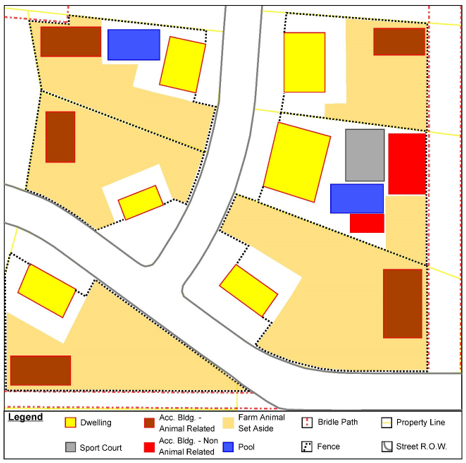 Figure 1 - Diagram of Farm Animal Set Aside Area (not drawn to scale)
- Ratio of Farm Animals to Lot Size. Keeping of farm animals shall be regulated as stated in Section 21-11-3, except for the ratio of animals to lot size for farm animals. Definitions of what constitutes a small, medium, and large animal can be found in Section 21-37-7(3). The following ratios of animals to gross land area shall apply.
- Large animals may be kept at a ratio of one per 7,500 square feet of lot size. In addition, one offspring under the age of 12 months may be kept on the property and shall not be tabulated in the allowed number of farm animals.
- Medium animals may be kept at a ratio of one per 4,000 square feet of lot size.
- Small animals may be kept at a ratio of one per 400 square feet of lot size.
- Miniature horses shall be considered medium animals in this zone only.
- Vietnamese potbellied pigs shall be limited to no more than two per lot.
- Unless a special use permit is obtained as described below, no lot shall have more than a maximum of four large animals, or ten medium animals, or 50 small animals.
- Combinations of each size of animal may be kept at these ratios listed above. For example, a 30,000 square foot lot could have a combination of three large animals (22,500), one medium animal (4,000), and eight small animals (3,200). See breakdown table below:
Example of Farm Animal Ratio Breakdown k = 1000 Gross Lot Square Footage = 30,000 sq. ft. Large 3 × 7.5k = 22.5k Medium 1 × 4k = 4k Small 8 × 0.4k = 3.2k Total 3 Large (22.5k) + 1 Medium (4k) + 8 Small (3.2k) = 29.7k
- Special Use Permit for Keeping of Additional Farm Animals. Lot owners that maintain a more than half of their gross lot area in farm animal area set aside may be allowed to keep additional animals on their lot through a special use permit from the Sandy City Community Development Department at the ratios specified below and if certain criteria is met:
- Under this special use permit, the following ratios of animals to dedicated farm animal area set aside shall apply:
- Large animals may be kept at a ratio of one per 3,000 square feet. In addition, one offspring under the age of 12 months may be kept on the property and shall not be tabulated in the allowed number of farm animals.
- Medium animals may be kept at a ratio of one per 2,000 square feet.
- Small animals may be kept at a ratio of one per 200 square feet.
- In no case shall this permit grant more than a maximum of ten large animals, or ten medium animals, or 50 small animals per lot.
- Combinations of each size of animal may be kept at these ratios as listed above. For example a 30,000 square foot lot (gross area) with 20,000 square feet of dedicated farm animal area set aside would allow for a combination of five large animals (15,000) and two medium animals (4,000) and five small animals (1,000). See breakdown table below:
Example of Farm Animal Ratio Breakdown
- Special Use Permit -k = 1000 Lot Farm Animal Set Aside Area - 20,000 Sq Ft Large 5 × 3k = 15k Medium 2 × 2k = 4k Small 5 × 0.2k = 1k Total 5 Large (15k) 2 Medium (4k) 5 Small (1k) = 20k
- Owner Occupancy. The owner of the subject property shall live in the primary dwelling unit and must reside therein as their primary residence.
- An individual shall prove ownership of the property as evidenced by a copy of a transfer deed listing the applicant as the fee title owner. Fee title owner may be an individual or trustor of a family trust that possesses 50 percent or more ownership of the primary dwelling. The fee title owner may not be a corporation, partnership, limited liability company, or similar entity.
- To establish that the property is the owner's primary residence, the owner shall:
- Present the owner's most recent State and Federal tax returns both listing the property as the owner's primary residence; or
- Present a government-issued identification document listing the address of the property as the address of the owner; and
- A signed affidavit sworn before a notary public shall be provided by the owner stating that the proposed property is the primary residence of the owner, and they will occupy the property as their residence, except for bona fide temporary absences.
- Farm Animal Area Set Aside. This area must be actively used and preserved for the purpose of keeping farm animals (including fencing). Areas that merely could be used for farm animals, but is not currently being used as such (play areas, landscaped yards, gardens, unfenced yard areas, etc.), will not be used in determining additional farm animal area set aside.
- Shelter. Shelter shall be provided for all large animals on the property at all times. At a minimum, this shelter shall consist of three solid walls, a pitched or slanted roof and provide ventilation. This shelter must meet all Building Code requirements. The minimum space required for shelter shall be 120 square feet per large animal. An outdoor animal domicile structure is required for all other farm animals. A plot plan must be submitted to illustrate the location of all proposed and existing structures and facilities.
- Waste Removal. A Waste Management Plan must be submitted to provide for the elimination of potential nuisances, including unsanitary conditions, odors, rodents, and flies. At a minimum, the plan must ensure routine cleaning of shelter space of all manure and waste. This plan must provide details of how the removal from the premises or proper recycling of manure and other waste products will be accomplished. The waste removal plan is subject to the approval of the Community Development Department, Sandy City's Animal Services Division, affected water districts, and the Salt Lake Valley Board of Health.
- Review. The applicant shall at all times remain in compliance with all the requirements of the special use permit, the City's ordinances and state laws pertaining to animals and nuisances and the regulations of the Salt Lake Valley Board of Health. The Community Development Department, the City's Animals Services Division, and the Salt Lake Valley Department of Health shall be allowed to inspect the property at reasonable times to verify compliance. This special use permit may be reviewed upon legitimate complaint or failure to comply with the requirements herein. If the applicant is found to be out of compliance, this special use permit may be revoked by the Community Development Director.
- Under this special use permit, the following ratios of animals to dedicated farm animal area set aside shall apply:
- Additional Square Footage for Accessory Structures. The total maximum square footage of all accessory buildings on a lot may be increased from the permitted size listed in Section 21-11-2 upon receipt of a conditional use permit from the Sandy City Planning Commission if the following criteria are met:
- The square footage of all accessory structures approved in this process may increase up to a maximum of 20 percent of the rear yard area, less bridle path areas.
- The requested increase of square footage is used exclusively for animal domiciles or related to the keeping of animals (stables, hay barns, etc.). The typical permitted maximum square footage of accessory buildings may be used for all other purposes, but all structures beyond the maximum size permitted by right will be restricted in the use thereof.
- Fencing. Lot fencing shall be regulated as stated in Section 21-28, except for the following exceptions:
- A six-foot open style fence for the keeping of animals is allowed within a portion of the front yard area. The fence may not be in front of the home (that area between the front of the home and the street and at least 15 feet on either side of the home) and must be located outside of any required sight visibility triangle areas (see Figure 2).
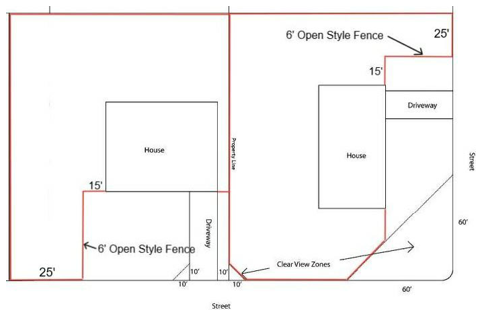
Figure 2 - Fence Diagram (not drawn to scale)
- A six-foot open style fence for the keeping of animals is allowed within a portion of the front yard area. The fence may not be in front of the home (that area between the front of the home and the street and at least 15 feet on either side of the home) and must be located outside of any required sight visibility triangle areas (see Figure 2).
(LDC 2008, § 15A-19-31; Ord. No. 09-11, 4-22-2009)
Amended by Ord. 22-18 § 1(Exh. A) on 12/20/2022

