Griffin City Zoning Code
712 J
Architectural standards.
Architectural standards are established for residential and commercial development within a PRD district.
1.
Residential construction. The following standards pertain to residential construction:
a.
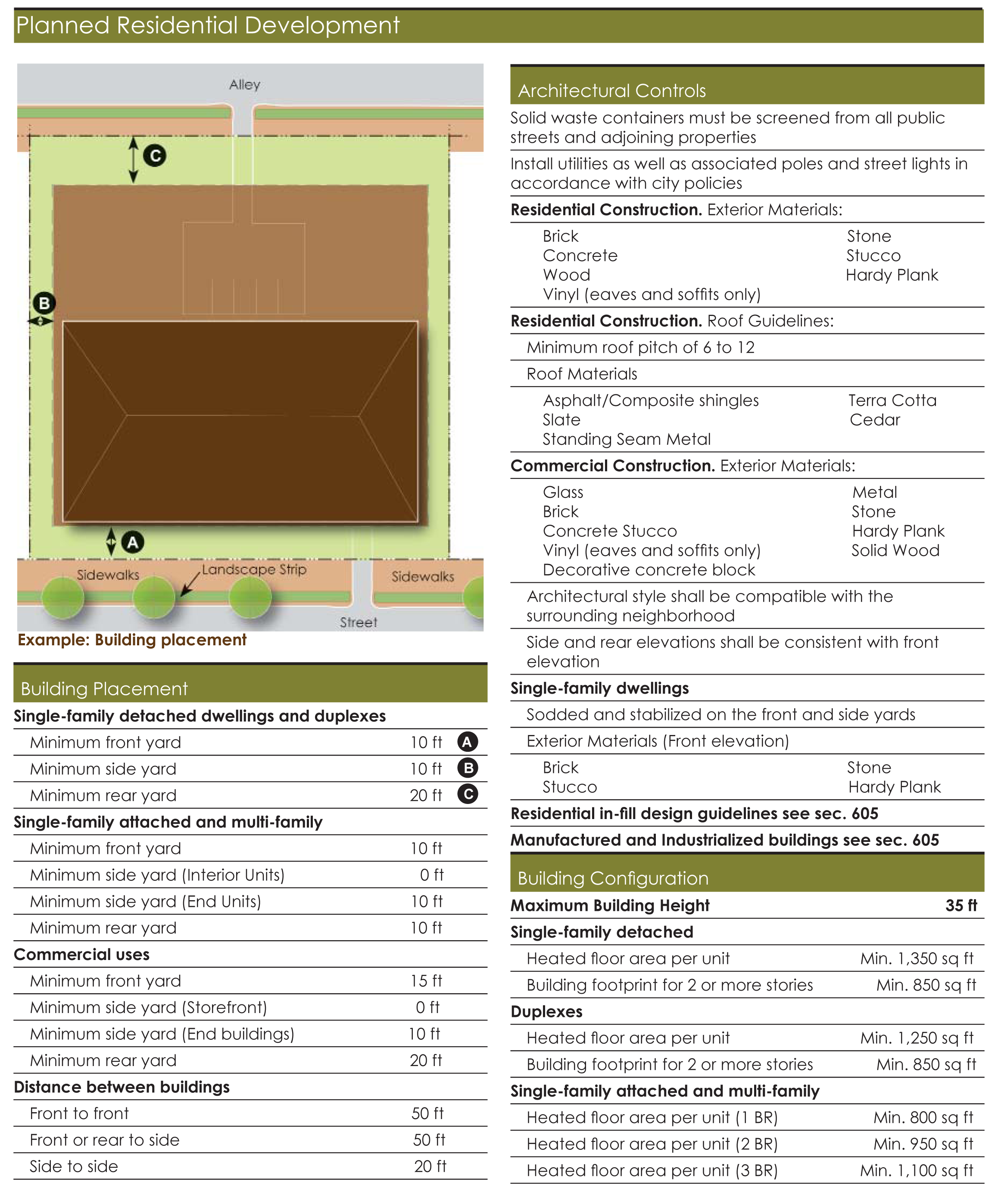
Roof pitch in residential developments shall be a minimum of 6/12. Roof materials shall consist of asphalt or composite shingles, terra cotta, slate, cedar or standing seam metal. "Rolled" asphalt roofing materials shall not be used.
b.
Brick, stone, concrete stucco, wood, hardy plank, or any combination thereof, shall be the only acceptable exterior finish materials.
c.
Subdivision developments shall use a combination of compatible architectural styles and elevations to avoid repetition of dwelling unit appearance along any street.
d.
Side and rear building elevations of attached residential developments shall be substantially consistent with the front building elevation.
e.
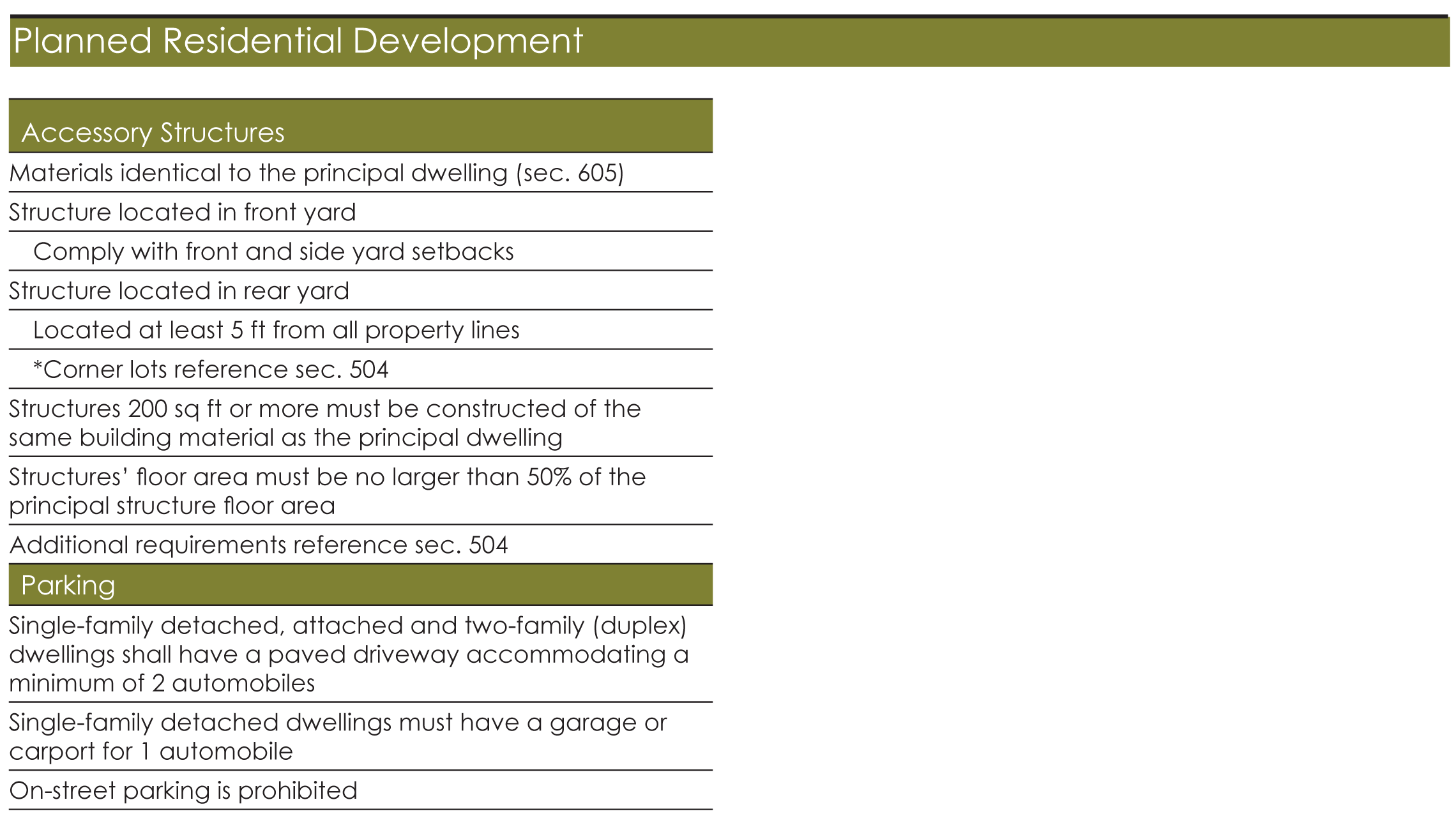
Accessory structures shall be finished using materials identical to the principal dwelling.
2.
Commercial construction. The following standards pertain to commercial construction:
a.
Building materials used for exterior finishes shall consist of glass, metal, brick, stone, concrete stucco, decorative concrete block, solid wood or hardy plank. Awning materials shall be limited to canvas or metal.
b.
Architectural style within one block or other contiguous development unit shall be compatible and shall adhere to a single, consistent architectural theme compatible with the character of the surrounding neighborhood.
c.
Side and rear building elevations of all commercial structures shall be substantially consistent with the front building elevation.
d.
Placement of air-conditioning units and other mechanical systems and equipment shall be accomplished without detracting from the architectural integrity of the building or site. Generally, such equipment must be installed to the rear of the building or on the side, provided the view is partially obstructed through either the use of compatible with the building such equipment serves or landscaping. Rooftop equipment shall be completely screened from view from the public right-of-way as well as adjoining properties.
(Ord. No. 19-15, § 1, 10-22-2019; Ord. No. 19-16, § 1, 10-22-2019)