
New Castle City Zoning Code
CHAPTER 17
40 - BUILDING DESIGN STANDARDS IN C-1 COMMERCIAL DISTRICT
17.40.010 - General intent and purpose.
The intent and purpose of these standards is to ensure that infill and redevelopment in the established C-1 district:
A.
Maintains and protects the historic resources;
B.
Is compatible with surrounding land uses;
C.
Enhances the existing small town character;
D.
Improves the overall image of downtown; and
E.
Is consistent with the goals and policies of the downtown plan, as described in the town land use plan, adopted in June 1982.
(Ord. 2001-5 § 2 (part): prior code § 13-04-085(A))
17.40.020 - Applicability.
The design standards will apply to all uses in the C-1 zone including single and multifamily developments, as well as nonresidential uses, such as office, commercial and retail within the district, as defined in the district map.
(Ord. 2001-5 § 2 (part): prior code § 13-04-085(B))
17.40.030 - General.
These design standards shall be applied in the normal review processes for zoning ordinances, building additions, renovations, and new construction in the form of approved site plans or development plans, as applicable.
(Ord. 2001-5 § 2 (part): prior code § 13-04-085(C))
17.40.040 - Review criteria.
In addition to the review criteria specified for each type of development application in town ordinances, application and review procedures, each rezoning or development plan shall evidence compliance with these design standards.
(Ord. 2001-5 § 2 (part): prior code § 13-04-085(D))
17.40.050 - Definitions.
As used in this chapter and Chapter 17.44, the following terms shall mean:
"Civic use" means any use intended to be conducted in a facility or upon land that is owned or operated for public use by school districts or by a town, county, state, or federal government.
"Commercial development" means any development activity except development activity intended solely for residential use.
"Contributing" means a property adds to the historic architectural qualities, historic associations or archaeological values for which the district is significant because: (1) it was present during a period of significance and possesses historic integrity reflected in its character at that time or it is capable of yielding important information about the period; and (2) it independently meets the National Register criteria set forth in the Standards for Rehabilitation and Guidelines of Rehabilitating Historic Buildings, a section of the Secretary of the Interior's Standards for Historic Preservation Projects, revised in 1990 as part of Department of the Interior Regulations (36 CFR Part 67, Historic Preservation Certifications) and available from the U.S. Government Printing Office, Superintendent of Documents, Mail Stop: SSOP, Washington, DC 20402-9328.
"Infill and redevelopment" means development on property located within the district that is: (1) proposed for a vacant or substantially vacant tract of land surrounded by existing development, or (2) proposed for a tract of land with existing structures where all or most of the existing structures would be razed and a new structure or structures built.
"Maximum extent feasible" means that no feasible and prudent alternative exists, and all possible efforts to comply with the regulation or minimize adverse impacts have been undertaken. Economic considerations may be taken into account but shall not be the overriding factor in determining maximum extent feasible.
"Mixed-use development" means the development of a lot, tract or parcel of land, building or structure with two or more different uses including, but not limited to, residential, office, retail, public uses, personal service or entertainment uses, designed, planned and constructed as a unit.
"Multifamily development" means a structure or part thereof designed exclusively for occupancy by two or more families and commonly referred to as a duplex (two-family dwelling), triplex, four-plex, townhouse, or apartment house.
"Noncontributing" means a property does not add to historic architectural qualities, historic associations, or archaeological values, usually because of alterations, additions or other changes. If the property no longer possesses integrity reflecting its character at the time or is incapable of yielding information about the period, then it is considered "noncontributing." Many buildings are rated "noncontributing" simply because the building was constructed less than fifty (50) years before the present time.
"Office" means an office for professionals such as physicians, dentists, lawyers, architects, engineers, artists, musicians, designers, teachers, accountants, and others who through training are qualified to perform services of a professional nature and where no storage or sale of merchandise exists.
"Orient" means to bring in relation to, or adjust to, the surroundings, situation, or environment; to place with the most important parts facing in certain directions; to set or arrange in a determinate position; to orient a building.
"Pedestrian-oriented development" means development that is designed with a primary emphasis on the street, sidewalk and/or connecting walkway access to the site and building, rather than on auto access and parking lots. In pedestrian-oriented developments, buildings are typically placed relatively close to the street and the main entrance is oriented to the street sidewalk or walkway. Although parking areas may be provided, they are not emphasized in the design of the site.
"Standards" means mandatory regulations. Standards are indicated by use of the terms shall and must.
(Ord. 2001-5 § 2 (part): prior code § 13-04-085(E))
17.40.060 - Site layout and development pattern.
A.
Intent. A sense of visual unity of the district is established with the repeating of existing similar building features. The relatively uniform alignment of commercial structures along Main Street is an example of a repeated feature. The pattern of the visual unity of consistent setbacks and building orientation must be maintained.
B.
Design Standards.
1.
New structures shall respond to the current historic building setbacks and orientation of the surrounding structures on the block.
2.
New construction and walls shall be built parallel to lot lines to reflect the historical orientation of nonresidential structures. Structures shall not be oriented at other than right angles to lot lines.
3.
The tradition of building commercial and other nonresidential structures aligned flush with the sidewalk or property line shall be maintained. A minimum of eighty (80) percent of the building edge shall be located adjacent to the street edge. (Example: Figure 1)
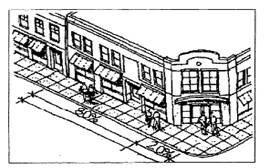
Figure 1—-Street frontage should be primarily dedicated to storefront uses. A corner site may orient its primary entry towards the corner for emphasis as above.
d.
On corner lots, structures shall not be set back from the sidewalk edge. A corner entry door may be provided at a forty-five (45) degree angle and a width not greater than twelve (12) feet. (Example: Figure 2)
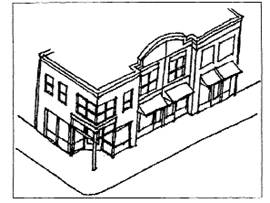
Figure 2—Aligning front walls of a new structure flush with the sidewalk edge creates a consistent visual line along the street.
5.
Orient the structure's primary façade to the street, not to an interior court.
a.
At corners, a primary façade shall face the major street or the corner; a lesser façade shall face the cross street.
b.
When designing courtyards, a minimal amount of street frontage shall be utilized. Courtyards shall not extend across the entire front of the property. Instead, a building shall be located flush with the property line on the street side.
6.
Clearly identify the primary entrances to a building.
a.
Locate the primary entrance facing the street. When a structure is located on a corner lot prominent entries shall be designed for both facades along the street edge or a single prominent entry shall be designed to face the corner.
b.
The building entrance shall appear similar in scale and character to those used historically.
7.
Density of infill and redevelopment projects shall be maximized within current standards to provide the greatest opportunity for mixed-use, pedestrian-oriented development.
(Ord. 2001-5 § 2 (part): prior code § 13-04-085(F))
17.40.070 - Building height, scale, massing and form.
A.
Intent. Continuity in heights of historic buildings shall be maintained for preservation of the historic character of the district. In order to maintain the historic character of the district, infill and redevelopment projects shall utilize building footprints and heights similar to those found on the same block.
B.
Design Standards.
1.
Building massing shall respect the existing neighborhood scale, especially along the lot edge that abuts existing residential development and along the street edge.
a.
The primary mass of a structure shall include secondary projections that reduce apparent scale, increase visual interest and promote compatibility with adjacent properties.
b.
Structures directly adjacent to residential zone districts shall "step-down" in height on the abutting edge to match the height of the adjacent structure.
2.
New structures shall reinforce historic building front width pattern or spacing of façade bays. (Example: Figure 3)
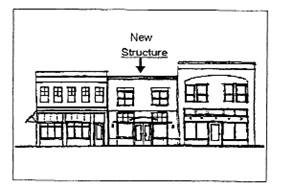
Figure 3—Second story floors of new structure visually align with those of adjacent existing structures creating a consistent appearance for the street.
Storefront type development shall typically be differentiated every twenty-five (25) feet along the block. This will help preserve the "rhythm" of building facades that contributes to the visual continuity of the street and help create variation in the façade of a larger building.
3.
Structures shall be divided into modules reflecting traditional building widths.
Prominent civic and in some cases office structures may vary in front width and shall
be reviewed on an individual basis for compatibility.
4.
The appearance of floors of new buildings shall appear to be similar in height to those of existing historic buildings in the district. (Example: Figure 3)
a.
The level of first floor shall be at or near grade level at the entrance.
b.
The first floor shall appear to be a full floor in height.
5.
The alignment of horizontal elements along the block face, including building cornices,
shall be maintained.
Windowsills, moldings, and cornices are types of building elements that shall be aligned.
(Ord. 2001-5 § 2 (part): prior code § 13-04-085(G))
17.40.080 - Surface parking, loading, and service areas.
A.
Intent. A pedestrian safe condition of the district is to be developed and maintained, enhancing the economic health of the area. To protect this condition, the visual and operational impacts of surface parking, loading and other auto-oriented service areas on surrounding uses shall be minimized.
B.
Design Standards.
1.
Parking orientation shall minimize visual and noise impacts on adjacent properties. To the maximum extent feasible, parking shall be located behind or to the side of a structure. (Example: Figure 4)
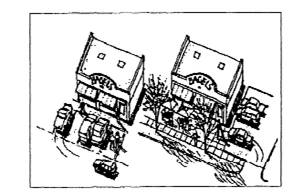
Figure 4—To the maximum extent feasible, parking should be located to the side or rear of building.
2.
All parking lots adjacent to a street edge shall be screened using plant material, walls, and/or fencing. (Example: Figure 5)
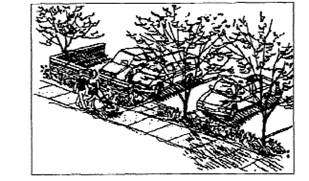
Figure 5—Parking lots should be screened using plant material, walls, and/or fencing at the street edge.
a.
Low water or native plant materials typically found within environs adjacent to the town shall be used to provide buffers between sidewalk and edge of parking.
b.
Use of smooth-finish walls shall include plant materials to buffer and soften their appearance.
3.
Interior parking lot landscaping shall be used to break up the appearance of parking lots and to provide shaded parking. (Example: Figure 6)
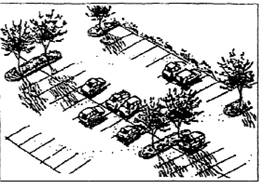
Figure 6—-Landscaped islands break up the visual monotony of parking areas and provide shade.
a.
For parking lots with ten (10) or more spaces, one deciduous shade tree shall be planted in the interior of the lot for every ten (10) spaces.
b.
Shade trees shall be located within curbed, planted medians and/or islands to provide spatial definition.
4.
Loading and Unloading of Materials in Streets.
a.
The use of alleys for loading and unloading is preferable to the use of streets. To the maximum extent feasible, loading areas shall be located on private property away from the front of the building.
b.
Commercial off-street parking or loading areas shall not be permitted or allowed adjacent to residential zone districts.
c.
Parking shall be located in the rear of lots to the maximum extent feasible, reserving the street frontage for commercial uses.
(Ord. 2001-5 § 2 (part): prior code § 13-04-085(H))
17.40.090 - Vehicular and pedestrian access.
A.
Intent. Heavy automobile traffic along Main Street compromises the safety and comfort of pedestrians in the district and shall be mitigated to the maximum extent feasible. Clearly defined auto and pedestrian zones shall provide safety and mobility for both modes of travel and encourage pedestrian commercial activity in the district.
B.
Design Standards.
1.
Established street and sidewalk patterns shall be incorporated within the site plan of any infill or redevelopment project. Sidewalks shall remain consistent in width to an abutting sidewalk edge.
2.
A continuous pedestrian pathway surface shall be provided to encourage pedestrian
activity within the district.
In areas of high pedestrian activity, public street crossings shall be marked with
a change in paving materials, such as a high contrast brick or cobble.
3.
Space for a buffer between sidewalks and moving traffic shall be allocated to enhance pedestrian comfort and safety. Existing areas in the district where space may be allocated for this purpose typically range from four feet to six feet in width from curb to sidewalk edge.
a.
Buffers shall be achieved through the use of on-street parallel parking, street furniture, a landscape buffer, a change in paving materials, or some combination of two or more of these elements.
b.
Brick payers, in combination with street trees shall be used as a buffer in and around the district, providing a consistent visual appearance and a comfortable environment for pedestrians.
(Ord. 2001-5 § 2 (part): prior code § 13-04-085(I))
17.40.100 - Architectural details.
A.
Intent. Prominent, street-oriented door-ways, awnings and large glass storefront windows are historical building features that shall be maintained and provided as they add visual interest to the street. The downtown district shall continue to develop as a pedestrian-oriented environment. Streets, sidewalks, and alleys shall enhance walking, sitting, and other outdoor activities. Existing pedestrian routes shall be enhanced. Buildings shall express human scale through materials and forms that were seen and used traditionally. The use of rooflines similar to those historically known in the district also contributes to the area's character and shall be maintained to create a visually unified appearance for the district.
B.
Design Standards.
1.
Do not use or add non-historic details to buildings.
a.
Use ornamental details with restraint.
b.
Historic details that were not used in the neighborhood are not appropriate and shall not be used.
2.
Contemporary interpretations of historic styles may be utilized for new buildings in the district. (Example: Figure 7)
a.
A new design that draws upon the fundamental similarities among historic buildings in the community (without copying them) is required. New structures may be seen as products of their own time yet compatible with their historic neighbors.
b.
New designs for window moldings and door surrounds, or porch railings and columns, for example, can provide visual interest while helping to convey the fact that the building is new.
c.
New, soffit details and dormer designs also may be used to create interest while expressing a new, compatible style.
d.
Generally, the imitation of older historic styles may also be considered to attain compatibility with the historically authentic styles of the district.
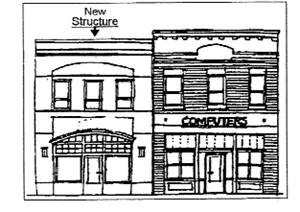
Figure 7—The new structure on the left uses similar, but less ornate building ornamentation and proportion to create a modern interpretation of a historic style.
3.
The ground floor of a project shall be developed to encourage pedestrian activity by providing at least one of the following along primary pedestrian ways:
a.
Design and develop a storefront, display cases, public art. landscaping, or decorative wall surfaces.
b.
Include traditional elements such as display windows, kick plates and transoms on commercial storefronts.
c.
Avoid a blank wall or vacant lot appearance.
4.
A new commercial storefront building shall incorporate these character-defining elements (Example: Figure 11 set out in Section 17.44.020):
a.
Display windows: the main portion of glass on the storefront, where goods and services are displayed.
b.
Transom: the upper portion of the display, separated from the main display window by a frame.
c.
Kickplate: found beneath the display window. Sometimes called a bulkhead panel.
d.
Entry: usually set back from the sidewalk in a protected recess.
e.
Upper story windows: windows located above the street level. These usually have a vertical orientation, and appear to be less transparent than the large expanse of glass in the storefront below.
5.
The distinction between the street level and the upper floor shall be maintained. (Example: Figure 8)
a.
The first floor of the primary façade shall be predominantly transparent glass.
b.
Upper floors may be more opaque than the lower floor.
c.
Highly reflective or darkly tinted glass is inappropriate and shall not be utilized.
d.
The traditional distinction in floor heights between street levels and upper levels through detailing, materials and fenestration shall be maintained.
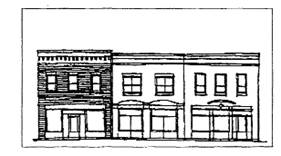
Figure 8—Upper stories of commercial structures should appear more solid than the transparent glass storefronts found at the street level.
6.
Primary building entrance shall be recessed.
a.
Doors that are flush with the sidewalk shall be avoided for the safety of pedestrians.
b.
Doors shall have large areas of glass.
c.
Use of accent color on the door is encouraged to help lead the pedestrian inside.
7.
The primary roof form shall appear to be flat, as traditionally found on district commercial structures. (Example: Figure 9)
a.
A parapet shall conceal roofs.
b.
Exotic roof forms, including mansards, domes and extreme angles, shall not be allowed.
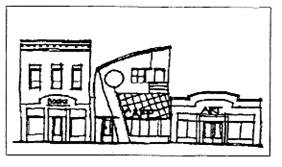
Figure 9—Exotic roof forms such as the dramatic curves found on the above center building are not appropriate in the downtown district.
8.
Upper story windows shall have a vertical emphasis, in similar proportions to those traditionally found, on historic commercial structures in the district.
9.
Awnings, where utilized, shall be of fabric material. (Example: Figure 10)
a.
Awnings shall be canvas with a matte finish. Awnings with high gloss finishes were not historically found in the downtown and shall not be used.
b.
Operable awnings are required, except rigid frame awnings may be allowed, but shall stop at the top section and shall not be included in the valance.
c.
Illuminated, plastic awnings are not appropriate for the downtown and shall not be allowed.
d.
Awning colors shall be compatible with the overall color scheme of the façade. Solid colors or subtle striped patterns shall be used.
e.
Awnings for rectangular openings shall be simple, shed shapes.
f.
Awnings shall not be used to create arches.
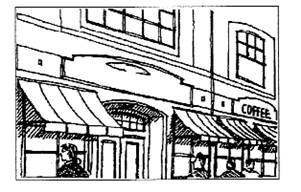
Figure 10—Fabric awnings are encouraged for downtown storefronts.
10.
Glass transoms shall be used above display windows. These bands of glass shall be located at the same building height along a block to reinforce the sense of visual continuity for the street and introduce light into the depths of a building.
11.
Cornices and parapets shall be repeated on the façade where appropriate to provide a continuous visual line along the block.
a.
Parapets and cornices are examples of decorative elements found on historic commercial buildings in the district to be maintained.
b.
Prudent and moderate emphasis of detail with accent colors is appropriate and permitted.
12.
Featureless backs of buildings shall not be located facing Interstate 70 or adjacent
residential neighborhoods. Features on backs of buildings facing Interstate 70 or
adjacent residential neighborhoods shall not include signs of any type.
To attain and attract active uses in this area, all design standards applicable to
street frontage structures shall also be applicable to the back of a building in this
area.
(Ord. 2001-5 § 2 (part): prior code § 13-04-085(J))
17.40.110 - Building materials and colors.
A.
Intent. New structures shall utilize historically similar materials and colors to maintain a unified character for the district.
B.
Design Standards.
1.
Colors that enhance the natural colors of the building materials shall be used in developing an overall color scheme.
2.
Primary materials should be similar in character to those used traditionally on downtown commercial structures.
a.
Only brick and masonry of durable quality, color and texture as traditionally found on historic structures in the district shall be used. New materials shall demonstrate similar durability.
b.
Diagonal siding shall not be used.
c.
Concrete block is acceptable for side and rear walls, but shall not be used as an exposed material.
3.
Accent materials shall be similar to those used historically.
Wood was traditionally used for trim elements on commercial storefronts while stone,
brick and painted metal were used in detailing.
4.
Glass used in windows shall appear similar to that used historically.
a.
Only transparent, clear glass shall be used.
b.
Opaque, tinted, and mirrored glass detracts from pedestrian interest at the street level and shall not be used.
(Ord. 2001-5 § 2 (part): prior code § 13-04-085(K))
17.40.120 - Mechanical and electrical equipment.
A.
Intent. Mechanical and utility equipment systems shall not detract from the historic character of the district. This character is a key element of the district's appeal and efforts shall be taken to minimize the visual impacts of mechanical and utility systems on surrounding development.
B.
Design Standards.
1.
Ground-mounted electrical and mechanical equipment shall be screened from public view using opaque fencing, walls or a combination of fencing or walls and planting.
a.
Materials for screening purposes shall be wood, masonry, or split face concrete block.
b.
Chain link fencing may be used in rear service areas and shall be vinyl-coated black or brown and used in conjunction with tightly spaced plant material to create a visual screen.
2.
Mechanical/utility screening shall be integrated as part of the building structure and architecture and not appear "tacked on" to the exterior surfaces of the structure. All mechanical, electrical, and communications equipment including but not limited to air-conditioning, heating and soft water tanks, television antennas, satellite dishes, security apparatus, transformers, electric and gas meters, must be integrated into the building design, screened from public view, or enclosed in a suitable accessory structure, when appropriate.
3.
Roof top mechanical equipment shall be painted to match roof color only if parapet walls or other means of screening are not reasonably feasible within the bounds of a project.
(Ord. 2001-5 § 2 (part): prior code § 13-04-085(L))
17.40.130 - Lighting.
A.
Intent. Lighting has historically been used in the district to accent important building features, displays, or entries. In addition to the positive cosmetic effects, the presence of multiple light sources along a street frontage increases security and safety, encouraging nighttime pedestrian activity. Care shall be taken to provide adequate lighting in all downtown commercial areas.
B.
Design Standards.
1.
Lighting shall be used as it was used historically in the district.
a.
Low-scale, decorative lighting shall be used to accent architectural details, building entries, or signs. Additional, pedestrian-scaled lighting shall be provided to illuminate sidewalks, enhancing security and extending hours of activity.
b.
All light sources shall be shielded.
c.
Lights shall not be focused upward to light the façade or used to dominate a façade or the street.
d.
Neon lighting may be used, but shall not be used to internally light a sign.
e.
Animated lighting, such as chase lights, shall not be used.
(Ord. 2001-5 § 2 (part): prior code § 13-04-085(M))
17.40.140 - Reserved.
Editor's note— Ord. No. 2011-4, § 2(c), adopted Apr. 19, 2011, repealed § 17.40.140, which pertained to signage and derived from prior code § 13-04-085(n); Ord. 2001-5 § 2.

