
Griffin City Zoning Code
724 M
Building envelope standards.
1.
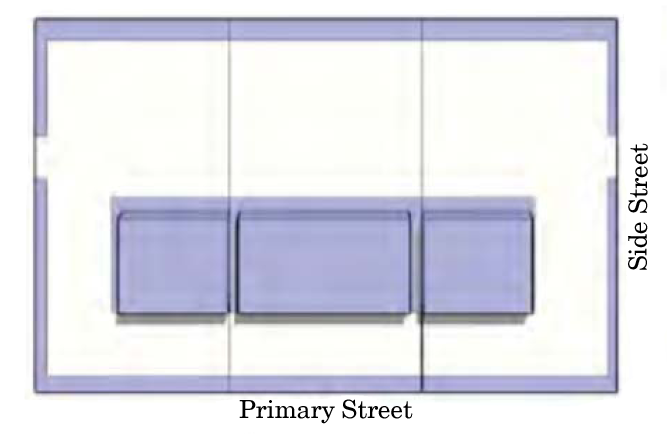
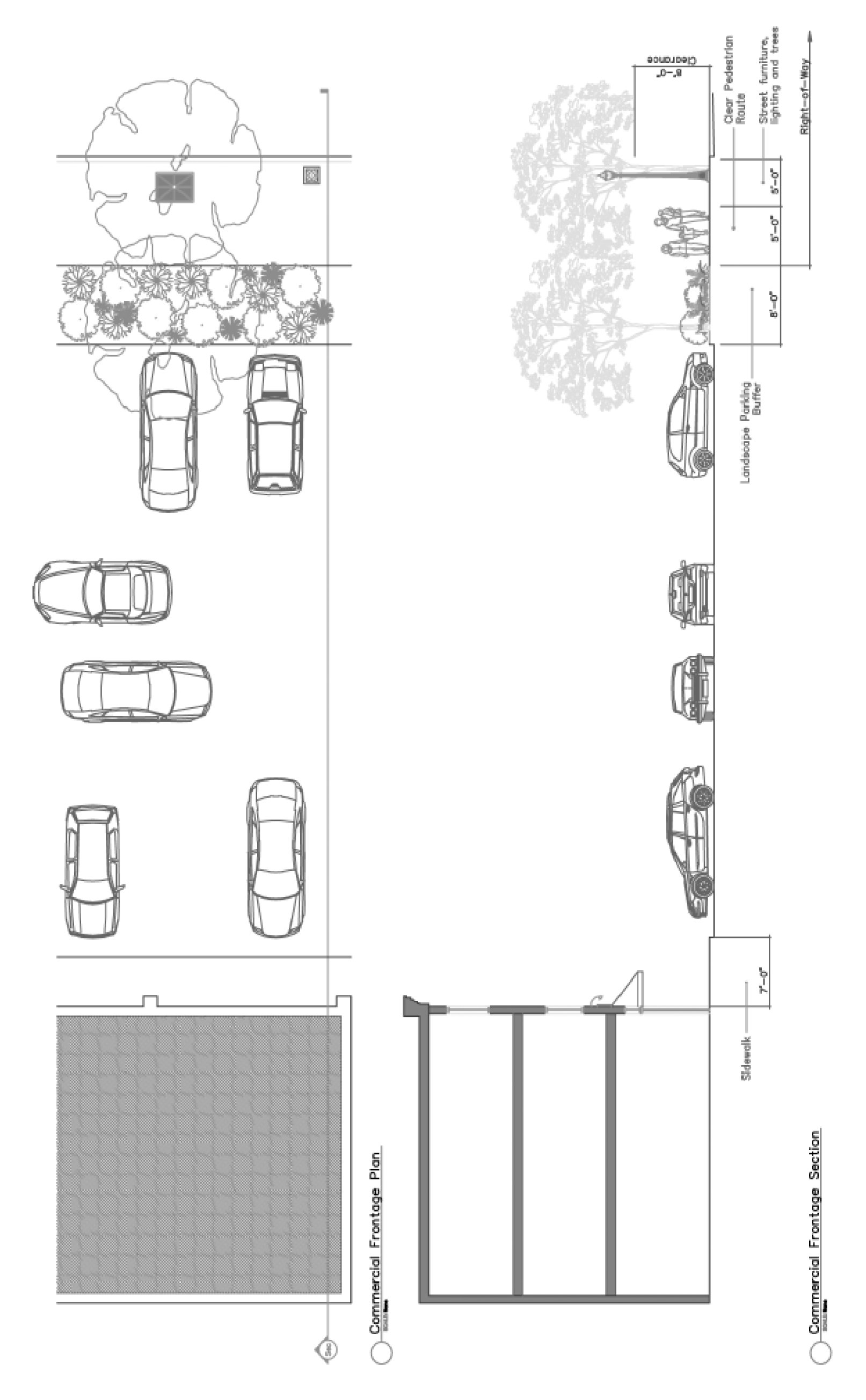
Applicability. Buildings are set back further from the street to allow for easier access by automobile. Parking occurs in front of buildings but is limited to two bays with a single drive aisle. There is usually a single entrance facing the primary street served by an internal sidewalk.
2.
Building regulations. The building standards in the following table shall replace and supplement the respective regulations of the underlying nonresidential districts:
BUILDING AND PARKING PLACEMENT
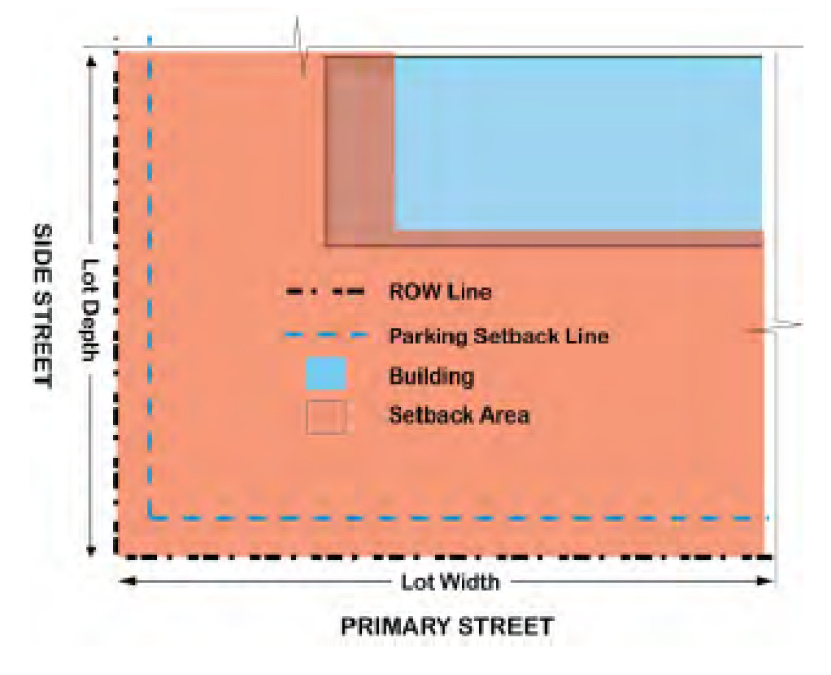
Lot Area and Width: No minimum.
Setback Area: Ten feet behind ROW line.
Parking Setback Line:
1.
Primary/side street setback. Minimum ten feet behind ROW line.
2.
Parking shall be located behind the parking setback line. A single 22-foot drive aisle serving 20-foot deep parking spaces on one or both sides may be located between the building and the street. Where parking is provided between the building and the street, the eight-foot parking setback area shall be landscaped.
Building Entrance:
1.
A building located on two primary streets shall have either one entrance per frontage or provide one angled entrance at the corner of the building at the intersection. Building located on corner lots shall meet all applicable intersection sight distance requirements. Additional entrances off another street, pedestrian area, or internal parking area are permitted.
2.
Recessed entrances shall not exceed 3 ft. in depth and one floor in height.
HEIGHT
Building Height: See underlining zoning district for maximum height requirements.
3.
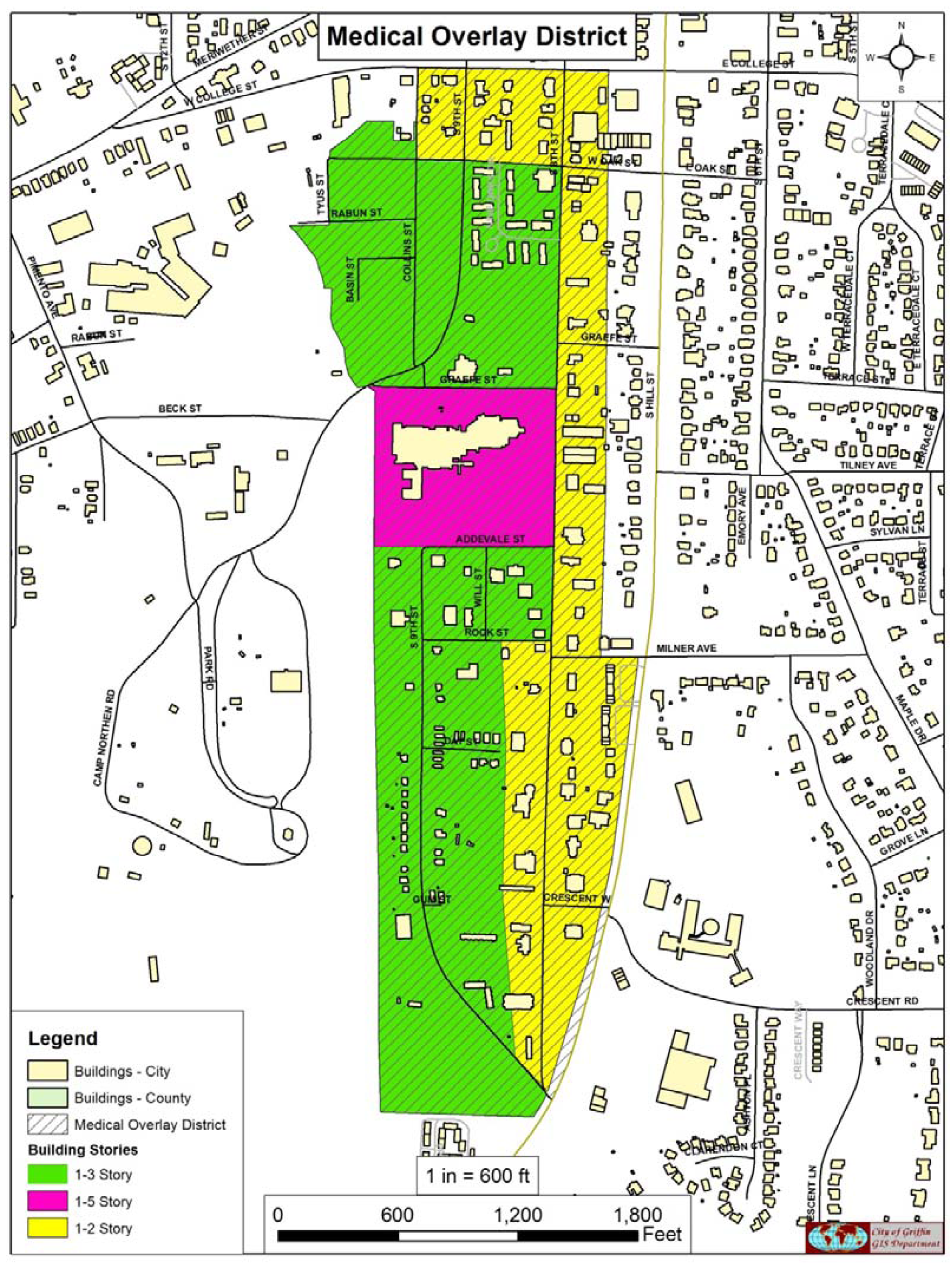
Height standards. The following map designates maximum building story limits with the Medical Overlay District (MOD).
4.
Streetscapes standards. The following minimum streetscape standards apply along a Pedestrian Frontage as designated in building envelope standards.
Frontage Plan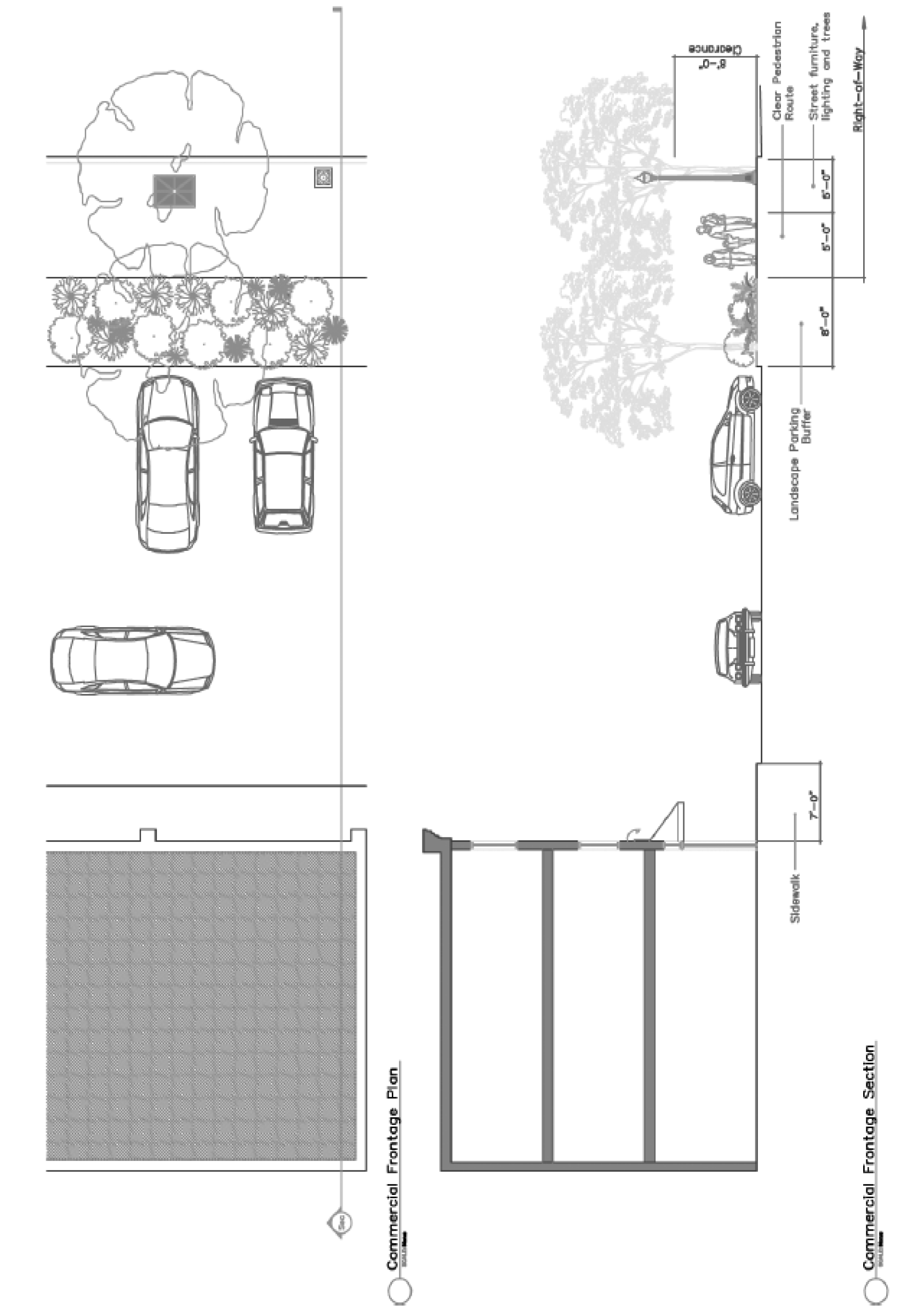
5.
Street trees. A project developed in the Medical Overlay District shall provide street trees located at least every 30 feet on center. The street trees shall be planted in grates that are American with Disabilities Act (ADA) compliant or in planters with curbed beds. The location of street trees shall conform to the applicable streetscape plate.

