
Keizer City Zoning Code
2.203
PERMITTED USES GENERALLY
Sec. 2.203.01. - Permitted uses.
The following uses and activities are permitted in all zones:
A.
Utility facilities. Placement and maintenance of underground or above ground wires, cables, pipes, guys, support structures, pump stations, drains, and detention basins within rights-of-way by public agencies and utility companies for telephone, TV cable, or electrical power transmission, or transmission of natural gas, petroleum products, geothermal water, water, wastewater, sewage and rainwater. (5/98)
B.
Railroad tracks. Railroad tracks and related structures and facilities located within rights-of-way controlled by railroad companies. (5/98)
C.
Street improvements. Surfaced travel lanes, curbs, gutters, drainage ditches, sidewalks, transit stops, landscaping and related structures and facilities located within rights-of-way controlled by a public agency. (5/98)
D.
Public right-of-way expansion/use. Expansion of public right-of-way and widening or adding improvements within the right-of-way, provided the right-of-way is not expanded to more width than prescribed for the street in the public facilities segment of the comprehensive plan.
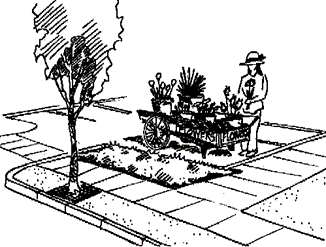
The placement, storage or display of merchandise, or other material for commercial use in the street,on the sidewalk, median strip, or any other portion of the street right-of-way or public easement is prohibited. (12/15)
E.
Signs. Signs as permitted in section 2.308. (5/98)
Sec. 2.203.02. - Permitted residential accessory structures and uses.
The following accessory uses shall be permitted, subject to the following limitations and requirements:
A.
Accessory structures and uses. The following accessory structures and uses are permitted on a lot in any zone in conjunction with a permitted dwelling or manufactured home:
1.
Decks and patios (open, covered or enclosed). (5/98)
2.
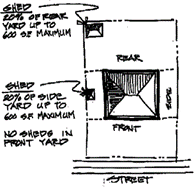
Storage building for firewood, yard maintenance equipment or tools or personal property not used in conjunction with any commercial or industrial business other than a home occupation. (5/98)
3.
Greenhouse or hobby shop. (5/98)
4.
Swimming pools, hot tubs, and saunas along with associated structures. (5/98)
5.
Pets, including outdoors shelters or runs. (5/98)
6.
Fallout shelters. (5/98)
7.
Garages and carports. (5/98)
8.
Rooms for one or two boarders residing in the dwelling. (5/98)
9.
Animals, if required to be allowed under federal or state law, including outdoor shelters or runs. (6/20)
B.
Fences. Fences are a permitted accessory or secondary use in all zones, subject to the requirements in section 2.312.10. (5/98)
C.
Residential office. One manager's office of 400 square feet or less for rental of dwellings is a permitted accessory use in the RL, RM, RH and CM zones, provided the office is located within a building containing dwelling units. (5/98)
D.
Agricultural uses. Gardens, orchards and crop cultivation primarily for personal use is a permitted use accessory to a dwelling in residential zones, except that the keeping of livestock, poultry (except chickens and ducks) or the sale of such, as well as the selling of produce on site, are prohibited. Chickens and ducks are only permitted consistent with the following standards: (6/20)
1.
Chickens and ducks shall only be kept upon property occupied by a detached single-family dwelling or duplex. (6/20)
2.
No more than six hens or ducks in total may be kept on any one parcel or lot. (6/20)
3.
The keeping of roosters is prohibited. (9/11)
4.
Chickens and ducks shall be kept for personal, noncommercial use only. No person shall sell eggs or engage in breeding or fertilizer production for commercial purposes. (6/20)
5.
Chickens and ducks must be kept in a coop and runway, which shall only be located in a side or rear yard. A runway is a fully enclosed fenced area connected to the coop. Chickens and ducks must remain confined to the coop and runway at all times, except when under control of an owner or custodian. (6/20)
6.
Coops shall comply with accessory structure requirements in section 2.313.B, C, D, and F. (6/20)
7.
Coops and runway areas shall be kept clean, dry, free of noticeable odors, and in good repair. (6/20)
Sec. 2.203.03. - Permitted nonresidential accessory structures and uses.
A.
Rental office. A manager's office for rental of space in an industrial zone. (5/98)
B.
Mobile classrooms. Mobile classrooms are a permitted accessory use in conjunction with elementary and secondary schools. (5/98)
Sec. 2.203.04. - Permitted temporary uses.
The following temporary uses shall be permitted, subject to the following limitations and requirements:
A.
Permitted activities. Outdoor tree or fireworks sales are permitted in all zones except residential. Amusement and recreational service (SIC 799) and retail sales and services from a vehicle or temporary structure are permitted in all permitting zones, except residential, as a secondary use; however, houses of worship on arterial or collector streets may conduct any temporary use as described in this section. (2/01)
1.
The uses are otherwise permitted to be outdoors in the zone. (5/98)
2.
The activity is located on the same lot for no more than 90 days in any calendar year. (5/98)
3.
The use does not block driveways, driveway entrances or parking aisles. (5/98)
4.
The activity conforms to all signage requirements in section 2.308. (5/98)
5.
The activity conforms to all setback requirements applicable to the lot and zone. (5/98)
6.
The operator of a temporary use shall provide the required information, pay the applicable fee, obtain and display the required temporary business permit. (5/98)
7.
The operator of a temporary use shall obtain all permits required by other agencies, including those required for food handling and sales, and the sale of fireworks. (5/98)
B.
Temporary construction facilities. Mobile offices, temporary power equipment and temporary structures to house personnel and store equipment during construction, provided the structures are not used as dwellings. (5/98)
C.
Produce stands. Temporary roadside stands in conjunction with a farm use, provided:
1.
Sales are limited to produce grown in the vicinity with at least 51 percent of the produce is grown on the premises. (5/98)
2.
The roadside stand is operated for no more than six months in any calendar year and only between official sunrise and sunset. (5/98)
D.
Yard sales and auctions. Yard sales in any residential zone, and auctions in commercial and industrial zones, provided there are not more than three sales in a calendar year with each sale not to exceed three consecutive days. Merchandise and signs shall remain on private property. (5/98)
E.
Additional permitted temporary uses. The city council may, by resolution, authorize additional permitted temporary uses during a specific event or festival. This may include setting forth reasonable types of uses, appropriate zones for such uses, temporary signs and any time restrictions the council finds necessary to protect the health, safety and welfare of the public. (5/04)
F.
Temporary use of containers. The temporary use of a portable storage container may be permitted, provided that the portable storage container is placed in a driveway, parking lot, or other paved surface area. A container must be placed on private property and cannot encroach or interfere with any sidewalk, public right-of-way, access way, or vision clearance area. A portable storage container may not be placed anywhere on a lot or parcel more than a total of 30 days in a calendar year. (3/12)
(Ord. No. 2025-895, § 1(exh. A), 7-7-2025)

