
Keizer City Zoning Code
2.308
SIGNS
Sec. 2.308.01. - Purpose.
The purpose of these sign regulations is to provide equitable signage rights, reduce signage conflicts, promote traffic and pedestrian safety, and, increase the aesthetic value and economic viability of the city, all by classifying and regulating the location, size, type and number of signs and related matters, in a content-neutral manner. (5/98)
These regulations are not intended to and do not restrict speech on the basis of its content, viewpoint or message. Any classification of signs in these regulations that permits speech by reason of the type of sign, identity of the sign user or otherwise, shall permit any type of speech on the sign. To the extent any provision of these regulations is ambiguous, the term shall be interpreted to not regulate on the basis of speech content. (9/18)
Sec. 2.308.02. - Definitions.
For the purposes of this section, the following definitions shall apply: (6/23)
Alteration or altered. Any change in the size, shape, method of illumination, position, location, construction, or supporting structure of a sign. A change in sign copy or sign face alone shall not be considered an alteration. (5/98)
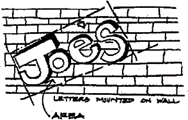
Area. The area of a sign shall be the entire area within any type of perimeter or border which encloses the outer limits of any writing, representation, emblem, figure, or character. If the sign is enclosed in a frame or cabinet the area is based on the inner dimensions of the frame or cabinet surrounding the sign face. When a sign is on a base material and attached without a frame, such as a wood board or plexiglass panel, the dimensions of the base material are to be used. The area of a sign having no such perimeter, border, or base material shall be computed by enclosing the entire area within a standard geometric figure or combination of no more than two connected standard geometric figures (e.g., rectangle, circle, parallelogram, triangle) of the smallest size sufficient to cover the entire message of the sign and computing the area of the sum of the geometric figures. For the purpose of computing the number of signs, all writing included within such geographic figure or two connected geographic figures shall be considered one sign, except for multi-faced signs on a single sign structure, which shall be counted as one sign per structure. The area of multi-faced signs shall be calculated by including only one-half the total area of all sign faces. (9/18)
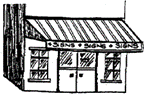
Awning. A shelter supported entirely from the exterior wall of a building and composed of non-rigid materials, except for the supporting framework. (5/98)
Building face. The single wall surface of a building facing a given direction. (5/98)
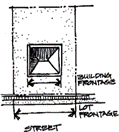
Building frontage, primary. The portion of a building face most closely in alignment with an adjacent right-of-way or fronting a parking lot when so defined, as allowed in this section. A gasoline service station may use the overhanging canopy as a substitute for building frontage when computing the allowable sign area. The longest side of the canopy shall be used to compute the allowable sign area. (6/23)
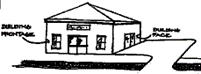
Building frontage, secondary. Buildings located on lots abutting more than one right-of-way or a parking lot may designate one building face as a secondary building frontage. (11/05)
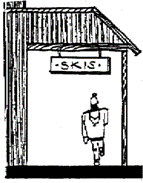
Canopy sign. A sign hanging from a canopy or eve, at any angle relative to the adjacent wall, the lowest portion of which is at least eight feet above the underlying grade. (5/98)
Construct. Build, erect, attach, hang, place, suspend, paint in new or different word, affix, or otherwise bring into being. (5/98)
Electronic message sign. Signs that incorporate as part of, or wholly, an electronic message or display by means of light-emitting diodes, plasma, electronic ink, or other means that allow that display to be changed through electronic controls. (9/18)
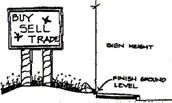
Finish ground level. The average elevation of the ground (excluding mounds or berms, etc., located only in the immediate area of the sign) adjoining the structure or building upon which the sign is erected, or the curb height of the closest street, whichever is the lowest. (5/98)
Flashing sign. A sign any part of which pulsates, scrolls, flutters, animates, lights intermittently, or blinks on and off. (10/08)
Freestanding sign. A permanent sign supported by one or more uprights, poles or braces placed in or upon the ground, or a sign supported by any structure primarily for the display and support of the sign, the structure of which will not be calculated as part of the overall sign area. (See Area. ) (9/18)

Incidental signs. A sign that is normally incidental to the allowed use of the property but can contain any message or content. Such signs can be used for, but are not limited to, nameplate signs, warning or prohibition signs, and directional signs not otherwise allowed. (5/98)
Indirect illumination. A source of illumination directed toward such sign so that the beam of light falls upon the exterior surface of the sign. (5/98)
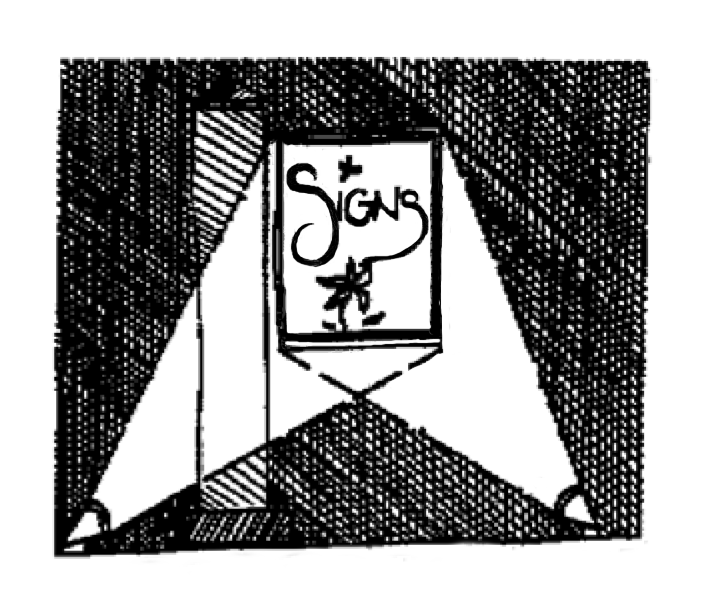
Integrated business center. A group of two or more businesses which are planned or designed as a center, and share a common off-street parking area or access, whether or not the businesses, buildings or land are under common ownership. (5/98)
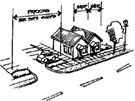
Internal illumination. A source of illumination from within a sign. (5/98)
Multi-faced sign. A sign which has two or more identical size sign faces, contained in a single sign structure. (9/18)

Multifamily dwelling. A residential structure or complex of structures that include five or more separate dwelling units, whether rented or owned by the occupants. (6/22)
Mural. An illustration (with or without words or numbers) which is painted or otherwise applied (without projections) to an outside wall of a structure. (5/98)
Nit. Nit is used as a measurement of luminance, where the nit is equal to one candela per square meter (1cd/m 2 ). A candela is a unit of measurement of the intensity of light, where one candela is the monochromatic radiation of 540 THz with a radiant intensity of 1/683 watt per steradian in the same direction. By way of example, an ordinary wax candle generates approximately one candela. (10/08)
Nonconforming sign. Any sign which lawfully existed prior to May 7, 1990, but which, due to the requirements adopted herein, no longer complies with the height, area and placement regulations or other provisions of these regulations. (9/18)
Owner. As used in these regulations, "owner" means owner or lessee of the sign. If the owner or lessee of the sign cannot be determined, then "owner" means owner or purchaser of the land on which the sign is placed. (5/98)
Portable sign. A sign that is, or similar to, an A-frame sign, sandwich board sign, yard sign, wind feather or feather flag, or a sign attached to wood or metal frames and designed to be self-supporting and movable. Wind feathers or feather flags may be placed on a stand or placed in the ground. Portable signs are not to be considered temporary signs as defined and used in this section. (6/23)
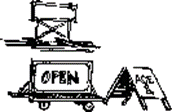
Projecting sign. A sign the face of which is not parallel to the wall on which it is mounted. (11/05)
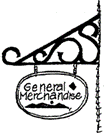
Roof sign. A sign or any portion of which is displayed above the highest point of the roof, whether or not such sign also is a wall sign. (5/98)
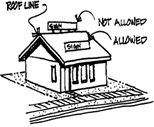
Roofline. Either the eaves of the roof or the top of the parapet at the exterior wall. (A mansard roof is below the top of a parapet and is considered a wall for sign purposes.)
Rotating/revolving sign. A sign all or a portion of which moves in some manner. (5/98)
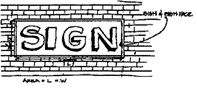
Sign. Any writing, including letter, word, or numeral; pictorial presentation, including mural, illustration or decoration; emblem, including device, symbol, logo or trademark; flag, including banner or pennant; or any other device, figure or similar thing which is a structure or any part thereof, or is attached to, painted on, or in any other manner represented on a building or structure or device; and is used to announce, direct attention to, or advertise; and is visible from any public right-of-way. (9/18)
Sign face. Surface of a sign containing the message. The sign face shall be measured as set forth in the definition for "area."
Sign height. The distance from the finish ground level to the top of the sign or the highest portion of the sign structure or frame, whichever is greater. (5/98)
Sign structure. The supports, uprights, braces, framework and other structural components of the sign. (5/98)
Street frontage. That portion of a property that abuts a paved street right-of-way and measured by the linear distance of the property adjacent to such right-of-way. (5/98)
Temporary business. A business of a temporary nature authorized through a temporary business permit issued by the City of Keizer. (5/98)
Temporary sign. A sign that is, or is similar to, a banner and is attached, but not permanently affixed, to a building and which may be made of canvas, cloth, rigid plastic, paper, vinyl, or other lightweight flexible material. (9/18)
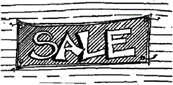
Wall sign. A permanent sign attached to, erected against or painted on a wall of a building or structure, with the exposed face of the sign in a plane approximately parallel to the face of said wall. A sign painted on an awning in which the face of the sign is approximately parallel to the wall shall also be considered a wall sign. (9/18)
Sec. 2.308.03. - Review procedures.
A.
Permit required. Except as specifically excluded herein, no property owner, lessee or contractor shall construct or alter any sign without first obtaining a valid permit to do so. (5/98)
B.
Permit fees. Permit fees shall be established from time to time by city council resolution. (5/98)
C.
Application requirements. An application for a sign permit shall be made on a form prescribed by the zoning administrator. The application shall include, at a minimum, a sketch drawn to scale indicating the proposed sign and identifying existing signs on the premises, the sign's location, graphic design, structural and mechanical design and engineering data which ensures its structural stability. The application shall also contain the names and address of the sign company, person authorizing erection of the sign and the owner of the subject property. (5/98)
The zoning administrator shall issue a permit for a sign unless the sign is in violation of the provisions of these regulations or other provisions of the Keizer Zoning Ordinance. Sign permits mistakenly issued in violation of these regulations or other provisions of the Keizer Zoning Ordinance are void. The zoning administrator may revoke a sign permit if he finds that there was a material and misleading false statement of fact in the application for the permit. (5/98)
D.
Design, construction, and maintenance. All signs shall be designed, constructed, and maintained according to the following standards: (5/98)
1.
Compliance with building codes. All signs shall comply with the applicable provisions of the building code in effect at the time of the sign permit application and all other applicable structural, electrical and other regulations. The issuance of a sign permit under these regulations does not relieve the applicant of complying with all other permit requirements. (9/18)
2.
Materials. Except for banners, flags, portable signs, temporary signs, and window signs conforming in all respects with the requirements of these regulations, all signs shall be constructed of permanent materials and shall be permanently attached to the ground, a building, or other structure by direct attachment to a rigid wall, frame, or structure. (9/18)
3.
Maintenance. All signs shall be maintained in a good structural condition and readable at all times. (5/98)
4.
Owner responsibility. The owner shall be responsible for its erection and maintenance and its compliance with the provisions of these regulations or other laws or ordinances regulating signs. (5/98)
5.
Aesthetics. All signs shall be professional in appearance, constructed in a workmanship like manner to professional standards. (12/10)
Sec. 2.308.04. - Nonconforming signs.
A.
Any sign not complying with these regulations is prohibited and constitutes a violation. (9/18)
B.
Permits for properties with nonconforming signs. (5/98)
1.
Businesses in integrated business centers. For individual businesses in integrated business centers, all signs of the individual business must comply prior to issuance of sign permits for new or altered signs for such business. No freestanding sign permits will be issued for the integrated business center, unless all freestanding signs comply. (9/18)
2.
Businesses not in integrated business centers. No permits shall be issued for new or altered signs unless all signs of the individual business comply with these regulations. (9/18)
C.
Electronic message signs which are legally placed and maintained in all respects on or before October 6, 2008, shall be allowed to remain as nonconforming signs and do not have to be brought into compliance; however, once a nonconforming electronic message sign is removed, any replacement sign must comply in all respects with these regulations. (10/08)
D.
Abandoned signs. All signs for a business shall be removed within 120 days after that business ceases to operate on a regular basis, and the entire sign structure or structures shall be removed within 12 months of such cessation of operation. (9/18)
Sec. 2.308.05. - Signs generally permitted.
Subject to the limitations in sections 2.308.07 and 2.308.08, the following signs and sign work are permitted in all zones. These signs shall not require a permit, and shall not be included when determining compliance with total allowed area: (9/18)
A.
Sign copy. Painting, change of sign face or copy and maintenance of signs. (9/18)
B.
Temporary signs. Temporary signs that do not exceed 16 square feet in area may be displayed for a maximum of 120 days in any calendar year. Only one temporary sign per storefront or residential structure may be displayed at a time except during the period 45 days preceding and seven days following governmental elections during which time temporary signs may be unlimited in number. Paper signs may only be used for single day events. (9/18)
C.
Property signs. For commercial properties only, one sign per parcel or integrated business center not exceeding 32 square feet in area during the time of sale, lease or rental of the property, provided that the sign is placed on the property for sale, lease, or rent and removed within 15 days of the sale, lease or rental of the property, or a sign not exceeding 32 square feet in area during the time of construction and remodeling of the property, provided the sign is placed on the property where construction and remodeling is taking place and removed within seven days of the completion of any construction or remodeling. An additional sign not exceeding 32 square feet may be erected if the property borders a second street and the signs are not visible simultaneously. (9/18)
D.
Government signs. Signs posted by or under governmental authority, including legal notices, traffic, danger, no trespassing, emergency, city identification, signs related to public services or safety. (9/18)
E.
Development signs. One sign not over 32 square feet located at each street entrance to a residential subdivision or residential development. (9/18)
F.
Incidental. Incidental signs that do not exceed six square feet. Such signs shall not be mounted on permitted freestanding sign structures. (5/98)
G.
Flags. Flags on permanent flag poles that are designed to allow raising and lowering of the flags. Flagpoles shall either be freestanding or shall be mounted on the building but, if mounted on the building, may not be taller than the peak of the roof. Flags shall not exceed 25 square feet in area. (5/98)
H.
Interior signs. Signs within a building. (5/98)
I.
Window signs. For commercial or industrial buildings, signs painted or hung on the inside of windows, or otherwise affixed (such as window clings) to the surface of a window with its message intended to be visible to the exterior environment. (9/18)
J.
Residential signs. Residential signs, pursuant to requirements in section 2.308.07. (5/98)
K.
Portable signs. Portable signs are limited to six square feet in area, with the exception that wind feather/feather flag signs may be up to 16 square feet in area. One portable sign per storefront or residential structure is allowed except during the period 45 days preceding and seven days following governmental elections, during which time portable signs may be unlimited in number. The following additional standards apply to portable signs: (9/18)
1.
Portable signs may not be within 25 feet of any other portable sign on the same lot or less than five feet from a side lot line. (9/18)
2.
Portable signs must be located on private property and may not be within any public sidewalk easement or right-of-way. If located along a public street, signs must be located behind the sidewalk regardless of property line location. (12/10)
3.
Portable signs cannot impede sidewalks, exits, or other pedestrian, vehicular, or bicycle way. (12/10)
Sec. 2.308.06. - Prohibited signs.
The following signs are prohibited and are subject to immediate code enforcement action, including, but not limited to, the issuance of citations and/or confiscation under the Keizer Uniform Nuisance Abatement Ordinance: (9/18)
A.
Tethered signs. Balloons or similar types of tethered objects, including strings of pennants. (5/98)
B.
Roof signs. Roof signs or signs which extend higher than the roofline. (5/98)
C.
Odor, visible matter. Signs that emit odor, visible matter, or sound; however, an intercom system for customers remaining in their vehicles, such as used in banks and drive-through restaurants, shall be allowed. (5/98)
D.
Wire supports. Signs that use or employ side guy lines of any type. (5/98)
E.
Obstructing signs. Signs that obstruct any fire escape, required exit, window or door opening used as a means of egress. (5/98)
F.
Utility lines. Signs closer than 24 inches horizontally or vertically from any overhead power line or public utility guy wire. (5/98)
G.
Vehicle, trailer signs. No vehicle, trailer, or trailer mounted reader boards shall be parked on a public right-of-way or public property, or on private property so as to be visible from a public right-of-way which has attached thereto or located thereon any sign or advertising device for the basic purpose of providing advertisement of products or directing people to a business or activity located on the same or nearby premises. This provision applies where the primary purpose of a vehicle is for advertising purposes and is not intended to prohibit any form of vehicular sign, such as a sign attached to a motor vehicle which is primarily used for business purposes, other than advertising. (12/10)
H.
Rotating/revolving signs. (10/08)
I.
Flashing signs. (10/08)
J.
Projecting signs. Projecting signs exceeding 24 inches and private signs that project into or over driveways and public rights-of-way, except signs under a canopy that projects over a public sidewalk and the sign is eight feet or more above the sidewalk. (9/18)
K.
View obstruction. Signs that obstruct required vision clearance area or obstruct a vehicle driver's view of official traffic control signs and approaching or merging traffic, or which present a traffic hazard. (5/98)
L.
Safety interference. Signs that interfere with, imitate, or resemble any official traffic control sign, signal or device, emergency lights, or appears to direct traffic, such as a beacon light. (5/98)
M.
Signs in the public right-of-way/use of utility poles. Except for government signs under section 2.308.05(D), signs located in public right-of-way, in any public or utility easement or attached to any utility poles. Signs located in such areas are subject to immediate removal without notice. (9/18)
N.
Vacant land. Any sign on unimproved property, unless allowed as a temporary or portable sign. (9/18)
O.
Electronic message signs. Electronic message signs except by conditional use permit. Electronic message signs that change more frequently than once per 15 seconds are prohibited. Further, any change made with the use of scrolling, flashing, fluttering or other animated effects is prohibited. Variances to any of these requirements are not allowed. (9/18)
P.
Temporary or portable signs exceeding the allowed size or timeframes for display are prohibited, unless authorized by special occasion permit approval as outlined in section 2.308.08.E. (9/18)
Sec. 2.308.07. - Noncommercial uses.
The following regulations apply to signs for residences, public or semi-public buildings and similar noncommercial, non-industrial uses: (5/98)
A.
Sign types. The following sign types are allowed: (5/98)
1.
Wall, canopy and window signs, subject to the limitations in 2.308.07.C. (5/98)
2.
Freestanding signs, subject to the limitations in 2.308.07.C. (5/98)
3.
Temporary displays consisting of any sign type for a period not to exceed 21 days in any 365-day period; however, the owners or responsible parties of such displays shall be responsible for any public or private nuisance. (5/98)
B.
Maximum number. Any number of wall, canopy or freestanding signs not exceeding the sign area and height limitations of this section; plus signs allowed in section 2.308.07.A.3. (9/18)
C.
Maximum sign area. Maximum total sign area for property on which the building or buildings are located: (5/98)
1.
Single-family and two-family (duplex) dwelling: six square feet. (5/98)
2.
Multiple family dwelling: 32 square feet. (5/98)
3.
Public and semi-public: 64 square feet. (5/98)
D.
Maximum sign height.
1.
Wall, canopy or window sign: eight feet. (5/98)
2.
Freestanding sign: six feet. (5/98)
E.
Location. (5/98)
1.
Wall, canopy or window sign shall be set back from the property lines of the lot on which it is located, the same distance as the building containing the permitted use, provided that wall signs may project into the required setback space up to 1.5 feet. (5/98)
2.
Freestanding signs are permitted where fences are allowed. (5/98)
F.
Illumination. Except for electronic message signs, noncommercial use signs may only be indirectly illuminated by a concealed light source, shall not remain illuminated between the hours of 11:00 p.m. and 6:00 a.m., (except by conditional use permit) and shall not flash, blink, fluctuate or produce glare. (9/18)
Sec. 2.308.08. - Commercial and industrial uses.
The following regulations apply to signs for commercial and industrial uses: (5/98)
A.
Non-integrated business centers.
1.
Total allowed area. 1 ½ square feet of total allowed sign area for each linear foot of building frontage, up to a maximum total allowed area of 150 square feet, except that awnings shall be allowed 50 percent of awning area be exempt from this limit. (9/18)
2.
On a secondary building frontage, one wall sign shall be allowed, in addition to that listed above, at the rate of 0.75 square feet per linear foot of that portion of the building designated a secondary building frontage, up to a maximum of 75 square feet. (9/18)
3.
Type, maximum number and size of signs. Within the total allowed area, one freestanding sign per street frontage and an unlimited number of wall, canopy or projecting signs. Regardless of total allowed area, the freestanding signs shall be limited to a maximum of 100 square feet in area, shall not exceed one sign on each frontage, and shall be oriented to face the traffic flow on the street upon which they front. (9/18)
4.
Maximum sign height. (5/98)
a.
Wall and canopy signs shall not project above the parapet or roof eaves. (5/98)
b.
Freestanding signs: 20 feet. (5/98)
5.
Location. (5/98)
a.
Wall or projecting signs may project up to two feet away from the building. (9/18)
b.
Freestanding signs have no limitations except the signs shall not project over street right-of-way and shall comply with requirements for vision clearance areas and special street setbacks. (5/98)
B.
Integrated business centers.
1.
Allowed area. For wall, canopy and projecting signs on individual businesses within an integrated business center, 1 ½ square feet of total allowed sign area for each linear foot of building frontage for the individual business, up to a total maximum of 150 square feet per business, except that awnings shall be allowed 50 percent of awning area be exempt from this limit. The sign area of a projecting sign shall be calculated as a freestanding sign. Individual businesses may not assign their unused allowed area to other businesses in the integrated business center. Freestanding signs are permitted only as set forth below and in section 2.308.08.C. (9/18)
2.
On a secondary building frontage, one wall sign shall be allowed, in addition to that listed above, at the rate of 0.75 square feet per linear foot of that portion of the building designated a secondary building frontage, up to a maximum of 75 square feet. (11/05)
3.
Freestanding sign. For each integrated business center, one freestanding sign per street frontage not to exceed 100 square feet each in area. Freestanding signs shall not exceed one sign on each frontage and shall be oriented to face the traffic flow on the street upon which they front. (9/18)
4.
Maximum sign height. (5/98)
a.
Wall and canopy signs shall not project above the parapet or roof eaves. (5/98)
b.
Freestanding signs: 20 feet. (5/98)
5.
Location.
a.
Wall or projecting signs may be located on any face of the building, except as provided in 2.308.08.B.4.b, and may project up to two feet away from the building. (9/18)
b.
Wall signage located on a secondary building frontage shall be limited to only one sign, limited in size as provided in 2.308.08.A.2. In no case may any signage derived on the primary building frontage be located on the secondary building frontage. (11/05)
c.
Freestanding signs have no limitations except the signs shall not project over street right-of-way and shall comply with requirements for vision clearance areas and special street setbacks. (5/98)
C.
Mixed use developments. Signs for developments containing a mixture of commercial and residential uses shall be subject to the following restrictions: (5/98)
1.
Noncommercial uses shall be subject to the provisions in section 2.308.07. (5/98)
2.
Commercial-industrial uses shall be subject to the provisions for integrated business centers in section 2.308.8.B. (5/98)
3.
Freestanding signs shall be subject to the provisions in section 2.308.08.B.3. (9/18)
D.
Additional signs. Within the limitations of this subsection, the signs below do not require a permit and are not included in calculating allowed area and number of signs. (5/98)
1.
Secondary entrance. When a business has two public entrances, each on a separate building wall, there is permitted one additional wall sign not to exceed ten square feet in area for the wall where the entrance is not the primary entrance. (5/98)
2.
Vehicle directional signs. Vehicle directional signs are allowed either as wall or freestanding signs. Such signs shall be limited to three square feet in area and two per driveway. Freestanding signs shall be limited to a height of six feet. (9/18)
3.
Drive-through signs. Signs located adjacent to a drive-through lane at a restaurant are allowed as follows: one per drive-through lane limited to 40 square feet in area and a maximum height of eight feet. Any sign greater than ten square feet in area and/or six feet in height must be screened from adjacent streets by a sight-obscuring fence, wall or hedge. (9/18)
E.
Signs for temporary businesses/special occasions. (9/18)
1.
Signs for temporary businesses. Temporary businesses receiving temporary business permit approval may display temporary or portable signs, other than trailer mounted reader boards or any sign that includes flashing or rotating lights or moving parts. The cumulative size of all such signs may not exceed 32 square feet. All temporary business signs must be placed within ten feet of the structure or vehicle used for the temporary business and may not be placed within any public right-of-way. (9/18)
2.
Signs for special occasions. The placement of multiple and/or oversized temporary or portable signs is only allowed subject to permit approval. A special occasion sign permit may be granted for the following situations: (9/18)
Any combination of temporary or portable sign types, regardless of size and quantity, are allowed for a maximum of 14 consecutive calendar days. A maximum of two special occasion sign permits may be issued for any given address in a calendar year, with no less than 30 days between events. (9/18)
F.
Signs for mobile food vendors.
1.
In addition to the signs allowed in section 2.308.08(F)(2) below, mobile food vendors shall be limited to six square feet of signage, which can be displayed only during hours of operation and shall comply with the provisions within section 2.308.05.K. (9/18)
2.
Signs painted upon or affixed directly to the mobile food vendors are exempt from the sign code provisions, provided that no sign may protrude from or project above the roofline of the unit. All other signage must comply with the remaining provisions of section 2.308. (7/17)
3.
Property on which two or more mobile food vendors are located shall comply with the remaining provisions within the sign code. (9/16)
G.
Special commercial signs.
1.
Home occupation. Maximum area shall be six square feet and subject to the location provisions in section 2.308.07. (9/18)
2.
Residential sales office. Maximum area shall be 16 square feet and subject to the location provisions in section 2.308.07. (9/18)
3.
Bed and breakfast. Maximum area shall be 16 square feet and subject to the location provisions in section 2.308.07. (9/18)
4.
Signs for stadiums in the IBP zone. Notwithstanding any other regulations in this section, in the IBP zone for stadiums with seating for not less than 4,000 persons, the following shall apply: (6/23)
a.
Total allowed area: 760 square feet. (11/05)
b.
Type, maximum number and size of signs: Within the total allowed area, one freestanding sign and a total of no more than two wall or canopy signs. Regardless of the total allowed area, the freestanding sign shall be limited to a maximum of 680 square feet. (11/05)
c.
Maximum sign height: (11/05)
1.
Wall and canopy signs shall not project above the parapet or roof eaves. (11/05)
2.
Freestanding sign: maximum total height of 50 feet. (11/05)
d.
Location:
1.
Wall signs may project up to 1.5 feet from the building. (11/05)
2.
Freestanding sign: no limitation except shall not project over street right-of-way and shall comply with requirements for vision clearance areas and special street setbacks. (11/05)
Sec. 2.308.09. - Conditional uses.
A.
Procedures. Applications for conditional use permits for illumination of noncommercial use signs, or electronic message signs shall be processed according to the procedure set forth in section 3.103 of this ordinance. The criteria to be reviewed and applied in conditional use permit proceedings for illumination of noncommercial use signs or electronic message signs are set forth in this section. The criteria of section 3.103 shall not be applied. (9/18)
B.
Decision criteria. The following criteria shall be used to review and decide conditional use permit applications for the illumination of noncommercial use and electronic message signs: (9/18)
1.
The proposed sign is located in an EG, P, IBP, CR, CO, MU, CM or a CG zone, or the proposed sign is for a public or semi-public use regardless of the underlying zone. (9/18)
2.
The proposed sign, when conditioned, will not either:
a.
Significantly increase or lead to street level sign clutter; or
b.
Lead to signs that adversely dominate the visual image of the area. (9/18)
3.
The proposed sign, as conditioned, will not adversely impact the surrounding area to a significant degree. Electronic message signs that are proposed to be located adjacent to residential areas shall include mitigation measures such as screening and buffering or other measures to mitigate any impacts onto adjacent properties. Electronic message signs proposed for a public or semi-public use adjacent to residential areas shall only be illuminated between the hours of 6:00 a.m. and 11:00 p.m. (9/18)
4.
The proposed sign will not present a traffic or safety hazard. (5/98)
5.
If the application is for the illumination of noncommercial use or electronic message sign, no rotary beacon lights, zip lights, strobe lights, or similar devices shall be allowed. No chaser effect or other flashing effect consisting of external lights, lamps, bulbs or neon tubes are allowed. (9/18)
Electronic message signs. Electronic message signs must remain static and unchanging for a period no less than 15 seconds. Further, the level of illumination must be limited in the following ways: (9/18)
a.
An electronic message sign that contains a changeable display produced by light-emitting diodes, incandescent or low-voltage lamps or bulbs, or cathode ray tubes shall include automatic brightness compensation features to adjust brightness to compensate for the angle and ambient light conditions.
b.
No electronic message sign may be illuminated to a degree of brightness that is greater than 7,500 nits in the daytime and 1,000 nits between sunset and sunrise, provided that electronic message signs comprised solely of one color may not be illuminated to a degree of brightness exceeding the following illumination levels: (6/23)
1.
For a display comprised of red only, the degree of brightness shall not be greater than 3,150 nits in the daytime and 450 between sunset and sunrise; (6/23)
2.
For a display comprised of green only, the degree of brightness shall not be greater than 6,300 nits in the daytime and 900 nits between sunset and sunrise; (6/23)
3.
For a display comprised of amber only, the degree of brightness shall not be greater than 4,690 nits in the daytime and 670 nits between sunset and sunrise. (6/23)
As used herein, "sunset" and "sunrise" shall be as determined by the U.S. Naval Observatory Astronomical Applications Department or other governmental agency.
6.
The total allowed sign area shall be reduced by 25 percent if the application is for an electronic message sign. (9/18)
7.
The proposed sign will comply with all other regulations, including, but not limited to, height and placement restrictions. (5/98)
Sec. 2.308.10. - Variances.
A.
Procedure. Any allowance for signs not complying with the standards set forth in these regulations shall be by variance. Variances to this section will be processed according to the procedures in section 3.202.02 as a Type I-B procedure. The criteria in section 3.105 shall not be used, but instead the following criteria shall be used to review and decide variance applications: (9/18)
1.
There are unique circumstances of conditions of the lot, building or traffic pattern such that: (5/98)
a.
The existing sign regulations create an undue hardship; (5/98)
b.
The requested variance is consistent with the purpose of this section as stated in section 2.308.01; and
c.
The granting of the variance compensates for those circumstances in a manner equitable with other property owners and is thus not a special privilege to any other business. The variance requested shall be the minimum necessary to compensate for those conditions and achieve the purpose of this section. (6/23)
2.
The granting of the variance shall not: (5/98)
a.
Decrease traffic safety nor detrimentally affect any other identified items of public welfare. (5/98)
b.
Result in a special advertising advantage in relation to neighboring businesses or businesses of a similar nature. The desire to match standard sign sizes (for example, chain store signs) shall not be listed or considered as a reason for a variance. (5/98)
c.
Be the result of a self-imposed condition or hardship. (5/98)
Sec. 2.308.11. - Exemptions.
The following are exempt from the regulations of this section but may be subject to other regulations under this development code or other city regulations: (6/23)
A.
Public art as defined by city ordinance or resolution. (3/14)

