Zoneomics Logo
search icon

Saint Petersburg City Zoning Code

SECTION 16

20.080.- CORRIDOR COMMERCIAL TRADITIONAL DISTRICTS "CCT"

Typical Buildings in the CCT District

Typical Buildings in the CCT District

Sections:


16.20.080.1.- Composition of corridor commercial traditional.

A.

The corridor commercial traditional development pattern includes the design aesthetics, densities and uses found in the various neighborhood shopping districts of the early 20th Century Main Street.

B.

These districts are characterized by a collection of compatible, interrelated uses that include shopping, service, employment and residential opportunities. The symbiotic relationship of these mixed uses creates a more balanced community, reduces traffic, consolidates service delivery, and benefits the surrounding residential areas that are within walking distance.

C.

The buildings in the corridor commercial traditional districts often exhibit architecture of the early 20th Century Main Street. Buildings typically feature vertically oriented architecture and are constructed close to the street, as these uses depend upon pedestrian access. Architectural details such as large display windows, awnings, an articulated base course and cornice, use of natural materials and other fenestrations are common. Primary entries face the street and are enhanced with architecturally appropriate features.

D.

Driveways and parking areas in front yards are not typical in most traditional corridors. Consequently, alleys and secondary roadways are the primary routes for utilities and access to off-street parking to the rear of properties. Rear parking areas are often connected to the building by rear entrances, arcades within buildings or small pedestrian paths, courtyards or plazas between buildings.

(Code 1992, § 16.20.080.1)

16.20.080.2. - Purpose and intent.

The purpose of the CCT district regulations is to protect the traditional commercial character of these corridors while permitting rehabilitation, improvement and redevelopment in a manner that encourages walkable streetscapes. The regulations include urban design guidelines, including zero setbacks, building design (e.g., requiring windows and entryways at ground level), cross-access, and other standards, to reflect and reinforce the unique character within each of the districts.

(Code 1992, § 16.20.080.2)

16.20.080.3. - Permitted uses.

Uses in these districts shall be allowed as provided in the Matrix: Use Permissions and Parking Requirements.

(Code 1992, § 16.20.080.3)

16.20.080.4. - Introduction to CCT districts.

The CCT districts are the CCT-1 and the CCT-2 districts.

16.20.080.4.1. Corridor Commercial Traditional-1 (CCT-1).

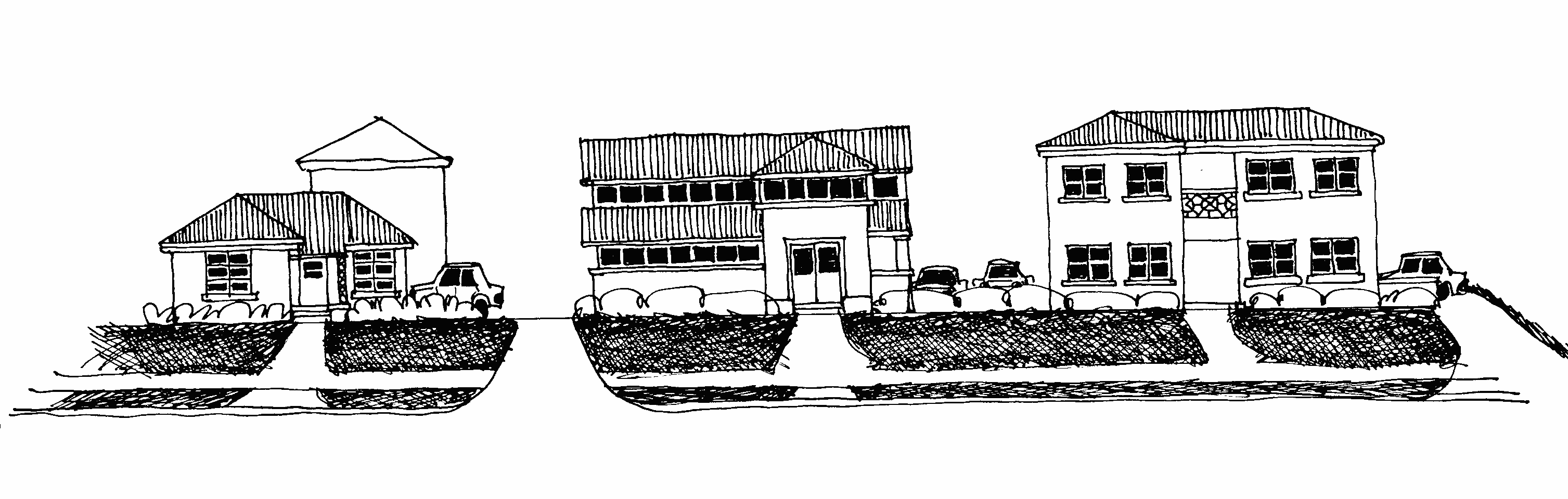
This district generally allows one-story to three-story development containing mixed uses with multifamily structures. Additional density is possible when affordable workforce housing or missing middle housing is provided.

Typical Residential Uses in CCT-1 District

Typical Residential Uses in CCT-1 District

16.20.080.4.2. Corridor Commercial Traditional-2 (CCT-2).

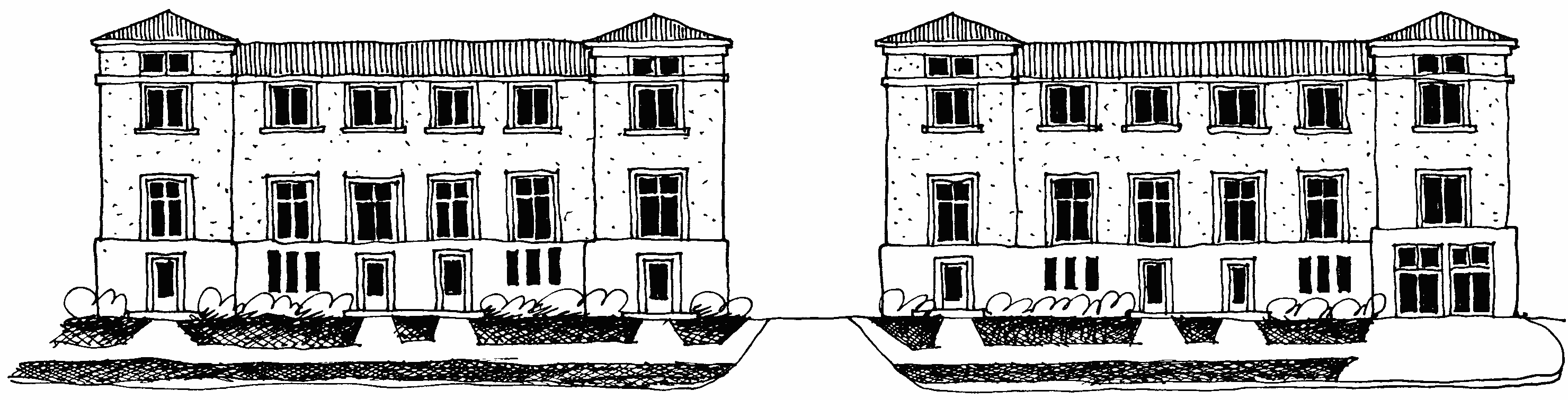
This district generally allows one to five story development containing mixed uses with multifamily structures. Additional density is possible when affordable workforce housing is provided.

Typical Multi-Family Uses in CCT-2 District

Typical Multi-Family Uses in CCT-2 District

(Code 1992, § 16.20.080.4; Ord. No. 540-H, § 7, 3-23-2023)

16.20.080.5. - Development potential.

Development potential is slightly different within the districts to respect the character of the neighborhoods. Achieving maximum development potential will depend upon market forces, such as minimum desirable unit size, and development standards, such as minimum lot size, parking requirements, height restrictions, and building setbacks.

Minimum Lot Size, Maximum Density and Maximum Intensity

CCT-1CCT-2
Minimum lot area (square ft.) 4,500 4,500
Maximum residential density (units per acre) Residential density 24 40
Residential density within activity center 36 60
Missing middle housing density bonus 6 N/A
Missing middle housing density bonus within activity center N/A N/A
Workforce housing density bonus 8 6
Hotel density
(rooms per acre)
45 45
Hotel density
(rooms per acre)
within activity center
80 80
Maximum nonresidential intensity (floor area ratio) Nonresidential intensity 1.0 1.5
Nonresidential intensity
within activity center
1.5 2.5
Workforce housing
intensity bonus
0.2 0.2
Maximum impervious surface (site area ratio) 0.95 0.95
Workforce housing density and intensity bonus: All units associated with this bonus shall be utilized in the creation of workforce housing units as prescribed in the City's workforce housing program and shall meet all requirements of the program.
A missing middle housing density bonus is allowed for multi-family use at a maximum density of 30 dwelling units/acre following all dimensional and design requirements in Section 16.20.015 Neighborhood Traditional Mixed Residential-1 (NTM-1) and NTM parking requirements. The missing middle bonus is not allowed in addition to the workforce housing density bonus.
Refer to technical standards regarding measurement of lot dimensions, calculation of maximum residential density, nonresidential floor area and impervious surface.
For mixed use developments, refer to additional regulations within the use specific development standards section for mixed uses (currently section 16.50.200).


(Code 1992, § 16.20.080.5; Ord. No. 876-G, § 8, 2-21-2008; Ord. No. 66-H, § 3, 2-7-2013; Ord. No. 83-H, § 9, 12-19-2013; Ord. No. 166-H, § 3, 5-21-2015; Ord. No. 230-H, § 1, 6-16-2016; Ord. No. 246-H, § 6, 10-20-2016; Ord. No. 405-H, § 4, 12-12-2019; Ord. No. 540-H, § 7, 3-23-2023)

16.20.080.6. - Building envelope: Maximum height and minimum setbacks.

Maximum Building Height (All Districts)

Building HeightCCT-1CCT-2
Primary building 42 ft. 60 ft.
Primary building within activity center Small lot
(< one acre in size)
48 ft. 72 ft.*
Medium lot
(between one and two acres in size)
60 ft. 72 ft.*
Large lot
(> two acres in size)
84 ft. 72 ft.*
Refer to technical standards regarding measurement of building height and height encroachments.
* The allowable height encroachment identified in section 16.20.060 and referred to as "Building in a mixed-use or non-residential zoning district (with 50 percent or more of the first floor of the principal structure devoted to parking spaces)" shall be prohibited within the Central Avenue Corridor Activity Center.


Minimum Building Setbacks

Building SetbacksCCT-1CCT-2
Building height in setback up to 42 ft.Building height in setback up to 42 ft.*Building height in setback 42 ft.* to 72 ft.
Front yard 0 ft. from the property line or 10 ft. from the curb, whichever is greater 0 ft. from the property line or 10 ft. from the curb, whichever is greater 10 ft. from the property line or 20 ft. from the curb, whichever is greater
Interior side yard 0 ft. 0 ft. 15 ft.
Street side yard 0 ft. from the property line or 5 ft. from the curb, whichever is greater 0 ft. from the property line or 5 ft. from the curb, whichever is greater 10 ft. from the property line or 20 ft. from the curb, whichever is greater
Rear yard With alley 0 ft. 0 ft. 0 ft.
No alley 10 ft. 10 ft. 10 ft.
For measurements from the curb, if there is no curb, the measurement shall be from the edge of the street pavement.
Additional criteria may affect setback requirements including design standards and building or fire codes.
Refer to technical standards for yard types and setback encroachments.
* Where a single development project includes at least 135 feet of linear frontage along the primary street, building setbacks will be assessed above 48 feet in lieu of the standard 42 feet.


(Code 1992, § 16.20.080.6; Ord. No. 876-G, § 8, 2-21-2008; Ord. No. 985-G, § 25, 7-15-2010; Ord. No. 66-H, § 4, 2-7-2013; Ord. No. 83-H, § 10, 12-19-2013)

16.20.080.7. - Building design.

The following design criteria allows the property owner and design professional to choose their preferred architectural style, building form, scale and massing, while creating a framework for good urban design practices which create a positive experience for the pedestrian.

Site layout and orientation. The City is committed to creating and preserving a network of linkages for pedestrians. Consequently, pedestrian and vehicle connections between public rights-of-way and private property are subject to a hierarchy of transportation, which begins with the pedestrian.

Building and parking layout and orientation.

1.

New multi-building development shall relate to the development of the surrounding properties. This means there shall be no internally oriented buildings which cause a rear yard or rear façade to face toward abutting properties.

2.

Buildings shall create a presence on the street. This means that a minimum of 60 percent of the principal structure's linear frontage, per street face, shall be on the building setback line.

3.

All service areas and loading docks shall be located behind the front façade line of the principal structure.

4.

The principal structure shall be oriented toward the primary street. A building on a corner property may be oriented to the secondary street so long as all street façades are articulated as primary façades. Buildings at the corner of two intersecting streets are encouraged to highlight and articulate the corner of the building.

5.

All mechanical equipment and utility functions (e.g. electrical conduits, meters, HVAC equipment) shall be located behind the front façade line of the principal structure. Mechanical equipment that is visible from the primary street shall be screened with a material that is compatible with the architecture of the principal structure.

6.

Parking, detention and retention ponds, drainage ditches, and accessory structures shall be located behind the principal building to the rear of the property. Detention and retention ponds and drainage ditches shall comply with the design standards set forth in the drainage and surface water management section.

Vehicle connections.

1.

Nonresidential development within CCT-1:

Access to parking shall be from the street. If the primary street is utilized for vehicular access, the driveway shall serve the entire complex, not individual units, and shall not exceed one lane in each direction.

2.

Residential development within CCT-1:

Access to parking shall be designed to take advantage of the first available alternative in the following prioritized list:

a.

Access shall be made from the alley or secondary street.

b.

Where no alley or secondary street are present, access shall occur from the primary street.

c.

For multi-unit structures, the driveway shall serve the entire complex, not individual units and shall not be wider than one lane in each direction.

3.

All development within CCT-2:

Access to parking shall be made from the alley or secondary roadway. No new curb cuts shall be allowed on Central Avenue.

Pedestrian connections.

1.

Each ground floor multifamily unit or commercial unit that faces a primary street shall contain a primary entry which faces the primary street. The primary entry shall include decorative door surrounds, porches, porticos and/or stoops.

2.

Where a single building includes separate commercial and residential entrances, the residential entrances shall be raised at least 16 inches above ground level or recessed within the façade to reinforce a privacy zone and distinguish it from the commercial entrances.

3.

Doors shall be a commercial size and style.

Building and architectural design standards. All buildings should present an inviting, human scale façade to the streets roadway, internal drives, parking areas and surrounding neighborhoods. The architectural elements of a building should give it character, richness and visual interest.

Building style.

1.

New construction shall utilize an identifiable architectural style which is recognized by design professionals as having a basis in academic architectural design philosophies.

2.

Renovations, additions and accessory structures shall utilize the architectural style of the existing structure, or the entire existing structure shall be modified to utilize an identifiable architectural style which is recognized by design professionals as having a basis in academic architectural design philosophies.

3.

All accessory structures, including, but not limited to, drive-throughs, canopies, storage buildings, and solid waste container enclosures shall be compatible with the architectural design of the principal structure. Compatibility shall be determined by reviewing building materials, finishes and other significant features.

Building form.

1.

Buildings should create a width to height ratio of no more than 1:1. Buildings that exceed the width to height ratio of 1:1 shall feature architectural fenestration creating a bay system that divides the building design into a maximum ratio of 1:1. This may be done through pilasters, arcades, building line and roof line off-sets, materials and other appropriate architectural features.

2.

The first floor of each multi-story building shall be at least 12 feet in height as measured to the bottom of the second floor.

Streetwall. Articulating different uses at lower building levels will aid in creating a sense of human scale in mid-rise buildings. Addressing human scale may be achieved through architectural detailing and by variation in the three-dimensional character of the building mass as it rises skyward.

1.

Buildings shall use expression lines within the first two floors to delineate the divisions between the base and middle or top of the building. Expression lines may include a horizontal band, projecting material, shift in vertical plane, change in building material, or other treatment. Where existing, adjacent buildings have an established expression line, minor variations to this standard will be considered.

Wall composition. Wall composition standards ensure that ground level storefronts and multifamily and single-family residential buildings offer attractive features to the pedestrian. Wall composition also mitigates blank walls and ensures that all sides of a building have visual interest.

1.

Buildings shall be articulated and fenestrated with vertical proportioning.

2.

At least 50 percent of street façades shall have fenestration. At least 30 percent of the interior side and rear façades shall have fenestration. Entry doors shall be counted as toward fenestration if side panels or decorative windows or lights are provided. Garage doors shall not count towards fenestration percentage on street facing façades.

3.

A zero lot line building, abutting another zero lot line building, is exempt from providing fenestration on any portion of the façade concealed by the abutting building. Portions of façades which are not concealed by another zero lot line building shall meet fenestration requirements, but do not need to provide transparency.

4.

Where fire or Florida Building Codes prohibit the use of transparency along interior side or rear façades, total fenestration percentages must still be met, but without the transparency percentage.

5.

Structures which are situated on corner lots, through lots, or by the nature of the site layout are clearly visible from rights-of-way shall be designed with full architectural treatment on all sides visible from public rights-of-way. Full architectural treatment shall include roof design, wall materials, and architectural trim, and door and window openings. While it is recognized that buildings have primary and secondary façades, the construction materials and detailing should be similar throughout.

Transparency. The provision of transparency enhances visual connections between activities inside and outside buildings, thereby improving pedestrian safety.

1.

At least 50 percent of street level façades of commercial units shall be transparent. The bottom of windows shall begin no higher than two feet above grade level, and the top of all windows and doors shall be no lower than eight feet above grade level. Taller windows are encouraged.

2.

At least two-thirds of the fenestration on all façades shall be transparent.

3.

Windows on the street side façades shall be evenly distributed in a consistent pattern.

4.

Windows shall not be flush mounted. Windows recessed less than three inches shall feature architectural trim including a header, sill and side trim or decorative shutters. Windows recessed three inches or more shall feature a window sill.

5.

Window sashes and glass shall be square or vertical, unless a different proportion is permitted or required by an identifiable architectural style.

Roofs. Rooflines add visual interest to the streetscape and establish a sense of continuity between adjacent buildings. When used properly, rooflines can help distinguish between residential and commercial land uses, reduce the mass of large structures, emphasize entrances, and provide shade and shelter for pedestrians.

1.

Buildings shall provide a pitched roof or a flat roof with a decorative parapet wall compatible with the architectural style of the building.

Garages. Garage standards maintain and enhance the attractiveness of the streetscape and are influenced by a hierarchy of transportation, which begins with the pedestrian.

1.

Garage doors should face the rear or side of the property. Garage doors facing the primary roadway shall be set back behind the principal façade line at least 20 feet.

Parking structures and surface parking lots.

1.

Parking structures shall utilize a recognized architectural style.

2.

Parking structures which are part of an overall project shall utilize the same architectural style, fenestration and detailing as the principal structure.

3.

Sloping interior floors shall not be visible or expressed on the exterior face of the building.

4.

Parking structures may be located at grade, provided that the perimeter along each street is devoted to active uses in accordance with the use regulations of this section. Parking structures located above the ground floor are encouraged to either encase the parking level with active uses or an architecturally compatible design that creates an attractive façade to screen the structure from the street (not alley).

5.

Surface parking lots that are visible from the street (not alleys) shall provide a solid knee wall not less than 36 inches high.

Building materials. Building material standards protect neighboring properties by holding the building's value longer, thereby creating a greater resale value and stabilizing the value of neighboring properties.

1.

Building materials shall be appropriate to the selected architectural style and shall be consistent throughout the project.

2.

The base of buildings, where the building meets the sidewalk and entryway, shall be constructed of high-quality, hardened materials. The use of high-quality materials will protect against damage caused by pedestrian traffic and thereby benefit the lifetime maintenance costs of the building.

Use regulations. For properties located within the Central Avenue Corridor Activity Center, non-vehicular, pedestrian-oriented uses shall be incorporated into no less than 60 percent of the linear building frontage along Central and 1st Avenues North and South.

1.

Non-vehicular, pedestrian-oriented uses shall have a minimum average depth of 25 feet;

2.

Non-residential, pedestrian-oriented uses including office, personal service, and neighborhood scale retail and café, are encouraged;

3.

Credit toward fulfillment of the 60 percent requirement shall also be granted for those portions of the building including limited residential support activities (e.g., lobbies, fitness centers) and where each ground floor, multi-family dwelling unit has a primary entrance along the street. The primary entrance shall include a decorative door surround, porch, portico or stoop, or a combination thereof.

Streetscape improvements. For properties located within the Central Avenue Corridor Activity Center, the abutting public sidewalk shall be generally improved consistent with the "Promenade: Level Two" streetscape treatment plan identified in the Plaza Parkway Design Guidelines, except as may be prohibited by the relevant permitting authority.

(Code 1992, § 16.20.080.7; Ord. No. 1029-G, § 21, 9-8-2011; Ord. No. 83-H, § 11, 12-19-2013; Ord. No. 287-H, § 41, 7-20-2017)

16.20.080.8. - Demolition of buildings.

A.

Purpose. Vacant lots along streets within the CCT-2 zoning district are generally detrimental to the goal of promoting a pedestrian oriented area. Vacant lots which are not maintained to certain minimum standards promote visual blight, property maintenance concerns and erosion of soil into the public stormwater management system. The purpose of this section is to minimize the creation of vacant land parcels and ensure the proper treatment and maintenance of any vacant parcels resulting from voluntary demolition within the CCT-2 zoning district.

B.

Definition(s). For the purposes of this section, the term "structure of general public interest" means the existing primary or principal building or buildings on any land parcel within the CCT-2 zoning district. Accessory structures, structures over submerged land or structures within right-of-way are not included in this definition.

C.

Issuance of demolition permit for a structure of general public interest (SGPI). A demolition permit may be issued for a SGPI, if a site plan has been approved, any pre-demolition conditions of the approval have been complied with and a complete application for building permits has been submitted. However, a demolition permit may be issued without meeting any of the foregoing requirements if the Building Official determines that a building is structurally unsafe.

D.

Vacant lots resulting from demolition. Vacant lots created in the CCT-2 zoning district after September 8, 2011 shall be improved and maintained subject to the following standards:

1.

All sites. Vacant lots abutting resulting from a demolished building within the CCT-2 zoning district shall comply with the following:

a.

Fence requirements. All fences shall be decorative and shall be a minimum height of three feet and a maximum height of six feet. Required fences shall be of an "open" design and shall not exceed the maximum opacity standard of 25 percent as defined in the fence regulations section.

b.

Landscaping.

(1)

The applicant shall submit a scaled plan showing the vacant lot layout, the proposed landscaping and irrigation, and the proposed maintenance plan which shall include provisions for trash removal, erosion management, and landscape maintenance.

(2)

Surface shall include grass or other living ground cover, in any combination, provided that the total site is covered. A five foot wide perimeter landscape buffer shall be provided along all streets which shall consist of a continuous row of foundation landscaping and one shade tree for every 35 feet, or portion thereof, along the street. A corner landscape feature shall be provided at each street corner which shall be a minimum of 100 square feet and shall be densely planted with trees, low shrubs and ground cover to meet the planting standards provided in the landscaping and irrigation section.

(3)

Irrigation shall be provided consistent with the applicable standards for such systems as described in this chapter.

2.

Permit and inspections required. A permit and inspections of the required improvements to the vacant lot are required.

3.

Guarantee required. Prior to and as a condition of issuance of a demolition permit, the applicant shall furnish to the City a performance bond or an irrevocable and unconditional letter of credit, cash, or a combination thereof, or other instrument acceptable to the City, in the amount sufficient to insure that the requirements set forth in this section are met.

4.

Recorded notice required. Prior to and as a condition of issuance of a demolition permit, the applicant shall execute and record in the public records a notice, which shall be provided by the City, identifying the required site improvements and associated conditions of approval.

5.

Posted sign. A sign identifying a 24-hour contact person's name, address and telephone number for the site shall be posted on the site. The sign shall be designed in accordance with the standards of the City's sign regulations. Such person shall be the owner or site manager and shall have the authority to make decisions concerning the property.

E.

Procedure if demolition permit is denied for a SGPI. If an application for a demolition permit within the CCT-2 zoning district is denied, the applicant may request an exemption according to the procedures and criteria provided under section 16.70.040.1.9, "Exemptions, Demolition of Structures of General Public Interest within DC and CCT-2 Zoning Districts."

F.

For demolition applications involving designated historic landmarks or structures within designated local landmark historic districts, where demolition requires certificate of appropriateness (COA) approval, this section 16.20.080.8 shall not apply.

(Ord. No. 1029-G, § 63, 9-8-2011; Ord. No. 81-H, §§ 1, 2, 9-19-2013)