
Saint Petersburg City Zoning Code
SECTION 16
30.095.- STOREFRONT CONSERVATION CORRIDOR
Sections:
16.30.095.1.- Applicability.
This section applies to any property within a delineated Storefront Conservation Corridor. This section is not retroactively applied. Upon establishment of a delineated Storefront Conservation Corridor, the properties and structures within a corridor are deemed to be grandfathered with respect to the standards and regulations set forth in this section. However, properties within a delineated Storefront Conservation Corridor may not seek to increase any non-conforming land use, and no structure or tenant space may be enlarged, altered or changed in a way which increases its nonconformity except as may be allowed by this section.
(Ord. No. 363-H, § 1, 4-18-2019)
16.30.095.2. - Purpose.
The purpose of this overlay is to reinforce the importance of St. Petersburg's small-scale business sector by maintaining the existing pattern of small- and medium-sized storefront widths along popular pedestrian-oriented corridors, while also conserving the physical character of these special places. The following regulations shall be in addition to the zoning district regulations, and where there is conflict this section shall apply. Additional corridors may be added to this section.
(Ord. No. 363-H, § 1, 4-18-2019)
16.30.095.3. - Definitions.
For the purposes of this section, the following terms and definitions apply:
Corridor. A collection of parcels with frontage to the primary roadway (street or avenue) identified in the description and for which the overlay regulations apply. A corridor does not include those parcels adjacent to the primary delineated roadway with frontage to cross streets or alleys.
"Large" storefront width. Tenant spaces measuring more than 40 feet in width. The most common form of storefront width in contemporary construction. Where large storefront widths have the potential to host regional assets such as museums activating a pedestrian-oriented corridor, they can also be occupied by passive land uses and can create lengthy sidewalk zones void of activity along the streetscape. Large storefront widths facing the delineated conservation corridor shall be minimized within the corridors.
"Medium" storefront width. Tenant spaces measuring more than 20 feet in width and up to 40 feet in width. The evolution of commercial activity sometimes requires larger footprints, especially restaurants. This is most commonly observed where two, traditionally small storefront widths have been combined to create a single, 40-foot-wide tenant space.
Residential support services. Any use occupying a storefront that is not accessible to the general public and that is provided for the sole benefit of the residents of the building within which the use is located, including a leasing office.
"Small" storefront width. Tenant spaces measuring up to 20 feet in width. This is the most common range for tenant spaces developed within St. Petersburg's traditional commercial corridors. Small storefront widths shall be required within the delineated corridors.
Storefront, generally. A room or set of rooms, making up a tenant space, and collectively facing the street on the ground floor of a commercial or mixed-use building.
(Ord. No. 363-H, § 1, 4-18-2019)
16.30.095.4. - Establishment of an overlay corridor.
A.
Procedures. Establishment of a corridor shall only be initiated by resolution of the City Council.
1.
Commission review. Upon passage of a resolution by the City Council, the POD shall prepare an application and report to the commission designated in the Decisions and Appeals Table. Notice of the public hearing and notice to the owner(s) shall clearly state the boundaries for the proposed corridor and notice shall include mailed notice to the owner. After evaluating the testimony, evidence, and other material presented to the commission, the commission shall recommend approval, denial, or approval with modifications of the application.
2.
City Council review. The City Council shall schedule a public hearing on an ordinance for the proposed corridor within 60 days of the commission recommendation. Notice of the public hearing and notice to the owner(s) shall clearly state the boundaries for the proposed corridor and notice shall include mailed notice to the owner. After evaluating the testimony, evidence, and other material presented to the Council, the Council shall approve, deny, or approve with modifications the commission recommendation. If the commission recommends against establishment of the corridor, then a supermajority vote of the Council is required to reverse the commission recommendation and approve the application.
B.
Minimum district size. The boundary shall include a minimum of one roadway segment containing two opposing block faces, except as noted. The corridor shall be easily identified with characteristics including, but not limited to, geography, neighborhood or business association boundaries, building typologies, and the design of storefronts and adjoining public rights-of-way.
C.
Zoning districts. The corridor is a zoning overlay and shall overlay all other zoning districts within its boundaries. Any uses permitted in the zoning district shall be permitted subject to all provisions applicable to the zoning district.
D.
Amendments and rescissions. A corridor may be amended or rescinded through the same procedure utilized for the original establishment of the corridor.
(Ord. No. 363-H, § 1, 4-18-2019)
16.30.095.5. - Approved corridors.
A.
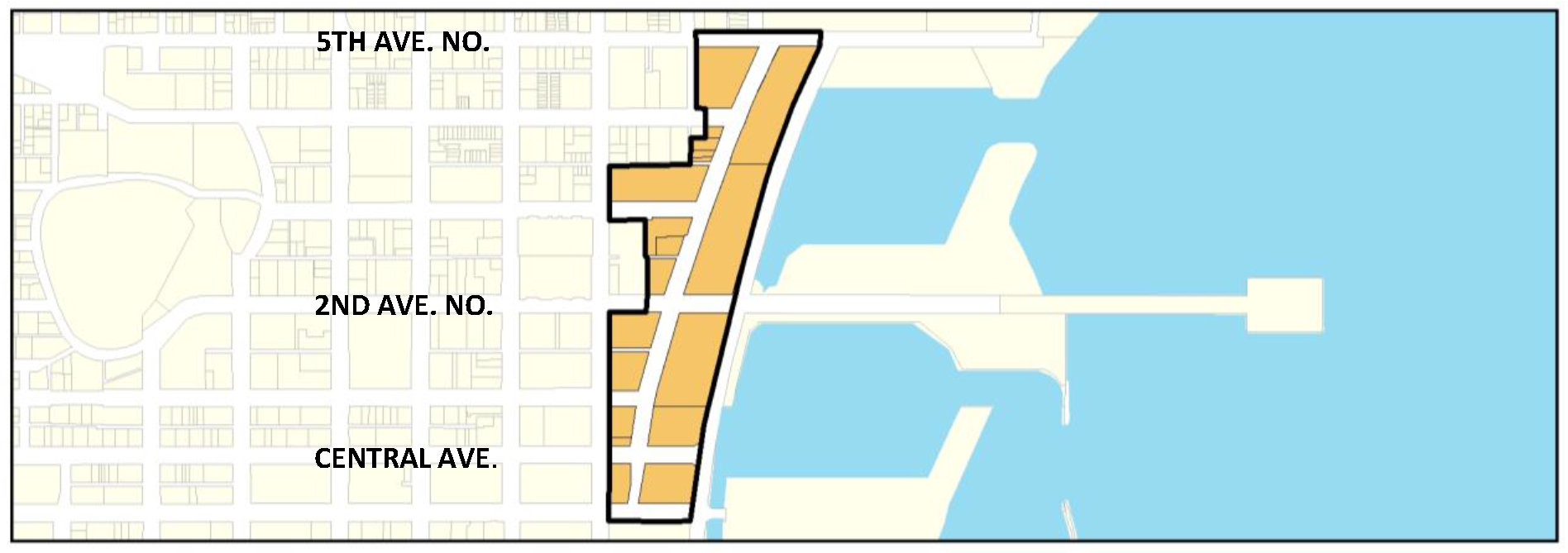
Beach Drive. Beach Drive shall be the delineated corridor extending from the centerline of the right-of-way of 5 th Avenue North to the centerline of the right-of-way of 1 st Avenue South. This corridor was established on April 18, 2019.
B.
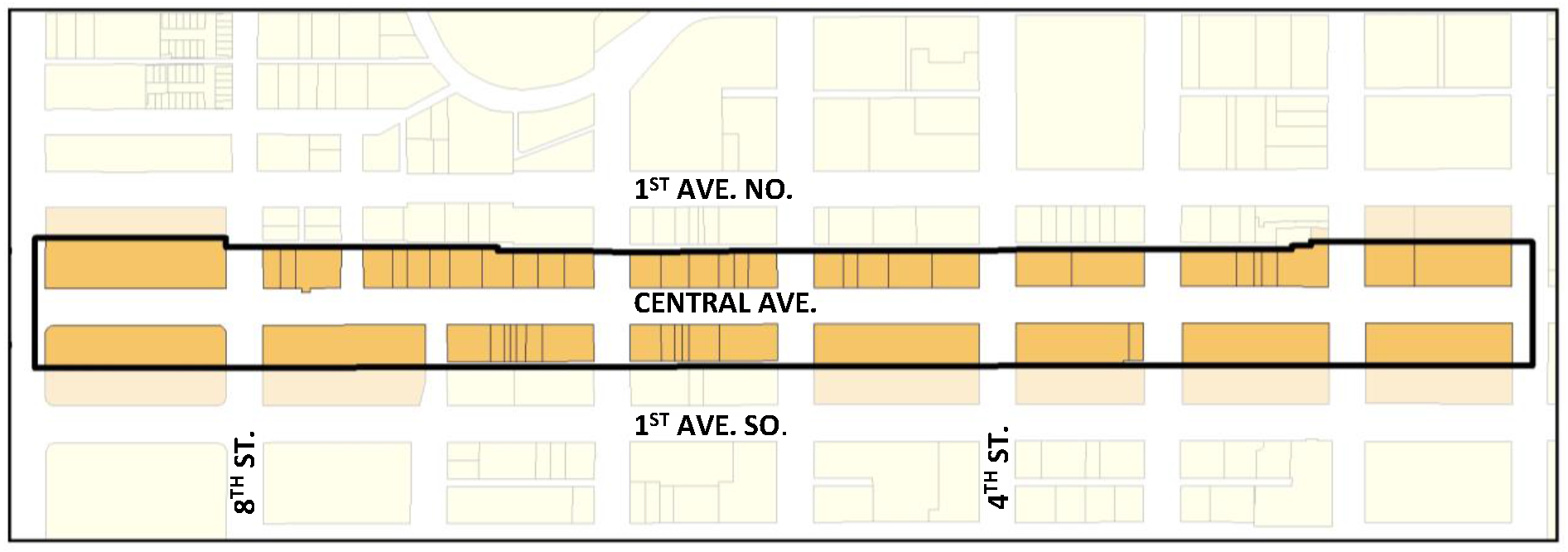
Central Avenue, Downtown East. Central Avenue shall be the delineated corridor extending from the centerline of the right-of-way of 1 st Street to the centerline of the right-of-way of Dr. Martin Luther King Jr. Street. This corridor was established on April 18, 2019.
C.
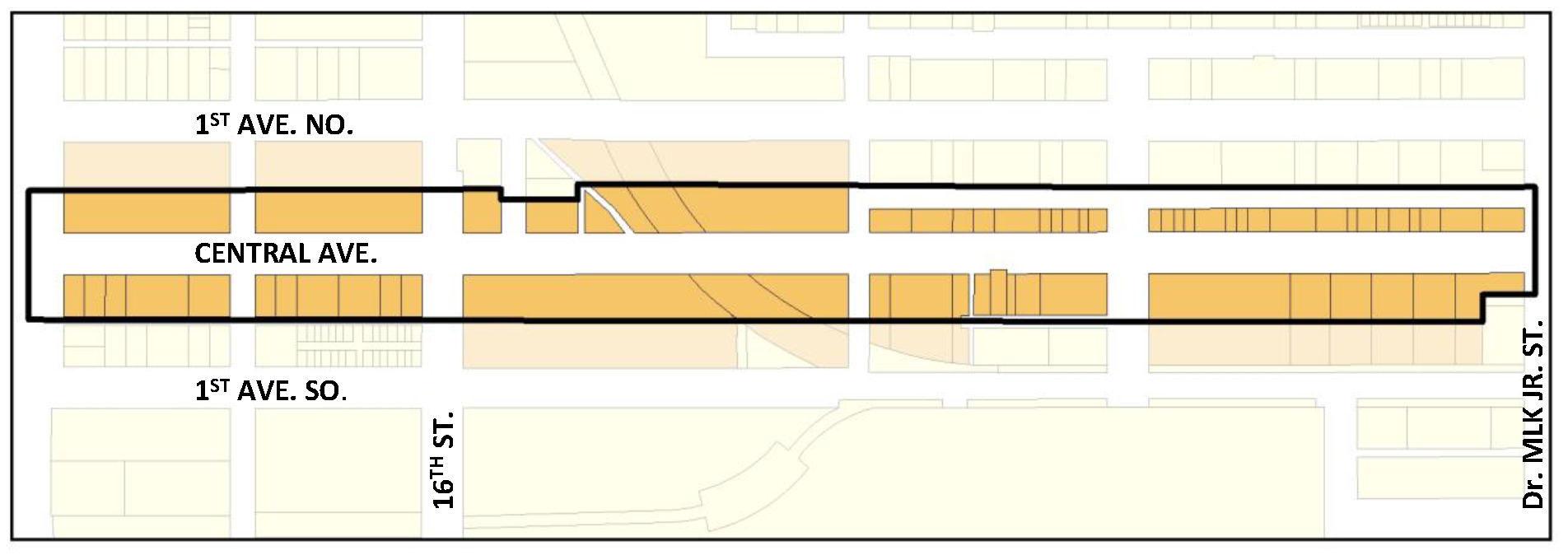
Central Avenue, Downtown West. Central Avenue shall be the delineated corridor extending from the centerline of the right-of-way of Dr. Martin Luther King Jr. Street to the centerline of the right-of-way of 18 th Street. This corridor was established on April 18, 2019.
D.
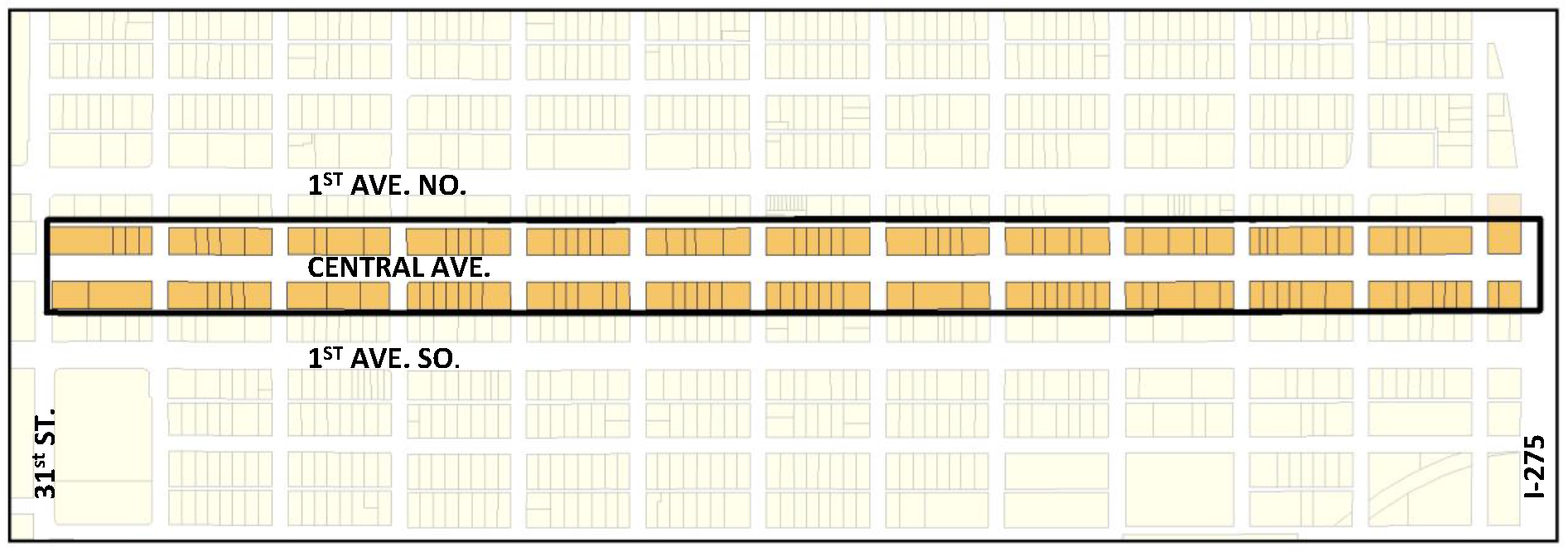
Grand Central. Central Avenue shall be the delineated corridor extending from the centerline of the right-of-way of 18 th Street to the centerline of the right-of-way of 31 st Street. This corridor was established on April 18, 2019.
(Ord. No. 363-H, § 1, 4-18-2019)
16.30.095.6. - Storefront width for pedestrian level, publicly accessible storefronts.
Storefront widths help define the character of place as one moves throughout the delineated corridors. To conserve the character of these places, the percentage of existing small, medium, and large storefronts for the corridor shall be established by averaging all storefront widths throughout the corridor. The percent distribution of storefront types throughout the corridor shall then be applied on a block-by-block basis within the applicable corridor as follows:
No. of small storefronts on block / no. of total storefronts on block = total percent (shall comply with minimum)
No. of large storefronts on block / no. of total storefronts on block = total percent (shall not exceed maximum)
The storefront width for pedestrian level, publicly accessible storefronts is only applicable along the ground floor of those portions of the building fronting towards the corridor. When located on the second floor or above, or when located along a rear alley or roadway, storefront widths do not apply.
(Ord. No. 363-H, § 1, 4-18-2019)
16.30.095.7. - Use standards.
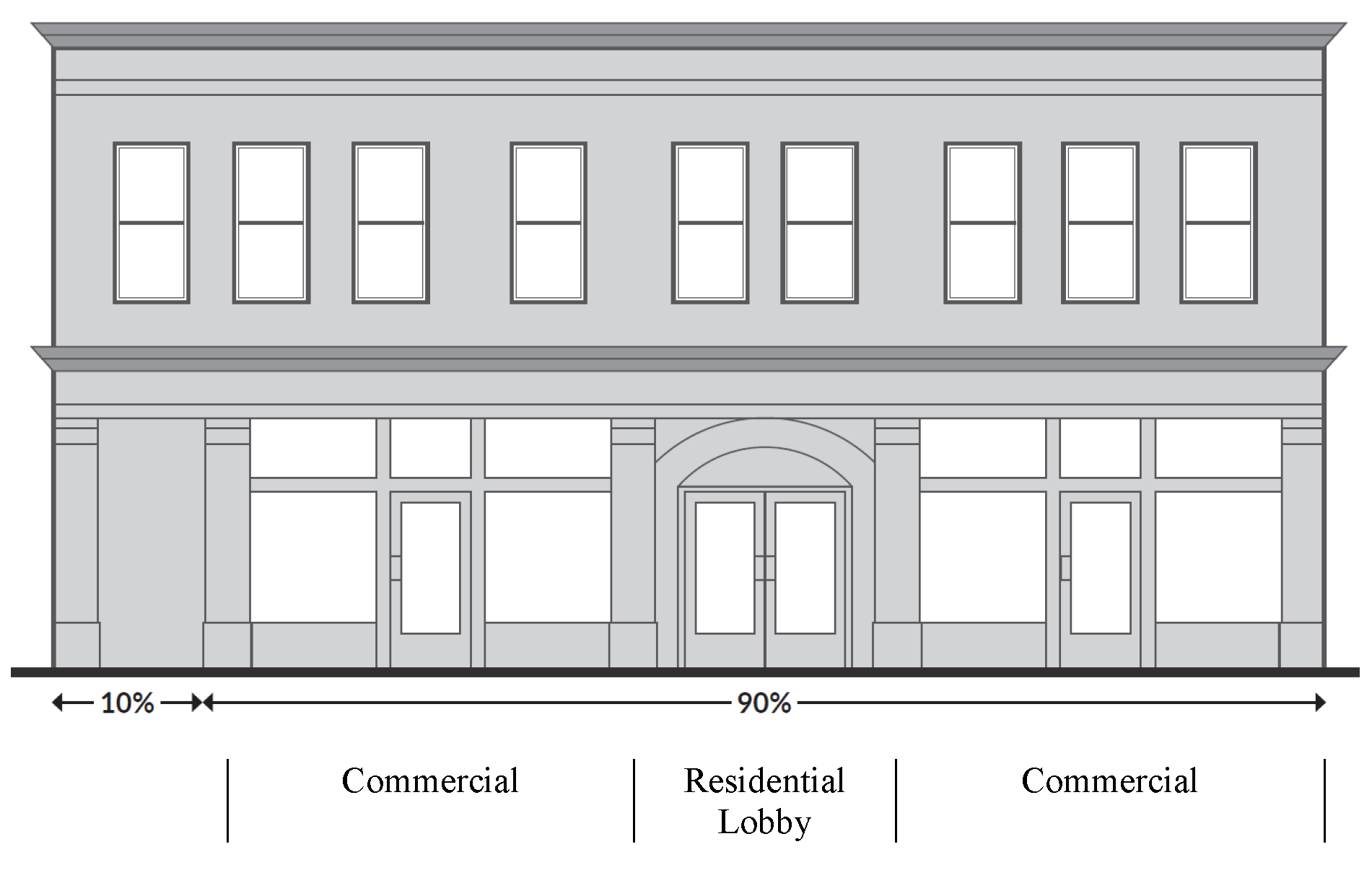
Appropriate nonresidential, pedestrian-oriented uses shall include, but not be limited to, retail sales, service establishments, museums, restaurants and bars, hotel lobbies, residential lobbies, and studios. Such pedestrian-oriented uses shall be incorporated into no less than 90 percent of the linear building frontage. This does not include residential support uses (e.g., fitness centers, leasing offices, residential gathering spaces).
(Ord. No. 363-H, § 1, 4-18-2019)
16.30.095.8. - Design standards.
A.
The exterior design of individual storefront spaces shall be consistent with the overall architectural style and materials of the building.
B.
Each tenant space located on the ground floor shall include a primary entrance facing the corridor. Arcades, featuring a center walkway with storefront access, are exempt from this requirement.
C.
Storefront doors shall be transparent.
D.
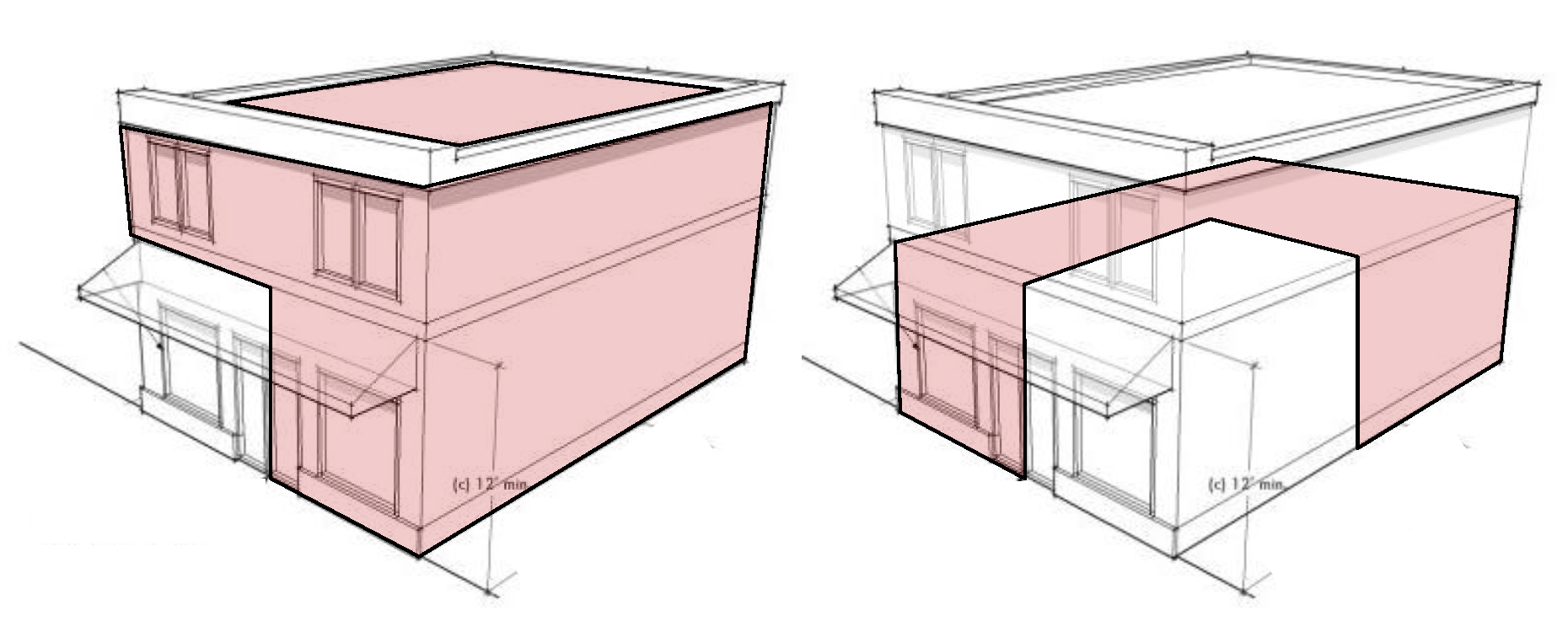
For all new construction, the first floor of a building shall be at least 12 feet in height as measured to the bottom side of the roof or the structural slab of the first floor above the ground floor.
E.
Buildings shall use expression lines within the first two floors to delineate the divisions between the base and middle or top of the building. Expression lines may include a horizontal band, projecting material, shift in vertical plane, change in building material, or other treatment. Where existing, adjacent buildings have an established expression line, minor variations to this standard will be considered.
F.
Awnings shall not be internally illuminated or back-lit; exterior illumination, such as downlighting, is allowed. For new construction only, an awning or other shade device measuring at least four (4) feet in depth shall be provided alongside a minimum 50 percent of any building frontage to the corridor; building entrances and exits, other than those used solely for emergency purposes or for deliveries, shall be located under an awning or other shade device.
G.
Opaque materials, such as one-way vinyl appliques and mirrored tint, that are applied to any storefront glazing shall be prohibited within the transparency zone, measured between 3 feet and 8 feet from grade. Individual letters, wordmarks, and corporate logos are exempt from this prohibition, provided that their combined square footage does not exceed 25 percent of the calculated surface area of the transparency zone.
(Ord. No. 363-H, § 1, 4-18-2019)
16.30.095.9. - Parking.
Where an individual tenant space facing the corridor is equal to or less than 20 feet in width and measures 3,000 square feet or less in gross floor area, or where the space is equal to or less than 40 feet in width and less than 100 feet in depth and measures 2,000 square feet or less in gross floor area, there shall be no required on-site parking. Any qualified tenant space shall be located within an approved corridor, located on the ground floor, with a storefront facing the corridor and adjoining the pedestrian sidewalk.
(Ord. No. 363-H, § 1, 4-18-2019)
16.30.095.10. - Vehicular access.
There shall be no vehicular curb cuts on the corridor. All access shall be from alleys or secondary streets. Any proposed construction which would qualify as development or redevelopment under the Landscaping and Irrigation Ordinance shall remove existing curb cuts on the corridor if alley or secondary street access is available, provided such modification does not reduce the existing number of parking spaces or create a non-conforming condition.
(Ord. No. 363-H, § 1, 4-18-2019)
16.30.095.11. - Additions, renovations, and change of use.
Storefront width, use and design standards shall not apply to existing buildings or tenant spaces, however no structure or tenant space may be enlarged, altered or changed in a way which increases its degree of nonconformity except as may be allowed by this section.
(Ord. No. 363-H, § 1, 4-18-2019)
16.30.095.12. - Variances.
Where an applicant requests variance from these standards, such consideration by the commission designated in the Decisions and Appeals Table shall include the general criteria for evaluating a variance application, plus the following factors to promote diversity and variety of commercial uses:
(1)
Distribution pattern of windows and activated doorways shall reinforce the intent of this section and preserve the physical character of the subject block and larger corridor;
(2)
Pedestrian activation of the subject block by the proposed use; and
(3)
Expansion of an existing storefront space where the total combined square footage is 2,500 s.f. or less, and the storefront width is 40 feet or less.
(Ord. No. 363-H, § 1, 4-18-2019)

